
304 vs 316L Stainless Steel Jewelry
Chicolink helps commercial jewelry sellers choose the grade that can actually be sampled, polished, priced, and repeated. For many stainless steel jewelry programs, 304 is the practical production default because it is easier to process and keeps cost under control. 316L is a useful upgrade when a SKU truly needs stronger corrosion margin, closer skin-contact positioning, or stricter material files.
- 304 is usually the recommended starting grade for general stainless steel jewelry production.
- 316L often brings higher processing pressure for complex styles, tight curves, dense stone seats, and difficult polishing areas.
- On comparable structures, 316L can be about 15%-20% more expensive than 304, with a wider gap possible on difficult designs.
- Both grades include nickel as an alloying element; Chicolink focuses on nickel-release files and market requirements rather than simple material promises.
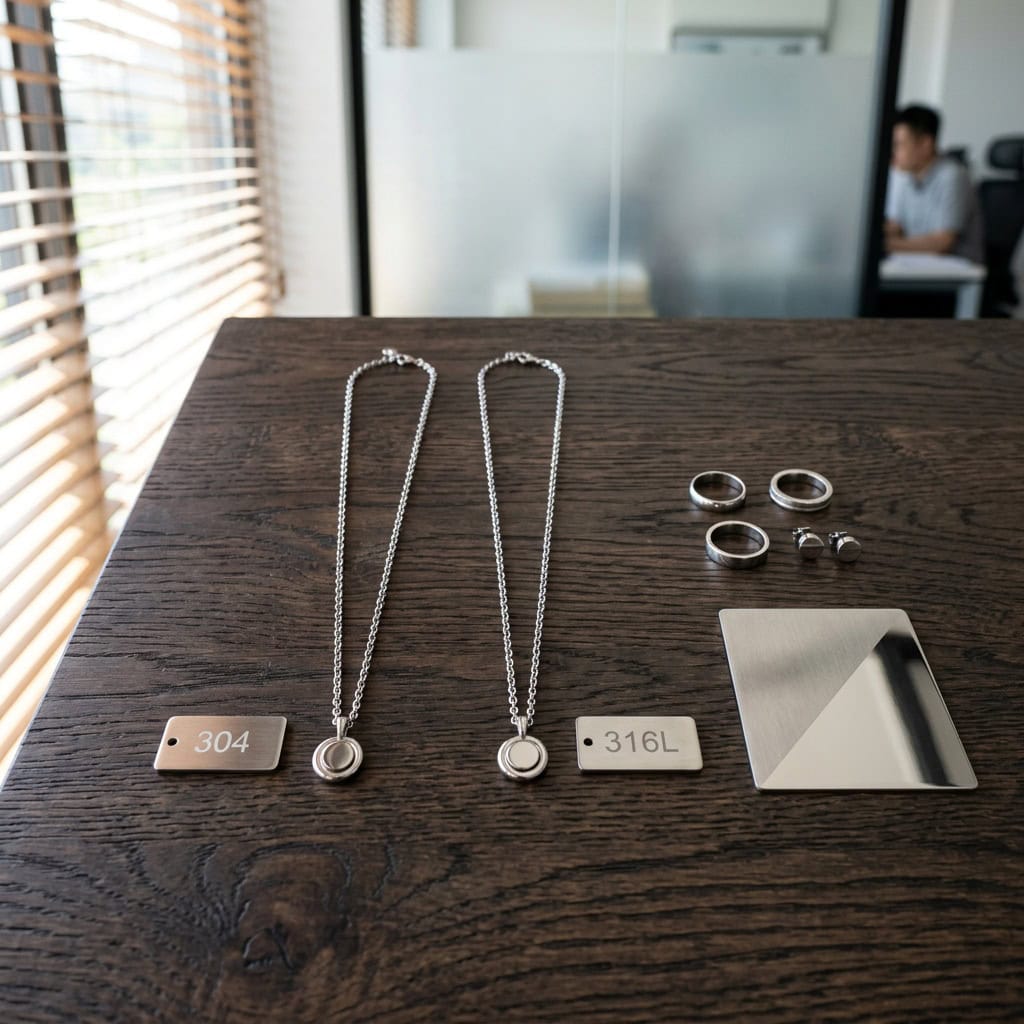
304 vs 316L Grade Choice
Chicolink compares 304 and 316L by processing pressure, sample risk, cost, appearance, and nickel-release files before quoting. For ordinary fashion jewelry, 304 often gives the better balance; 316L is reserved for SKUs with a clear commercial reason.
Decision Area | 304 Stainless Steel Jewelry | 316L Stainless Steel Jewelry | Chicolink Review Direction |
General recommendation | Practical default for many earrings, pendants, chains, bracelets, bangles, charms, and decorative fashion SKUs | Upgrade route for closer skin-contact, higher humidity/sweat exposure, premium basics, or documentation-sensitive programs | Build the first quotation around 304 unless the product promise requires 316L. |
Processing and buildability | Usually softer and more forgiving in common forming, cutting, polishing, and assembly routes | Often treated as the harder/tougher route in jewelry production, especially on detailed structures | Check whether the design can be sampled cleanly before choosing the higher grade. |
Cost and margin | Moderate material cost, mature supply, and easier price control for fast launches and repeat orders | Commonly about 15%-20% higher than 304 on similar structures; complex designs can widen the actual quote gap | Compare the extra cost against retail price, target margin, MOQ, and SKU role. |
Appearance and wear | Steel color, polished surface, brushed finish, and PVD-ready appearance can look strong when process control is good | Final appearance and ordinary wear performance may not look dramatically different from 304 after proper finishing | Chicolink checks whether appearance alone justifies the upgrade or whether 304 already supports the product goal. |
Nickel-release discussion | Suitable for many projects when surface route, approved sample, nickel-release files, and market scope support the claim | Often selected for stronger skin-contact positioning, but still needs actual product-version review | Use nickel-release testing files and contact-area review for EU-style or skin-contact discussions. |
304 And 316L By Product And Process
Chicolink matches grade to product role and production route. A detailed pendant, a fast-test launch, a daily-wear hero piece, and a file-heavy retail project do not need the same material decision.
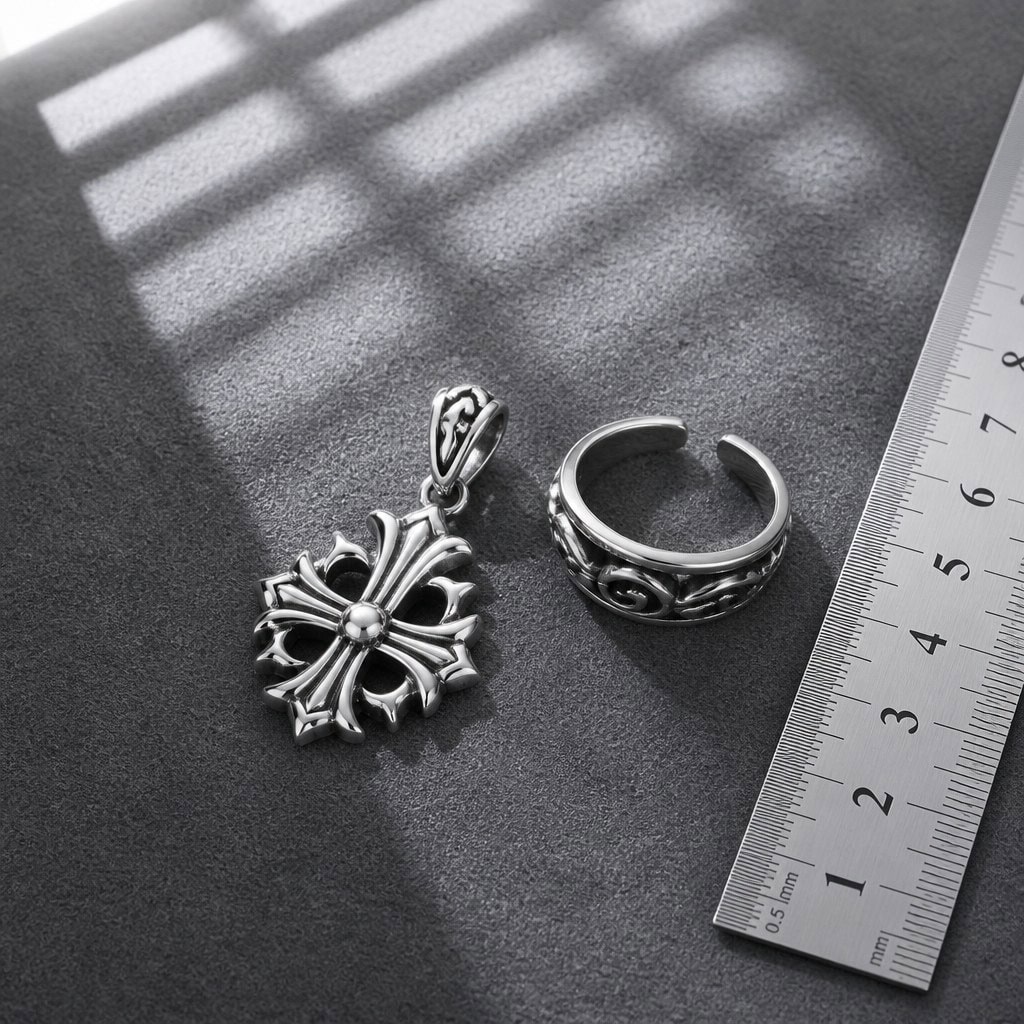
Complex Fashion Styles
Detailed pendants, open rings, sculpted charms, cut-out earrings, and small stone-set details often work better on 304 because it is easier to form and finish. Chicolink checks bridge width, edge finishing, polish access, and sample risk before pushing a complex design into 316L.
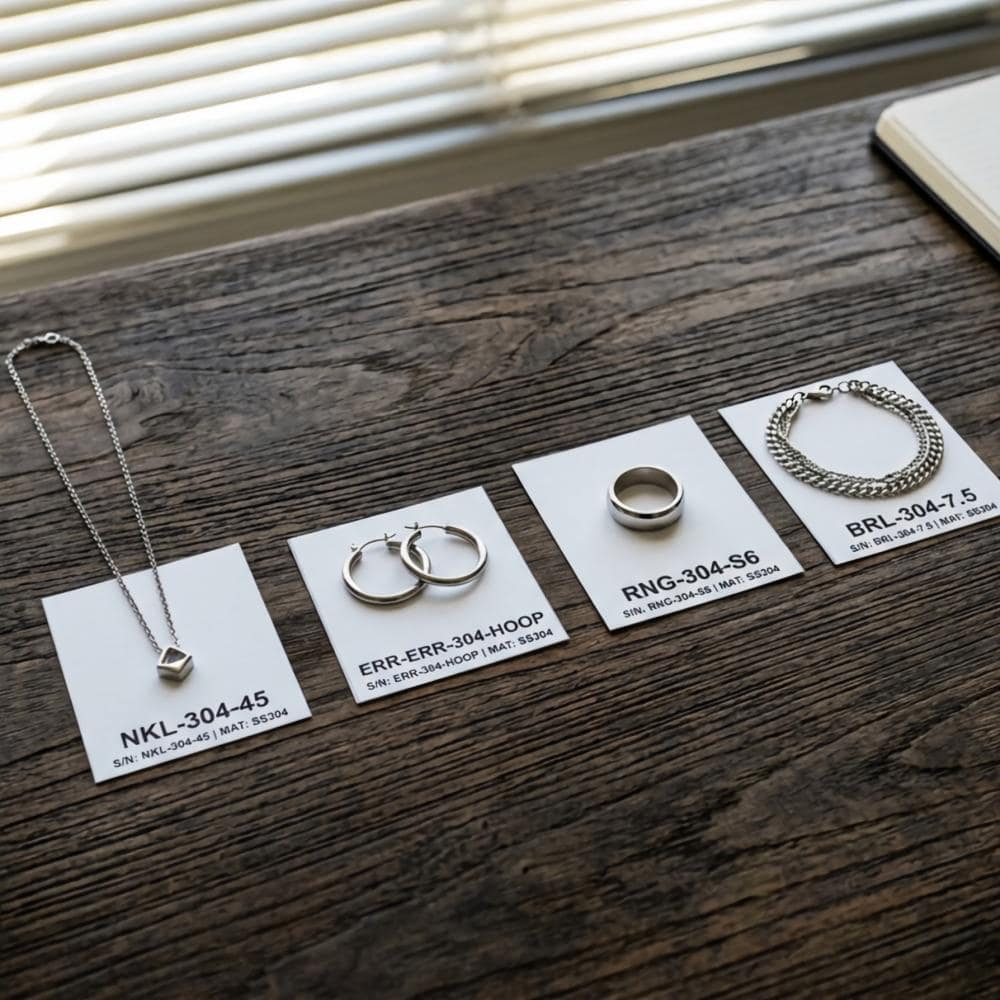
Fast-Test Launches
Seasonal drops and platform test SKUs usually need fast sampling, stable price bands, and easier replenishment. 304 can support many of these launches because it keeps material cost and processing pressure closer to a repeatable commercial range.
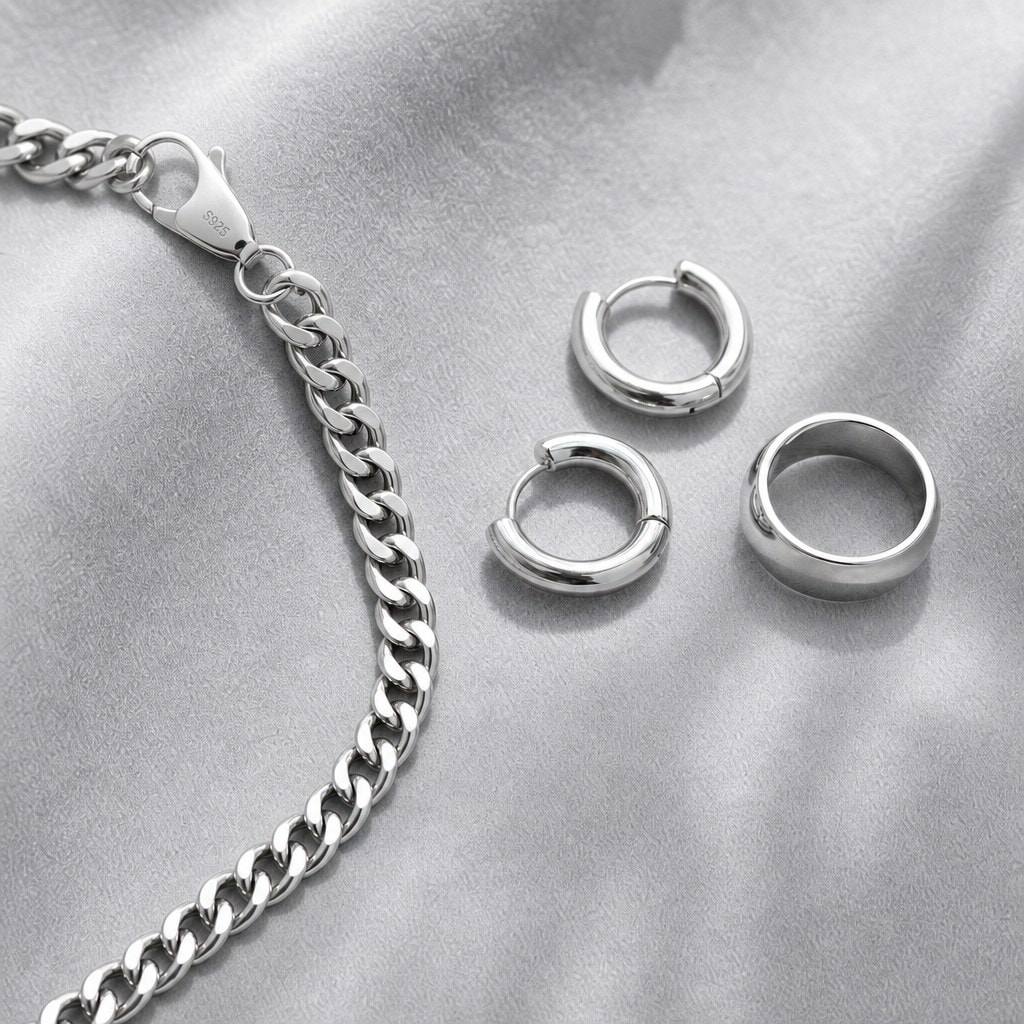
Daily-Wear Hero SKUs
Plain hoops, huggies, rings, chain necklaces, and bracelets may stay close to skin for longer use. 316L is worth reviewing when the hero piece depends on daily-wear positioning, stronger corrosion margin, or clearer material files.
Finish-Led Retail Lines
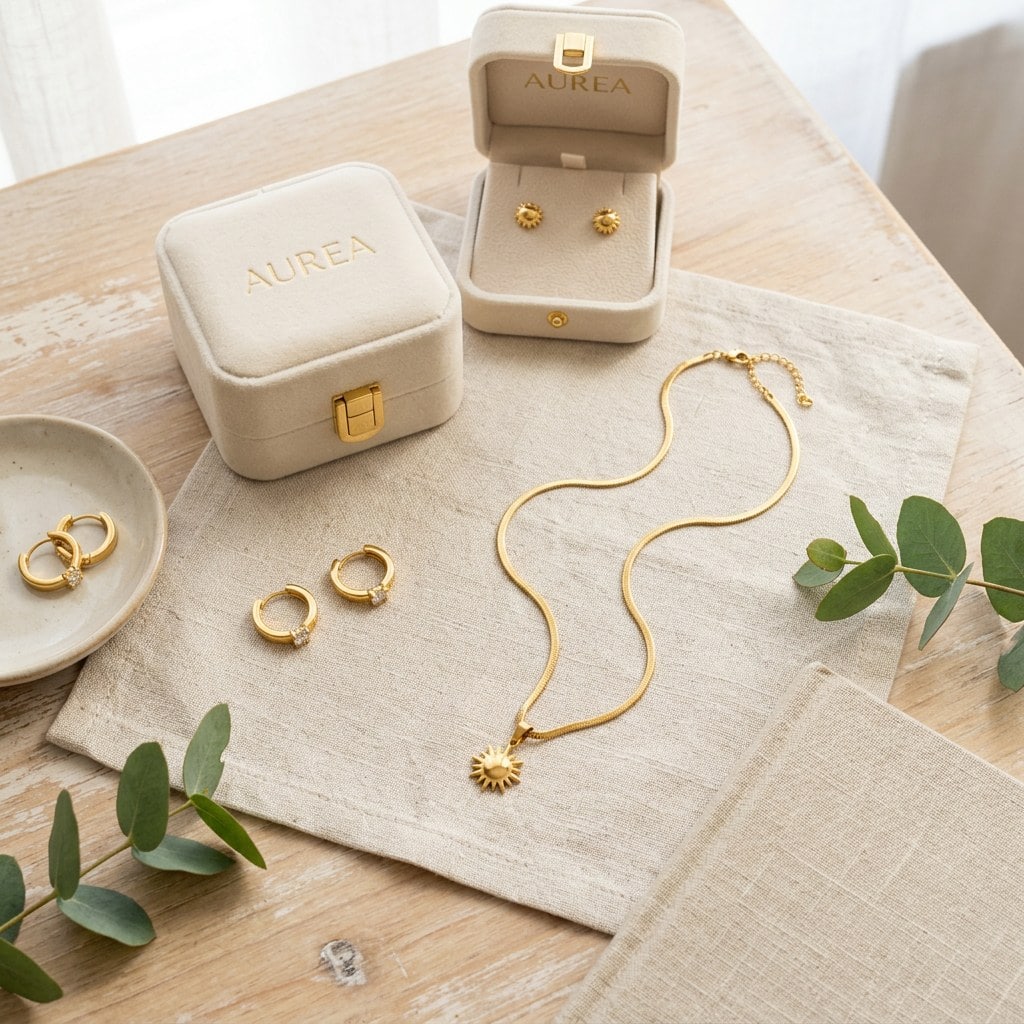
Gift sets, boutique assortments, and private-label retail programs often compete through color, packaging, and shelf price. 304 is usually enough for decorative or PVD-led pieces, while 316L can be reserved for selected contact-heavy hero items.
Design Review Before 316L
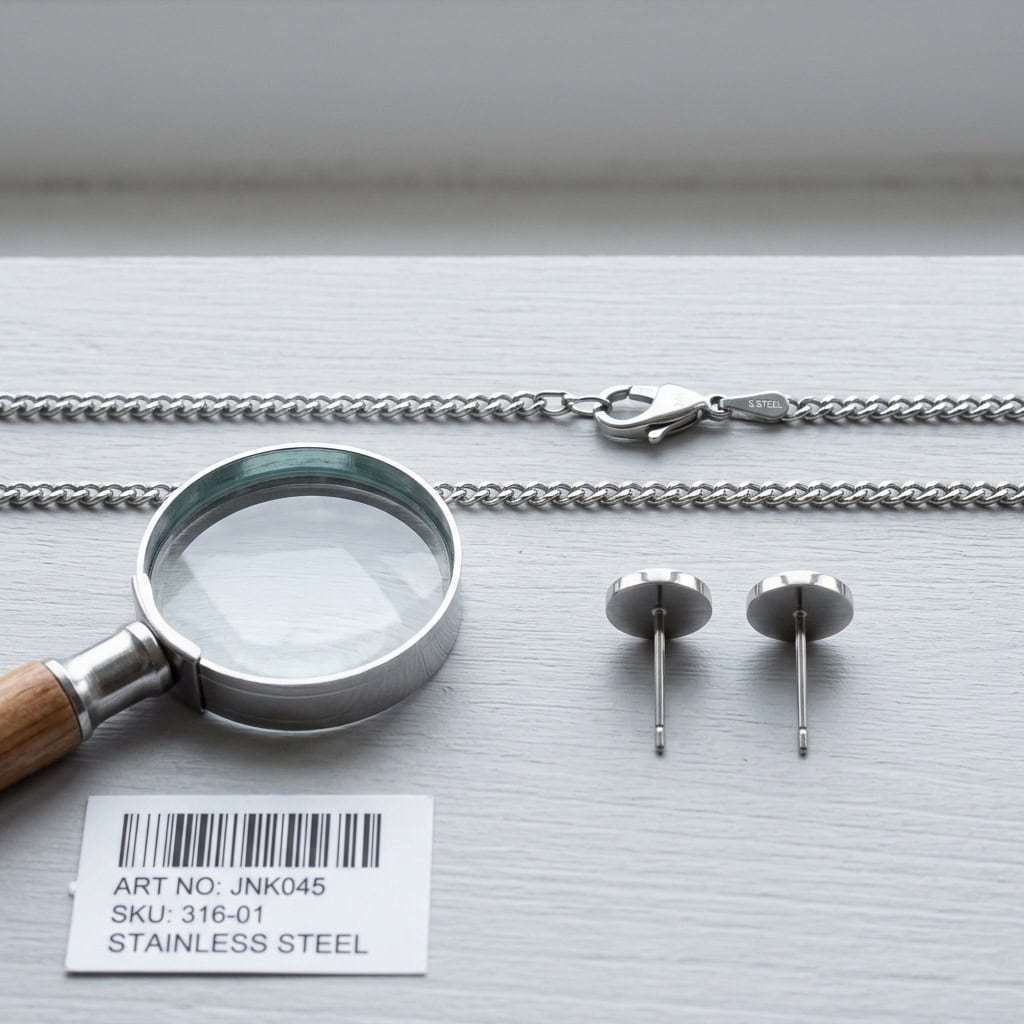
Deep relief, narrow cut-outs, dense stone seats, thin bridges, tight inner curves, and small welded joints can make 316L harder to justify. Chicolink may recommend 304, adjust hidden geometry, or use 316L only where the product promise needs it.
PVD Finish Control Logic
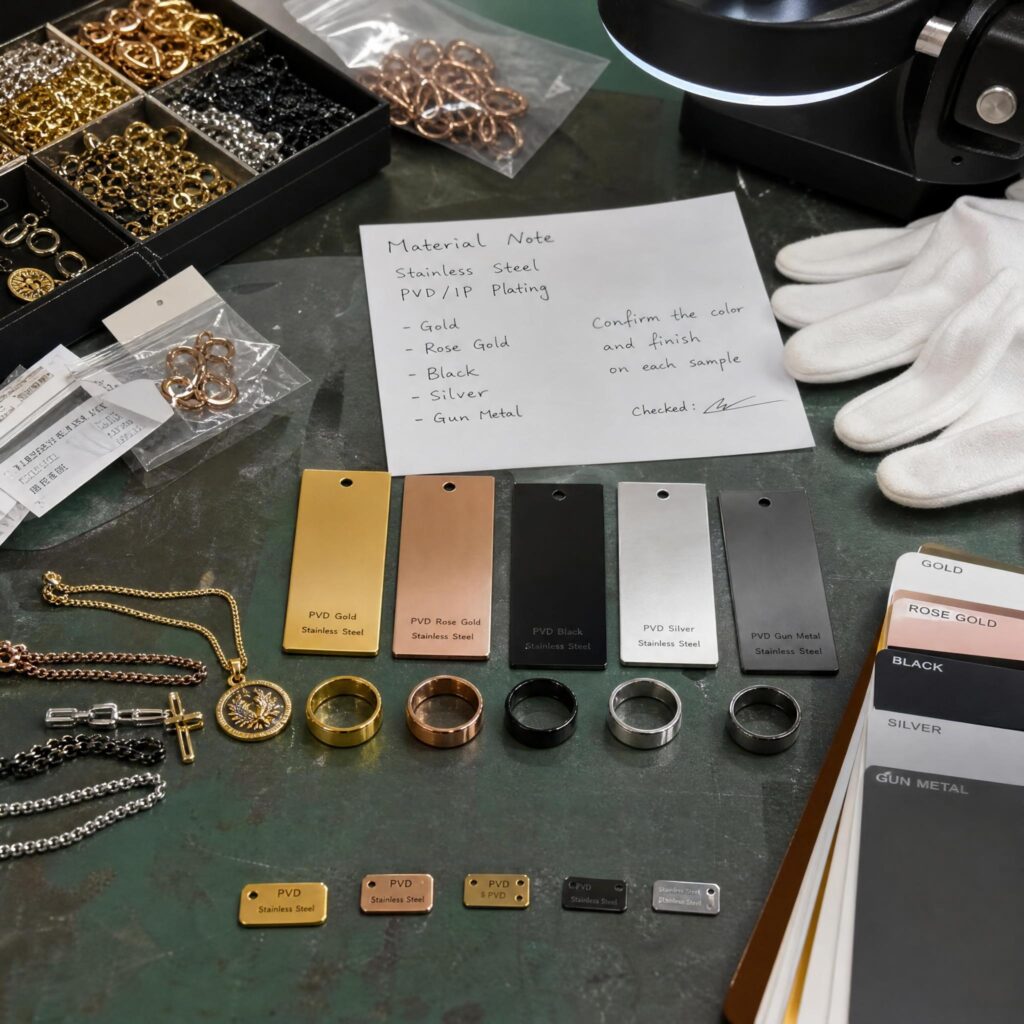
PVD performance depends on substrate stability. 304 improves coating consistency and reduces defect rate in production, while 316L is reserved for higher-wear applications. Chicolink evaluates yield, color consistency, and wear risk before final material selection.
Nickel Release Files Matter More Than Alloy Names Alone
Chicolink treats skin-contact discussion as a product-version and testing-file question. Both 304 and 316L include nickel in the alloy system, and the practical market question is actual release from the finished jewelry surface. Our team reviews contact area, finish route, approved sample, target market, and available test files before supporting product-page or packaging wording.
Review Item | Why It Matters | Chicolink Support |
Actual grade wording | Market terms such as surgical steel or titanium steel can be unclear without the real grade. | Chicolink can use grade wording such as 304 stainless steel or 316L stainless steel and review material-provider files when needed. |
Nickel-release logic | Alloy nickel content and finished-product nickel release are not the same discussion. EU-style review focuses on release from the final product surface. | Nickel-release testing support can be discussed for skin-contact or EU-facing projects when the product version and surface route are clear. |
Contact-area review | Ear posts, ring interiors, bracelet inner surfaces, and necklace chains carry different skin-contact pressure. | Our team checks where the jewelry touches skin and whether the material, polish, coating, and test scope match the market claim. |
EU-style thresholds | Piercing posts and long skin-contact items can require stricter nickel-release review under methods such as EN 1811. | Chicolink can discuss relevant nickel-release files, including the common EU references of 0.2 ug/cm2/week for piercing posts and 0.5 ug/cm2/week for long skin-contact items. |
Lead and cadmium | Coatings, solder, low-cost connectors, painted details, resin, or mixed components may need separate review. | Lead/cadmium related testing-file support can be reviewed according to product structure, component list, and target market. |
REACH, Prop 65, and RoHS | Marketplaces, EU retail, California programs, gift buyers, and distributors may ask for restricted-substance support. | REACH-related, California Proposition 65 related, and RoHS-related files can be discussed by SKU, batch, market, and product version. |
How Chicolink Reviews A 304 Or 316L Jewelry Request
Chicolink turns the material question into a production-ready review. Our team starts with the product design, target price, contact area, finish, market, quantity, and documentation need, then compares a 304 production route with a 316L upgrade route where needed.
Send The Style And Structure
Share the jewelry type, product photo, drawing, sample reference, size, weight target, wearing position, and any complex details such as cut-outs, stone seats, hinges, links, welded joints, or tight inner curves. These details affect whether 304 or 316L is realistic for sampling.
Review The 304 Route
For many earrings, pendants, chains, bracelets, charms, and decorative styles, Chicolink first reviews a 304 route because it usually supports better processability and cost control. This gives the project a practical baseline.
Review The 316L Route
316L is reviewed when the product is daily-wear, closer-contact, sweat or humidity exposed, premium, or documentation-sensitive. Our team checks whether that value justifies the added material and processing pressure.
Confirm Sample, Files, And Price
Steel color, mirror polish, brushed finish, matte finish, PVD color, engraving, stone setting, and enamel can change the production route. Chicolink confirms sample feasibility, material records, testing-file requests, QC checkpoints, packaging checks, and quote impact before bulk production.
304 vs 316L Stainless Steel Jewelry Questions
Chicolink answers the final material questions that usually come before sampling, quotation, and market-file review.
For most stainless steel jewelry, should I choose 304 or 316L?
For many commercial jewelry programs, Chicolink usually recommends starting with 304. It is easier to process, more cost controlled, and suitable for many decorative, fashion, gift, and trend-led styles.
Is 316L harder to process than 304?
In many jewelry production routes, yes. Actual hardness depends on supply condition and processing history, but 316L often behaves as the tougher route for cutting, machining, bending, polishing, and detailed assembly.
Is 316L worth the extra 15%-20% cost?
It depends on the SKU. 316L becomes easier to justify for daily-wear basics, closer-contact items, sweat or humidity exposure, premium collections, or channels that ask for stronger material documentation.
Are 304 and 316L safe for skin-contact jewelry?
Both grades include nickel in their alloy system, so the better discussion is nickel release from the finished jewelry surface. Chicolink reviews contact area, polish quality, surface coating, approved sample, target market, and nickel-release testing files.
What should I send Chicolink for a material recommendation?
Send the product photo or drawing, jewelry type, size, target quantity, preferred material grade, finish color, target market, packaging needs, testing-file request, launch timing, and any complex structure details.