A Trusted China stainless steel jewelry Manufacturer Since 2007!

Jewelry Packaging Solutions

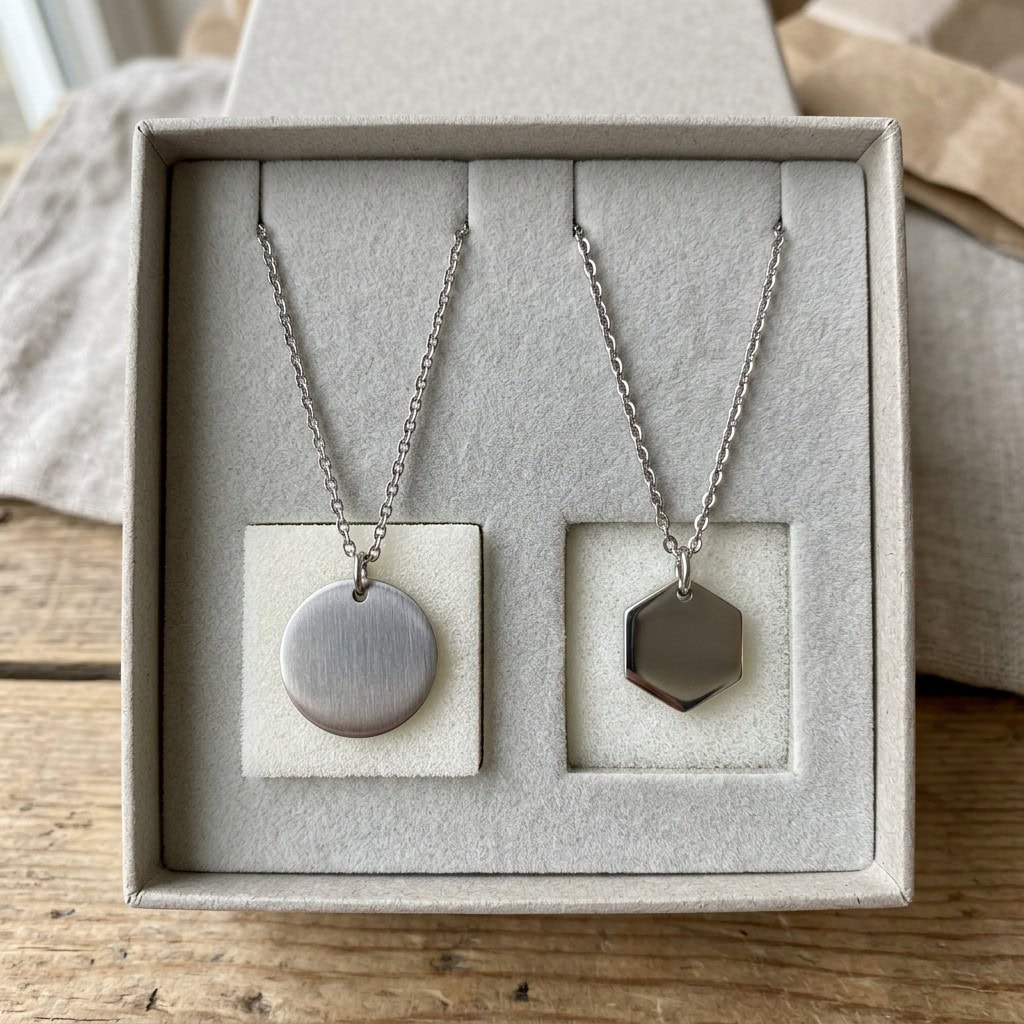
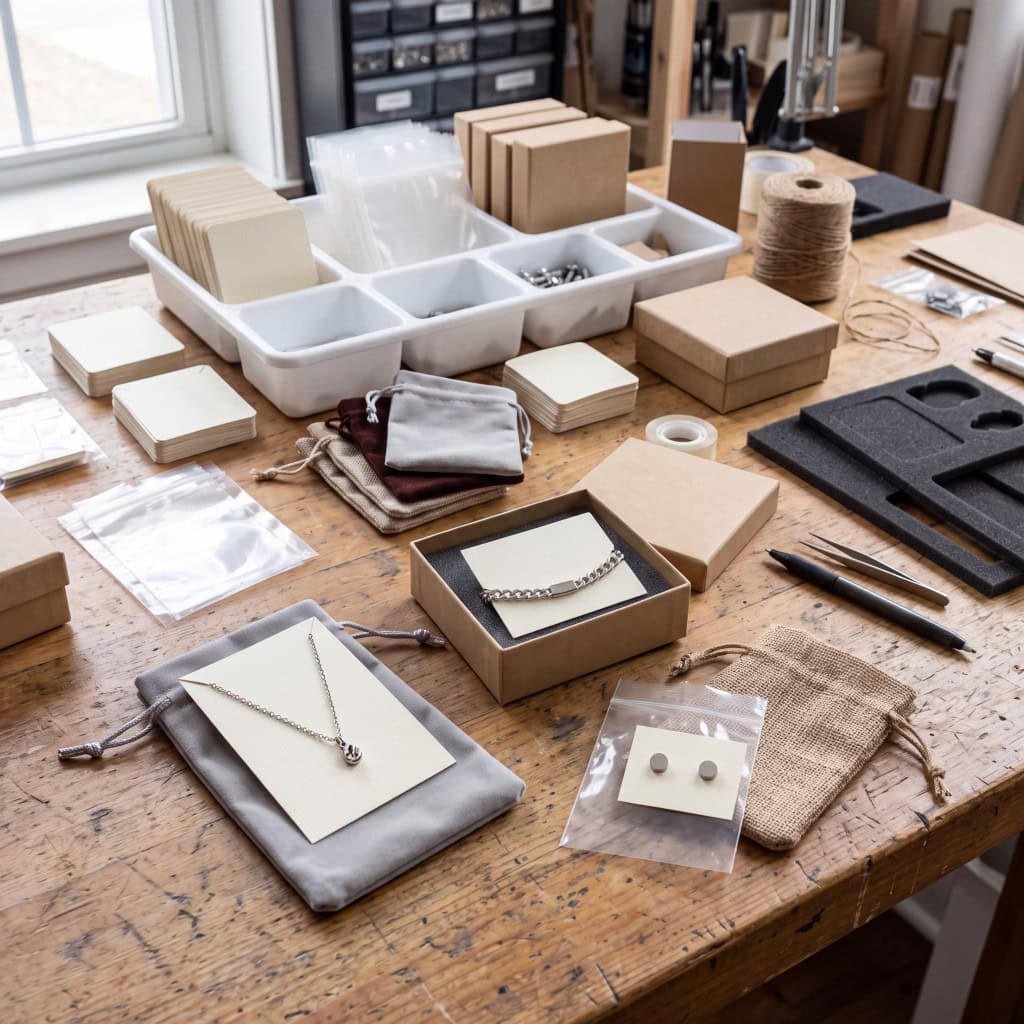
Chicolink provides jewelry packaging solutions for stainless steel jewelry brands, Amazon and marketplace sellers, Shopify/DTC brands, boutiques, retail programs, distributors, gift companies, and private label projects. We help match cards, bags, pouches, boxes, labels, inserts, and carton marks to the product style, sales channel, presentation goal, and repeat-order plan.
  • Packaging accuracy reference: >=99.8% after line clearance.
  • Barcode label/data mismatch target: <=100 PPM.
  • 20-person packaging team supports packing and label checks.
  • Packaging scope covers cards, bags, pouches, boxes, labels, inserts, and carton marks.
Jewelry Packaging Solutions By Sales Scenario

Different sales channels change what good packaging should feel like. A marketplace order needs clean labels and easy receiving, a retail order needs shelf presence, and a gift order needs a better opening experience. Chicolink helps customers turn those differences into packaging choices that fit the product, the channel, and the repeat-order plan.

Marketplace Sellers

Amazon and marketplace orders often need single-unit packing, FNSKU labels, warning labels, set marking, carton labels, and package-level verification. Chicolink connects approved label data with SKU separation, barcode scan checks, carton photos, and packaging records; high-risk FNSKU orders can use 100% scan checks, with barcode label/data mismatch controlled against the <=100 PPM reference.

DTC Jewelry Brands

Shopify and direct-to-consumer brands usually need packaging that feels brand-owned while staying repeatable for future launches. Chicolink can coordinate logo cards, gift boxes, pouches, care cards, inserts, product photos, barcode areas, and packaging version records, including card gsm, pouch fabric gsm, box size, logo method, insert size, and approved color file.

Retail Programs

Retail and chain-store packaging needs shelf display, hang-card strength, barcode readability, carton marks, and pre-shelf checking. Chicolink supports 300-450 gsm display cards, reinforced hang holes, 8-12 mm hole-to-edge margin as a starting reference, label placement review, carton data, and pre-shipment photo confirmation before store allocation.

Gift Projects

Gift companies and seasonal programs need accurate names, dates, logos, story cards, care cards, and event-ready carton separation. Chicolink uses sample approval, packaging version control, text checks, 2-10 mm product-to-box gap review, 76 cm drop-reference checks where needed, and set-packing records to reduce missing-item, wrong-text, and presentation problems.

Distributor Orders

Distributor packaging needs clear SKU files, carton labels, mixed-SKU packing, destination marks, and reorder records across multiple sales channels. Chicolink keeps hot-selling SKU files, packaging versions, packing matrix, carton labels, carton weight, carton number, destination, and shipment photos connected for repeat supply.

Private Label Lines

Private label packaging combines product fit, brand color, print method, logo placement, barcode area, material data, and carton marks. Chicolink reviews packaging artwork, product-to-package fit, label version, packaging BOM, component weight, material category, supplier declaration request, and approved samples before bulk packing.

How Chicolink Chooses The Right Packaging Route

A jewelry package should not start from a generic box list. It starts from the way the product moves, catches light, touches the card, fits the buyer’s hand, and enters the warehouse. Chicolink compares product structure, sales channel, display effect, barcode route, carton handling, and repeat-order records before choosing a card, bag, pouch, box, insert, or combined packaging route.

Start With The Jewelry Structure

Chains, studs, rings, bangles, pendants, and gift sets do not behave the same inside a package. Chicolink reviews product length, width, thickness, weight, ring size, chain length, stone height, clasp position, and surface sensitivity before selecting the first package direction. A thin chain may need a 2-4 mm card slot and tie points, while a box route may need a 2-10 mm product-to-box gap with fixation instead of loose movement.

Match The Sales Channel

Marketplace packaging often needs a flat readable label area, warning text, and scan checks; retail packaging needs stronger card display, clean hanging, and a visible barcode; gift packaging needs better opening, insert position, and box protection. Where no fixed template is supplied, Chicolink can use practical starting references such as a 30 x 20 mm small-unit label area, 8-12 mm hang-hole margin, 3-5 mm bag-label edge margin, and retailer-approved carton label size before sample approval.

Keep The Route Repeatable

The approved package should be easy to repeat, not just attractive in one sample photo. Chicolink records card gsm, bag thickness, pouch fabric gsm, box outer and inner size, tray fit, logo method, label file, carton mark, component material, and packaging version so reorder packaging does not drift when the same SKU returns months later.

Jewelry Card Packaging For Retail And Online Orders
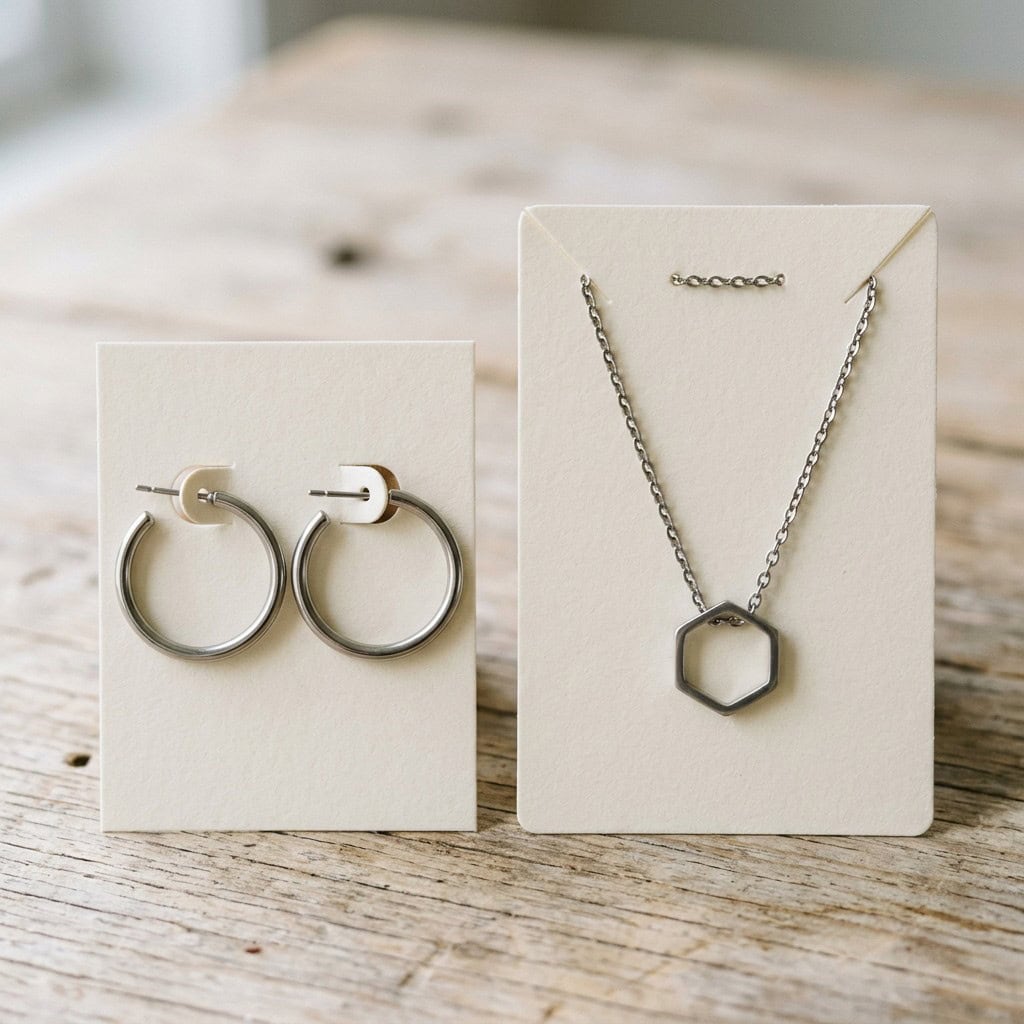
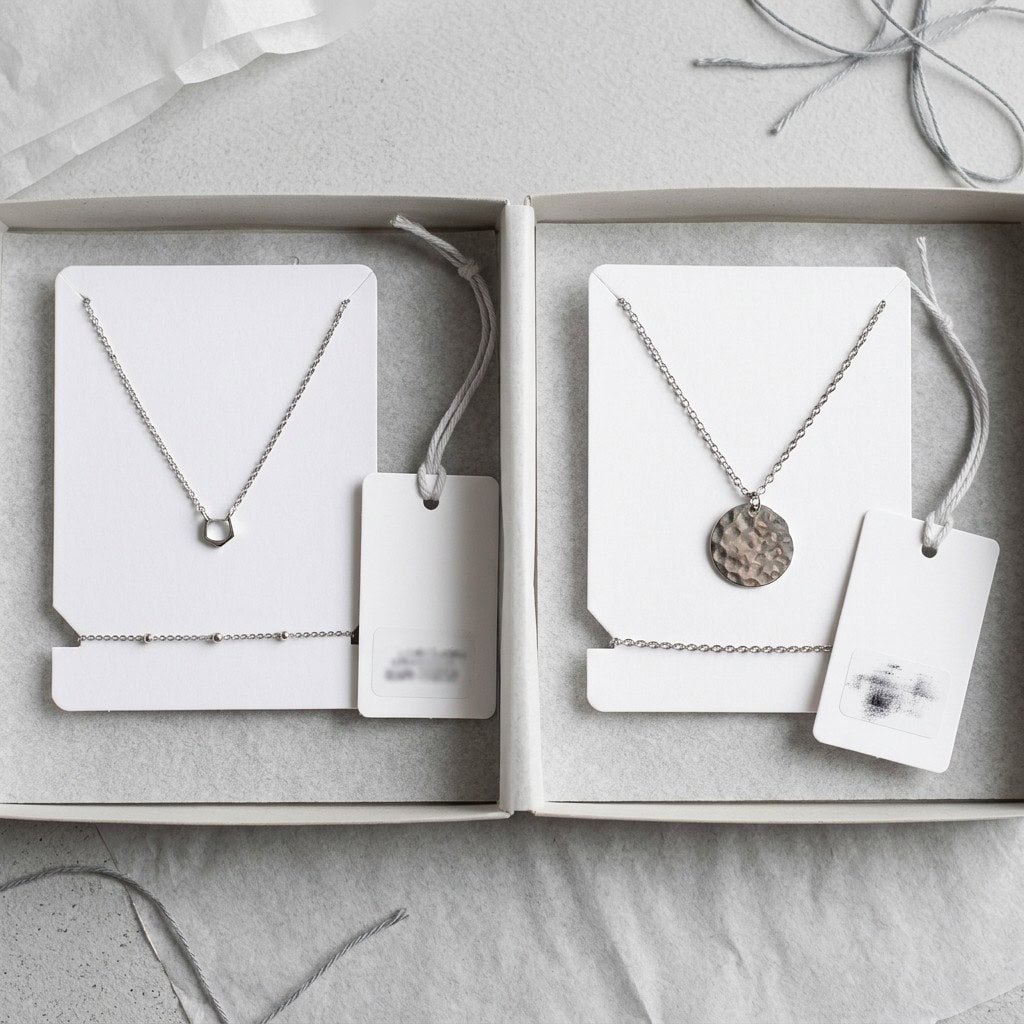
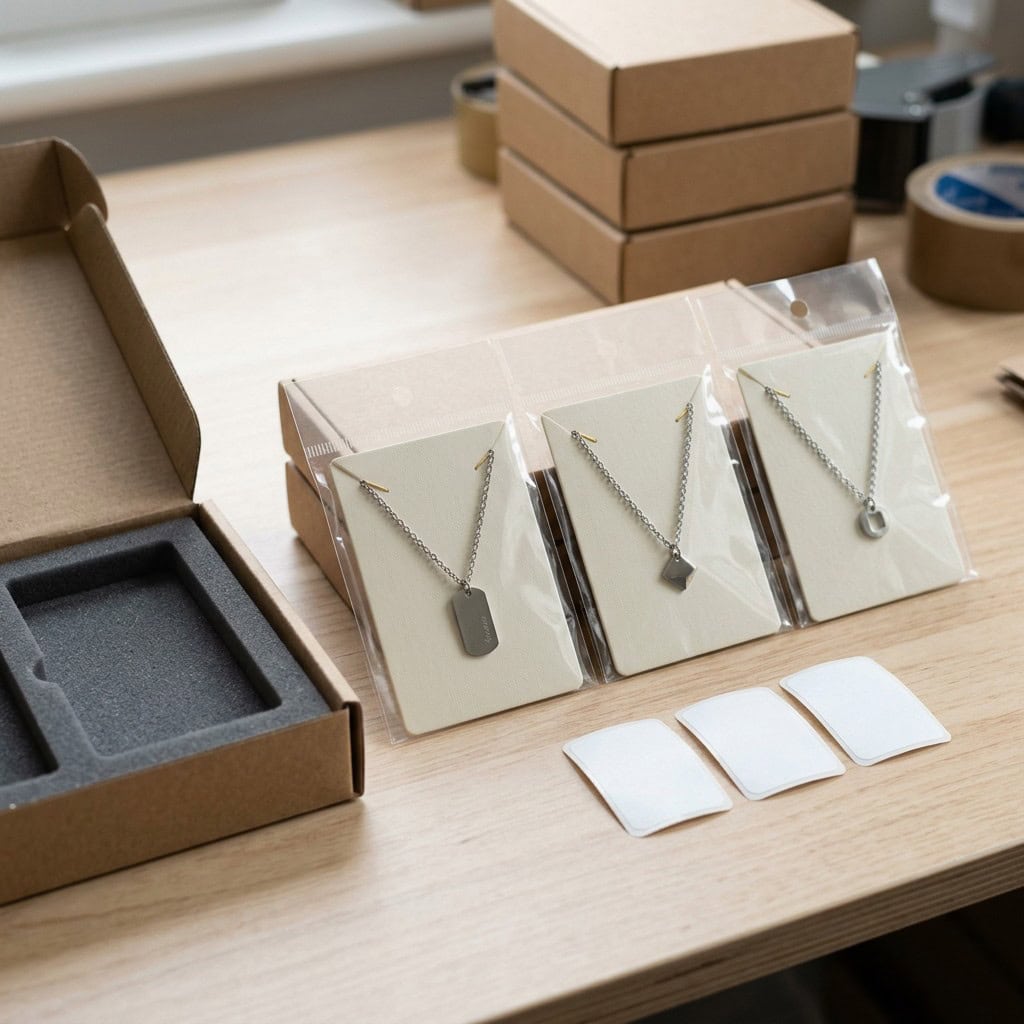
Jewelry cards do more than hold the product in place. They also decide whether earrings look balanced, whether a necklace hangs straight, and whether a bracelet or gift set feels neat on first glance. Chicolink checks paper strength, hole position, barcode area, logo area, product orientation, bag fit, and carton handling before bulk packing.

Card Structure

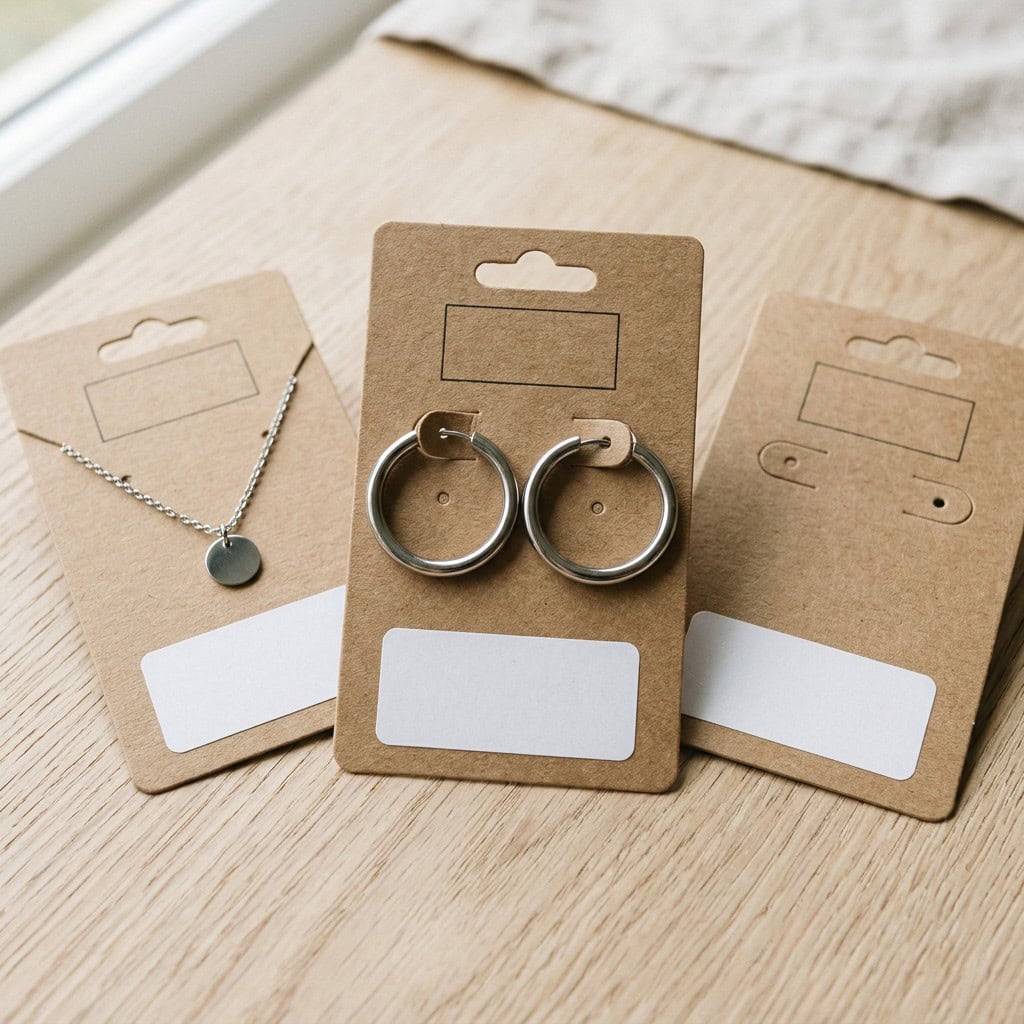
Jewelry card stock can start from 300-450 gsm. Common starting sizes can include 50 x 70 mm or 55 x 85 mm for earrings, 60 x 90 mm or 70 x 100 mm for necklaces, and 70 x 100 mm or 80 x 120 mm for bracelets or larger sets. Heavier necklaces, bangles, charms, or gift sets may need stronger card, lamination, reinforced hanging holes, or different fixation so the product does not bend the card during transport and shelf display.

Product Fixing

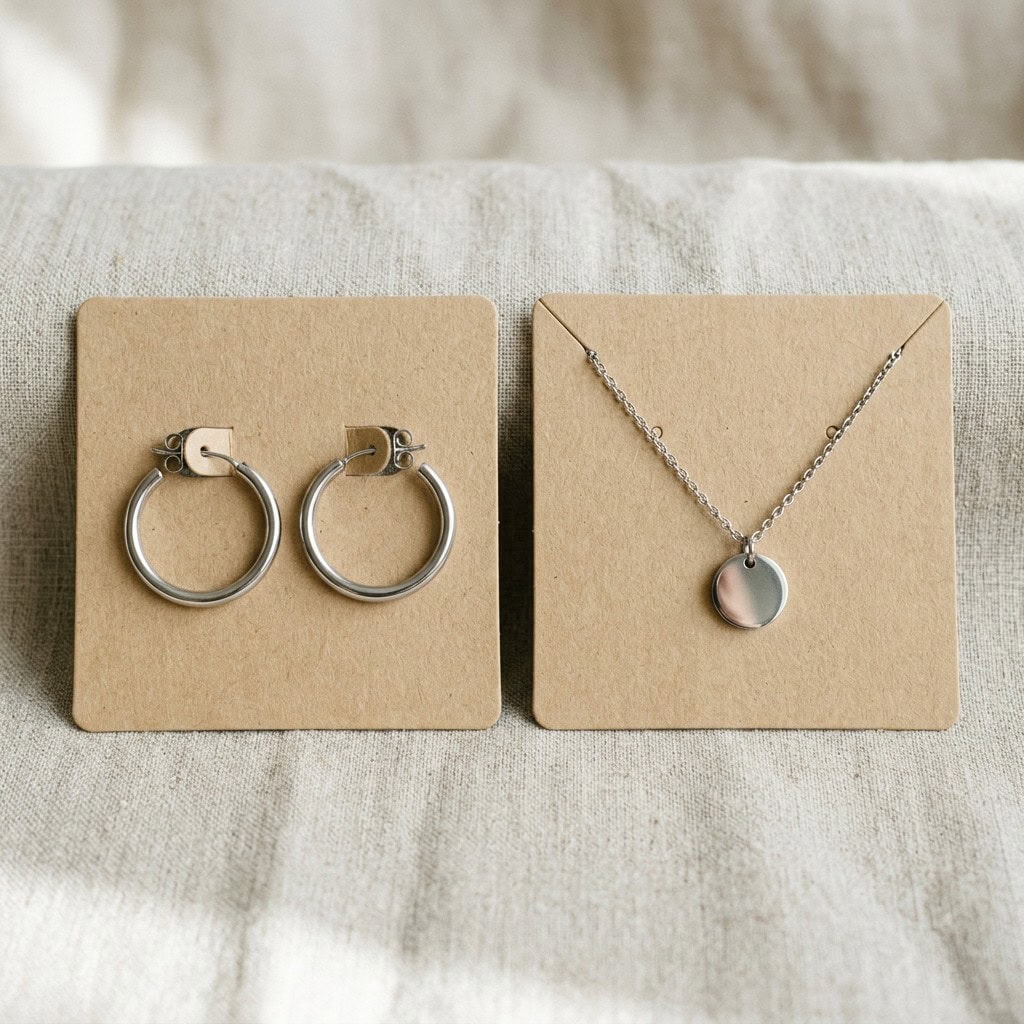
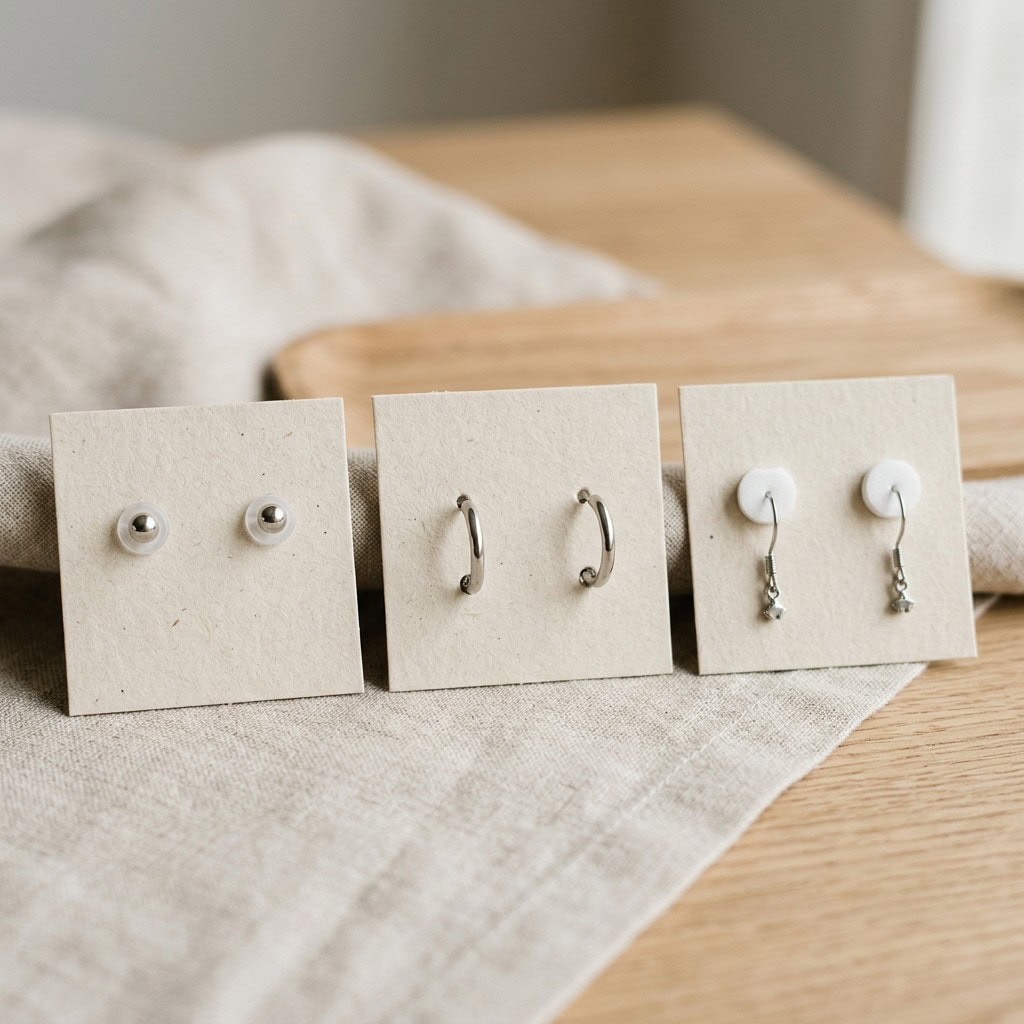
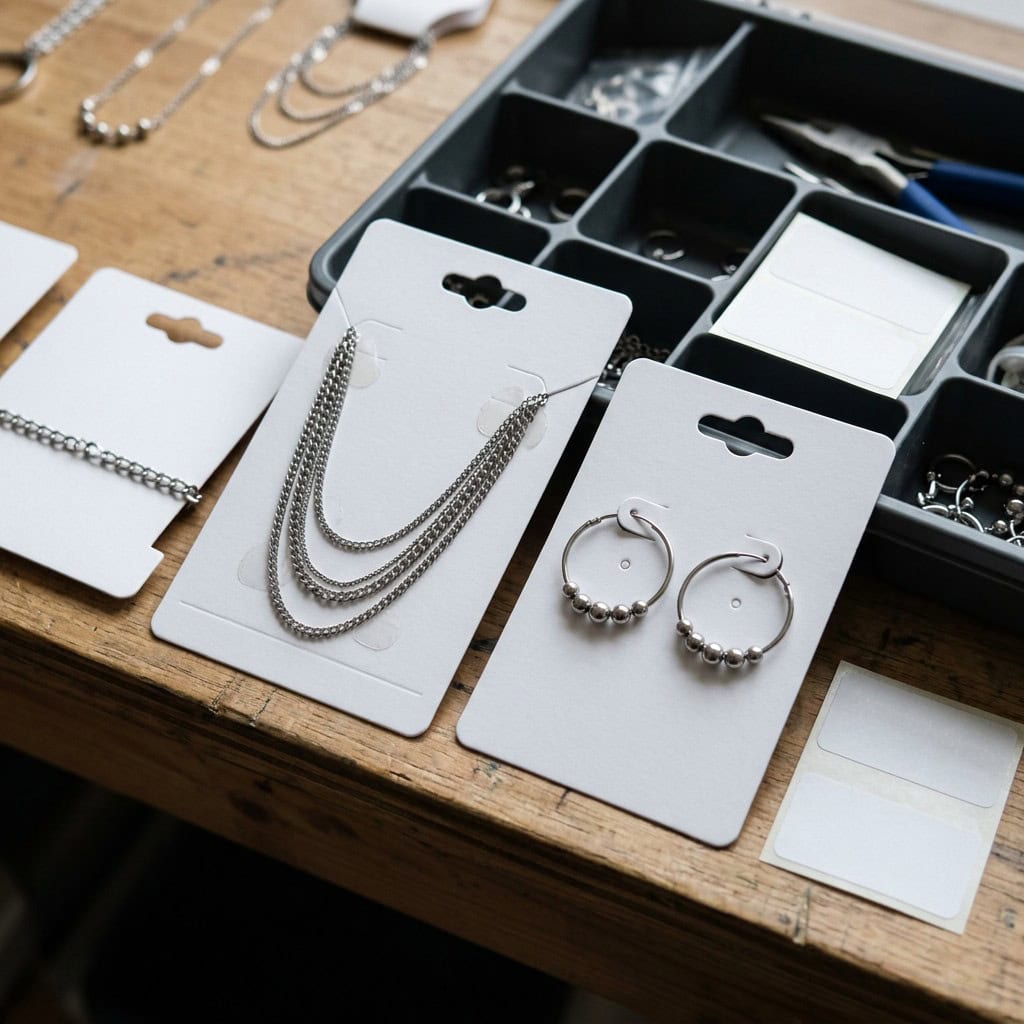
Card layout can include earring holes, necklace slots, bracelet ties, ring slots, elastic fixing, hang holes, barcode area, care icons, and logo placement. Starting references can use 1.2-1.8 mm earring post holes, 12-25 mm pair-hole spacing depending on earring width, 2-4 mm necklace slot width, and 8-12 mm hang-hole margin from the card edge. Chicolink checks whether the product sits flat, faces the correct direction, and stays stable after the card enters an OPP bag or retail display.

Printing And Label Area

Pantone or CMYK color, foil stamping, UV coating, lamination, warning text, material note, QR code, and barcode area should be checked on the real card size. A small unit label can reserve a 30 x 20 mm flat area as a starting reference, while barcode quiet zones should follow the barcode type, platform file, or GS1 requirement. Barcode placement should avoid folds, strong reflections, punched holes, and areas covered by the jewelry.

OPP, PE, And Anti-Oxidation Bags

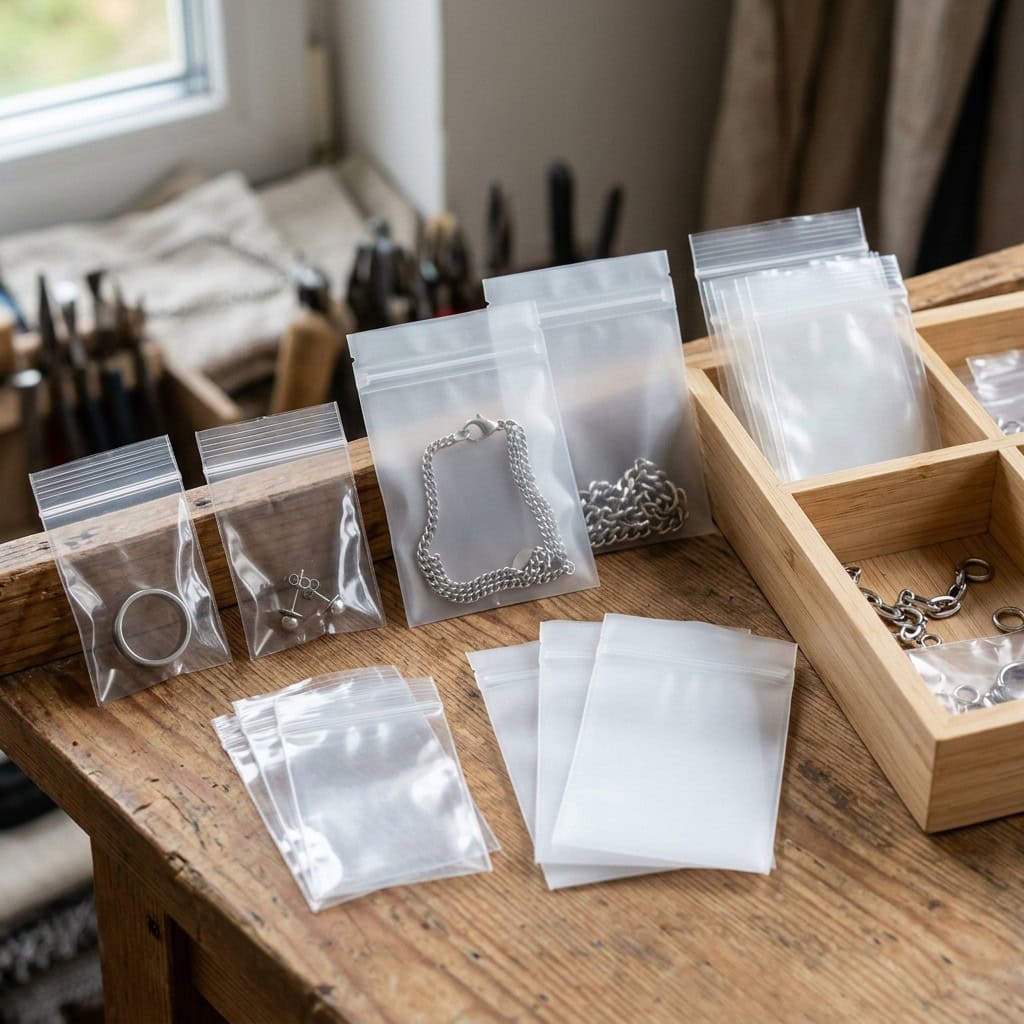
Single-unit bagging is often the simplest package, but it still shapes how clean, safe, and readable the jewelry feels when it reaches the buyer. Chicolink can prepare OPP bags, PE bags, anti-oxidation bags, warning labels, barcode labels, and FNSKU labels according to the product finish, channel, and storage route.

Bag Thickness And Size

OPP/PE bag thickness can start from 0.04-0.08 mm. For single-unit jewelry, the bag can start from product flat width +10-20 mm and product height +15-30 mm so the item can enter smoothly without sliding too much. Mirror-polished, sharp-edge, heavier, stone-set, or highly reflective products may need stronger bag material, protective film, inner card fixing, or a pouch/box upgrade instead of relying only on a thin bag.

Seal And Label Placement

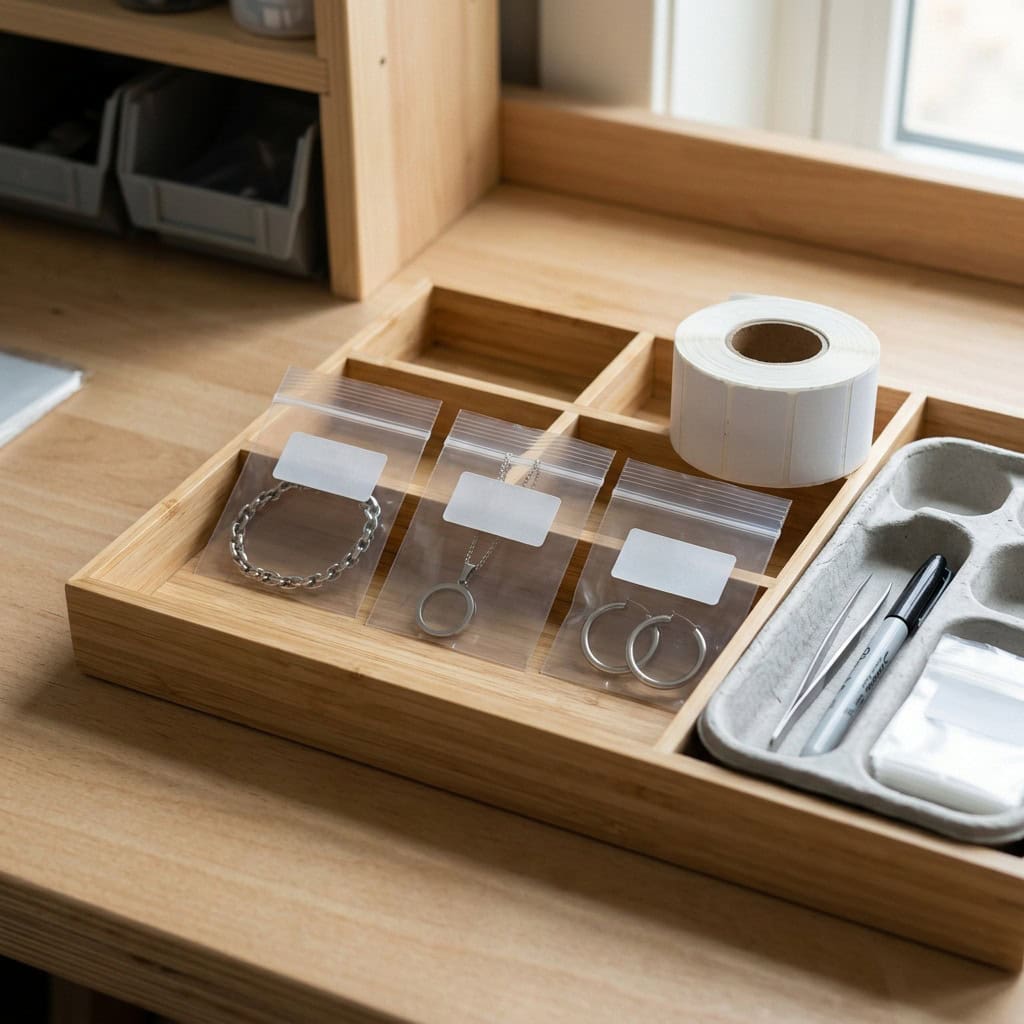
Bag design can include resealable adhesive, heat seal, ventilation hole, warning text, suffocation warning, barcode label, FNSKU label, SKU label, and product orientation. Label placement can keep a 3-5 mm margin from the seal, fold, and edge, and reserve a flat readable area instead of placing the code over chains, stones, or curved surfaces. Labels should stay readable after the jewelry is packed, not only before packing.
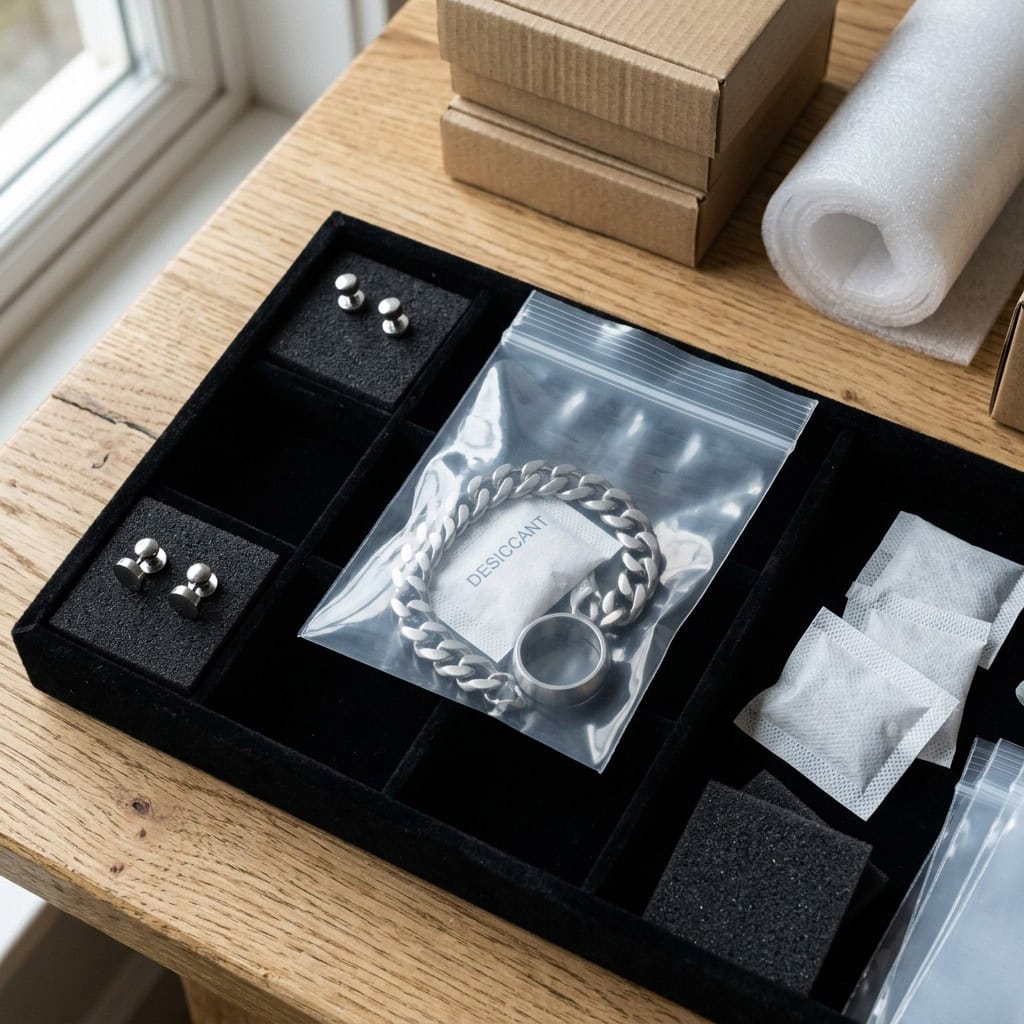
Anti-Oxidation And Moisture

Anti-oxidation bags can support high-humidity routes, long-distance transport, warehouse storage, or surface-sensitive jewelry. This works best with dry product cleaning, sealed packing, carton-level humidity awareness, and desiccant planning by packaging volume and storage period; 1-2 g desiccant can be used as a small inner-pack reference when the route and product finish require moisture control.

Velvet Pouch Packaging For Brand And Gift Orders
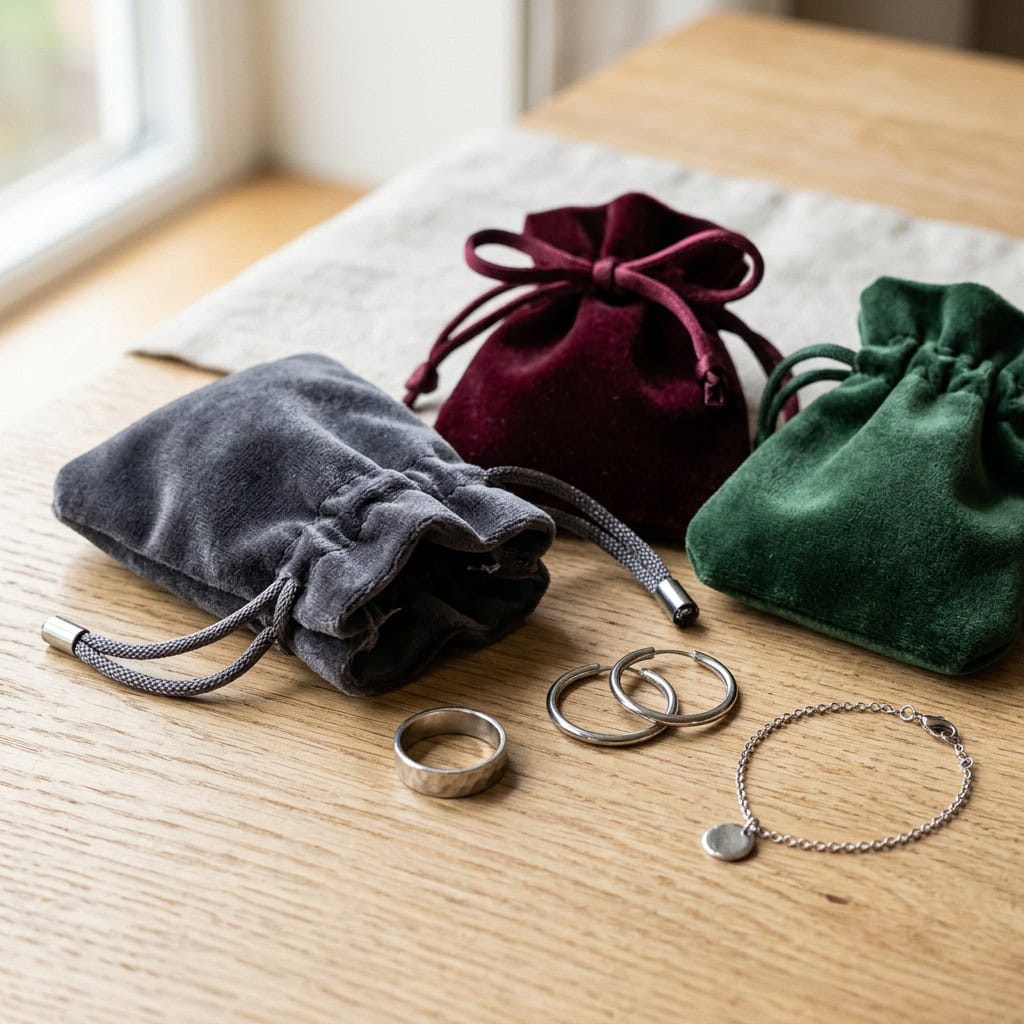
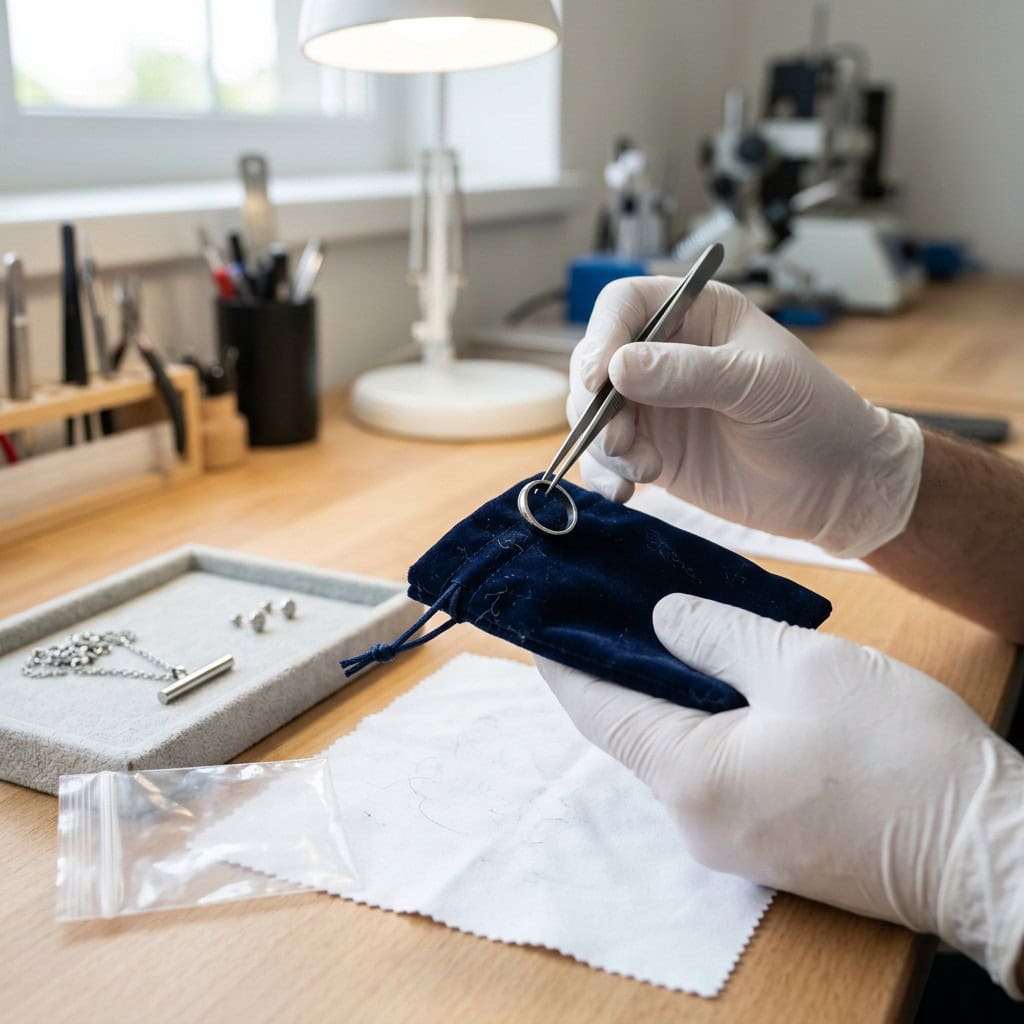
Velvet pouches are often chosen when the package should feel more giftable and less industrial. The pouch still has to match the jewelry, stay closed in transit, and avoid rubbing or color transfer. Chicolink reviews pouch fabric, size, drawstring, logo method, color transfer risk, and product fit before bulk pouch packing.

Fabric And Size

Velvet pouch fabric can use a 100-250 gsm reference. Pouch size should match product length, pendant thickness, bracelet width, ring box use, or gift-set grouping so the product does not fold, press, or move excessively inside the pouch. A soft pouch can start from product width +20-30 mm and height +25-40 mm; starting sizes can include 70 x 90 mm for rings or small earrings, 90 x 120 mm for necklaces and bracelets, and 120 x 160 mm for larger gift sets, then adjusted by real product size.

Logo And Closure

Logo pouches can use silk screen, foil stamping, woven logo, printed tag, or drawstring color matching. Logo position should normally stay at least 10 mm away from the seam and drawstring channel so the mark does not distort after closing. Pouch drawstring pull reference of 10-15 N can support basic closure review for ordinary jewelry packaging where the pouch needs to stay closed during handling.

Migration And Lint Check

Dark fabric, printed logo ink, flocking, and drawstring dye should be checked before contact with light-color, mirror-polished, or gift-ready jewelry. Chicolink can review lint, rubbing, color transfer, and pouch cleanliness before pouch packaging moves into bulk packing.

Color Box And Gift Box Packaging

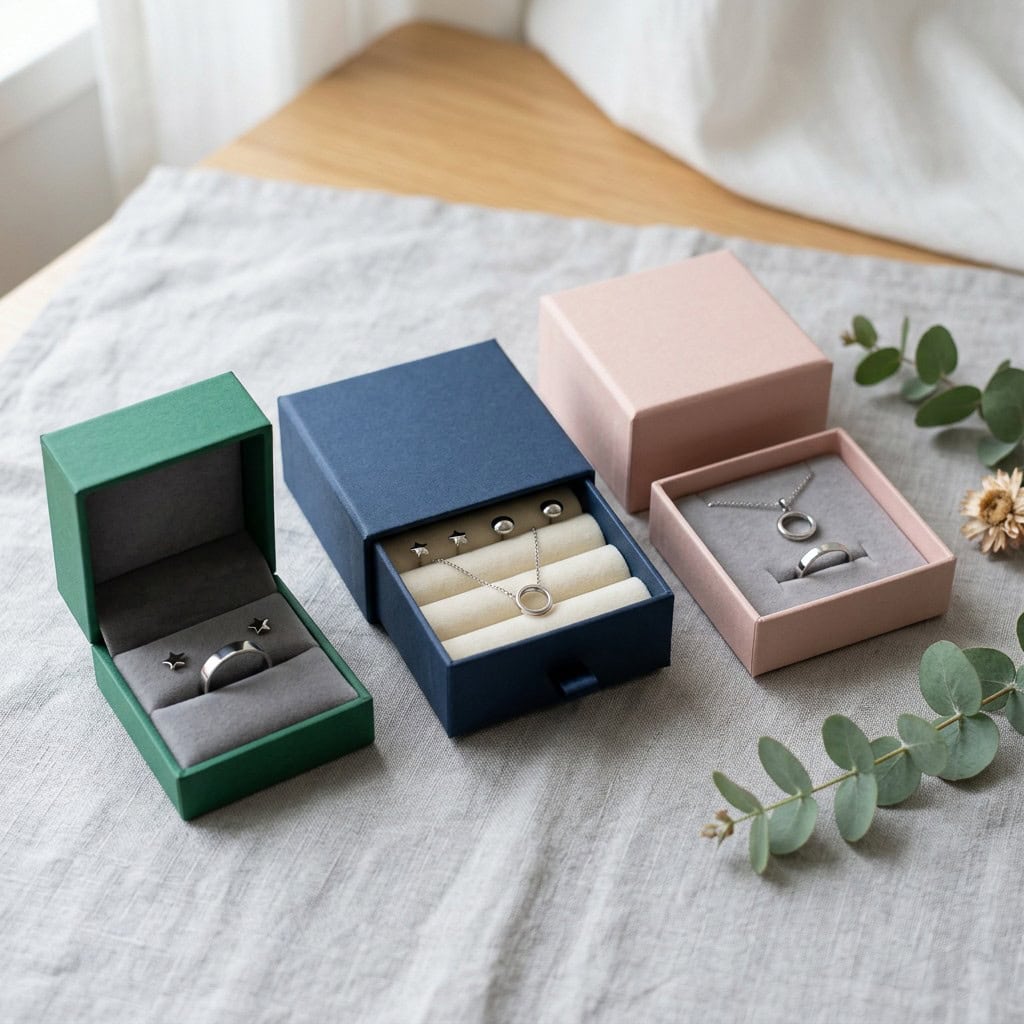
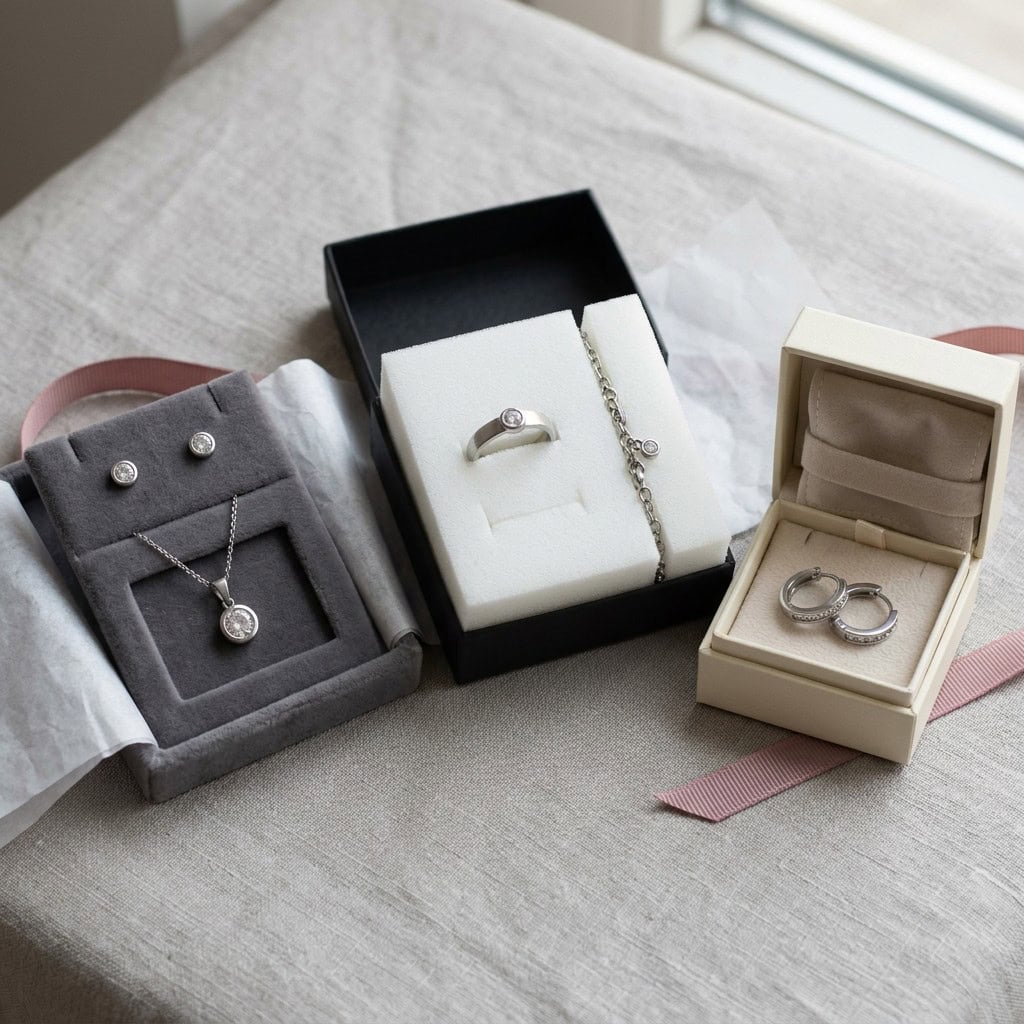
Color boxes and gift boxes are where packaging starts to influence the customer’s first real impression. A box can make a necklace look more premium, a ring feel more gift-ready, or a set look more complete. Chicolink checks box size, paperboard, inner tray, product-to-box gap, logo effect, barcode area, and transport protection before bulk box packing.

Box Structure

Common box routes include paper color box, drawer box, flip box, lid-and-base box, sleeve box, window box, logo box, and inner tray box. Color box dimension tolerance can start from +/-1-2 mm, especially where tray fit, sleeve movement, or barcode label placement matters. Starting box sizes can include 60 x 60 x 35 mm for rings or small earrings, 80 x 80 x 30 mm or 90 x 90 x 35 mm for necklaces, and 90 x 90 x 35 mm or 100 x 100 x 40 mm for bracelets and gift sets.

Product Fit And Insert

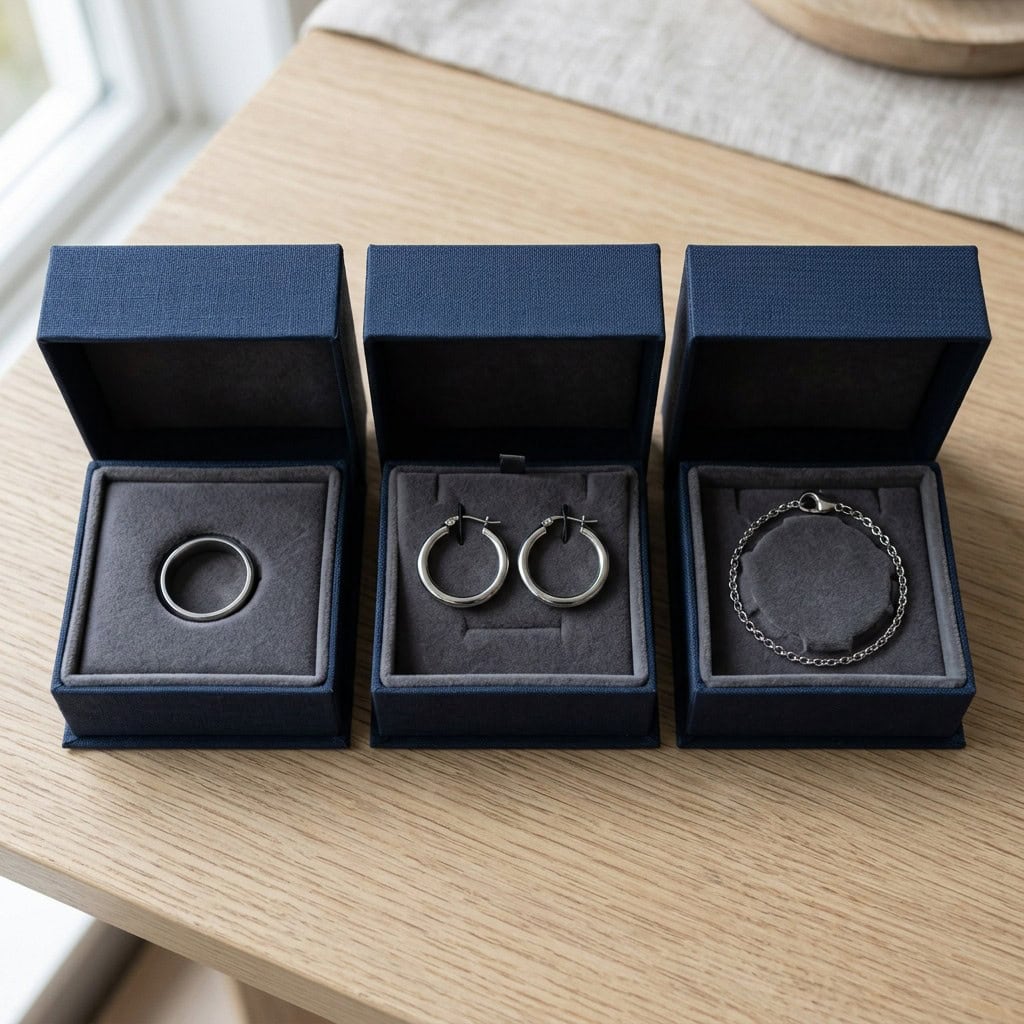
Product-to-box gap can start from 2-10 mm with fixation so polished jewelry, chains, stones, rings, or gift sets do not shake, scratch, or arrive off-center. Inner trays, foam, paper insert, elastic cord, ribbon, or card fixing can be selected by product weight and display angle. Tray recess can start from product thickness +1-3 mm, and visible side movement can be reviewed against a <=3-5 mm light-shake target before approving the box.

Print And Transport Review

Color box artwork can include Pantone or CMYK color, foil stamping, embossing, debossing, lamination, UV coating, QR code, and care text. Gift box or transport drop checks can use a 76 cm reference with faces, edges, and corners as applicable to review box deformation, product damage, and barcode readability.

Cards, Inserts, And Carton Marks

Cards, inserts, and carton marks help the package tell the buyer what the product is and help the warehouse know how to move it. Chicolink connects care wording, brand story, set instructions, barcode data, carton labels, and packing matrix with the approved packaging version.

Care Cards

  • Care cards can include material notes, cleaning guidance, after-sales information, QR codes, social handles, and multilingual text.
  • Card wording should match the product material, target market, and packaging version; 55 x 85 mm and 70 x 100 mm can be used as starting care-card sizes before brand artwork is finalized.
  • Version control prevents old care wording from being packed with a new product line.

Story Inserts

  • Story cards, thank-you cards, campaign cards, promotion cards, and gift notes support DTC and gift packaging.
  • Logo, brand color, paper texture, card size, and insert position should be reviewed with the real product.
  • Insert records help repeat seasonal or campaign packaging without artwork confusion.

Set Instructions

  • Gift sets and multi-piece jewelry packs need clear product sequence, set barcode, single-item code, card version, and missing-item checks.
  • Set instructions can reduce wrong combinations when necklaces, earrings, rings, bracelets, or personalized cards are packed together; the packing matrix can record set code, component SKU, quantity, package type, pouch/box position, and weight window.
  • First-piece packing confirms the actual set before bulk line packing.

Carton Marks

  • Carton marks can include PO number, SKU, quantity, carton number, destination, barcode, country, and handling marks.
  • Mixed-SKU orders need carton-level separation, packing matrix, label version control, and carton photos; carton labels can use 100 x 75 mm or the retailer/platform template as a starting label area.
  • Carton labels support warehouse receiving, retailer allocation, FBA preparation, and repeat-order traceability.

Retail And Ecommerce Label Control

A good label keeps the package readable for the warehouse and trustworthy for the buyer. Chicolink connects SKU data, FNSKU, UPC/EAN/GTIN, internal barcode, set code, carton label, scan check, and packaging record so the label stays useful after packing, receiving, and reordering.

SKU Labels

  • SKU labels identify product, color, size, packaging version, and order line.
  • Chicolink checks product-to-SKU matching before packing and during carton audit.
  • Label data should come from approved master data rather than repeated manual entry; the label file should carry SKU, barcode value, version date, and package type when the order has multiple packaging routes.

FNSKU Labels

  • FNSKU labels are supported for Amazon and marketplace packaging when the final label file is provided or approved in writing.
  • Single-unit packaging, set marking, warning labels, carton packing, weighing, and station-specific requirements can be connected to the label route.
  • High-risk FNSKU orders can use 100% scan checks.

UPC EAN GTIN

  • UPC, EAN, GTIN, customer internal barcode, and marketplace codes should not be mixed in one uncontrolled file.
  • Linear barcode quality can follow ISO/IEC 15416.
  • Chicolink checks the approved barcode data file before printing and application so ownership, code type, label size, quiet zone, human-readable text, and package placement stay aligned.

QR And DataMatrix

  • QR code or DataMatrix readability can follow ISO/IEC 15415.
  • Chicolink checks scan result after the label is placed on bag, box, card, or curved packaging surface; small 2D codes should be tested on the actual print method, coating, and background color before bulk label printing.
  • Strong reflection, wrinkles, transparent bags, and weak contrast can reduce readability.

Set Packaging

  • Set packaging needs clear single-item code and set-code rules.
  • Product count, color combination, card version, pouch or box placement, and barcode coverage must match the packing matrix.
  • A stable set weight window can support visual or weighing checks when the set composition is repeatable.

Carton Labels

  • Carton labels can include destination, PO, SKU, carton number, quantity, barcode, and logistics marks.
  • First, middle, and last carton scans can support normal orders; full scan checks can be used where receiving accuracy is critical. A 100 x 75 mm carton-label area is a practical starting reference when the customer does not provide a retailer template.
  • Carton photos and label samples help later replenishment orders keep the same route.

Necklace And Chain Packaging Standards
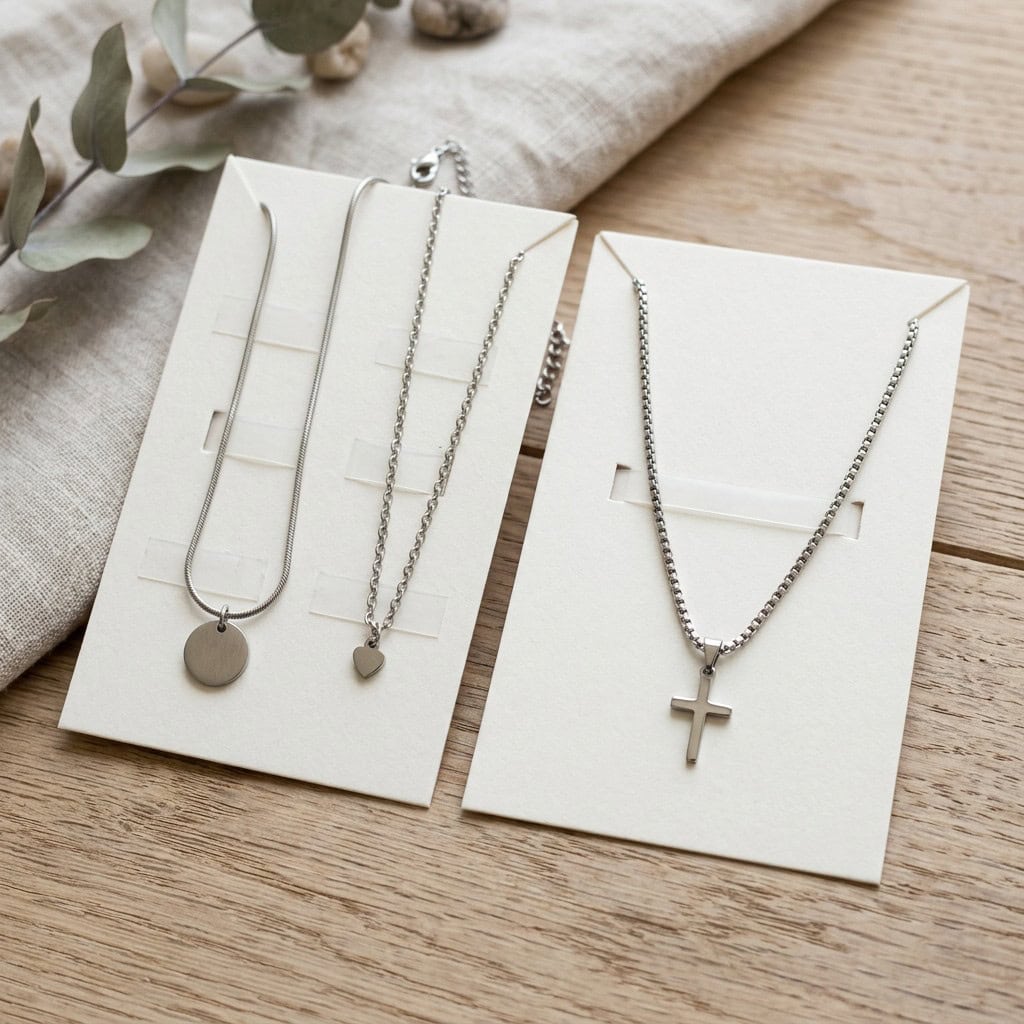
Necklaces and chains are easy to ruin with the wrong package. If the chain twists, the pendant flips, or the clasp scratches the card, the whole presentation feels weaker. Chicolink checks chain length, pendant direction, tail chain position, card slot, tie point, bag size, and box fixation before bulk packing.

Anti-Tangle Fixing

Fine chains, pendant necklaces, Cuban chains, snake chains, and layered necklaces can use card slots, ties, protective film, single-unit bagging, or box insert fixing. Necklace card slots can start from 2-4 mm width, with tie points about 20-35 mm below the top edge when the design needs a clean drop line. Chain tail and clasp position should be fixed so the chain does not cross the pendant face or twist during shipping.

Pendant Protection

Mirror pendants, engraved pendants, stone pendants, memorial pendants, and logo plates need surface separation from chains, cards, and other metal parts. Pendant centering can use a +/-2 mm visual target on retail cards or trays when front-facing display matters. Protective film, pouch separation, anti-oxidation bag, or inner tray support can be used according to finish and product weight.

Label And Set Control

Necklace packaging should keep chain length, pendant style, color, packaging version, and barcode label aligned. Necklace-and-earring sets also need set-code rules so the barcode identifies the full set or each single item according to the approved packing matrix.

Bracelet, Bangle, Stone, And Gift Set Packaging
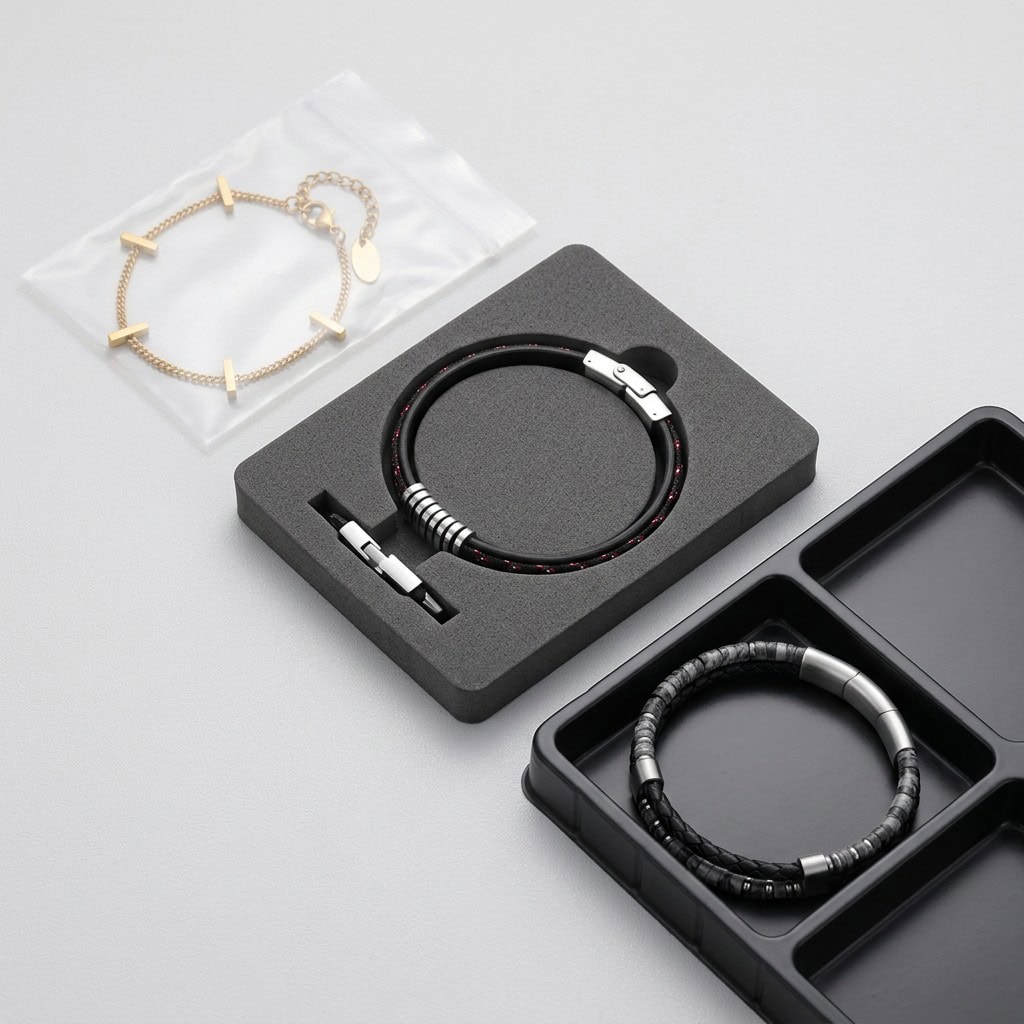
Bracelets, bangles, stone jewelry, and gift sets need packaging that respects how they move, lock, touch, and present together. A bangle box cannot behave like a necklace card, and a gift set needs a different balance than a single bracelet. Chicolink reviews chain movement, charm position, bangle inner diameter, hinge protection, stone pressure, set sequence, and surface separation before bulk packing.

Bracelet Packaging

Chain bracelets, charm bracelets, leather cord bracelets, magnetic clasp bracelets, and couple bracelets need chain control, charm position, clasp protection, and anti-rub packing. Bracelet card tie span can start from 50-80 mm, adjusted by bracelet length and charm position. Stronger card, pouch, or box fixation may be needed when charms, logo plates, or heavier chains are attached.

Bangle Packaging

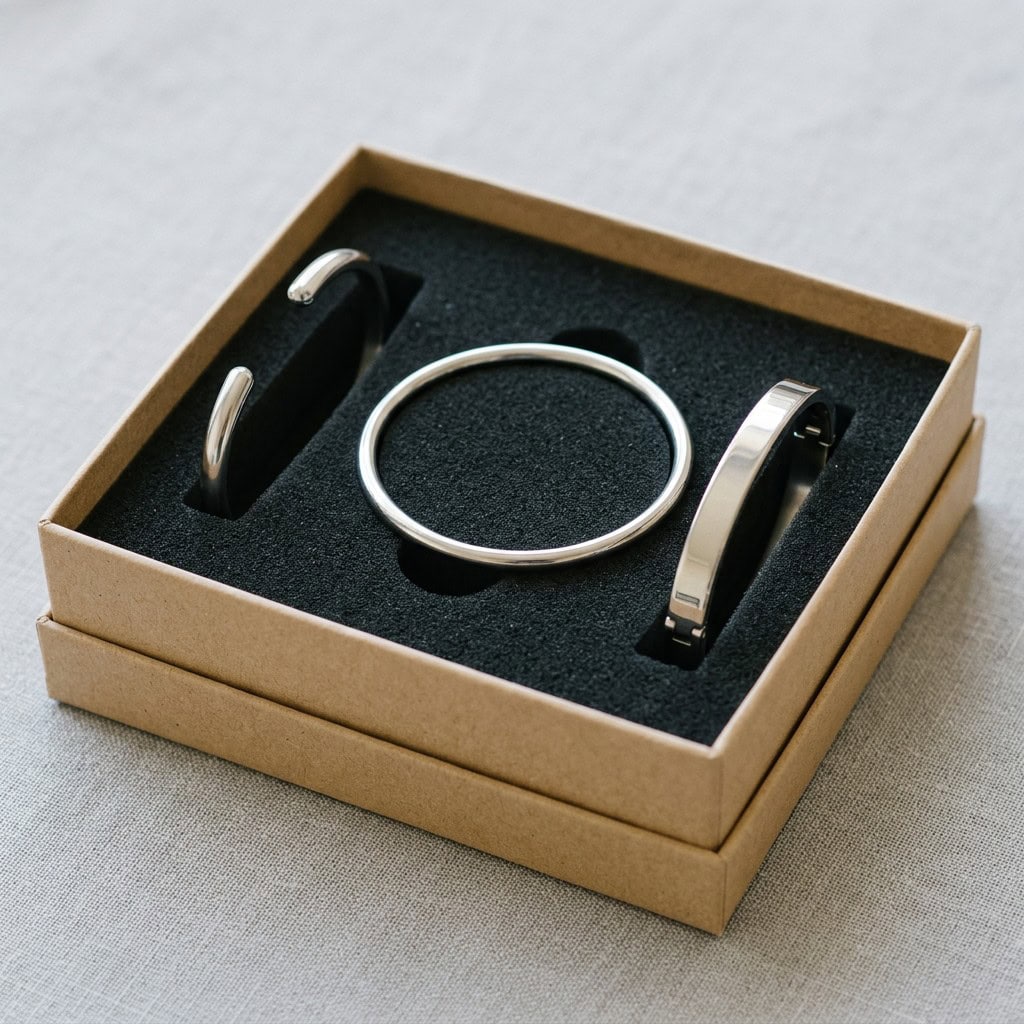
Bangles and cuffs need inner-diameter fit, hinge protection, lock protection, and surface separation. A bangle box or tray can start from product outer diameter +5-10 mm, with 3-5 mm hinge or clasp clearance where the structure is raised. Hinge or clasp areas should not press directly against hard box edges, and the package should keep the bangle stable so polished or plated surfaces do not rub during transport.

Stone And Gift Set Packaging

Stone, pearl, shell, acrylic, resin, enamel, and glass/CZ details need protection against impact, pressure, and color transfer. Raised stone or pearl details can use 3-6 mm top clearance and separate contact surfaces before the box is closed. Gift sets need product sequence, story card, pouch, box, inner tray, and set barcode alignment so missing-item and wrong-combination problems can be reduced.

Earring And Ring Packaging Standards

Earrings and rings need packaging that keeps small details from getting lost. If the pair is reversed, the post is bent, or the ring sits too tightly in the box, the buyer notices immediately. Chicolink checks earring post protection, pair orientation, card hole spacing, ring size labels, inner tray fit, and barcode matching.

Earring Cards And Post Protection

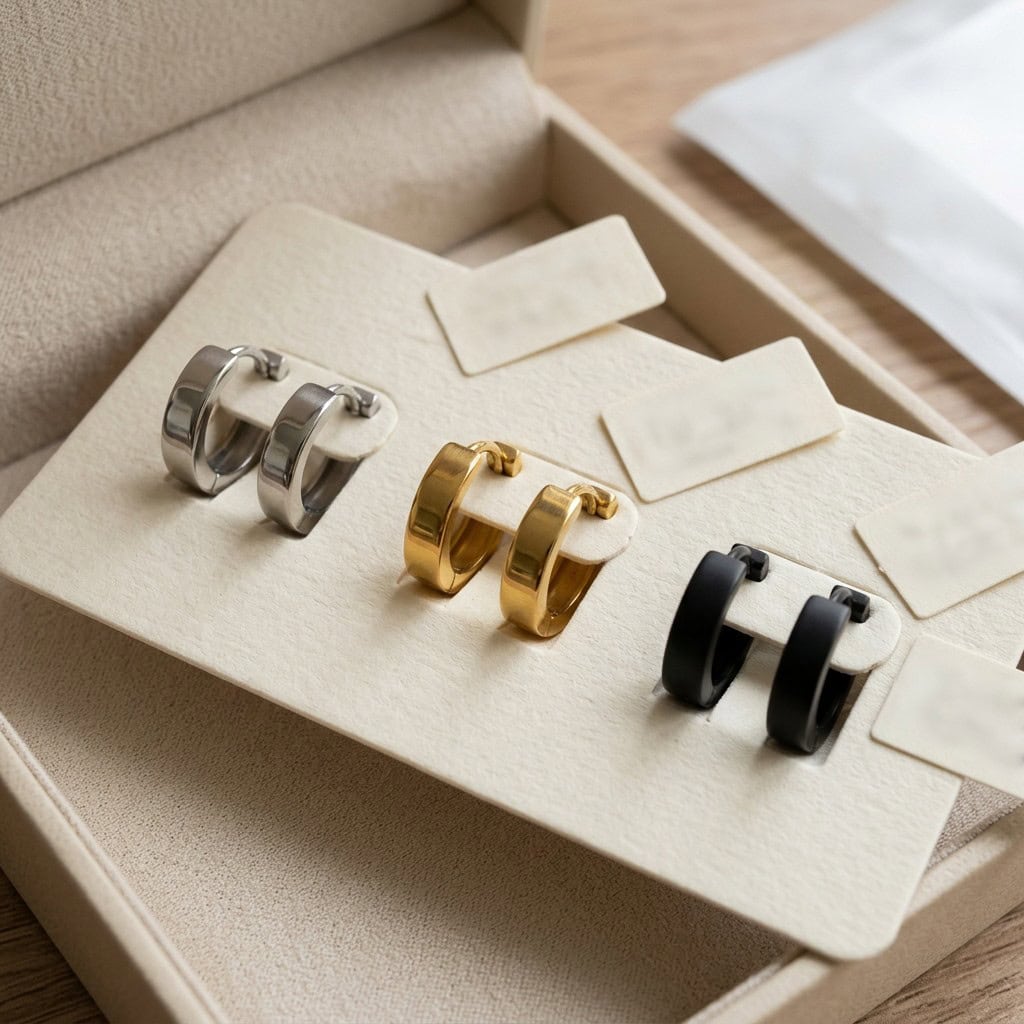
Studs, hoops, huggies, ear cuffs, and drop earrings need card hole spacing, backing fit, hinge clearance, left/right direction, and post protection. Starting references can use 1.2-1.8 mm post holes, 12-25 mm pair-hole spacing, 3-5 mm backing clearance, and 10-15 mm bag clearance for hinged or drop structures. Ear pins can pierce bags or scratch other products if no cap, card fixing, or separated bag route is used.

Pair And Color Matching

Paired earrings should keep direction, color, stone, logo, backing, and barcode matched. Chicolink can use first-piece packing, visual pair checks, and barcode scan checks to reduce left/right mismatch, wrong color pairing, and packaging version errors.

Ring Size And Box Fit

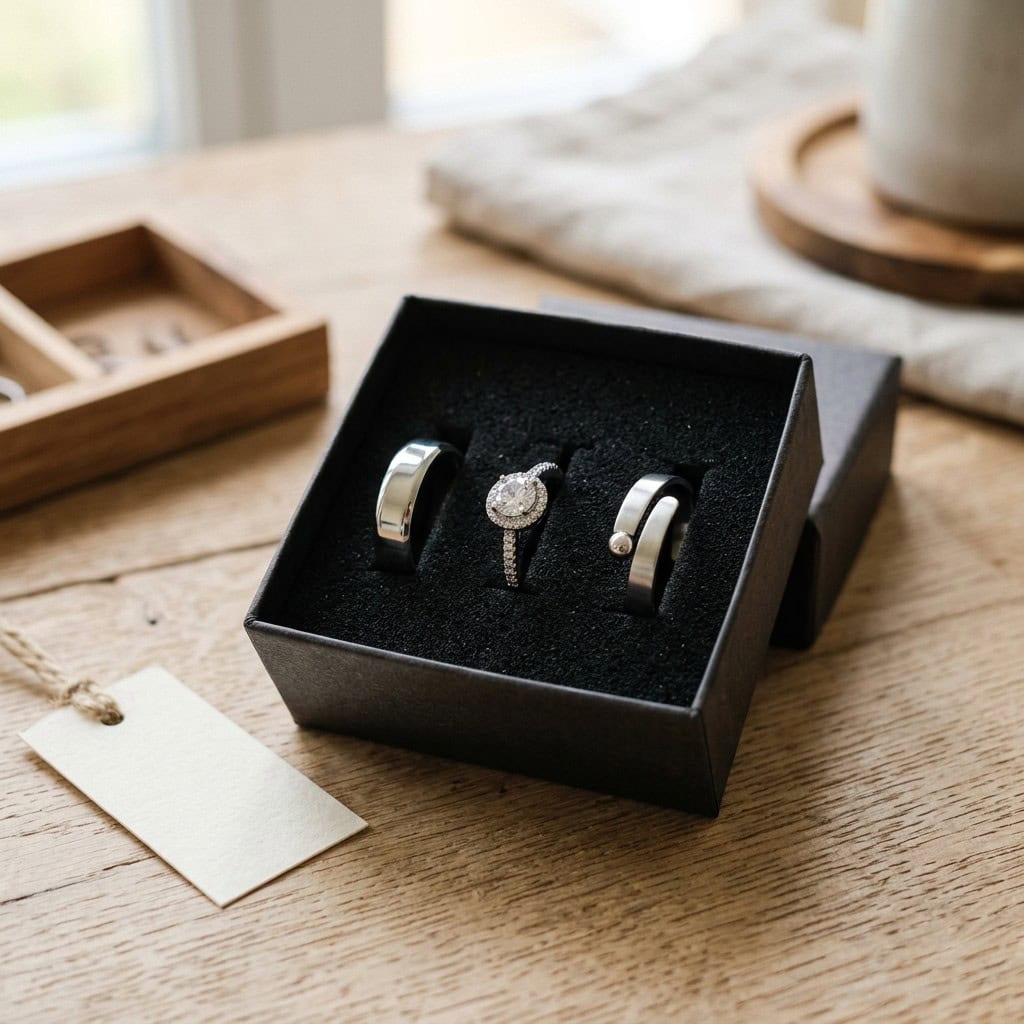
Rings need size separation, size label accuracy, inner-surface protection, and pressure-safe box or pouch fit. Ring foam slots can start from 3-5 mm width depending on ring thickness, with 2-4 mm top clearance before the lid touches the jewelry. Ring boxes, foam slots, pouches, or bags should avoid pressure marks on polished or plated surfaces, especially when multiple sizes are packed in one order.

Packaging Sample And Approval Workflow

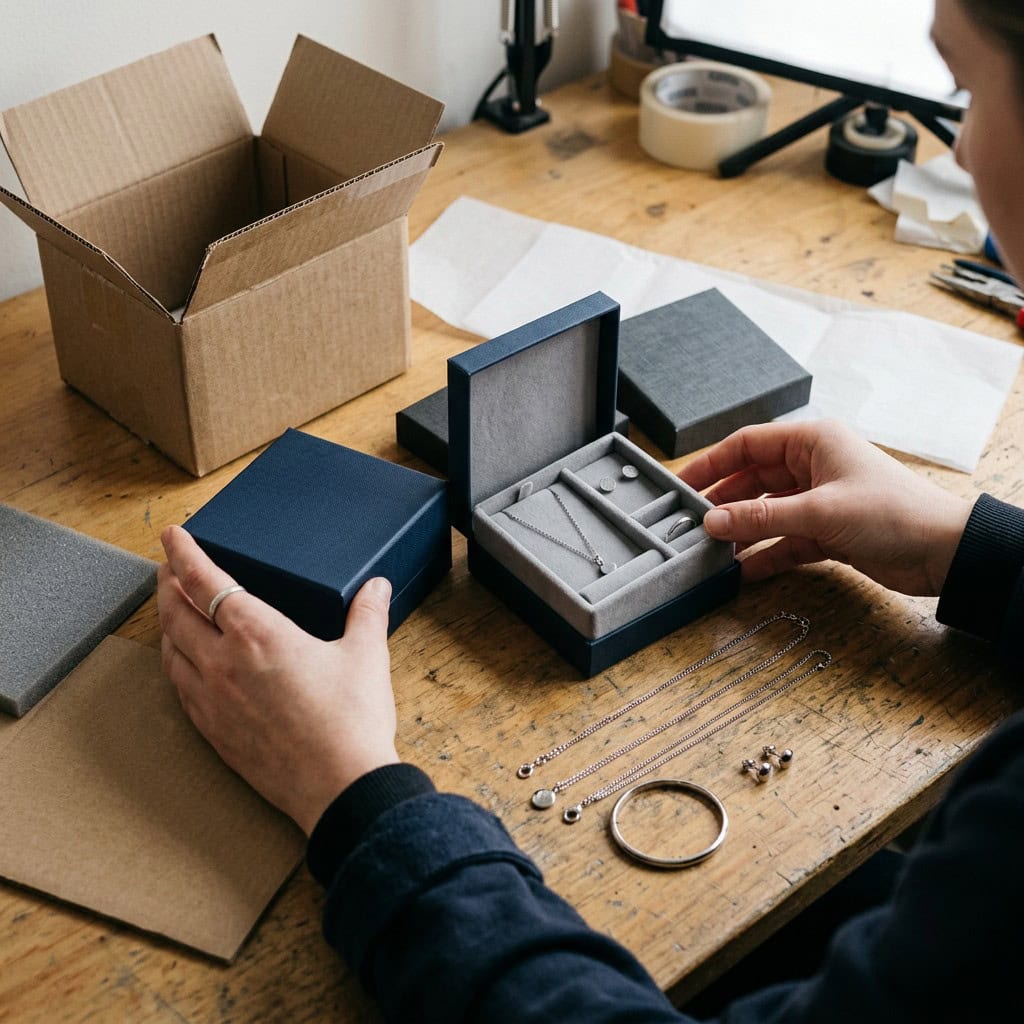
Packaging samples should feel like the real order, not a miniature guess. The sample needs to show how the product sits, how the box opens, where the label lands, and whether the jewelry still looks right after packing. Chicolink checks packaging file, product fit, barcode placement, material, color, logo, label version, carton mark, product protection, scan result, and material data before bulk packaging.

Packaging File Review

Chicolink reviews product list, packaging artwork, logo file, card or box dieline, barcode file, FNSKU file, carton mark, market requirement, material data request, and shipment route. Missing packaging files are clarified before sample preparation, including card gsm, bag thickness, pouch fabric, box size, label size, and component-weight fields when the customer needs material records.

Material And Structure Sample

Packaging samples can check card thickness, bag thickness, pouch fabric, box structure, inner tray, protective film, print effect, and product-to-box gap. The sample should show how the real product sits inside the package, with actual sample size, weight, material, print method, and fit notes recorded for approval. Common approval notes can include 300-450 gsm card stock, 0.04-0.08 mm OPP/PE bag thickness, 100-250 gsm pouch fabric, +/-1-2 mm box-size tolerance, and 2-10 mm product-to-box gap where those routes apply.

Barcode And Label Check

Barcode, QR, FNSKU, SKU label, set code, and carton label should scan after printing and placement. The review can include decoded value, label size, scan result, quiet-zone risk, print contrast, placement photo, and package version. A 30 x 20 mm small-unit label area or 100 x 75 mm carton-label area can be used as a practical reference when the customer has not supplied a fixed template. Transparent bags, folds, curved surfaces, glossy film, or low contrast can affect readability after the product is packed.

First-Piece Packaging

The first piece checks product, color, size, packaging version, label, barcode, carton mark, and set combination before line packing continues. Chicolink uses first-piece confirmation to catch wrong cards, wrong labels, and mixed packaging versions.

Bulk Packing And Records

Bulk packing follows the approved packaging BOM, packing matrix, label version, barcode file, and carton mark. Carton photos, label samples, scan results, material records, and shipment files can be kept for future repeat orders.

Packaging QC And Error Prevention

Packaging mistakes often show up as something small at first: a wrong label, a weak card, a box that shifts, or a set that arrives incomplete. Chicolink uses packaging BOMs, line clearance, first-piece confirmation, barcode checks, label control, carton audit, and shipment records to reduce avoidable packaging errors.

Line Clearance

  • Previous order products, labels, cards, pouches, boxes, inserts, and carton marks are cleared before a new packing order starts.
  • Line clearance reduces old-version packaging and wrong-label carryover.
  • Changeover records help track where packaging mistakes begin.

First-Piece Check

  • The first packed unit compares product, color, size, quantity, card, bag, pouch, box, barcode, and carton mark.
  • Production and QC can sign the first-piece sample before bulk line packing, with photos of front view, back label, side fit, pouch/box opening, and carton mark where the order needs stronger traceability.
  • This check catches version mismatch before hundreds or thousands of units are packed.

Barcode Scan

  • Barcode checks compare decoded value with approved SKU, FNSKU, UPC/EAN, or internal label fields.
  • High-risk multi-SKU orders can use 100% scan checks where receiving accuracy is critical.
  • Barcode label/data mismatch target is <=100 PPM, with shipment-stopping wrong-label target at 0.

Packaging Accuracy

  • Packaging accuracy control reference is >=99.8% for SKU, color, quantity, card, pouch, box, barcode, and carton-mark matching.
  • Packaging BOM and packing matrix keep product, package, label, and carton data aligned.
  • Sample retention and carton photos support repeat-order consistency.

Set And Mixed SKU

  • Mixed SKU and set orders need product count, set code, single-item code, ratio packing, and store allocation checks.
  • Standard weight windows or visual checks can support repeatable set packaging where the component count is stable; the reference window should be approved from the first-piece sample instead of guessed during mass packing.
  • Random carton audit checks SKU, quantity, packaging version, destination, and carton label.

Shipment Release

  • Final packaging release can include carton organization, label sample, scan record, carton photo, packing list, and shipment file.
  • FQC/OQC can combine final surface, size, function, color, logo, stone, packaging, label, quantity, and carton mark checks.
  • Third-party inspection can be coordinated when the order arrangement requires it.

Carton, Transport, And Receiving Preparation
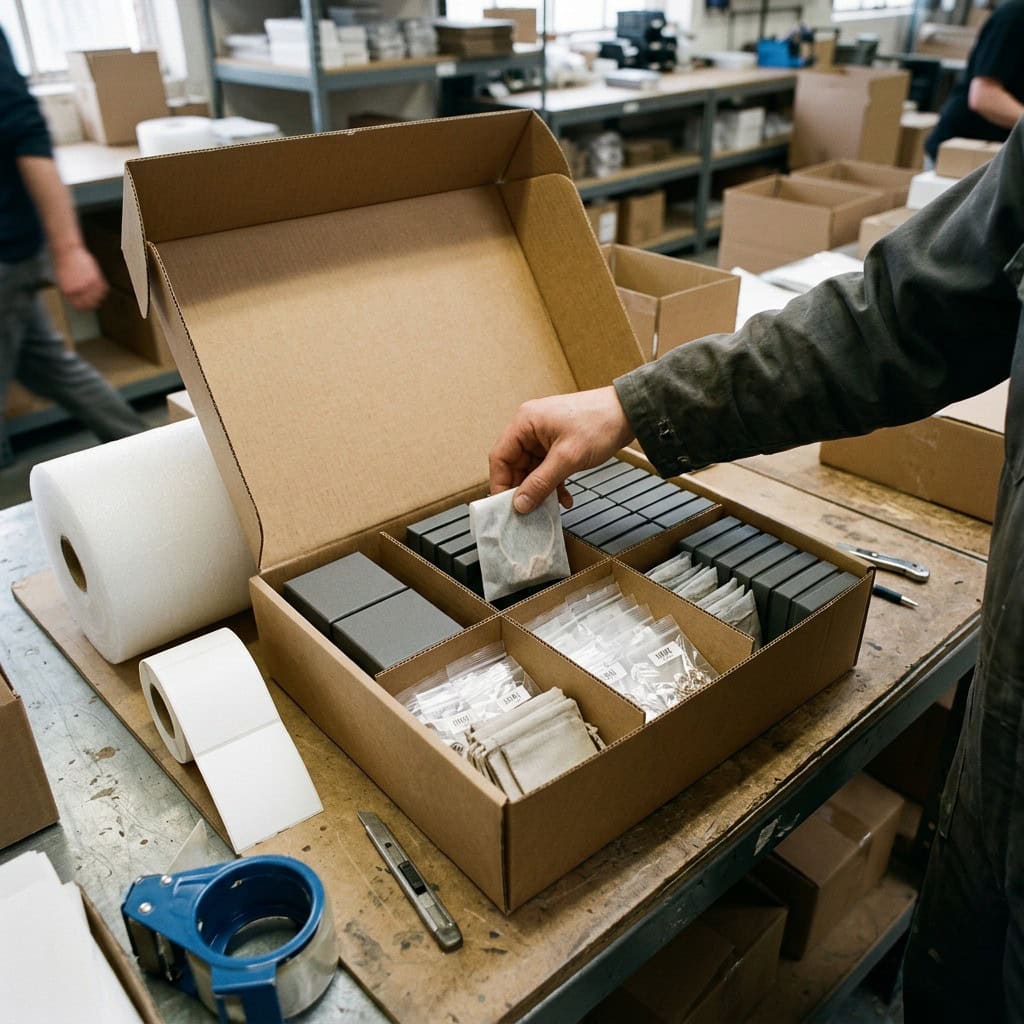
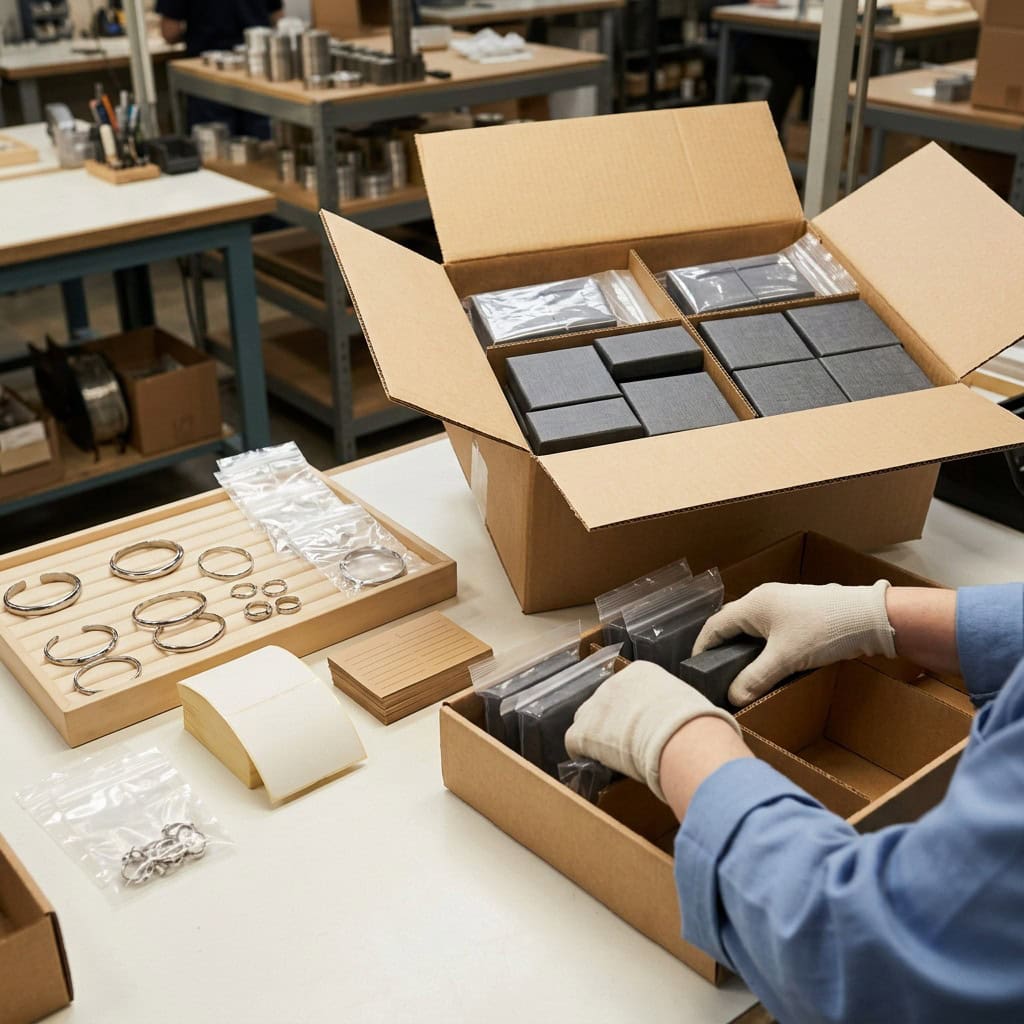
Good packaging still has to look right after the carton is moved, stacked, and opened again. Chicolink connects single-unit packaging, inner packing, carton marks, packing matrix, carton weight, carton photos, shipping method, and transport review so the package can survive the route, not only the packing table.

Carton Organization

Carton organization can include product SKU, quantity, carton number, destination, PO number, store allocation, barcode, special handling mark, gross weight, net weight, and carton size. Jewelry cartons can use <=15 kg gross weight as a handling reference unless the route or retailer specifies another limit. Mixed-SKU orders need clear packing matrix and carton-level separation.

Transport Protection

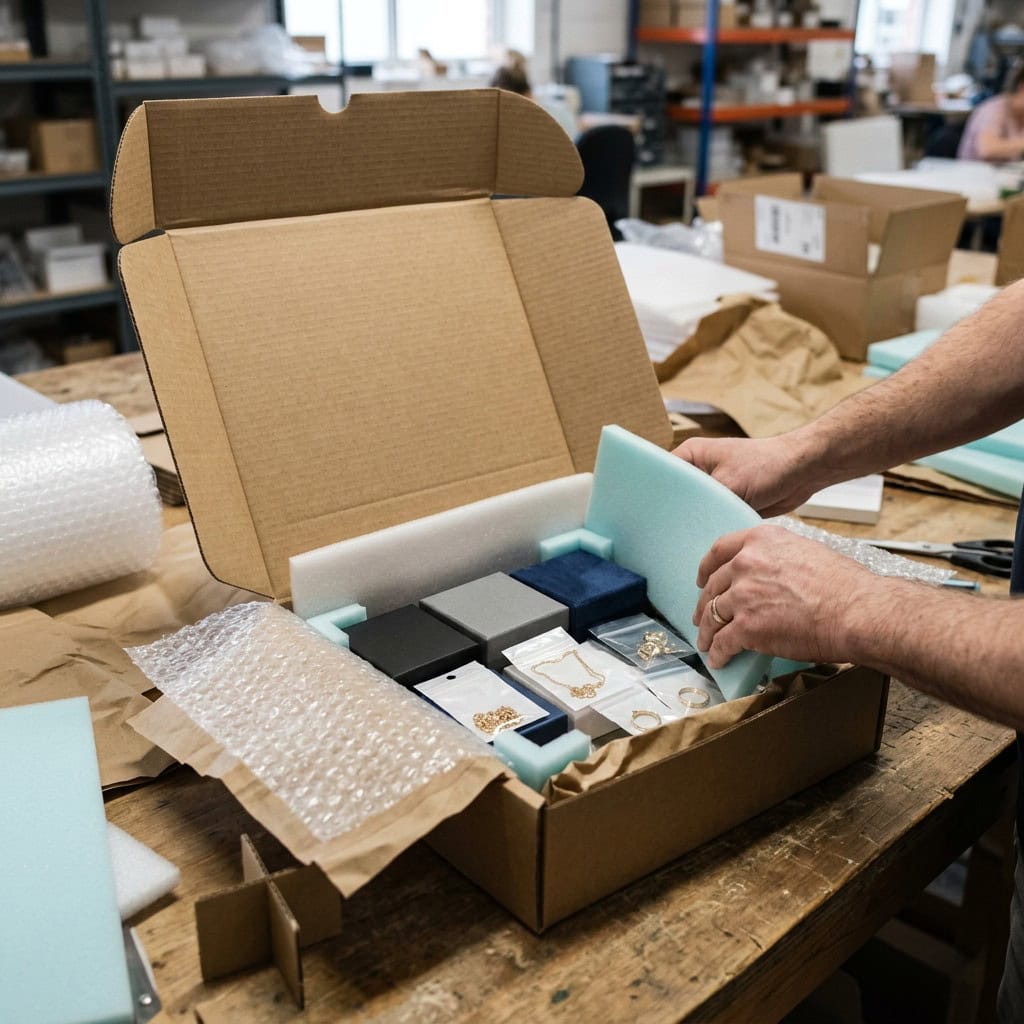
Packaging transport review can check box breakage, product exposure, tray failure, jewelry scratches, product deformation, stone loosening, chain tangling, barcode readability, label abrasion, and carton deformation. Inner cushion space can start from 20-30 mm when gift boxes need extra protection. Gift box or transport drop checks can use a 76 cm reference with faces, edges, and corners as applicable.

Shipment Routes

Chicolink can support courier, air, sea, rail, appointed forwarder, split shipment, and multi-address shipment according to order terms. Multi-address or store allocation shipments need route table, carton labels, destination labels, and packing records before carton sealing.

Market Packaging Requirements And Standards

Packaging data matters because it tells the buyer what the package is made of, how it moves, and what the receiving side needs to read. Chicolink can prepare packaging material records, barcode and label files, carton data, FSC paper options, recycled paper options, and packaging BOMs for customer, retailer, platform, importer, or market review.
Requirement Area
What It Means For Jewelry Packaging
Chicolink Support
EU PPWR preparation
Regulation (EU) 2025/40 increases attention on packaging sustainability, labelling, recyclability, and packaging data across the packaging life cycle.
Chicolink can prepare packaging material type, component weight, plastic/paper classification, sales/grouped/transport packaging level, packaging BOM, and material-provider declarations for customer review.
EPR packaging data
EPR programs often require packaging material categories, component weights, packaging levels, annual quantity data, and producer-responsibility clarification.
Chicolink can organize OPP/PE bag, jewelry card, inner box, foam, label, pouch, insert, and outer carton records by material, weight, color, provider, version, destination market, and annual order quantity.
Material weight records
Small jewelry packages may combine paper card, plastic bag, velvet pouch, foam, label, insert, and outer carton in one SKU.
Component weight can be recorded to 0.1 g for small inner packaging and 1 g for carton-level packaging as a project reference, then adjusted to the customer’s reporting format.
FSC and recycled paper
FSC paper, recycled paperboard, and recycled paper options need supplier certificate or material-provider declaration before claims or logo use.
Chicolink can source qualified packaging material options and keep certificate, authorization, recycled-content statement, and material version records when the project requires them.
Barcode print quality
Linear barcodes can be checked with ISO/IEC 15416; QR and DataMatrix codes can be checked with ISO/IEC 15415.
Chicolink checks label files, print clarity, contrast, quiet zone, placement, wrinkles, reflection, scan result, and decoded value after the label is applied to the package.
GS1 and GTIN data
GS1 barcodes and identification keys should follow the customer’s licensed code data and current GS1 General Specifications.
Chicolink can print and apply UPC/EAN/GTIN labels when the customer provides or approves the final barcode data, barcode ownership route, and human-readable text.
Retail and platform labels
Marketplaces, retailers, warehouses, and chain stores may require FNSKU, warning labels, carton marks, destination labels, or store-allocation labels.
Chicolink connects approved label files with product SKU, packaging version, set code, packing matrix, carton labels, scan records, shipment photos, and repeat-order records.

Packaging Project Results

Packaging improvements are easiest to judge when they solve a real order problem. The examples below show how Chicolink uses packaging BOMs, label checks, carton records, and packaging QC to reduce receiving problems, relabeling work, product damage, and repeat-order confusion.

Case 1

Customer Scenario:
An Amazon jewelry seller in the United States ordered stainless steel necklaces and personalized pendants with logo cards, barcode labels, and FBA packaging.
Jewelry Need And Pain Point:
The previous supplier mixed SKU labels and packaging versions, causing FBA receiving delays, relabeling work, and listing risk.
Chicolink Solution:
Chicolink built a SKU matching sheet and aligned product, card, OPP bag, barcode label, and carton label. Package-level verification and sample recheck reduced packaging error rate from about 4.8% to 0.6%, cut rework by 62.5%, and supported 3 repeat orders in Q2 with repeat-order value up 38.0%.

Case 2

Customer Scenario:
A chain-store jewelry program needed retail-ready stainless steel jewelry packaging with stable hang cards, barcode labels, and pre-shelf presentation.
Jewelry Need And Pain Point:
Shelf packaging looked inconsistent, hang cards did not match some SKUs, and label errors could delay store allocation.
Chicolink Solution:
Chicolink connected retail cards, barcode files, carton marks, display direction, and pre-shelf photo confirmation. Packaging rework decreased by 68.0%, and pre-shelf label error stayed within the 0.5% reference.

Case 3

Customer Scenario:
A distributor serving multiple EU retail channels needed repeat stainless steel jewelry orders with stable carton labels, packing matrix, and SKU records.
Jewelry Need And Pain Point:
The distributor needed fewer stock-out risks, clearer product numbers, and consistent packaging records across recurring orders.
Chicolink Solution:
Chicolink kept hot-selling SKU files, packaging versions, carton labels, packing matrix, and shipment photos connected for repeat orders. Hot-selling SKU supply stability reached 94.5%, replenishment communication time decreased 36.0%, and annual repeat orders increased 45.0%.

Packaging Inquiry Checklist

A complete packaging inquiry helps Chicolink narrow down the right package faster. Product details, artwork, label files, material data, and shipment route all change how the box, pouch, card, and carton should be built. Send the details below when starting a jewelry packaging project.
Inquiry Detail
What To Send
Why It Matters
Product list
SKU, product photo, size, weight, color, quantity, set combination
Defines packaging type, product protection, packing matrix, and carton plan.
Packaging artwork
Card, pouch, box, insert, care card, logo, Pantone/CMYK, dieline, print method, expected card/box/pouch size
Supports sample preparation, print checking, fit review, and packaging version control; useful examples include 55 x 85 mm card, 90 x 120 mm pouch, or 90 x 90 x 35 mm box target.
Label files
SKU label, FNSKU, UPC/EAN/GTIN, QR/DataMatrix, carton mark, warning label, label size, placement rule
Reduces label mismatch, scan failure, quiet-zone problems, and receiving issues.
Packaging data request
Material type, component weight, FSC option, recycled paper option, packaging BOM, retailer or importer format
Helps prepare market packaging records, sustainability-related documentation, and EPR/PPWR material fields.
Channel requirement
Amazon/FBA, Shopify/DTC, retail, boutique, distributor, gift, subscription box
Determines single-unit packing, display card, gift box, set code, or carton label route.
Protection need
Mirror polish, plated finish, stones, chains, earrings, bangles, moisture, long storage
Helps choose bag thickness, pouch, protective film, box gap, desiccant, and carton structure.
Shipment route
Destination, trade term, courier/air/sea/rail, split shipment, multi-address route
Supports carton marks, packing list, route table, carton photos, and shipment preparation.

Jewelry Packaging Solutions FAQ

Packaging inquiries usually become clearer when the package, the product, and the route are described together. Once packaging type, label files, product protection, sample route, material data, and shipment records are clear, the order is easier to plan and repeat.
What jewelry packaging options can Chicolink provide?
Chicolink supports jewelry cards, OPP/PE bags, anti-oxidation bags, velvet pouches, color boxes, gift boxes, logo boxes, care cards, brand story cards, inserts, barcode labels, SKU labels, FNSKU labels, carton marks, mixed SKU packing, and Amazon/FBA packaging preparation.
Yes. Chicolink can print, apply, and scan SKU labels, FNSKU labels, UPC/EAN/GTIN labels, QR codes, DataMatrix codes, internal barcode labels, and carton labels when final label data is provided or approved. Linear barcode checks can follow ISO/IEC 15416, and QR/DataMatrix checks can follow ISO/IEC 15415.
Chicolink uses packaging BOMs, line clearance, first-piece packaging confirmation, barcode scan checks, label version control, carton audit, sample retention, and shipment photos. Packaging accuracy uses a public control reference of >=99.8%, and barcode label/data mismatch target is <=100 PPM.
Yes. Necklaces need anti-tangle fixing and pendant protection; earrings need post protection and pair matching; rings need size-label accuracy and box fit; bracelets and bangles need chain, charm, hinge, clasp, and surface separation; stone and gift sets need pressure and missing-item checks. Chicolink can use starting references such as 2-4 mm necklace slots, 1.2-1.8 mm earring post holes, 3-5 mm ring foam slots, and 2-10 mm box gap, then adjust them after real product measurement.
Send the product list, product photos, size and weight, target quantity, packaging artwork, logo file, dieline, Pantone/CMYK color, label files, barcode data, carton mark, material-data request, target market, shipping method, and any retailer or marketplace packaging requirement.