Custom Logo Jewelry Manufacturer
Chicolink customizes stainless steel jewelry with logo engraving, laser marking, CNC engraving, stamping, cut-out details, custom charms, logo plates, jewelry cards, pouches, gift boxes, barcode labels, SKU labels, FNSKU labels, carton marks, and private label packaging. We review logo files, surface shape, PVD/IP color, readability, sample approval, packaging version, QC checks, and IP authorization before bulk production.
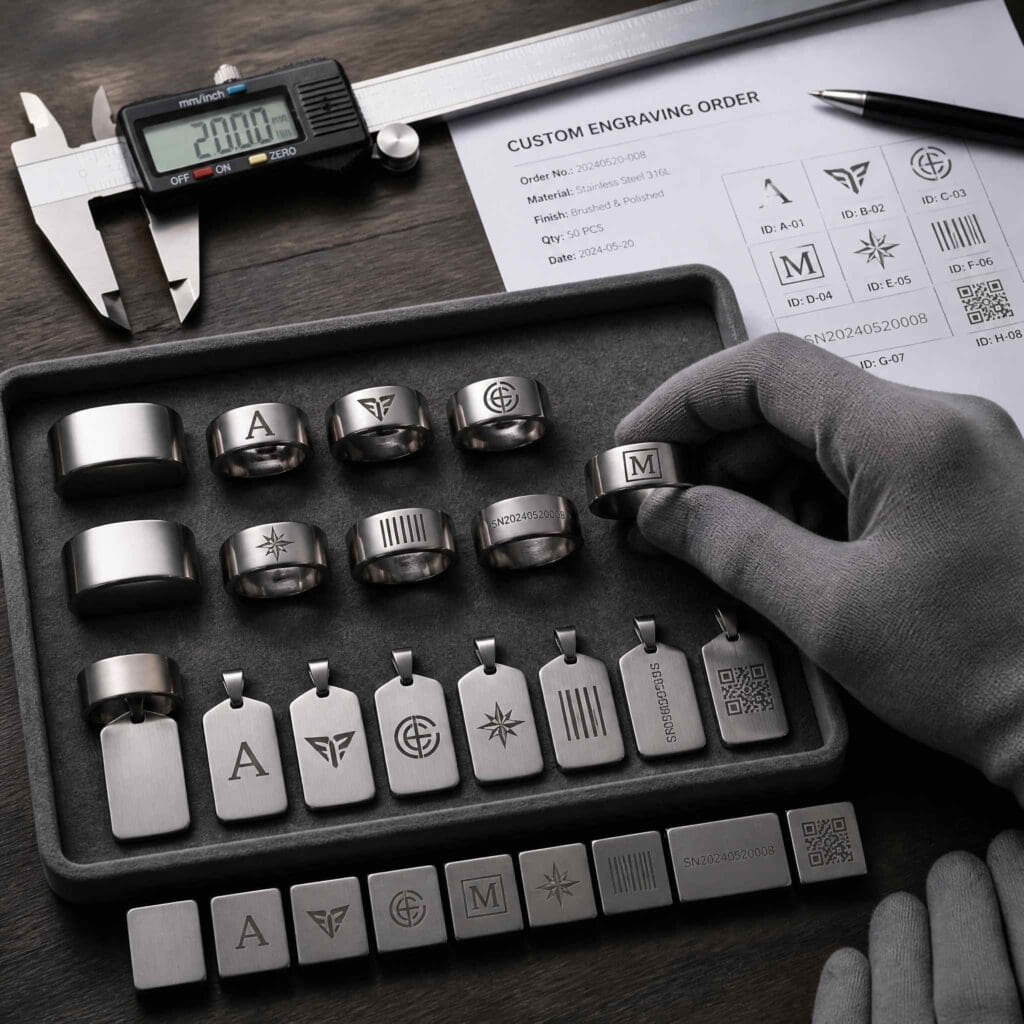
- Laser engraving supports logos, text, serial numbers, QR codes and patterns.
- Engraving accuracy acceptance reference: 98.2%.
- OEM/ODM custom orders usually start from 500 pcs/style.
- General logo customization is usually completed within 3-7 working days; complex logo details usually need about 10-12 working days after complete files are confirmed.
Logo Customization For Jewelry Brands
Custom logo jewelry works best when the logo is treated as a product detail, not only a decoration. Chicolink connects artwork review, jewelry surface, marking method, sample approval, packaging version, barcode data, and repeat-order records so the finished product can carry the brand mark clearly and consistently.
Brand Launches
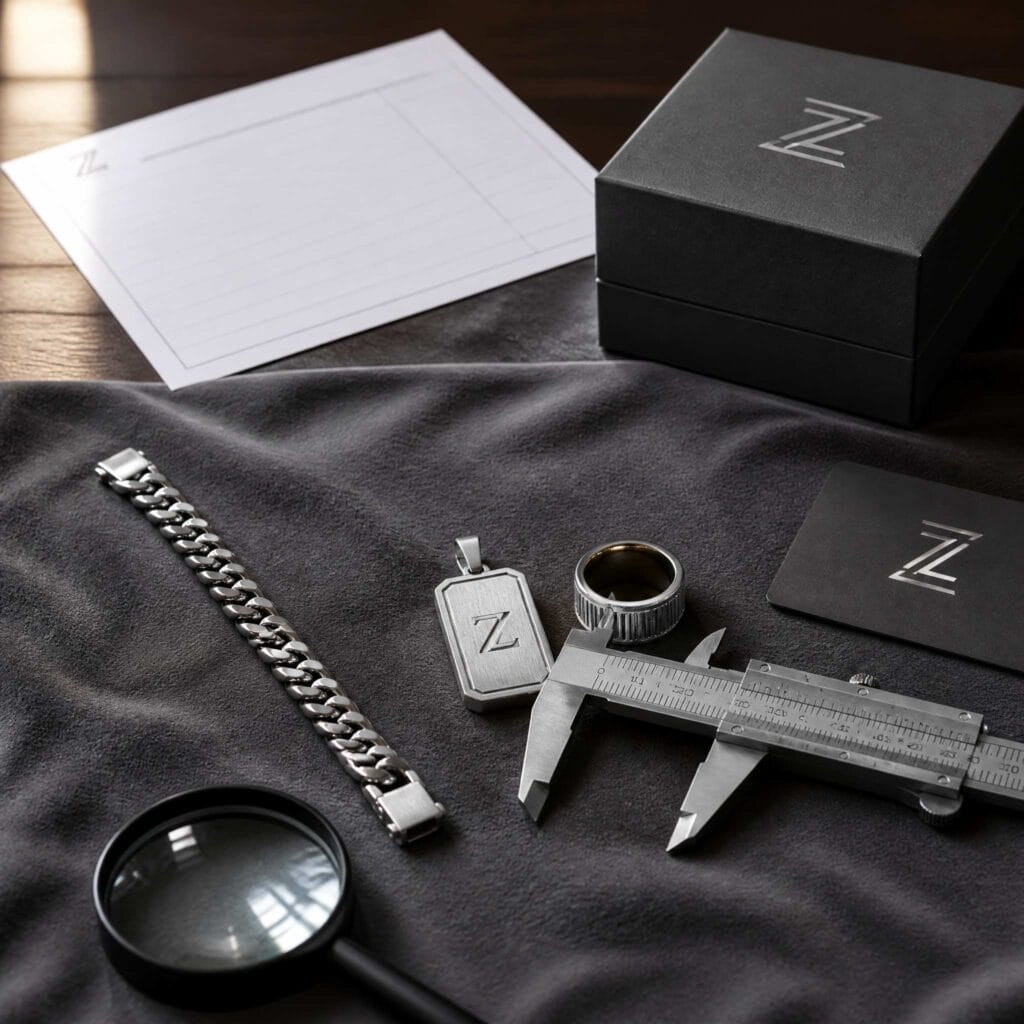
DTC brands, boutique brands, fashion brands, and private label projects often need logo marks on pendants, rings, bracelets, bangles, charms, gift boxes, jewelry cards, and pouches. Chicolink checks logo size, position, contrast, PVD/IP color, product photo use, and packaging version so a new launch has a cleaner brand presentation.
Retail And Ecommerce
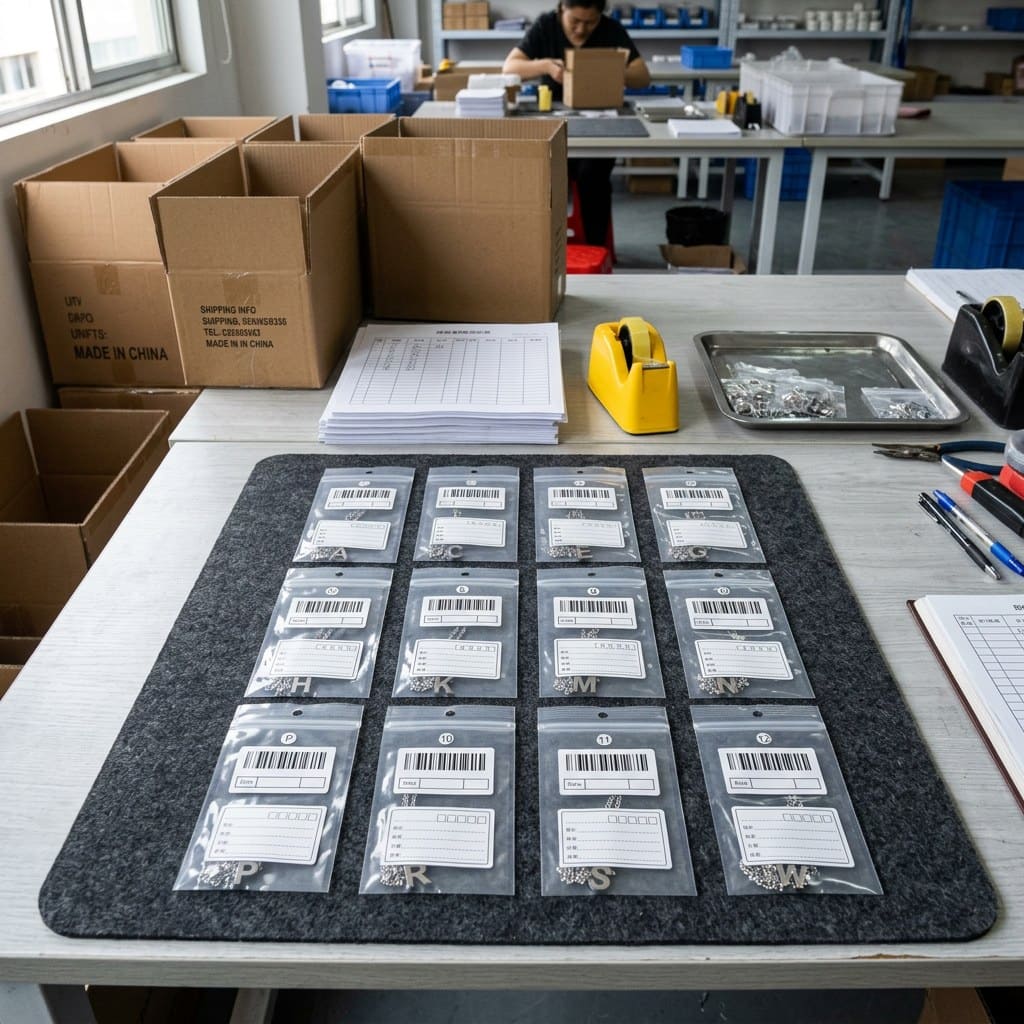
Amazon, Shopify, TikTok Shop, Etsy, and retail programs need logo jewelry to match SKU, barcode, FNSKU, packaging, product photo, and listing information. Chicolink can combine engraving, logo card, barcode label, first-piece packaging confirmation, and carton mark checks to reduce mismatched product and packaging details.
Gift And Corporate Projects
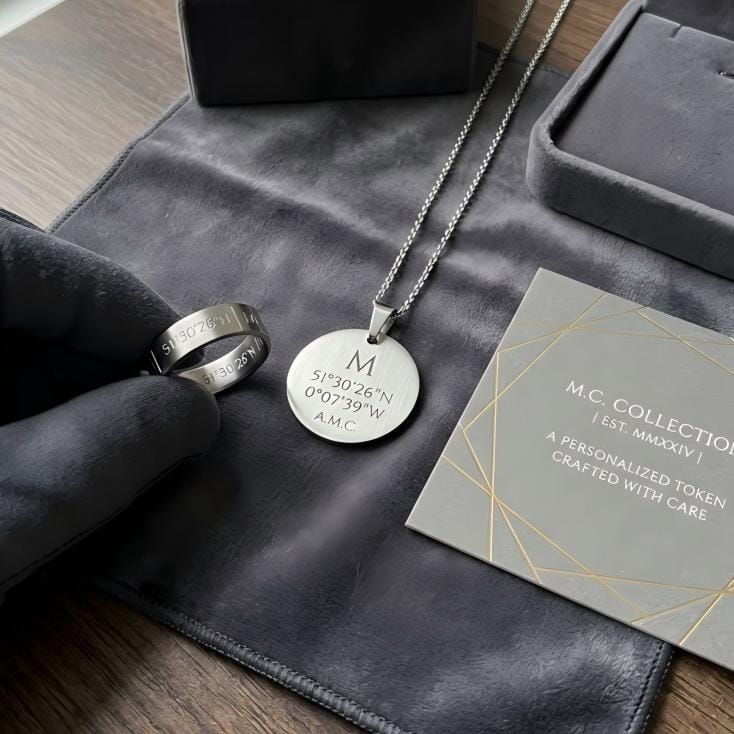
Gift, memorial, museum, event, and corporate jewelry projects often use names, dates, coordinates, logos, story cards, gift boxes, and special messages. Chicolink checks artwork, spelling, readable distance, engraving contrast, packaging consistency, and shipment timing so the final gift line feels intentional instead of rushed.
Custom Logo Methods For Stainless Steel Jewelry
The right logo method depends on product surface, depth requirement, order quantity, PVD/IP color, packaging plan, artwork detail, and sample approval. Chicolink review laser engraving, CNC engraving, stamping, cut-out, custom charms, logo plates, and branded packaging before production.
Laser Engraving
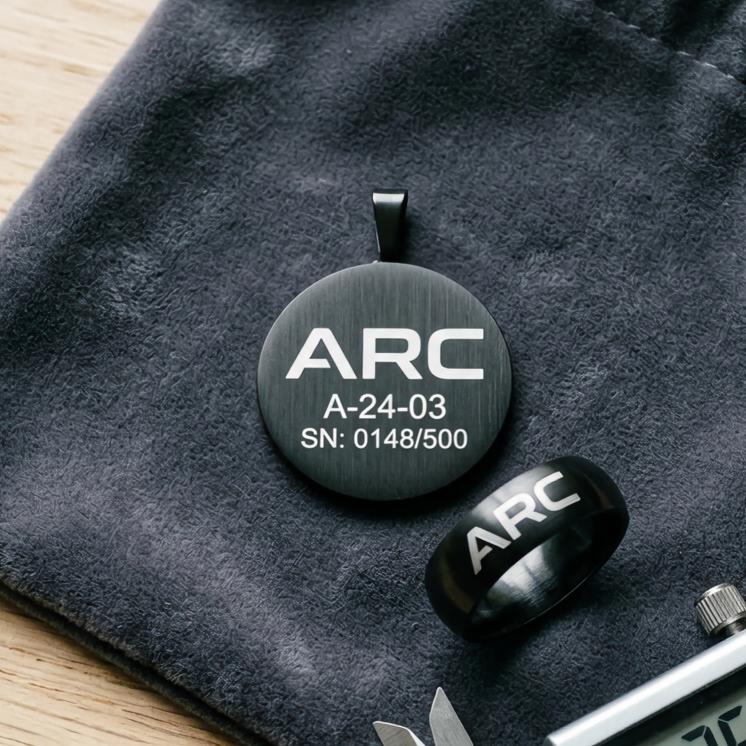
- Laser engraving fits brand logos, material marks, serial numbers, names, dates, coordinates, QR codes, and simple patterns.
- Chicolink reviews font, minimum text height, line width, depth, black or white mark direction, position reference, front/back direction, and readable distance.
- Curved, mirror, and PVD/IP surfaces need physical sample confirmation because reflection and coating response affect contrast.
CNC Engraving
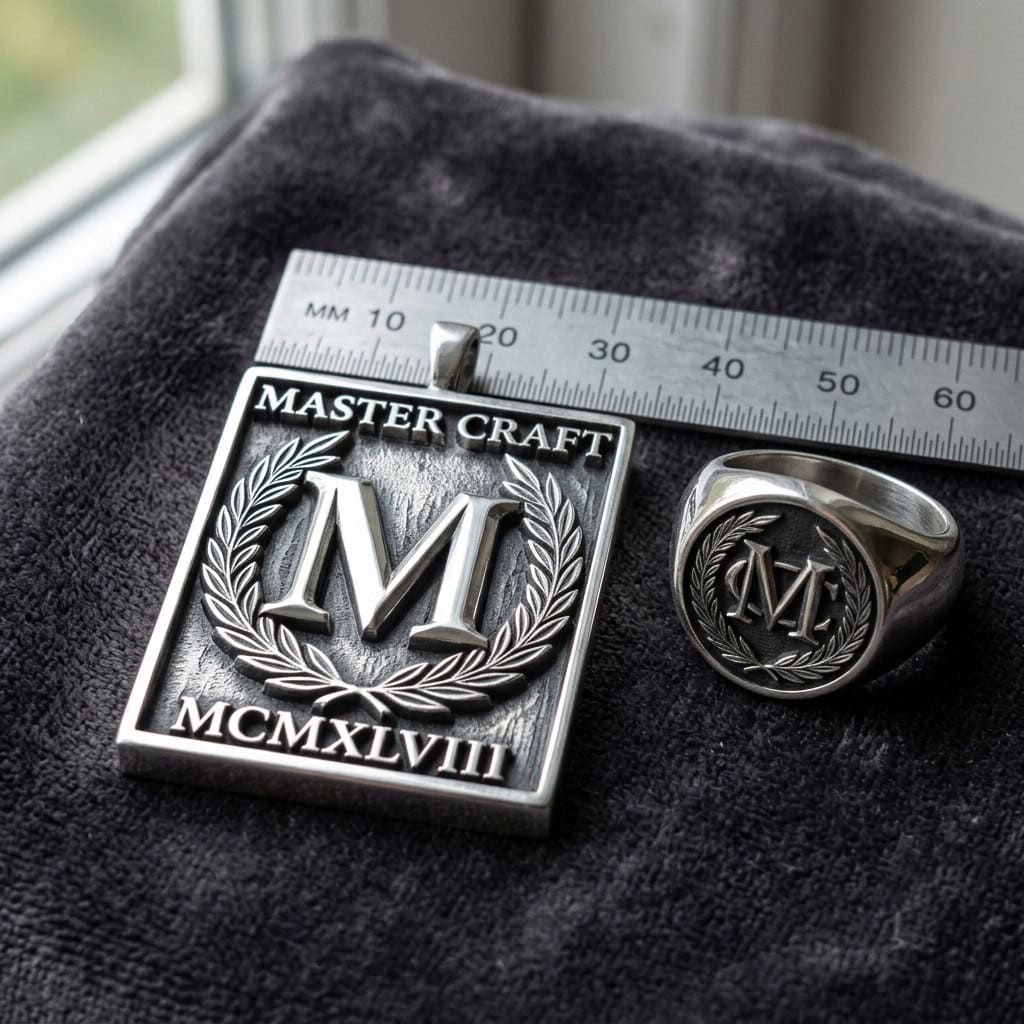
- CNC engraving works when a logo needs deeper relief, stronger dimensional structure, or controlled contour on suitable metal surfaces.
- Tool path, corner radius, cutting depth, surface burr, and polishing loss need review before the logo moves to bulk.
- CNC is useful for thicker pendants, signet rings, metal plates, keychains, charms, and high-relief logo details.
Stamping And Pressing
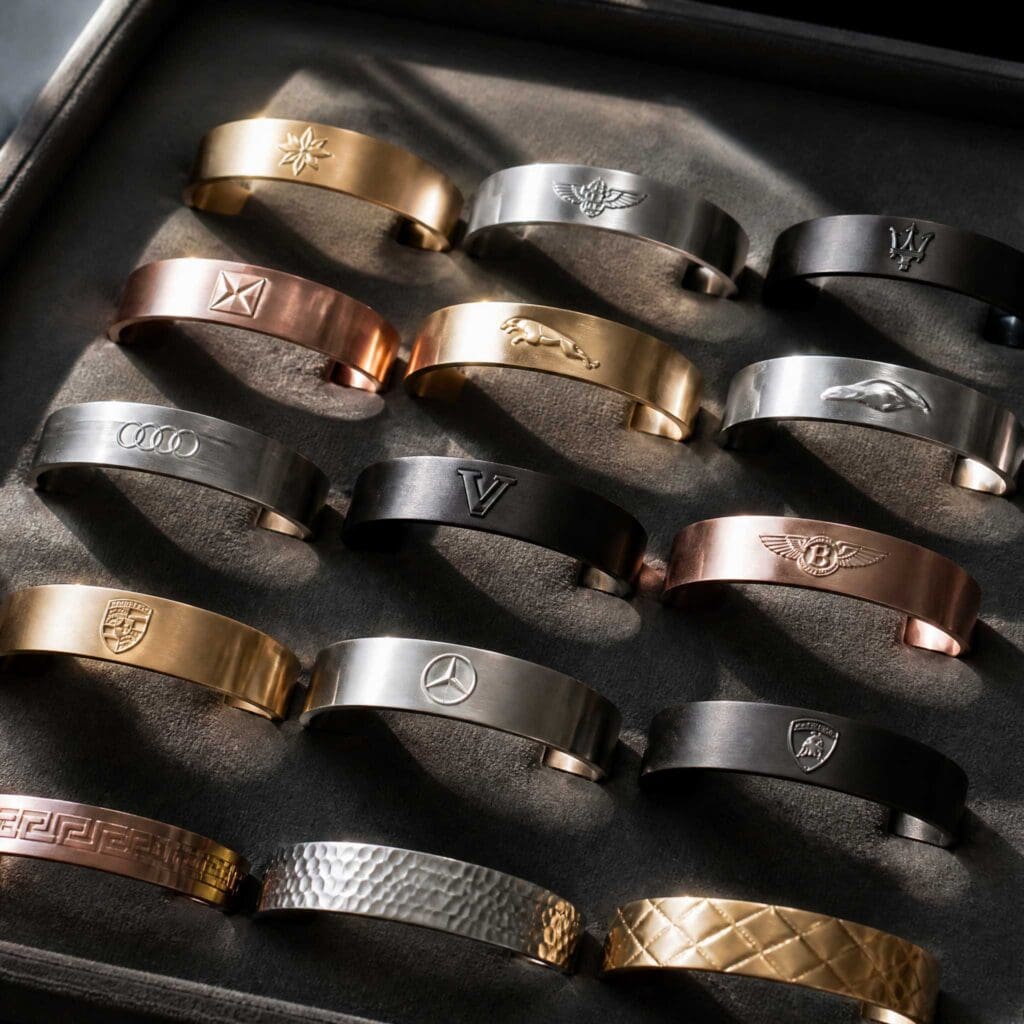
- Stamping or pressed logo work creates a real physical mark and can fit medium or larger batch projects.
- Chicolink reviews steel stamp, deformation risk, position tolerance, backside protrusion, surface flatness, and post-polishing effect.
- Rings, tags, cuffs, plates, charms, and certain packaging metal parts need sample approval before bulk pressing.
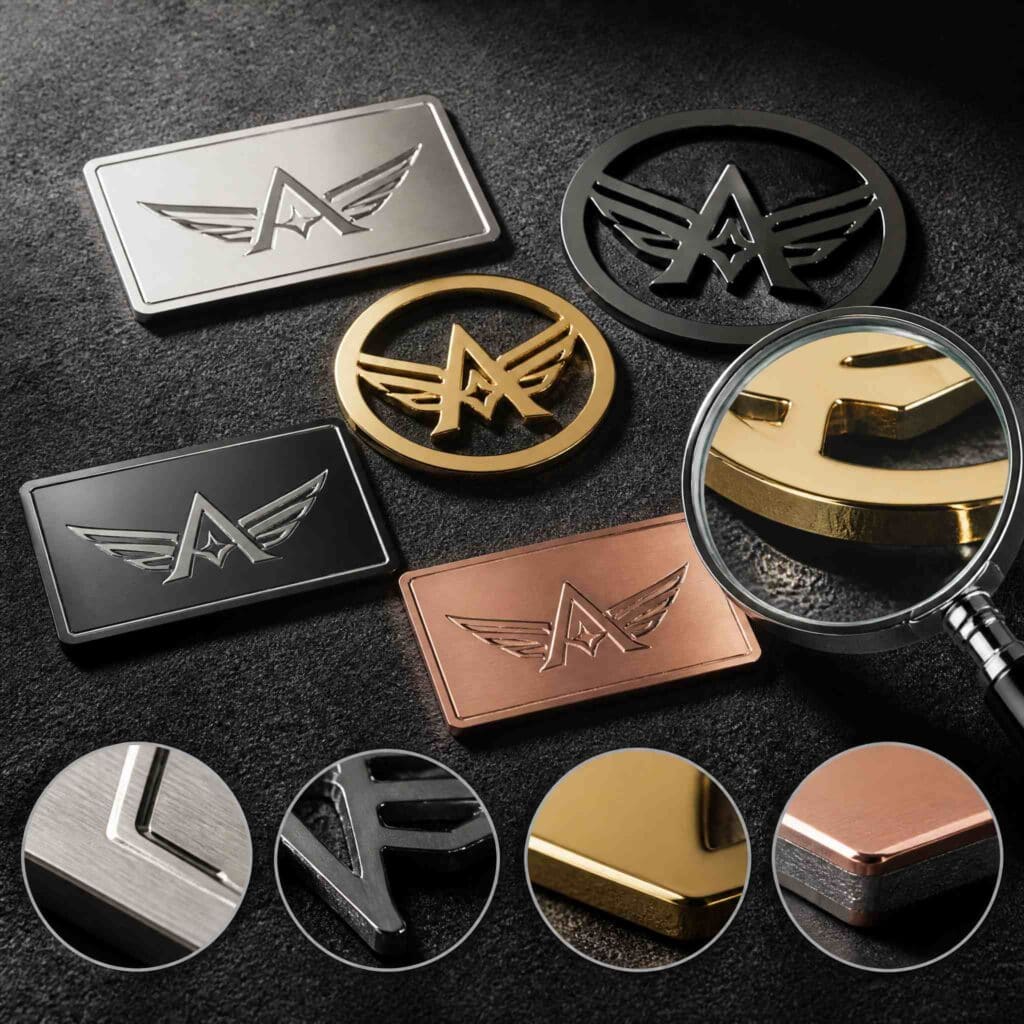
Etching And Cut-Out
- Chemical etching, laser cutting, punching, or CNC cut-out can create flat logo plates, patterned pendants, openwork charms, and brand-symbol accessories.
- Minimum line spacing, edge quality, hole size, flatness, burr removal, and PVD/IP edge coverage should be checked together.
- Cut-out logos work better when the artwork is simplified enough to survive polishing, handling, and packaging.
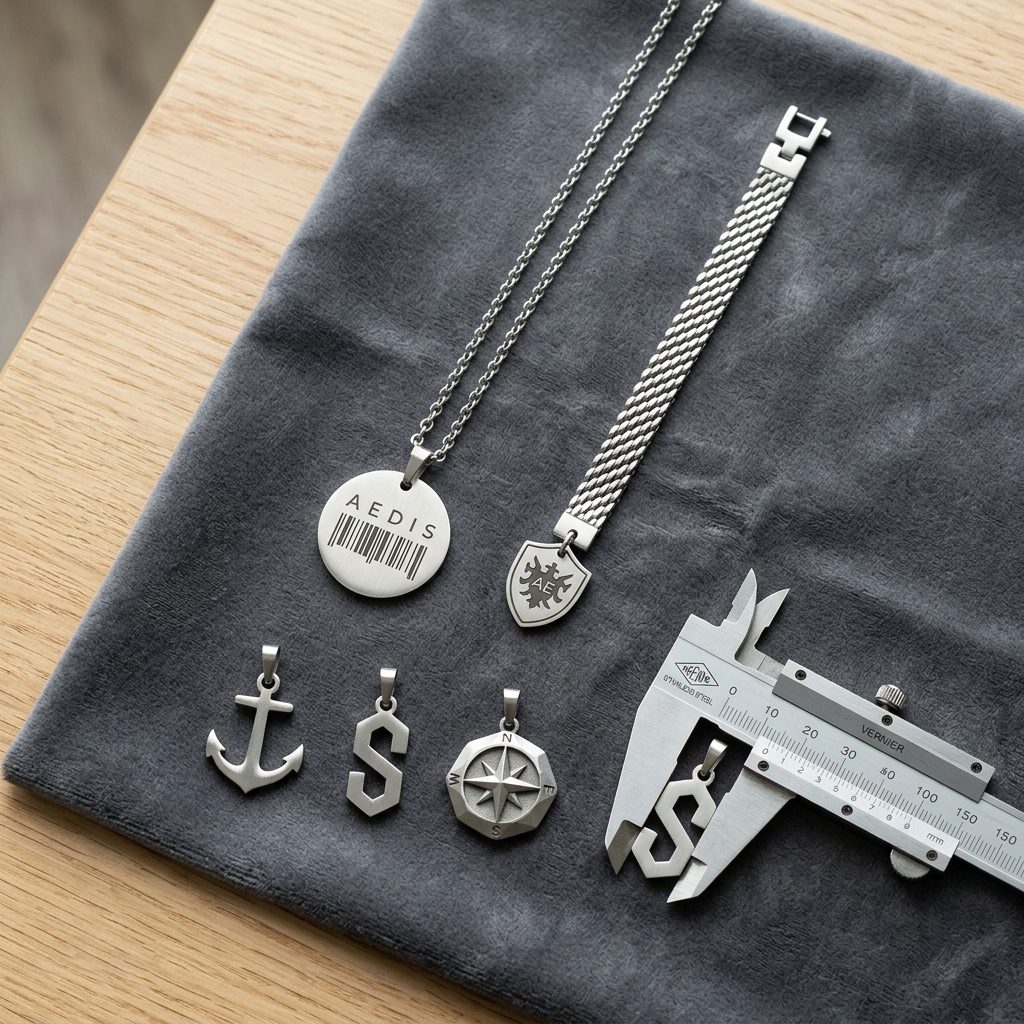
Logo Charms
- Custom charms, logo plates, tail tags, connector plates, and small brand parts can be added to necklaces, bracelets, bangles, keychains, and gift items.
- Jump ring size, hole diameter, edge radius, orientation, pull strength, and packaging position affect how the logo detail performs in use.
- Chicolink can connect the logo charm with product record, PVD/IP color, assembly route, and final packaging.
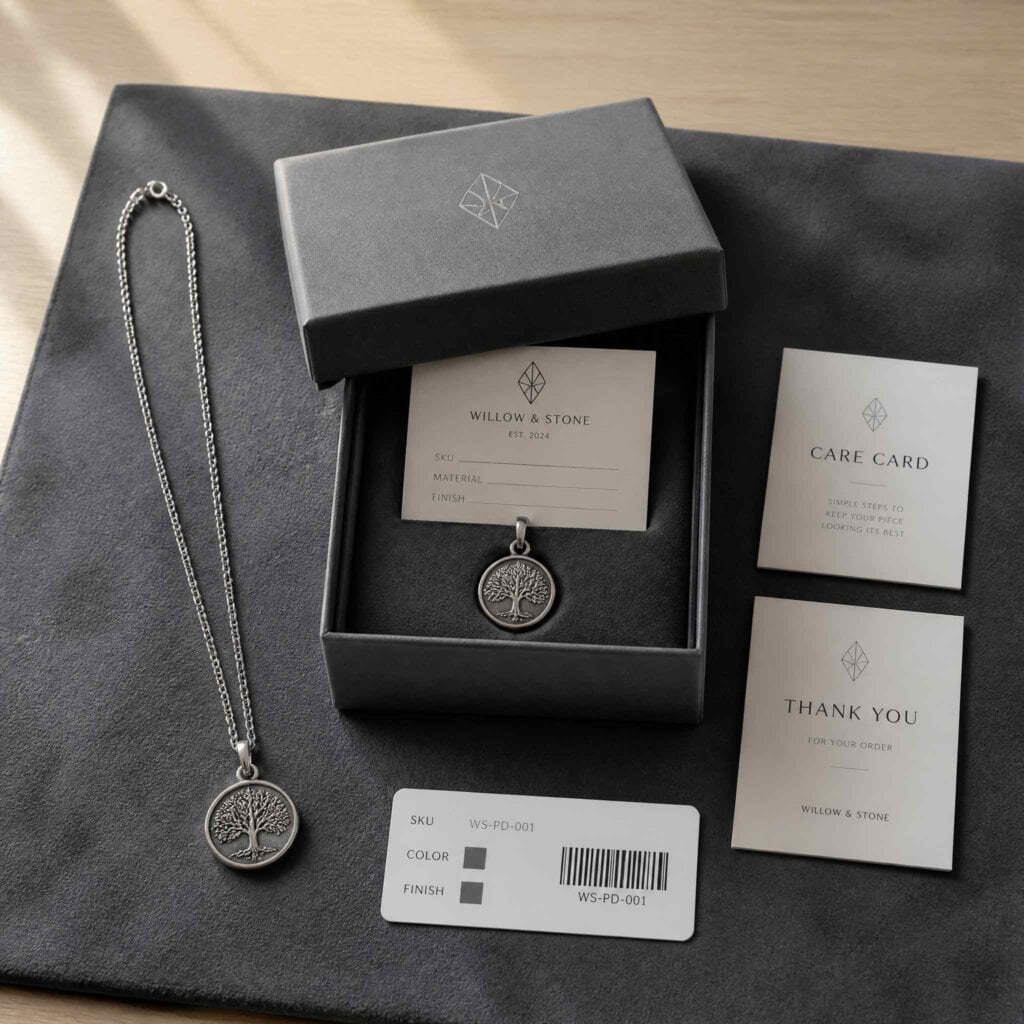
Branded Packaging
- Logo customization can continue onto jewelry cards, OPP bags, velvet pouches, gift boxes, care cards, thank-you cards, barcode labels, SKU labels, FNSKU labels, and carton marks.
- A packaging BOM defines material, thickness, color, Pantone, size, tolerance, printing method, surface lamination, and assembly direction.
- Packaging accuracy uses a public control reference of >=99.8% for SKU, color, quantity, card, pouch, box, barcode, and carton-mark matching.
Logo Placement By Jewelry Structure
Logo placement must match the jewelry structure. A clear logo on a flat pendant can fail on a curved ring, mirror PVD surface, tiny charm, or moving bracelet part. Chicolink checks logo area, surface shape, user contact, finish contrast, packaging position, and inspection method by product type.
Pendants
- Pendants offer front, back, edge, bail, or inner plate positions for brand logos, names, dates, QR codes, and pattern marks.
- Flat surfaces need readable line spacing and clear orientation; mirror or PVD/IP surfaces need contrast sample confirmation.
- Pendant hole, center of gravity, edge radius, and packaging protection are checked so the logo area does not scratch or tilt.
Rings
- Rings can carry logos inside the band, outside the shank, on a signet top, or on a side face.
- Inner diameter, ring width, curvature, polishing route, and readable distance decide whether laser engraving or stamping is suitable.
- Ring inner diameter tolerance can use +/-0.10 mm as a starting reference while logo placement stays tied to the approved sample.
Bracelets
- Bracelets can use logo plates, tail tags, clasp marks, charms, or engraved bar elements.
- Chain movement, jump ring closure, clasp action, pull area, and skin contact influence where the logo should sit.
- For suitable bracelet structures, pull-check planning can start around 50-80 N so logo plates and connectors do not become weak points.
Bangles
- Bangles can use inner engraving, outer logo marks, end-cap marks, hinge-side logos, or surface pattern branding.
- Curved and polished bangle surfaces need sample confirmation because focus distance and reflection affect logo contrast.
- Hinged bangles can use 1,000-2,000 cycle references according to structure, with logo visibility checked after function review.
Earrings
- Earrings can carry logos on backs, charms, small plates, drops, hoops, huggies, or packaging cards.
- Very small surfaces need simplified artwork and minimum line spacing so the mark does not close during polishing or PVD/IP finishing.
- Paired earrings should keep logo direction, color, weight, and packaging position aligned.
Necklaces
- Necklaces can use tail tags, clasp marks, pendant backs, charm plates, connector plates, or removable logo details.
- Chain length, tail chain, clasp model, jump ring, pendant orientation, and anti-tangle packaging affect logo visibility.
- Fine chains need protection so logo plates do not rub against polished or PVD/IP surfaces during shipment.
Keychains And Gifts
- Keychains, flat plates, memorial pendants, religious items, corporate gifts, and event accessories often use names, dates, symbols, and QR codes.
- Edge radius, hole size, flatness, engraving depth, QR readability, and packaging protection define the practical logo result.
- Text checking before production can reach 100.0% coverage for gift projects where names, dates, and message accuracy are critical.
Packaging Surfaces
- Logo position can appear on jewelry cards, box lids, pouch fronts, care cards, barcode labels, carton marks, and inserts.
- Card stock can start from 300-450 gsm; velvet pouch fabric can use 100-250 gsm references; box dimensions can use +/-1-2 mm starting tolerance.
- Packaging samples should show print color, logo size, foil or embossing position, barcode area, and product-to-box fit.
Logo File And Inquiry Inputs
A complete logo jewelry inquiry helps Chicolink review method, readability, sample route, tooling need, packaging file, cost driver, and production timing more accurately. The first review should connect artwork with the real jewelry surface and packaging version.
Input Detail | What To Send | Why It Matters |
Logo artwork | AI, PDF, SVG, EPS, high-resolution PNG, or vector file | Vector files keep edges, line width, and text cleaner during engraving, stamping, printing, or cut-out review. |
Logo size and position | Marked product drawing, photo mockup, front/back direction, readable distance | Prevents wrong orientation, weak contrast, and unreadable marks on curved or small surfaces. |
Product information | Product type, material, size, surface finish, PVD/IP color, stone or component detail | Surface, curvature, coating, and assembly route decide whether laser, CNC, stamping, or packaging logo is suitable. |
Quantity and order type | Sample quantity, bulk quantity, SKU split, color split, packaging version | Determines MOQ fit, tooling need, sample route, production plan, and label control. |
Packaging files | Jewelry card, pouch, box, care card, barcode, FNSKU, SKU label, carton mark | Connects the logo jewelry with retail, eCommerce, gift, and distributor packaging. |
Target market and testing | Market, retailer requirement, nickel release, lead/cadmium, REACH-related, Prop 65 related, RoHS-related files | Helps align logo project records with material, testing-file, and packaging preparation. |
Logo Readability And DFM Review
Logo customization needs a readability and manufacturability check before sampling. Chicolink reviews artwork detail, product surface, marking method, finish contrast, QR or barcode readability, packaging position, and inspection route so the logo stays clear on the real jewelry.
Scan And Text Checks
QR codes and DataMatrix marks should be verified with actual scanning equipment, not only visual appearance. For names, dates, coordinates, serial numbers, and corporate messages, Chicolink can check text coverage before production and use engraving accuracy acceptance around the 98.2% reference.
Surface And Finish
Curved rings, mirror pendants, brushed plates, black PVD parts, rose gold surfaces, huggies, and small charms reflect light differently. Physical samples are important because logo contrast can change after polishing, vacuum coating, packaging contact, or product photography.
Artwork Simplification
Thin strokes, tiny letters, complex gradients, dense icons, and very small QR codes can lose clarity after engraving, polishing, PVD/IP finishing, or printing. Chicolink reviews font, line width, spacing, direction, and readable distance before sample work.
Logo Sample Workflow
Logo jewelry samples should confirm more than whether the logo appears on the product. Chicolink uses sample records to confirm artwork version, size, position, engraving or stamping method, PVD/IP finish, packaging version, barcode detail, and inspection reference before bulk production.
Logo Test Sample
A logo test sample can check size, position, depth, contrast, orientation, black/white mark direction, QR readability, and visible surface effect. This step helps catch font, reflection, coating, or surface-shape issues before a full production sample is approved.
Artwork And Product Review
Chicolink reviews logo file, product surface, material, size, finish, PVD/IP color, quantity, packaging direction, target market, and IP authorization. Regular custom quotation feedback is usually prepared in 48-72 business hours after complete details are clear.
Golden Sample And Bulk Reference
After the final sample is approved, the Golden Sample, logo artwork version, product specification, packaging BOM, barcode file, QC checklist, and photo record become the reference for bulk production and inspection.
Product And Packaging Sample
Standard logo customization takes 3–7 working days after artwork, placement, style, and process are confirmed. Complex engraving, dense graphics, cut-outs, difficult contrast, or repeated proofing may take 10–12 days. New structures, molds, PVD colors, packaging samples, or extra testing follow a separate OEM/ODM timeline.
Logo With PVD And Surface Finish
Logo readability changes with surface finish and PVD/IP color. Chicolink reviews whether the logo should be engraved before or after finishing, whether the mark needs black or white contrast, whether PVD/IP color affects readability, and whether packaging contact can rub the marked surface.
Textured Surfaces
Brushed, satin, matte, sandblast, antique, hammered, and textured surfaces can make thin lines or small letters less sharp. Logo artwork may need simplified strokes, larger spacing, or a different method such as plate, charm, stamping, or packaging logo.
PVD/IP Color
Gold, rose gold, black, gunmetal, steel/silver color, and colorful PVD/IP surfaces respond differently to laser engraving and marking. Chicolink uses approved samples and batch records to keep logo contrast, color route, and surface appearance aligned.
Mirror And High Polish
Mirror and high-polish surfaces create strong reflection, so a logo that looks clear in artwork can become hard to read on the finished product. Chicolink checks focus distance, reflected light, polishing waves, and surface scratches before approving the logo direction.
Private Label Packaging For Logo Jewelry
Logo customization often continues from the jewelry surface into retail and eCommerce packaging. Chicolink can connect custom logo jewelry with jewelry cards, OPP bags, anti-oxidation bags, pouches, gift boxes, barcode labels, SKU labels, FNSKU labels, carton marks, and shipment records.
Jewelry Cards
- Jewelry cards can carry brand logo, product name, material note, barcode area, hanging hole, earring position, care note, and retail display direction.
- Card stock can start from 300-450 gsm, with heavier products needing stronger card or lamination.
- Logo position, hole spacing, card-to-bag fit, barcode area, and product orientation are confirmed before bulk packing.
OPP And Bags
- OPP or PE bags can support single-unit packaging, barcode label placement, warning text, ventilation hole, and product protection.
- Bag thickness can start from 0.04-0.08 mm depending on mirror surface, sharp edges, product size, and protection need.
- Chicolink checks whether the logo product, card, bag, and label remain readable after packing.
Velvet Pouches
- Velvet pouches can use silk screen, foil stamping, woven logo, drawstring, custom color, and size options.
- Fabric can use a 100-250 gsm reference, with color transfer, lint, and rubbing checks before contact with light-color or mirror jewelry.
- Pouch drawstring pull reference of 10-15 N can help review basic closure strength.
Gift Boxes
- Gift boxes can include paper box, drawer box, flip box, inner tray, logo box, story card, care card, and protective insert.
- Box dimension tolerance can start from +/-1-2 mm, while product-to-box internal gap can start from 2-10 mm with fixation.
- Logo jewelry should not move freely inside the box because rubbing can damage engraving contrast, PVD/IP surfaces, stones, or polished areas.
Barcode Labels
- SKU, FNSKU, UPC, EAN, GTIN, and customer internal barcodes should stay separated in label files and packaging records.
- Linear barcode verification can follow ISO/IEC 15416, while QR or DataMatrix verification can follow ISO/IEC 15415.
- High-risk multi-SKU logo orders can use 100% scan checks so product, color, size, card, pouch, box, and barcode stay aligned.
Carton Marks
- Carton marks can include PO number, SKU, quantity, carton number, destination, barcode, country, and handling marks.
- Mixed-SKU logo orders need carton-level separation, label version control, packing matrix, and shipment photos.
- Carton photos and label samples help later repeat orders follow the same packaging route.
Logo QC And Inspection
Logo QC connects artwork, product, marking method, surface finish, packaging, label, and shipment record. Chicolink checks logo clarity, position, version, readability, barcode matching, packaging accuracy, and final inspection according to product risk and order requirement.
Artwork Version
- Approved logo file, sample photo, product version, packaging version, and barcode file should remain connected.
- Chicolink checks whether the final artwork matches the sample and production record.
- Version control reduces the risk of old logo, old card, or wrong barcode file entering bulk production.
Position And Size
- Logo position can be checked by edge distance, center alignment, readable direction, product orientation, and packaging display direction.
- Curved rings, huggies, bangles, and small charms need sample-based position limits.
- Measuring tools and photo records help repeat orders follow the same logo placement.
Clarity And Contrast
- Chicolink checks whether the logo remains readable after engraving, stamping, CNC, polishing, PVD/IP finishing, packaging contact, and product cleaning.
- QR and DataMatrix marks should scan after final product and packaging state, not only on the artwork file.
- Engraving accuracy acceptance reference of 98.2% supports logo, text, pattern, QR code, and private-label engraving review.
Feature Checks
- High-risk features such as logo, barcode, clasp function, paired earrings, visible PVD/IP, packaging quantity, or critical product marks can receive order-specific 100% checks.
- AQL sampling can support broader final inspection when product risk and order requirement fit that method.
- Critical defects should be controlled separately from cosmetic variation.
Packaging Match
- Packaging inspection checks product, color, size, jewelry card, bag, pouch, box, barcode, FNSKU, carton mark, and set combination.
- Packaging accuracy uses a public control reference of >=99.8% for SKU, color, quantity, card, pouch, box, barcode, and carton-mark matching.
- Line clearance, first-piece packaging confirmation, and carton audit reduce mixed-version risk.
Shipment Files
- Shipment files can include approved sample photos, logo version, QC result, packaging version, barcode record, carton photo, and testing-file note.
- Material traceability can connect raw material, incoming batch, production work order, PVD/surface batch, finished inspection batch, and shipment batch.
- Repeat orders become cleaner when these files remain tied to the same product record.
Custom Logo MOQ, Timing And Cost Drivers
Logo customization timing and cost depend on product style, logo method, artwork complexity, tooling need, sample type, PVD/IP color, packaging version, testing request, and inspection scope. The references below help prepare a practical first inquiry.
Item | Chicolink Reference | Main Cost Or Timing Driver |
General logo customization | Usually completed within 3-7 working days after artwork, position, product style, and process details are confirmed | Available product or confirmed product style, logo method, simple marking route, sample quantity, and shipping details. |
Complex logo detail | Usually about 10-12 working days for detailed artwork, deeper engraving, cut-out work, difficult surface contrast, or multiple proofing steps | Artwork complexity, fixture or setup need, PVD/IP surface, readability check, and approval route. |
New product development beyond logo work | Quoted separately when the project is not only logo customization | New structure, mold or tooling, PVD/IP color development, packaging sample, testing, and approval route. |
Custom order MOQ | OEM/ODM custom orders usually start from 500 pcs/style | Product structure, logo method, PVD/IP color, packaging, tooling, and order requirement. |
Quotation feedback | Regular custom quotation feedback usually takes 48-72 business hours after complete information | Logo file, quantity, material, color, packaging, testing, and delivery requirement. |
Tooling or setup | Stamping, pressed logo, cut-out, custom charms, logo plates, and special packaging may require tooling or setup | Steel stamp, mold, fixture, film, die, packaging plate, or special sample route. |
Bulk production | OEM/ODM bulk production usually takes about 25-45 working days after sample approval, order freeze, packaging confirmation, and scheduling | Final sample, logo version, packaging BOM, label files, testing scope, and production schedule. |
Logo Authorization And Confidentiality
Custom logo jewelry often involves brand names, trademarks, protected patterns, customer drawings, private packaging, and unreleased products. Chicolink manages logo authorization, NDA support, project number control, file access, and custom product confidentiality before production.
Custom Product Privacy
Custom products, unreleased designs, customer logos, private order screenshots, and confidential packaging are not shown on Chicolink’s website, exhibitions, social media, sample room, or customer materials without written permission.
NDA And File Control
Chicolink supports mutual NDA or customer-standard confidentiality agreements. Customer drawings, logo files, packaging artwork, and custom product records can be protected through project number, controlled file transmission, internal access control, and order documentation.
Logo Authorization
Before producing a logo, trademark, protected mark, character, brand name, or special pattern, Chicolink requires confirmation that the customer owns or has lawful authorization to use the artwork. This keeps logo manufacturing connected to responsible commercial use.
Custom Logo Jewelry Project Results
Logo jewelry projects become stronger when artwork, text, product, packaging, barcode, and shipment records solve real commercial problems. The examples below show how Chicolink’s logo and private label controls improved packaging accuracy, reduced rework, and supported repeat orders.
Case 3
Customer Scenario:
An Etsy-style personalized jewelry seller needed engraved names, zodiac elements, memorial text, and small-batch mixed styles.
Jewelry Need And Pain Point:
The seller needed personalization without repeated content errors, weak differentiation, or packaging that looked disconnected from the product.
Chicolink Solution:
Chicolink combined laser engraving, name customization, pattern review, small-batch mixed styles, gift packaging, and custom cards. The project used 100.0% custom content checking coverage, reduced rework by 70.0%, and reached a 55.0% reorder reference.
Case 2
Customer Scenario:
A gift and corporate jewelry project needed names, dates, logos, story cards, and gift boxes for a time-sensitive order.
Jewelry Need And Pain Point:
Spelling errors, weak packaging, unreadable engraving, and late corrections could create high rework cost before the event date.
Chicolink Solution:
Chicolink checked logo artwork, text files, engraving contrast, sample approval, gift packaging, and packing consistency before bulk production. Text checking coverage before production reached 100.0%, engraving accuracy acceptance used the 98.2% reference, and the project kept engraving text error around the 0.3% reference.
Case 1
Customer Scenario:
An Amazon jewelry seller in the United States ordered stainless steel necklaces and personalized pendants with laser engraving, logo cards, barcode labels, and FBA packaging.
Jewelry Need And Pain Point:
The previous supplier mixed SKU labels and packaging versions, creating receiving delays, rework, and listing risk.
Chicolink Solution:
Chicolink built a SKU matching sheet and aligned product, logo card, OPP bag, barcode label, and carton label before shipment. Package-level verification and sample recheck reduced packaging error rate from about 4.8% to 0.6%, cut rework by 62.5%, and supported 3 repeat orders in Q2 with repeat-order value up 38.0%.
Custom Logo Jewelry FAQ
Logo jewelry inquiries usually focus on artwork files, method selection, MOQ, sample timing, packaging, and authorization before the project can move into sampling or production.
What logo file should be sent for custom logo jewelry?
Vector artwork such as AI, PDF, SVG, or EPS is preferred. High-resolution PNG can support early review, but production usually needs clear vector lines, text outlines, size, position, front/back direction, and the product surface where the logo will be placed.
Which logo method should be used for stainless steel jewelry?
Laser engraving works for many logos, text, serial numbers, QR codes, and simple patterns. CNC engraving is better for deeper dimensional marks, stamping gives a pressed physical mark, and cut-out or logo charms work for brand symbols and custom accessories. Chicolink reviews the method based on surface, finish, quantity, and sample result.
What is the MOQ for custom logo jewelry?
OEM/ODM custom logo orders usually start from 500 pcs/style. Existing-style or stock-style logo projects may follow the available style and marking route, while packaging MOQ can depend on cards, pouches, boxes, printing method, label type, and supplier setup.
Can Chicolink make logo packaging together with logo jewelry?
Yes. Chicolink supports jewelry cards, OPP bags, anti-oxidation bags, velvet pouches, gift boxes, logo boxes, care cards, story cards, barcode labels, SKU labels, FNSKU labels, carton marks, mixed SKU packing, and packaging BOM control for private label projects.
Does Chicolink need logo authorization before production?
Yes. Chicolink requires confirmation that the customer owns or has lawful authorization to use the logo, trademark, protected mark, character, brand name, or special pattern. NDA and custom product confidentiality can be arranged before sensitive files are shared.