Stainless Steel Cross Jewelry Manufacturer for Global Brands
Develop cross jewelry collections through one Dongguan team for engineering, sampling, plating, quality control, private labels, and bulk delivery.
Chicolink Jewelry develops stainless steel cross pendants, necklaces, bracelets, rings, earrings, charms, and coordinated sets for brands, wholesalers, distributors, and retail programs. Start with a drawing, reference image, physical sample, approved artwork, or collection brief. We assess the cross geometry, material, weight, chain interface, manufacturing route, finish, testing, packaging, quantity, and delivery target before sampling. Approved specifications and samples then become the controlled references for bulk production, retail pack-out, third-party inspection, and repeat orders.
Control Cross Jewelry Risks Before They Reach Bulk Production
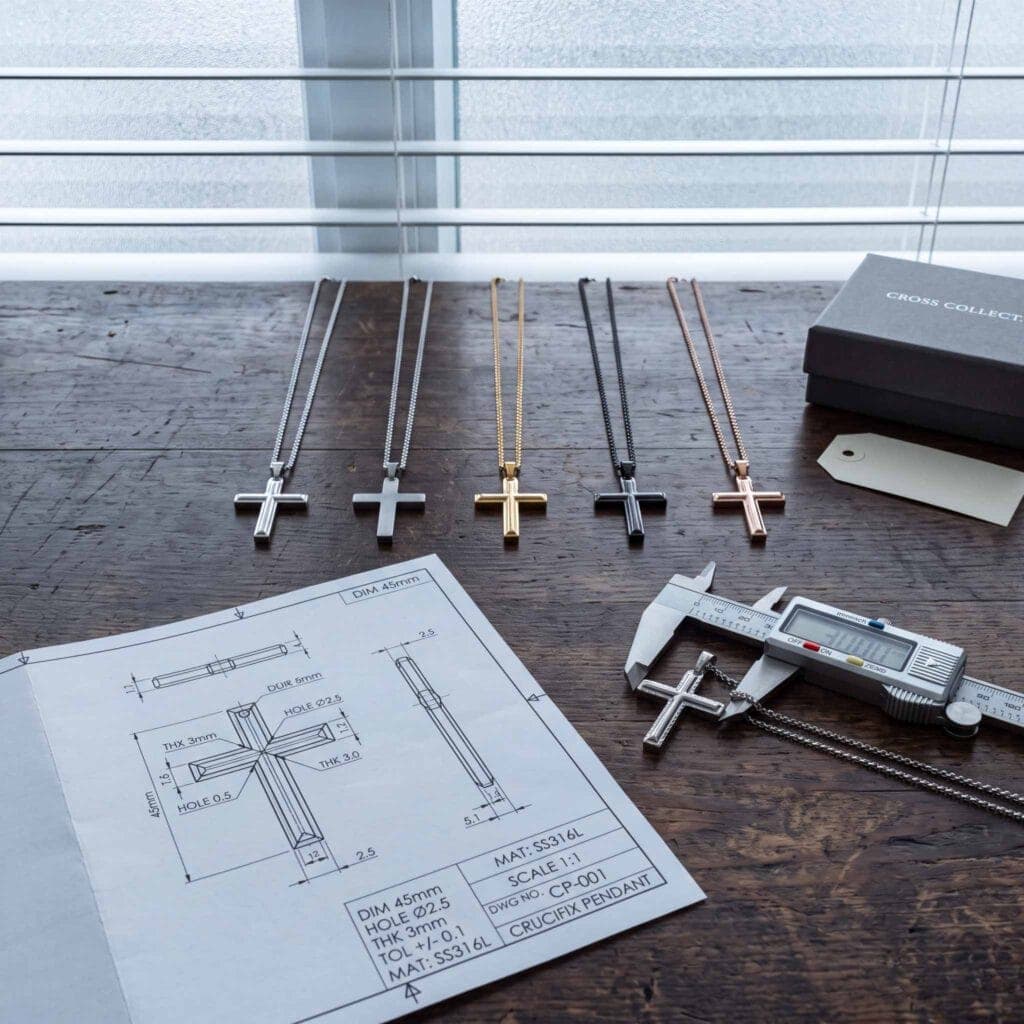
Cross jewelry combines visible symbolism with functional necklace, pendant, stone, plating, and packaging interfaces. We identify commercial and technical risks before quotation and sampling, assign each open decision to a project approval, and connect the final requirement to inspection. This helps reproduce the approved product more consistently across colors, sizes, packaging versions, and replenishment batches.
Artwork Accuracy
Cross, crucifix, scripture, figure, and cultural details must be approved as production artwork, not interpreted from a low-resolution image. We confirm front and back direction, proportions, relief depth, minimum line width, readable text, font conversion, engraving position, and your written authorization before creating tooling, CAD files, or production samples.
Pendant Chain Fit
A finished cross pendant must hang correctly on its selected chain. We check bail opening, hole diameter, chain width and thickness, connector dimensions, pendant balance, front-facing orientation, chain movement, and clasp configuration. Pendant-only and pendant-with-chain versions are specified separately so components are not assumed to be interchangeable.
Surface Consistency
Flat arms, polished edges, recessed details, figure relief, stone seats, and back surfaces can receive different polishing and plating coverage. We define A, B, and hidden surfaces, approved color references, polishing level, texture direction, recess acceptance, handling method, and protective packaging before bulk inspection criteria are finalized.
Connection Strength
The bail, jump ring, chain end, clasp, ear post, stone setting, and assembled decoration are common failure points. We identify the load path and set the appropriate welding, closed-ring, pull, stone-retention, or functional check. Test loads and sample quantities are set for the design.
Sample Bulk Match
An attractive sample is not sufficient without controlled files and acceptance references. We connect the approved drawing, BOM, material, color sample, engraving file, packaging artwork, golden sample, and revision record to the production SKU. Unapproved earlier versions are removed from purchasing, production, inspection, and packing use.
Repeat Batch Control
Replenishment programs require more than a repeat purchase order. We retain the approved SKU, production version, material record, PVD color reference, packaging file, inspection requirements, and batch information. Any proposed material, component, finish, process, or packaging change must be reviewed before it is introduced into a repeat order.
Build Cross Jewelry Assortments Around Real Buying Programs
We organize cross jewelry by product architecture and commercial use rather than grouping unrelated SKUs. A collection can share artwork, color references, chain families, stones, packaging, and quality standards while retaining a specification for each structure. You can compare compatible bodies, finishes, price positions, and retail uses without losing SKU-level control. This supports clearer quotations and repeat ordering for faith brands, men's accessories, boutiques, gift channels, retail chains, and eCommerce programs.
Minimalist Cross Pendants
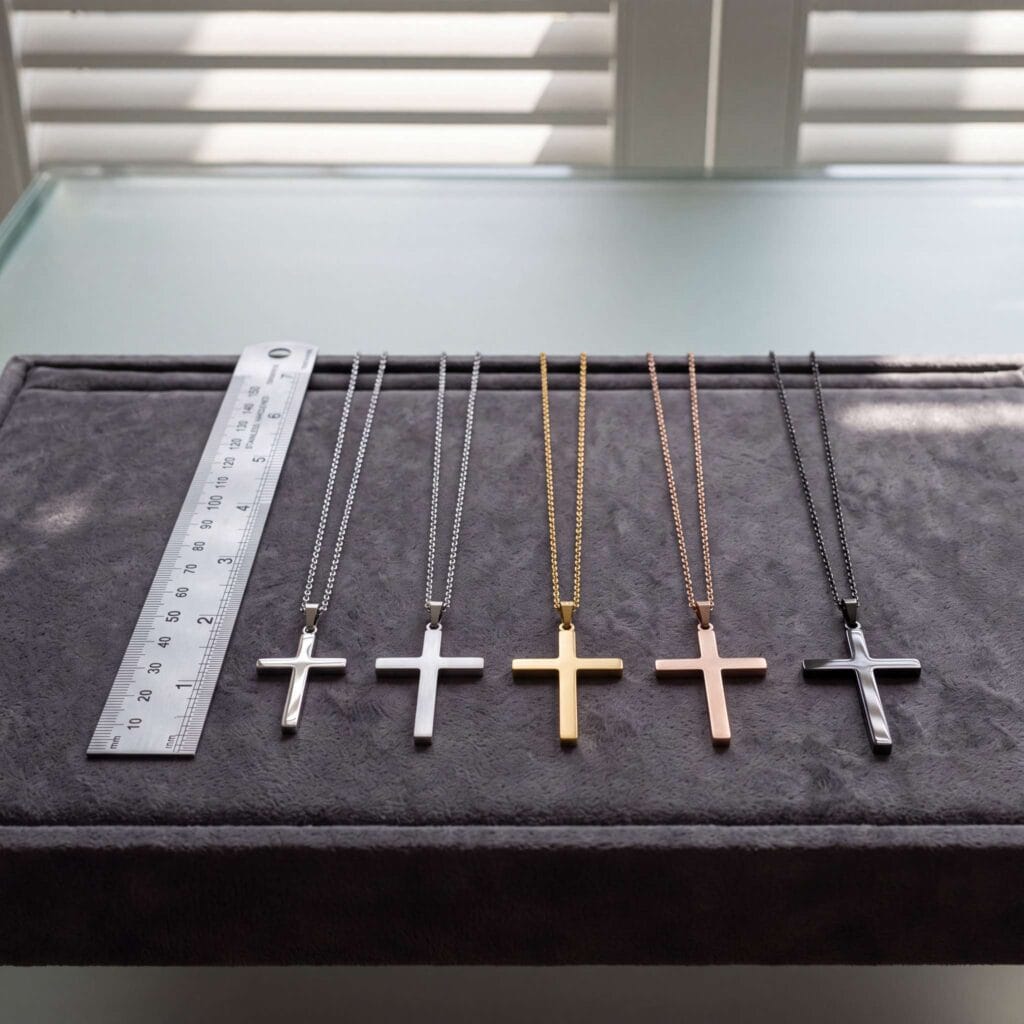
Clean flat crosses, fine outlines, compact pendants, and polished geometric forms depend on accurate proportions and disciplined finishing. We define arm width, thickness, corner radius, hole position, bail size, target weight, front and back appearance, and chain compatibility. We then align steel, gold, rose gold, or black versions with your market and target price.
Crucifix Relief Necklaces
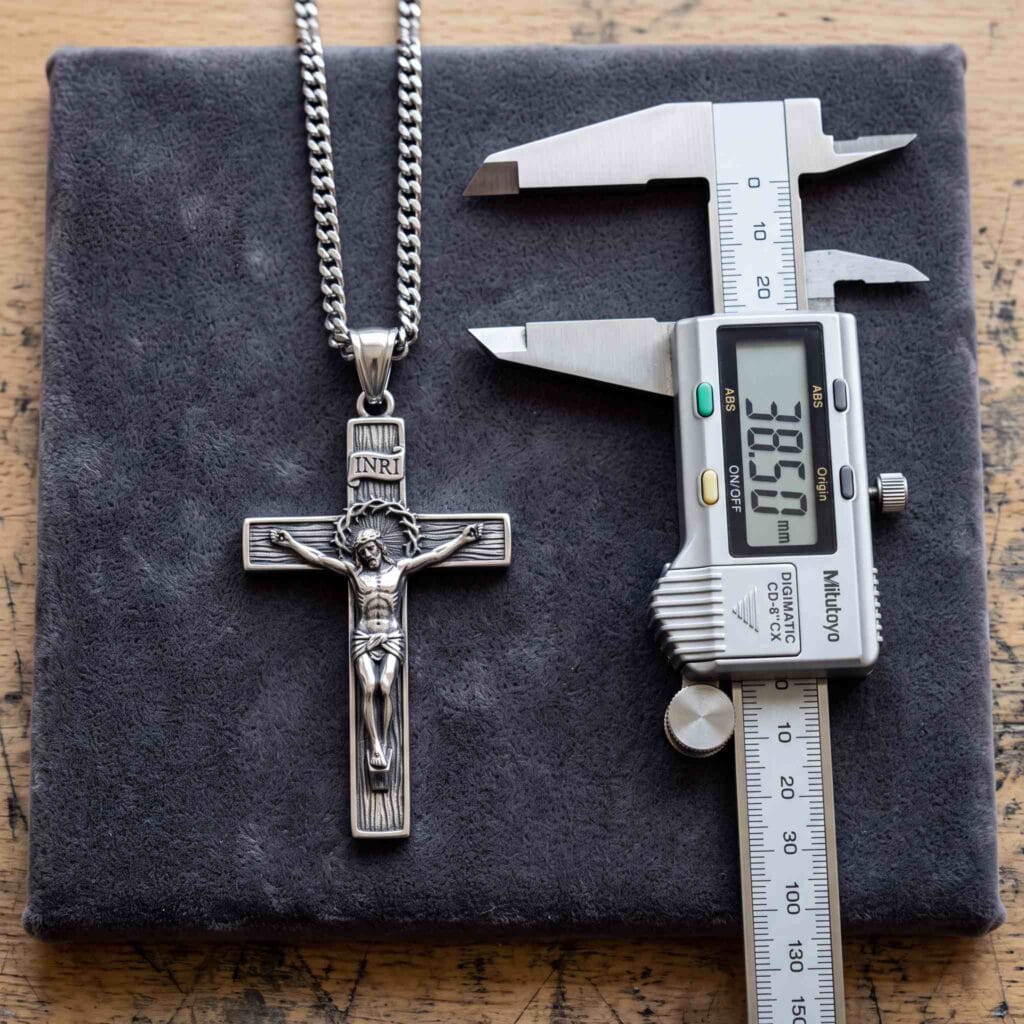
Crucifix designs require controlled figure proportions, relief height, recess access, readable details, respectful orientation, and a stable hanging position. We coordinate casting, CNC refinement, polishing, and plating so fine features remain clearly visible. You approve the artwork, finish direction, and physical sample before we release the design for bulk production.
Men's Statement Crosses
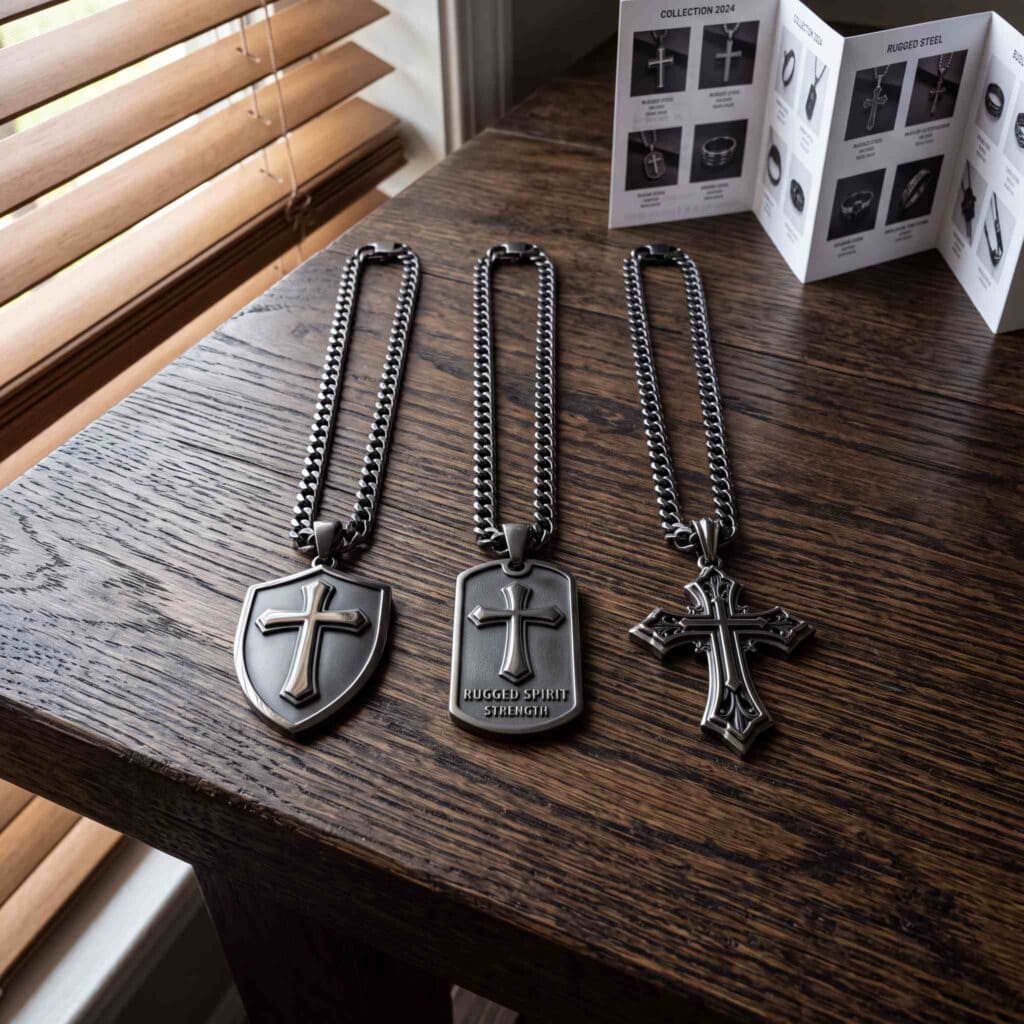
Large, thick, shield-based, dog-tag, Gothic, and architectural crosses often use deeper relief, heavier chains, wider bails, black or gun-metal colors, and mixed polished or matte surfaces. We assess total weight, chain load, edge comfort, hanging balance, connector strength, plating access, and transport protection before confirming the production route and target cost.

Scripture Engraved Crosses
Bible verses, prayers, names, dates, coordinates, and dedication messages require an approved text file and a defined engraving area. We check spelling, line breaks, font conversion, minimum character size, engraving depth, reading direction, surface contrast, and post-plating visibility. Variable personalization and fixed bulk artwork are quoted and controlled as different production programs.
Stone Set Crosses
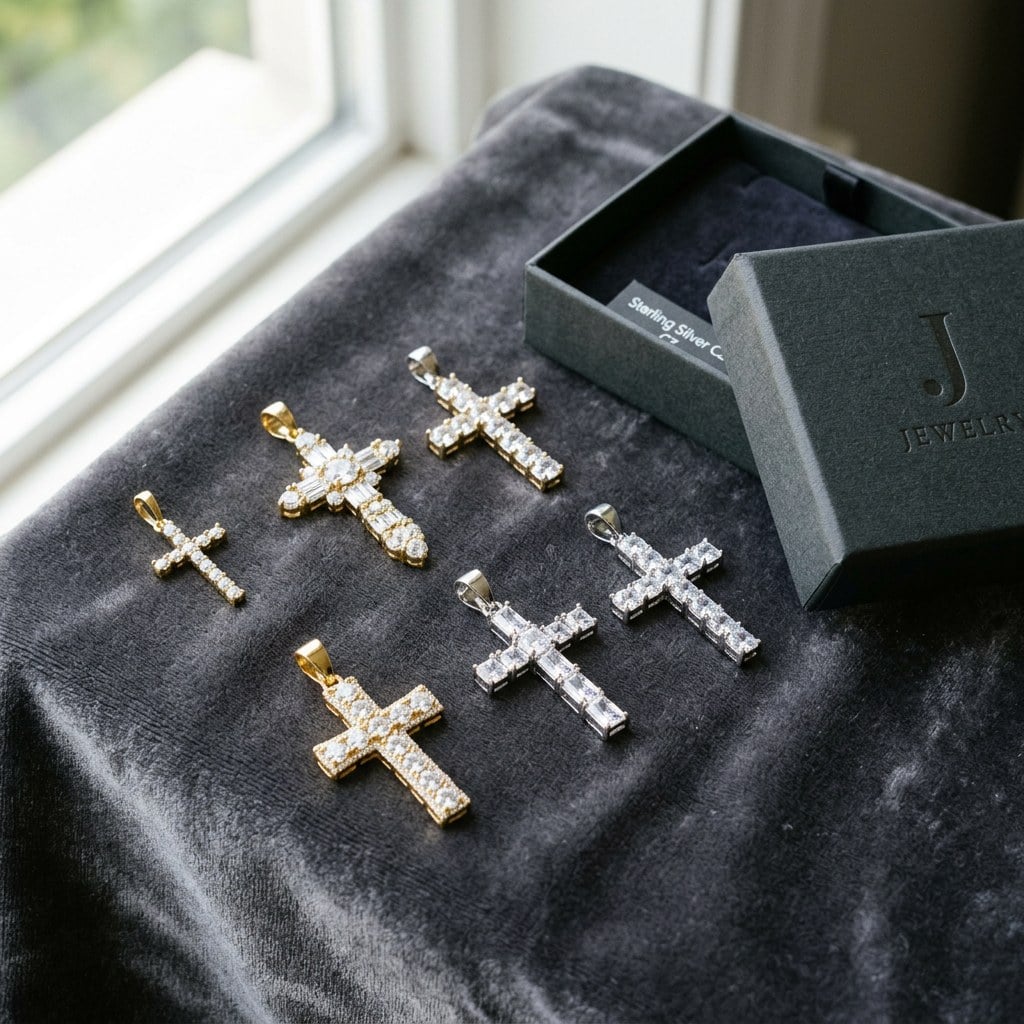
CZ, glass, crystal, synthetic stones, shell, pearl, resin, or other approved decoration can create boutique, gift, and premium-positioned cross collections. Specifications cover stone shape, size, color, quantity, setting method, stone height, adhesive or prong requirement, plating sequence, attachment inspection, allowed variation, replacement stones, and packaging protection against pressure, friction, and impact.
Cross Bracelets and Rings
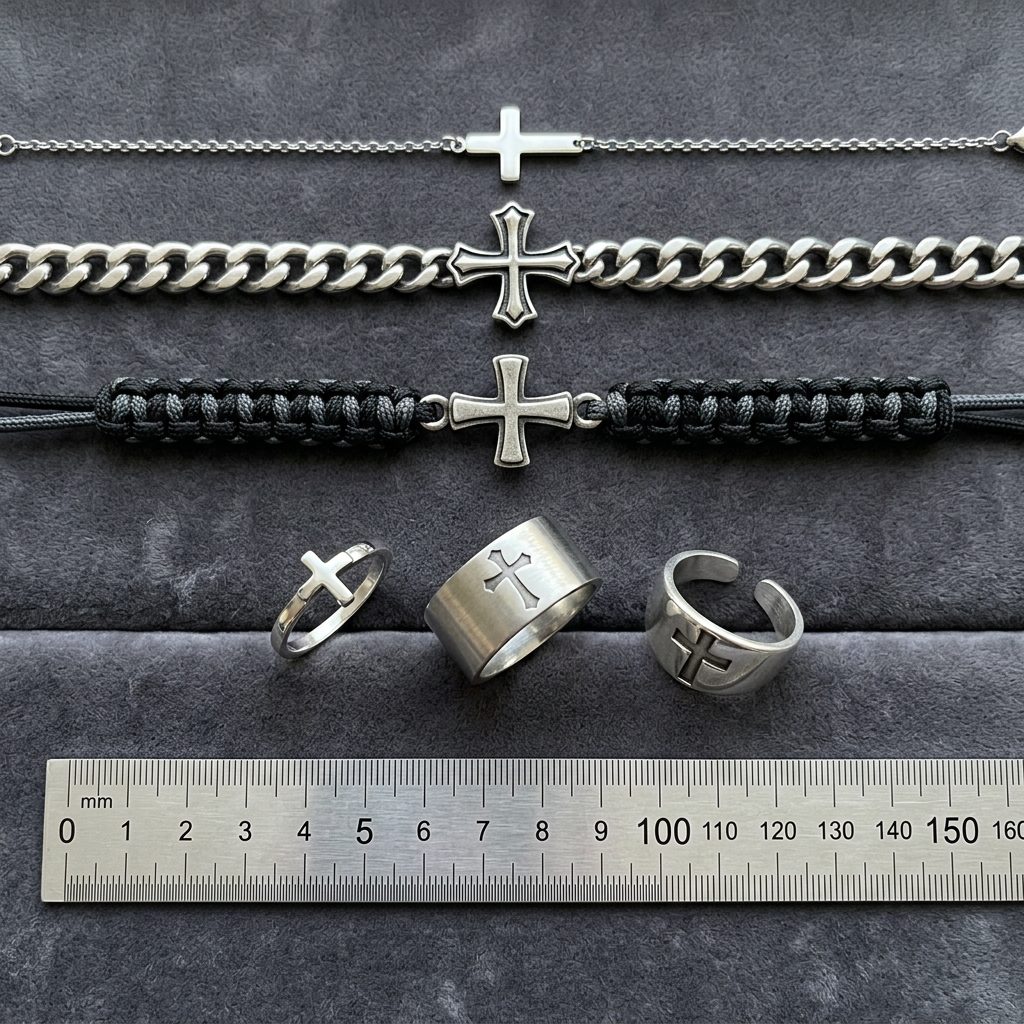
Cross motifs can be integrated into chain bracelets, cuffs, ID bracelets, signet rings, bands, and adjustable structures. Each product receives its own size system, wearing dimensions, connection method, surface priorities, and function checks. A necklace drawing cannot be reused as a bracelet or ring specification simply because the visible symbol remains the same.
Cross Earrings and Charms
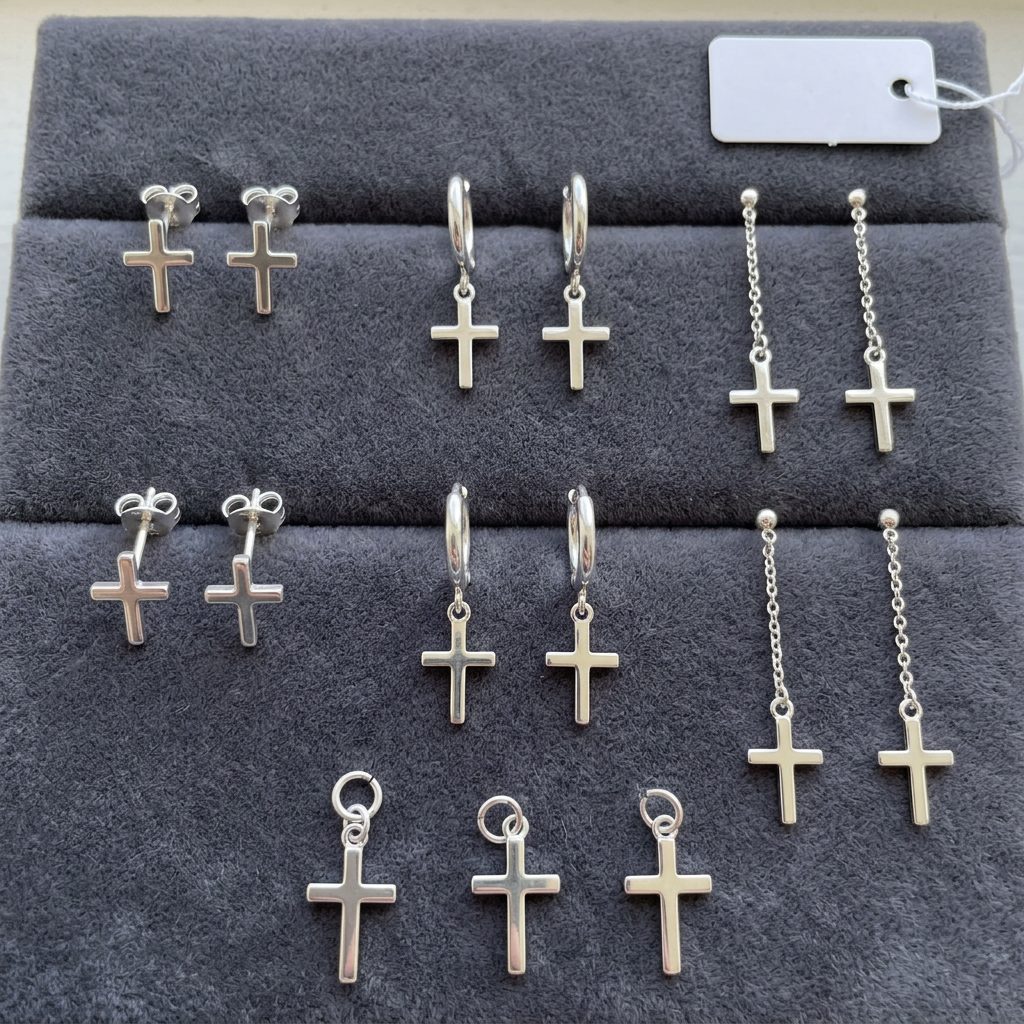
Studs, hoops, drops, huggie earrings, ear charms, bracelet charms, and standalone components require smaller-scale artwork and tighter interface control. We review ear-post diameter and alignment, left-right pair direction, charm hole size, connector orientation, unit weight, smooth edges, fastening method, plating coverage, set quantity, and packing protection for posts, polished surfaces, and delicate components.

Branded Cross Gift Sets
Coordinated necklace, bracelet, earring, ring, or charm sets can share a design language while retaining product-specific drawings and inspections. We plan SKU combinations, color and size ratios, set completeness, logo placement, product positioning, jewelry cards, boxes, instructions, barcode labels, and carton packing so the finished program is ready for retail or eCommerce distribution.
Define the Cross Before Requesting a Production Quotation
A reliable quotation uses the same information required for drawings, samples, production, inspection, and packaging. We convert your concept into measurable fields and mark missing decisions as open items. When information is incomplete, we provide a preliminary assessment instead of treating an assumption as approved. Use this framework for cross pendants, necklaces, earrings, bracelets, rings, charms, or sets.
| Specification Area | Information to Provide or Confirm | Why It Matters for Cross Jewelry |
|---|---|---|
| Product identity | Product type, SKU, style number, Cross or Crucifix definition, intended wearer, target market | Prevents a visual reference from being applied to the wrong product or audience |
| Artwork | Vector artwork, 2D drawing, 3D file, physical sample, approved text, font, front and back direction | Controls symbol accuracy, relief, engraving, text readability, and authorization |
| Material | 304, 316L, approved component materials, material form, solid or hollow construction | Affects processing route, corrosion performance, weight, cost, and testing |
| Pendant dimensions | Overall height, width, thickness, arm width, relief height, target weight, tolerance | Controls appearance, wear comfort, process feasibility, and commercial price |
| Chain interface | Hole or bail size, chain type, chain width and thickness, length, clasp, extension chain, logo tag | Ensures the pendant passes over or connects to the selected chain and hangs correctly |
| Surface and color | A/B/C surfaces, polish, brush, sandblast, texture, steel color, PVD shade, color reference | Establishes visible finish standards and batch color comparison points |
| Decoration | Stone, pearl, shell, enamel, resin, paint, quantity, position, fixing method, allowed variation | Determines setting, adhesive, process sequence, testing, and packing protection |
| Branding | Product logo, engraving, tag, card, pouch, box, barcode, SKU, FNSKU, instruction card | Separates product engineering from retail and fulfillment requirements |
| Order structure | Quantity per style, color, size, and packaging version; sample quantity; reorder plan | Determines MOQ, plating batch, material planning, tooling, cost, and schedule |
| Quality plan | Target market, dimensional checks, color tolerance, pull or function tests, AQL, third-party inspection | Aligns sample approval and bulk acceptance before production starts |
Match Material and Finish to the Cross Design
We select the steel grade, material form, surface preparation, texture, plating structure, and protection method as one product system. The choice depends on cross geometry, weight, skin contact, exposure, price, quantity, testing, and reorder needs. We review chains, findings, springs, stones, and other components separately when they differ from the pendant body, then record each approved material and finish in the SKU specification.
Choose the Base Material by Product and Process
- 304 stainless steel: Practical for many sheet, wire, tube, chain, stamped, laser-cut, and selected cast products. Suitability still depends on the structure, target market, and your requirements.
- 316L stainless steel: Contains molybdenum and generally provides improved pitting resistance. Its higher processing difficulty can affect complex forming, cutting, welding, polishing, correction, cost, and lead time.
- Component materials: Ear posts, springs, screws, magnetic parts, clasps, jump rings, chain, welding material, stones, and decorative components may require separate material specifications in the BOM.
- Approval rule: We link the material grade to the drawing, BOM, sample, target market, and testing. A generic material claim does not replace SKU-level approval.
For a complete necklace, we specify the pendant and chain separately even when both look steel-colored. We also define which components are included in chemical, corrosion, or skin-contact testing. A pendant report does not automatically cover an untested clasp, connector, spring, or chain.
Define the Visible Finish and Its Use Conditions
- Steel color, high polish, mirror finish, directional brush, satin, sandblast, or mixed finish
- 14K, 18K, or 24K gold-color reference; rose gold; black; gun metal; or another approved shade
- A, B, and hidden surfaces, including recessed artwork and the back of the cross
- Approved color sample, color-tolerance method, plating thickness, wear points, and test conditions
- Separate protection for polished faces, stones, chains, and plated components during assembly and packing
We complete PVD/IP in our in-house plating workshop. Reference options include E1 at 0.4 micrometers TiN plus 0.05 micrometers gold and E2 at 0.7 micrometers TiN plus 0.1 micrometers gold. These are options, not default specifications. We confirm the final structure, color, tests, cost, and care guidance for each project.
Color approval uses the actual substrate, preparation, texture, and layer direction intended for production. A photograph or color name can guide development but does not replace a controlled physical reference. Replenishment batches are compared with that reference under the agreed viewing or measuring condition, while recesses, edges, chain-contact areas, and rack points are judged against their separately defined acceptance limits.
Engineer Cross Details That Must Survive Bulk Production
The visual center of a cross may also be its thickest casting zone, deepest recess, narrowest bridge, or most important religious detail. Before tooling, we identify risks such as distortion, porosity, weak joints, trapped compound, uneven plating, unreadable text, sharp edges, and excess weight. We mark proposed changes on the drawing so you can assess the visual, functional, cost, and timing effects before sampling.
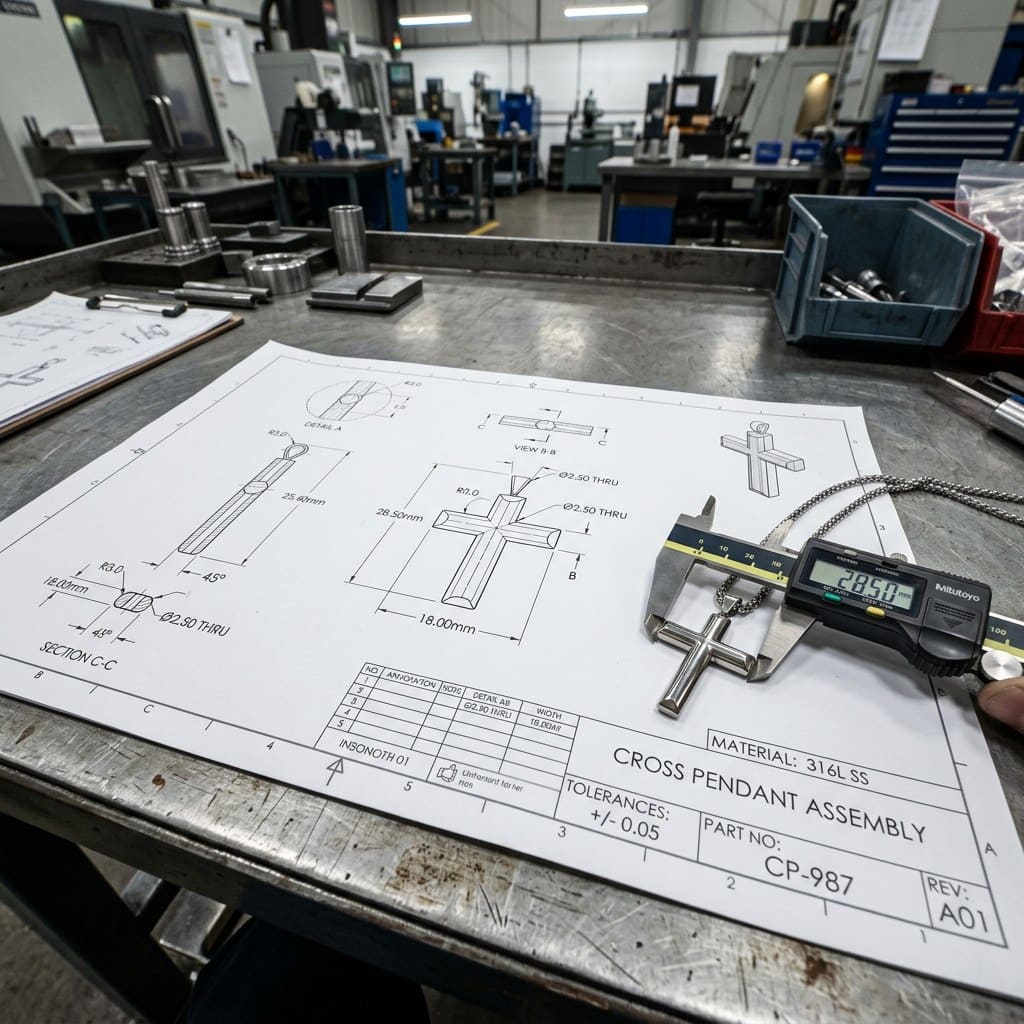
Review Geometry, Detail, and Wearing Interfaces Together
- Cross arms and center: Confirm minimum thickness, width transitions, corner radii, symmetry, flatness, and the risk of shrinkage or deformation at heavy intersections.
- Crucifix figures and relief: Define relief height, face and body detail, polishing access, protected edges, recess depth, and the approved appearance after plating.
- Cutouts and narrow bridges: Check tool access, laser heat effect, burr removal, edge rounding, strength, cleaning, and plating coverage.
- Scripture and engraving: Convert fonts, set minimum line and spacing, confirm spelling and line breaks, and protect readability through polishing and coating.
- Bail and hole: Set internal opening, wall thickness, hole-to-edge distance, chain clearance, connector direction, welding access, and the main load path.
- Weight and balance: Record target weight, solid or hollow structure, center of gravity, pendant tilt, chain load, and front-facing stability.
- Skin-contact edges: Remove burrs and sharp corners from the back, tips, bail, jump rings, ear posts, ring interiors, and bracelet contact areas.
- Drainage and cleaning: Avoid cavities that retain liquid, adhesive, polishing compound, or cleaning residue; add access or process holes when required.
We classify the design as producible as submitted, producible after modification, sample-dependent, or currently unsuitable. Open items remain visible until you approve the revised specification.
Choose a Manufacturing Route That Fits the Cross Structure
We select the manufacturing route after reviewing geometry, relief, thickness, quantity, tolerance, finish, tooling cost, and reorder plans. We also account for edge access, recess cleaning, bail welding, stone-setting sequence, PVD coverage, and surface protection. One released route card then guides metal preparation, forming, welding, polishing, plating, assembly, and inspection.
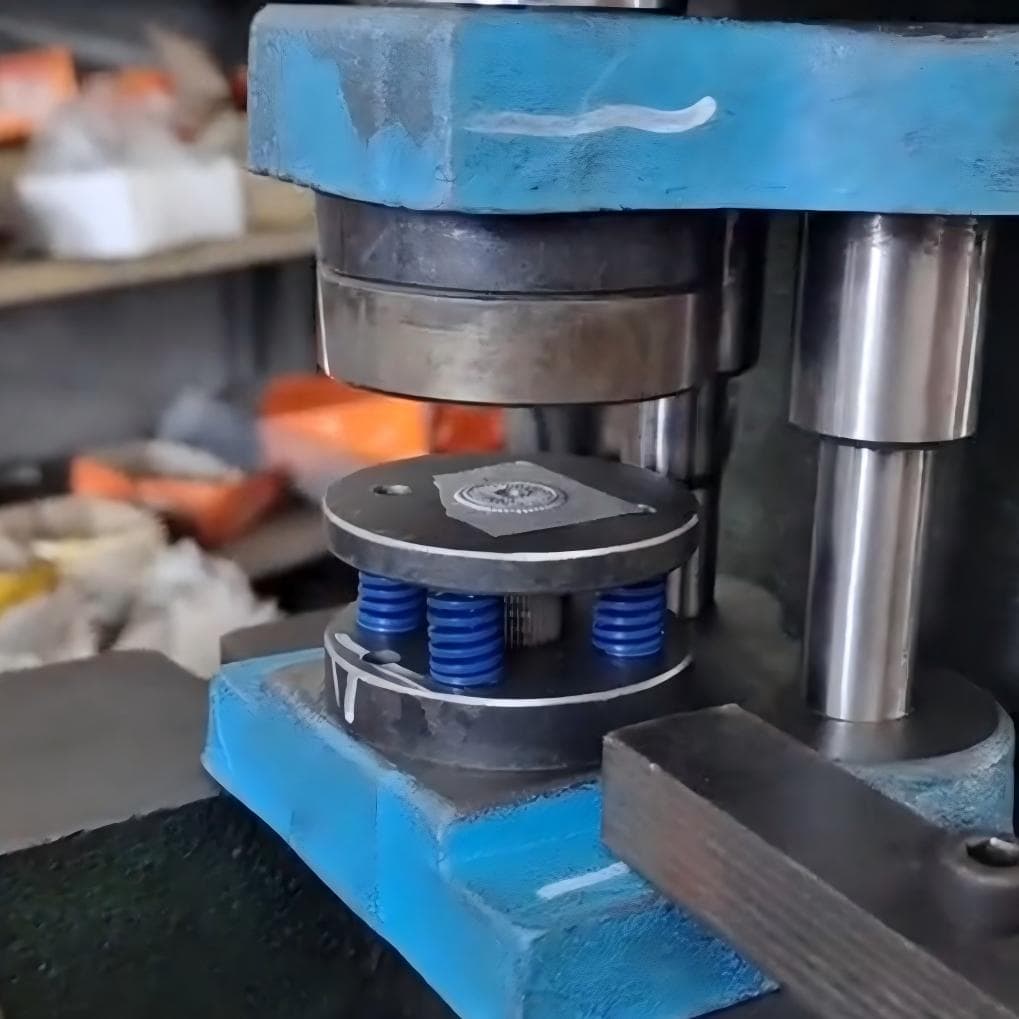
Route Each Cross by Geometry and Order Economics
- Casting: For three-dimensional crucifixes, sculpted figures, Gothic relief, stone seats, and different front and back levels. We check heavy centers, thin extremities, and deep recesses for shrinkage, incomplete fill, porosity, and polishing access.
- Stamping or hydraulic forming: For repeatable flat or shallow-relief crosses when volume supports steel tooling. We assess sheet thickness, die clearance, corner stress, hole distortion, burr direction, flatness, and required secondary work.
- Laser or wire cutting: For two-dimensional outlines, openwork, and fine sheet crosses. We plan for heat effect, deburring, hole finishing, flatness correction, and skin-contact edge rounding.
- CNC or lathe work: For precision recesses, stepped profiles, controlled holes, and geometric forms. Tool reach, internal corner radius, fixture marks, cycle time, and polishing allowance drive feasibility and cost.
- Hybrid routes: We may combine casting with CNC refinement, stamping with laser engraving, or laser cutting with welded bails and stone setting. The route card records every transfer and inspection point.
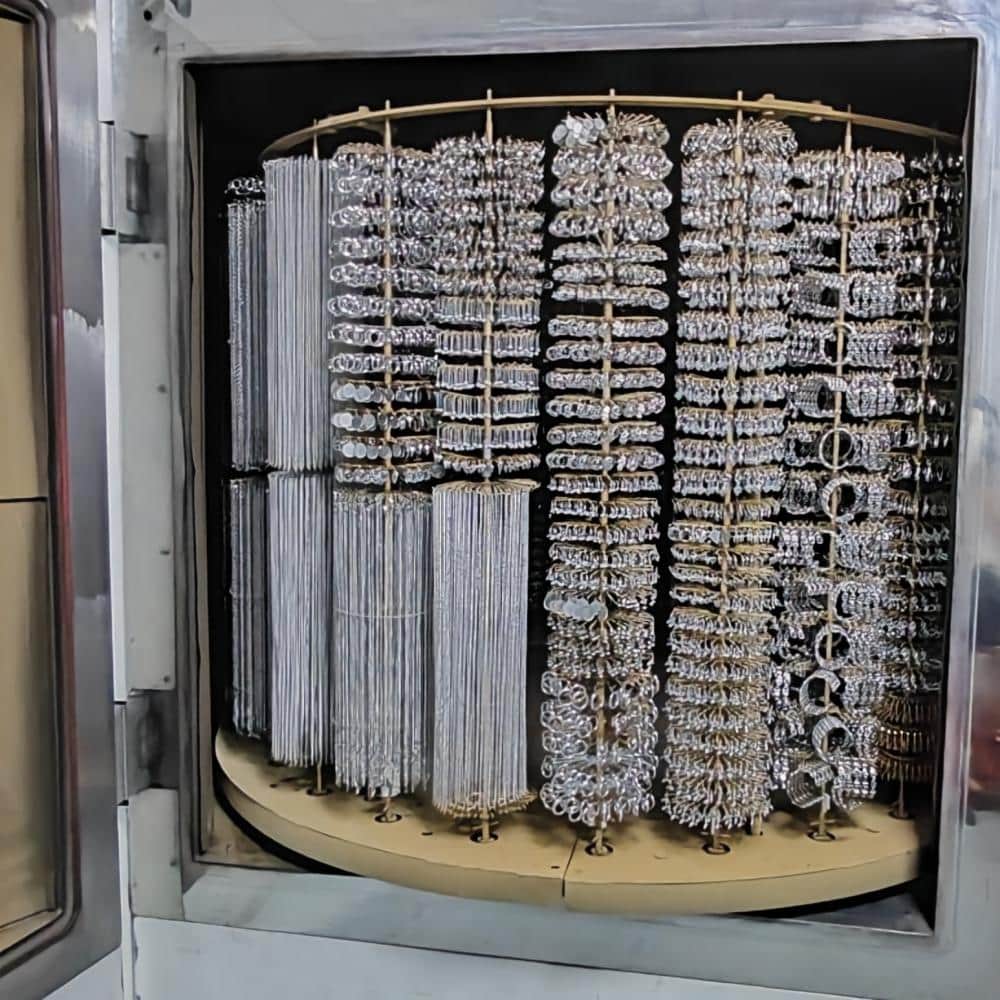
Prepare Complex Crosses for Controlled PVD Coverage
After metalwork and polishing, plated styles enter our in-house workshop with six PVD vacuum coating machines. Because plating cannot hide pores, waves, scratches, trapped compound, weak welds, or lost detail, we check surface condition, cleaning access, assembled materials, and the approved color route before loading.
- Surface zoning: Drawings identify primary, secondary, hidden, recessed, bail, and chain-contact surfaces with their coverage limits.
- Rack orientation: We position fixtures and rack points around cross arms, relief, cutouts, cavities, and defined appearance areas.
- Batch identity: We link the work order, SKU, material, polish, layer structure, color, machine or batch, date, and result.
- Color approval: We compare each shade with the approved physical reference under the agreed viewing or measuring condition.
- Post-plating handling: We inspect components before assembly and separate polished or PVD faces to reduce friction and scratches.
For each SKU, we confirm the plating structure, thickness, tests, quantity, and care guidance. A color name alone is not a production standard.
Move from Cross Concept to an Approved Golden Sample
For OEM projects, we manufacture to your approved requirements. For ODM projects, we also contribute style, structure, process, or collection-development input. Both routes use written approvals and version control for drawings, finishes, chains, stones, logos, scripture, and packaging. This keeps development ideas and early samples separate from the bulk-production specification.
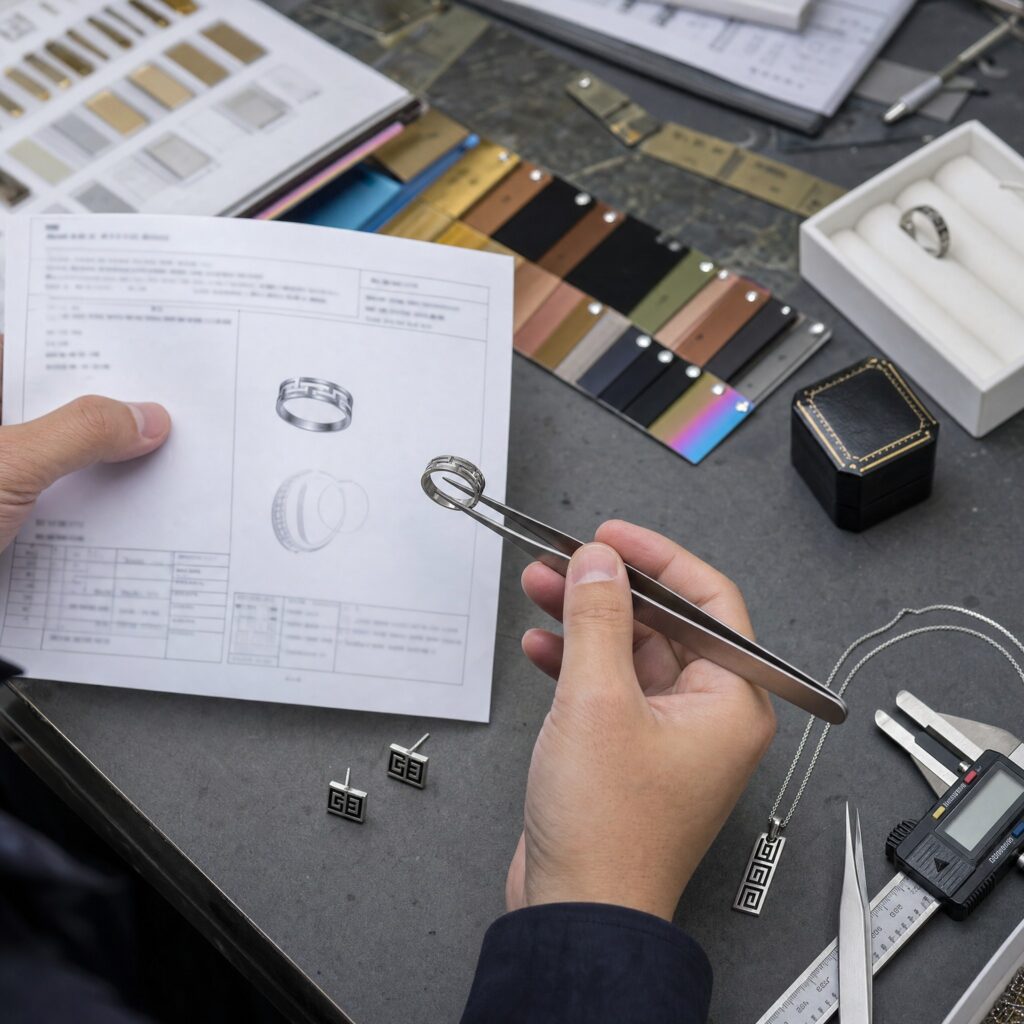
Use Eight Approval Gates Before Bulk Release
1. Qualify the project: We confirm the supply model, market, design ownership, quantity, target price, launch date, packaging, and test needs. Our 6 jewelry designers and 3 jewelry engineers join according to scope.
2. Review inputs: We check sketches, artwork, CAD, physical samples, scripture, logos, dimensions, finishes, chains, and brand authorization. Missing details remain open items.
3. Set commercial terms: We define drawing, tooling, sample, revision, testing, packaging, freight, payment, and any fee-deduction conditions.
4. Release engineering files: We issue a versioned drawing, model, or specification covering proportions, relief, weight, edges, bail, chain, material, finish, decoration, and logo.
5. Approve DFM: We record risks, proposed changes, route, tolerances, inspection methods, and sample-dependent features.
6. Make the sample: We document the material, process, color, chain, logo, components, and packaging. Custom samples commonly take 25–30 working days after required approvals.
7. Control revisions: We record every change, affected file, cost, and timing. Material changes may require a new physical sample.
8. Authorize the Golden Sample: We link the approved sample to its files, accepted deviations, approver, date, and use. It becomes the reference for first-article and bulk inspection.
Your approval covers only the stated version. We document tooling and sample ownership, confidentiality, restricted use, and file-release terms for the project.
Plan MOQ, Cost, and Timing Before Collection Approval
We confirm MOQ and timing by sellable SKU, not only by total project quantity. Style, color, size, plating batch, chain, stone, logo, and packaging versions may have separate minimums. Tooling, revisions, tests, inspection, and retail materials may add fees or milestones. Final terms appear in the written quotation and production schedule.
| Commercial Item | Our Planning Reference | Conditions to Confirm |
|---|---|---|
| Existing or regular style MOQ | Commonly 120 pieces per style | Stock status, selected color, chain, logo, packaging, and allowed mix |
| OEM/ODM MOQ | Commonly 500 pieces per style | Tooling, process, PVD batch, material, stones, sizes, colors, and retail versions |
| Existing-style sample | Commonly 3–7 working days | Available SKU, color, sample quantity, logo, packaging, payment, and dispatch method |
| Custom sample | Commonly 25–30 working days | Starts after required drawings, tooling, materials, color direction, and commercial approvals |
| Existing-style bulk | Commonly 20–30 working days | Confirmed stock or production route, quantity, finish, packaging, and current schedule |
| Custom bulk | Commonly 25–45 working days | Starts from agreed approval point; quantity, complexity, testing, inspection, and capacity can change timing |
| Sample and tooling fees | Quoted by project | Physical sample, master, mold, fixture, revision, plating sample, packaging sample, and freight scope |
| Testing and inspection | Quoted or arranged as required | Standard, laboratory, report scope, sample count, agency, inspection level, and booking date |
| Quantity tolerance | Common historical reference approximately +/-5% | Final allowed overage or shortage, invoicing, tail stock, and freight responsibility must be written |
| Formal quotation | Per piece for most jewelry projects | Material, dimensions, target weight, route, polish, plating, decoration, logo, packaging, quantity, and Incoterm |
Supporting Note
For faster evaluation, provide quantity by style, color, size, chain, and pack version, plus your market, delivery date, and editable design or measurable sample. We target an initial response within 6 working hours and preliminary guidance for complex projects within 24 hours. Formal pricing follows engineering and cost review.
Build Cross Jewelry That Arrives Ready for Your Channel
We bring the product, brand presentation, SKU data, and packing method together at one controlled pack-out point. Jewelry and packaging keep separate specifications because cards, pouches, boxes, labels, and inserts may have different MOQs, samples, lead times, and approvals. Each sellable version receives an instruction for its cross, chain, logo, insert, label, barcode, protection, and carton allocation.
Product Brand Identity
We can place authorized logos, word marks, scripture, style numbers, or origin statements on the cross, back, bail, clasp tag, or logo tag where geometry and regulations allow. Before sampling, we confirm the artwork version, ownership, size, depth, direction, safe margin, process, and visibility after finishing. We manage variable text separately from fixed artwork because setup, inspection, and pricing differ.
Pendant and Chain Set
We define the retail unit as pendant-only, pre-assembled, or packed with a separate chain. One sellable configuration covers chain profile, width, length, color, clasp, extension, connector, logo tag, pendant orientation, and anti-tangle packing. An alternate chain or component color may require a separate SKU, BOM, label, and instruction. We verify set completeness and chain-to-pendant matching at pack-out for each market.
Cards and Pouches
We develop jewelry cards, backing cards, velvet pouches, care cards, story cards, and dedication inserts around the cross dimensions and sales channel. Checks cover artwork, card size, attachment slots, print color, material, care content, pouch fit, rub points, and packing sequence. Jewelry and packaging MOQs are quoted separately. For a low-volume launch, we can assess a simpler approved pack before custom construction becomes practical.
Gift Box Engineering
A cross gift box must hold the pendant without pressing its relief, stones, bail, or polished face. We define box dimensions, insert cutout, chain storage, orientation, logo process, color, closure, protection, and carton fit. New structures, inserts, foils, and colors may require samples, tooling, and extra lead time. Approval covers presentation, handling, and transport protection against abrasion, impact, or tangling.
SKU and Channel Data
We can apply approved SKU labels, barcodes, FNSKU, origin information, color and size identifiers, set contents, and carton marks from your current data. You provide valid codes and channel instructions; we verify product, packaging, quantity, placement, readability, and retail-version matching before production release. For large programs, a data freeze date reduces relabeling, mixed inventory, and inspection delays caused by late changes.
Protected Export Pack-Out
We select packing around scratch risk, chain tangling, stone pressure, set completeness, moisture, carton movement, and destination. Options include individual bags, separators, anti-tangle winding, sleeves, trays, pouches, boxes, and SKU-separated inner cartons. Final instructions define inner-box quantity, carton quantity, labels, and inspection access. Before scale-up, we review packed samples for protection, presentation, labor, carton use, inspection access, and shipment handling.
Inspect Cross Jewelry Against Released Product Evidence
We build the quality plan from your contract, released drawing, BOM, artwork, Golden Sample, color reference, packaging file, and test matrix. Your written requirements take priority over our defaults. Relief, scripture, stones, heavy chains, openwork, and high-contrast PVD receive targeted checks. The plan defines the checkpoint, method, sample size, defect class, acceptance rule, record, and release authority.
Control Critical Features at the Earliest Practical Gate
- Incoming: We verify assigned steel, component dimensions, chains, findings, stones, packaging, and approved supplier inputs.
- First article: We compare symbol direction, crucifix detail, scripture, logo, dimensions, weight, bail, chain passage, balance, and orientation with released files.
- In process: We check casting fill, flatness, burrs, CNC detail, welds, edges, polishing loss, trapped compound, stone seats, and cleaning before plating or assembly can hide defects.
- Plating: We record the batch and inspect color, brightness, thickness, coverage, rack points, recesses, scratches, pits, burns, peeling, and exposed substrate.
- Assembly and final: We verify connectors, chain length, clasp function, stone retention, SKU, set contents, logo, labels, barcode, protective packing, and cartons.
When your drawing does not specify otherwise, our dimensional references are: up to 20 mm, +/-0.15 mm; 20–50 mm, +/-0.20 mm; above 50 mm, +/-0.30 mm; hole and assembly position, +/-0.05 mm. We define measurement references and equipment in the inspection plan.
Set Tests by Failure Mode, Market, and Product Structure
- Connection load: Our default for pendant rings, connecting rings, and clasps is 40 N on five pieces per style for 10 seconds. Main necklace structures use 30 N. Fixtures and load direction must represent the design.
- Color and thickness: Default Delta E00 is 1.5 or lower for polished surfaces and 2.0 for brushed, sandblasted, or antique surfaces. Plating-thickness tolerances are nominal +/-10% for the batch average and +/-20% for a single point; the main appearance surface must reach at least 80% of nominal.
- Corrosion and wear: Defaults are 24-hour salt spray for applicable bare steel and 48 hours for plated or PVD product; higher requirements may use 72 hours. Artificial perspiration defaults to 24 hours at 40+/-2 degrees C and pH 4.7+/-0.2.
- Decoration security: Tape is only an auxiliary check for small stones. Large glued stones, prong settings, pearls, resin, and other attached elements require a method suited to their fixing structure.
Unless we agree otherwise, our default is normal inspection at General Inspection Level II: Critical Ac 0/Re 1, Major AQL 1.0, and Minor AQL 2.5. Sample size and Ac/Re follow the lot-size table. Destructive test samples are not shipped.
Define Compliance Evidence for Each Cross Jewelry SKU
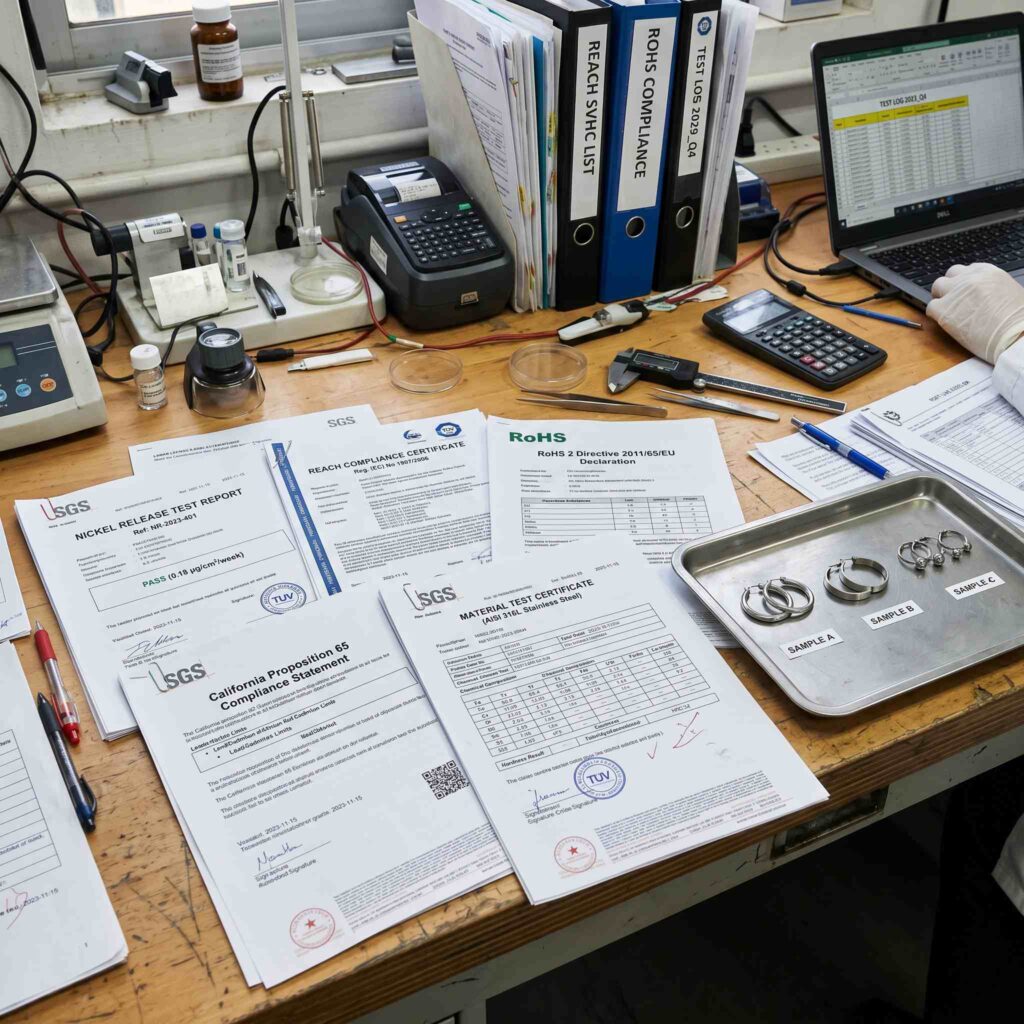
We do not apply one compliance statement to every cross jewelry SKU. Requirements depend on destination, use, material, components, PVD structure, skin contact, stones, packaging, and sales channel. One report does not automatically cover another alloy, color, component set, or market. Before testing, we agree the standard, sample, laboratory, fee, timing, pre-treatment, acceptance rule, applicant, and report scope.
| Verification Area | Information We Confirm | Your Decision or Evidence |
|---|---|---|
| Target-market scope | Destination, age group, product type, skin contact, retail channel, and your restricted-substance policy | Markets and channels where each SKU will be sold |
| Chemical requirements | Applicable nickel release, lead, cadmium, REACH, California Proposition 65, or other written requirements | Standard and version, limits, materials and colors covered, laboratory, and report format |
| Nickel-related route | Whether EN 1811, EN 12472 pre-treatment, or another method applies to the actual construction | Skin-contact definition, plating system, sample count, color count, and intended claim |
| Performance testing | Salt spray, artificial perspiration, abrasion, color, thickness, pull, torque, drop, or stone-retention method | Test duration, conditioning, load, measurement position, quantity, and acceptance rule |
| Laboratory testing | SGS, HKPC, or another approved laboratory can be arranged when applicable | Quotation approval, test samples, authorized applicant data, schedule, and report recipient |
| Third-party inspection | We support your appointed inspector before shipment | Agency, booking party, AQL, defect definitions, report format, carton-ready date, and release authority |
| Report applicability | Legal company name, tested sample, SKU, material, finish, layer structure, standard, issue date, and report number | Written confirmation that the report matches the product and market in question |
| Corrective action | Isolate affected stock, review evidence, identify cause, define correction, and approve retest rules | Disposition, responsibility, timing, replacement or rework authority, and shipment decision |
Supporting Note
Reference costs are approximately USD 100 for artificial perspiration, USD 2 per salt-spray hour, USD 120 for abrasion, USD 500 per color for SGS nickel release, and USD 120 per color for HKPC nickel release. We reconfirm scope, samples, price, and lead time before booking. We evaluate RoHS only where applicable and do not present CE as a general certification for ordinary non-electronic jewelry. We verify management-system or social-audit documents before sharing them.
Protect Cross Jewelry Programs Beyond the First Purchase Order
For long-term programs, we connect project files with PMC scheduling, purchasing, production, in-house plating, QC, pack-out, and shipment records. Forecasts, purchase orders, approval dates, material lead times, PVD loads, inspection bookings, and market-specific retail versions remain visible to the responsible teams. Each new material and plating batch still requires verification.
Connect Capacity, Versions, and Batches Across Reorders
Our 5,500+ square meter Dongguan factory has 400+ employees and factory-wide monthly capacity above 200,000 pieces. Its 58 machines include five CNC machines, three laser cutters, five laser welders, six stamping machines, eight polishing machines, and six PVD machines. These are factory-wide resources, not capacity reserved for one account. PMC checks current loading, materials, plating, packaging, inspection, and shipment timing before confirming delivery.
- Master SKU: We link the drawing, BOM, artwork, material, finish, chain, stone, logo, retail version, test plan, and Golden Sample.
- Batch identity: Purchase order, SKU, file version, material lot, work order, production date, plating batch, inspection, carton, and shipment records support investigation.
- Change authorization: We review any material, component, finish, process, decoration, or packaging change, including its cost, sample, test, stock, and delivery effects.
- Forecast and replenishment: Demand by SKU, color, size, market, launch window, and pack version helps us plan material, tooling, PVD, QC, and packing. A forecast does not replace a purchase order.
- Complaint containment: We collect the order, SKU, batch, affected quantity, images, packing condition, receipt date, and use or storage details before deciding sorting, repair, replacement, remake, or another resolution.
For multi-market programs, we maintain separate labels, barcodes, care cards, inspections, and carton allocations by retail version. We support repeatability through records and revalidation, not an unverified promise of identical future batches.
See How Cross Jewelry Programs Can Be Structured
These representative scopes show how we structure two common B2B briefs. They are illustrative workflows, not completed orders. Actual quantities, timing, processes, tests, packaging, and acceptance criteria depend on your artwork, our engineering review, and the written quotation.
Faith Collection with Scripture and Retail Variants
Use Scenario
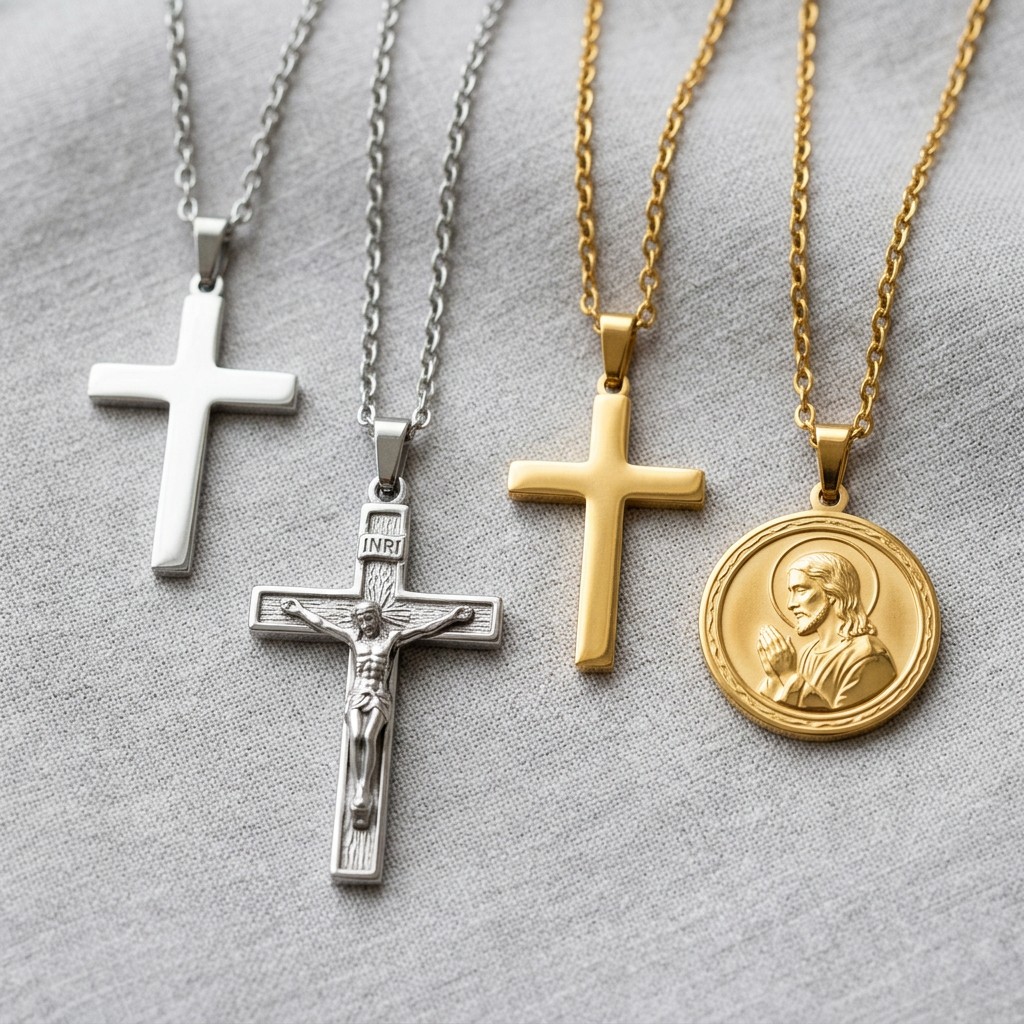
A European or North American brand plans a coordinated faith collection with four pendant bodies: a minimalist cross, a crucifix relief, a scripture-engraved cross, and a stone-set cross. Each body is offered in polished steel and one approved gold PVD color, with matched chains, logo tags, jewelry cards, barcode labels, and gift boxes for eCommerce and wholesale accounts.
Key Challenge
Eight sellable color SKUs share a collection identity but not the same manufacturing risks. The crucifix needs protected relief, scripture must remain readable after polishing and plating, the stone-set design needs retention and pressure-free packing, and every bail must fit its assigned chain. Packaging artwork and barcode allocation must match each finish without creating a false combined MOQ.
Chicolink Solution
We create separate product and retail files for each SKU, convert approved text and artwork, define cross and chain interfaces, select the manufacturing route, approve a physical PVD reference, identify appearance surfaces, sample each required structure, and record revisions. The Golden Sample links the product, color, chain, logo, card, barcode, box, and inspection requirements. We confirm MOQ, testing, and timing by style, color, and pack version before bulk release.
Result
The project produces eight inspectable SKU specifications rather than one generic collection approval. Our purchasing, production, plating, QC, and packing teams can identify the assigned body, color, chain, scripture or stone, label, and box. Reorders use the same references with new-batch color and quality checks.
Project Data
- Representative project scope; not a completed order
- 4 cross bodies and 8 sellable finish SKUs
- 2 chain configurations subject to bail-clearance approval
- OEM/ODM MOQ commonly starts at 500 pieces per style, subject to color and packaging allocation
- Custom sample timing commonly 25–30 working days after required approvals
- Custom bulk timing commonly 25–45 working days after approval and schedule confirmation
- Market testing, inspection level, packaging MOQ, and freight quoted separately as applicable
Men's Relief Cross Replenishment Program
Use Scenario
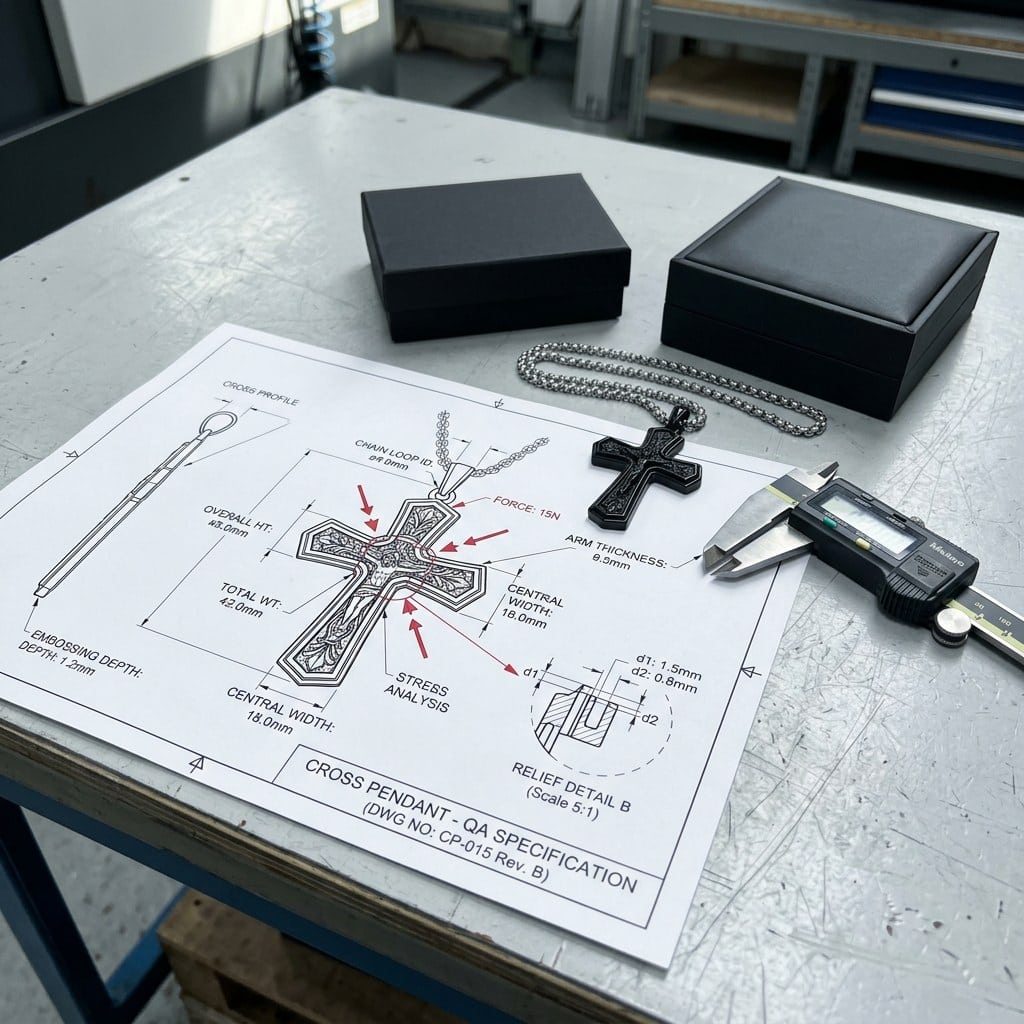
A men's accessories brand plans a substantial cross pendant with deep architectural relief, black PVD, a wider chain, a back logo, and retail-ready packaging. The style will support repeat orders in both standard wholesale packs and a gift-box version.
Key Challenge
The thick center and narrow arm transitions can create casting or polishing variation. Deep recesses complicate cleaning and PVD coverage. A heavy pendant increases bail, connector, and chain loads, while black high-contrast surfaces make pits, scratches, uneven polishing, and rack marks more visible. Two retail versions add label, barcode, insert, and carton-allocation risk.
Chicolink Solution
We review solid versus weight-reduced construction, relief depth, cleaning access, protected detail, edge comfort, balance, bail opening, chain profile, connector load, and packaging restraint. A route trial and sample establish the approved look and weight. Unless you specify another standard, the plan includes first-article dimensions, front-facing hang, a 40 N connector pull, black-color comparison, recess and rack-point inspection, scratch separation, barcode checks, and batch traceability.
Result
The master SKU links the approved structure, chain, black PVD reference, load and appearance checks, and two retail versions. Reorders use this specification; material, finish, chain, or box changes require approval before use.
Project Data
- Representative project scope; not a completed order
- 1 engineered pendant body
- 1 black PVD direction approved by physical sample
- 1 assigned chain and connector system
- 2 controlled retail packaging versions
- Default connector pull reference: 40 N, five pieces, 10-second hold when no other written standard applies
- Bulk MOQ, testing, packaging MOQ, and delivery schedule confirmed after actual design review
Approve These Inputs Before Ordering Custom Cross Jewelry
Use this checklist for RFQ comparison, sample review, and purchase-order release. It separates product approval from manufacturing, compliance, commercial, and reorder evidence. Keep every unresolved field open with an owner and due date. We can convert the completed inputs into a quotation basis, released specification, Golden Sample record, quality plan, pack-out instruction, and reorder reference.
| Your Checkpoint | Evidence or Decision Required | Approval Question |
|---|---|---|
| Artwork rights and accuracy | Authorized vector file, scripture or text file, font, direction, version, and owner | Is the exact cross, crucifix, logo, and text approved for production use? |
| Product architecture | Type, dimensions, thickness, relief, weight, solid or hollow direction, and tolerances | Can the structure be produced, polished, plated, inspected, and worn as intended? |
| Material and components | Steel grade plus separate chain, post, spring, magnet, stone, adhesive, and finding requirements | Does the BOM identify every material that affects use or testing? |
| Bail and chain system | Internal opening, chain cross-section, connector, length, clasp, extension, and orientation | Has physical chain passage and front-facing hang been approved? |
| Surface and PVD | A/B/hidden surfaces, polish or texture, physical color reference, layer and thickness direction | Are color, coverage, rack points, recesses, wear points, and test conditions measurable? |
| Decoration security | Stone or inlay specification, fixing method, setting height, allowed variation, and protection | Is the retention method appropriate to the real attachment structure? |
| Golden Sample | Sample ID, linked drawing and BOM, accepted deviations, approver, date, and retention plan | Does approval cover the exact production and retail version? |
| Quality agreement | Critical dimensions, defect classes, AQL or full inspection, tests, sample quantities, and reports | Can both parties reach the same pass or fail decision? |
| Market compliance | Destination, channel policy, applicable standard, laboratory, report scope, fee, and timing | Does the evidence cover the same SKU, material, finish, and market? |
| Commercial allocation | Quantity by style, color, size, chain, pack version, MOQ basis, price, and Incoterm | Are separate production and packaging minimums visible? |
| Schedule ownership | Drawing, sample, revision, testing, packaging, inspection, production, and shipment milestones | Which approval starts each lead-time commitment? |
| Repeat-order control | Forecast, master SKU version, change process, batch records, complaint evidence, and obsolete-file removal | Can a replenishment order be reproduced without relying on memory? |
Stainless Steel Cross Jewelry Manufacturing FAQ
These answers provide initial planning guidance for custom and wholesale cross jewelry. They focus on the details that commonly delay quotation, sample approval, or bulk release. Final feasibility, MOQ, price, timing, material, finish, testing, packaging, and acceptance criteria are confirmed from the actual design, order allocation, target market, and written project approvals.
Can you make a cross from my drawing?
Yes. We can evaluate a sketch, reference image, vector artwork, 2D drawing, 3D file, or authorized physical sample. Before quotation, we identify missing dimensions, relief, weight, material, chain, finish, quantity, and packaging. You retain approval responsibility for artwork rights and religious text.
Can you manufacture detailed crucifix relief?
Yes, when the geometry is manufacturable. We review figure proportions, relief height, recess depth, casting fill, tool and polishing access, cleaning, PVD coverage, and protected detail. A physical sample is normally required because fine features can change after casting, polishing, and coating.
How do you ensure the pendant fits its chain?
We specify the bail or hole opening, chain cross-section, connector clearance, clasp, movement, pendant balance, and orientation. The assigned chain is checked physically during sample or first-article approval. Pendant-only and complete-necklace products receive separate specifications.
What is the MOQ for custom cross jewelry?
OEM/ODM projects commonly start at 500 pieces per style. Existing or regular styles commonly start at 120 pieces per style. Actual MOQ may apply by style, color, size, plating batch, stone, chain, or packaging version, so a project total does not automatically satisfy every minimum.
How long do samples and bulk production take?
Existing-style samples commonly take 3–7 working days and custom samples 25–30 working days. Existing-style bulk commonly takes 20–30 working days and custom bulk 25–45 working days. Timing begins from the agreed approval point and can change with complexity, revisions, testing, packaging, quantity, or capacity.
Can you match our gold or black PVD?
We can evaluate a physical color sample or controlled reference and produce a plating sample in our workshop. The specification covers substrate, preparation, layer structure, thickness, color tolerance, tests, and viewing method. We do not promise that plated color will never change.
Can scripture and logos remain readable after plating?
Readability depends on character size, line width, spacing, depth, texture, polishing loss, and contrast. We review editable artwork, spelling, line breaks, font conversion, direction, safe margin, and process route. You approve the final text and physical sample before bulk release.
What quality tests can be included?
Depending on the design and market, the plan can include dimensions, color difference, plating thickness, connector pull, torque, drop, salt spray, artificial perspiration, abrasion, stone retention, and chemical testing. Method, sample count, condition, load, laboratory, fee, and acceptance rule are confirmed per order.
Do you support private-label and retail packaging?
Yes. We support product logos, tags, cards, pouches, gift boxes, care inserts, barcodes, SKU labels, FNSKU, eCommerce pack-out, and export cartons. Each packaging item may have its own MOQ, sample, artwork approval, color tolerance, lead time, and cost.
Can our inspector check the order before shipment?
Yes. We support your appointed third-party inspector. Before booking, we confirm the agency, AQL or inspection standard, defect definitions, test access, report format, carton-ready date, and release authority. The schedule should allow time for correction before shipment.