Custom Stainless Steel Jewelry Engraving & Personalization
Build repeatable engraved collections with controlled artwork, approved samples, in-house production, inspection, packaging, and export coordination.
Chicolink Jewelry develops engraved and personalized stainless steel jewelry for brands, wholesalers, retailers, and eCommerce programs. Send a vector logo, message layout, drawing, reference image, or physical sample. We review the product, marking area, engraving route, surface finish, data model, quality standard, packaging, quantity, and target market before quotation. Our Dongguan factory manages product development, laser logo processing, PVD/IP plating, assembly, inspection, and private-label delivery under one approved specification.
- Manufacturer established in June 2012 in Dongguan, China
- 5,500+ m2 factory, 400+ employees, 6 jewelry designers, and 3 jewelry engineers
- 3 laser Logo machines and 6 in-house PVD vacuum coating machines
- Factory-wide monthly capacity of 200,000+ jewelry pieces
- Existing styles commonly from 120 pieces per style
- OEM/ODM projects commonly from 500 pieces per style
- Custom samples usually require 25–30 working days after specifications are confirmed
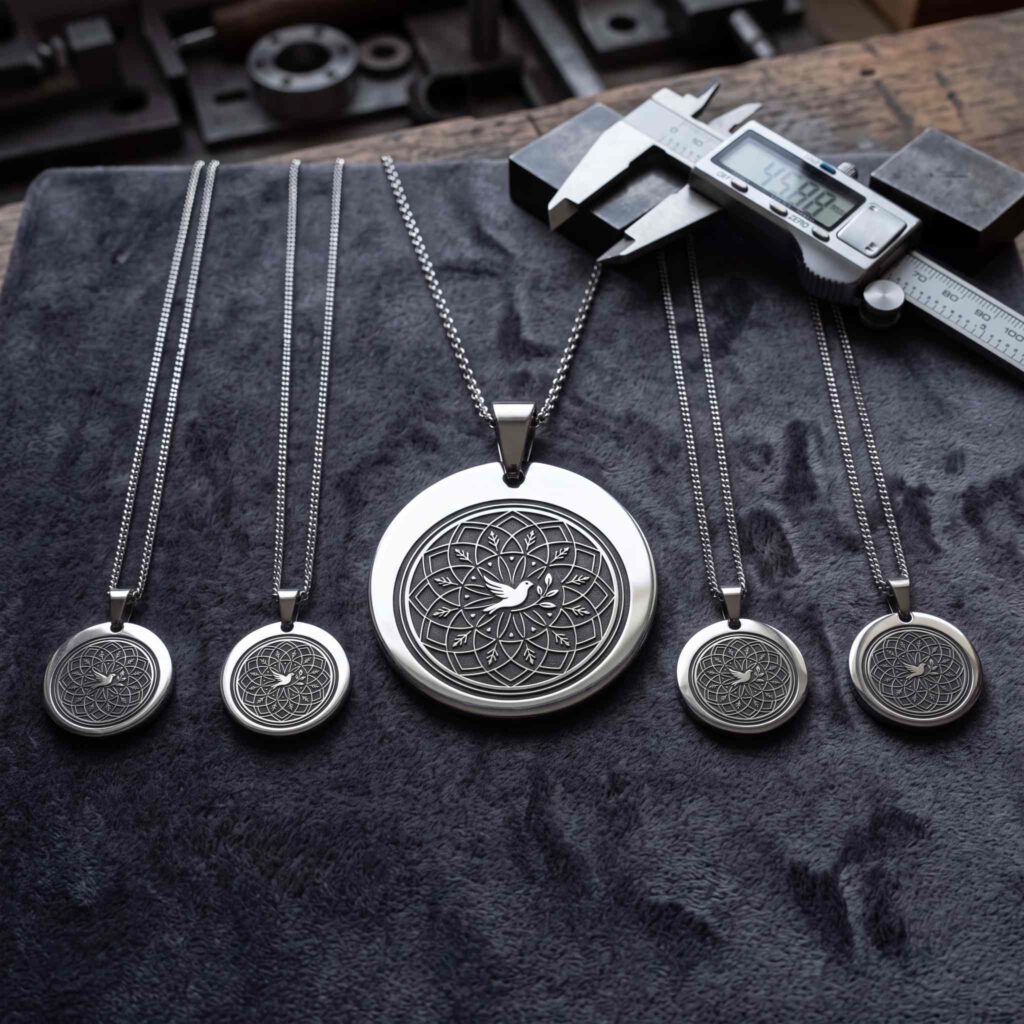
Control the Risks Behind Each Personalization Program
Engraving is only one production step. The commercial risk depends on whether every unit is identical, each SKU changes, or every piece carries unique data. We define the operating model before sampling so artwork approval, order release, inspection, packing, and replenishment follow the same logic.
Permanent Brand Marks
For one logo repeated across an entire collection, we lock the approved vector file, size, position, direction, safe margin, and contrast standard by SKU. The main risks are inconsistent logo scale, reversed orientation, loss of fine lines after polishing, and undocumented artwork changes between repeat orders.
Names and Initials
Name, initial, date, or short-message programs require a defined character limit, font, capitalization rule, line layout, and usable engraving area. Before accepting bulk data, we assess the product and order model. Unclear spelling responsibility, late edits, and text that exceeds the approved area are primary error sources.
Sequential Identification
Serial numbers, member IDs, model references, or controlled codes can be reviewed for approved projects. We first confirm the character pattern, sequence owner, duplicate policy, sample proof, and SKU-to-data link. Production is released only after the buyer supplies a final controlled list and accepts the agreed validation method.
Retail Gift Collections
Coordinates, anniversaries, zodiac symbols, short messages, and gift motifs must remain readable at retail scale and consistent across necklace, bracelet, ring, or tag formats. We control template families, surface orientation, font hierarchy, packaging presentation, and variant identification so the personalization does not become disconnected from the collection design.
Corporate and Promotional
Corporate gifts and event programs usually combine a fixed logo, delivery deadline, quantity tiers, individual names, and branded packaging. We separate fixed and variable elements, identify final-data and artwork cut-off dates, and confirm whether replacements, overage, or blank reserve pieces are required before the production schedule is committed.
Marketplace Fulfillment
Personalized eCommerce orders require exact links among item, engraving data, barcode, label, packaging version, and shipment destination. Chicolink accepts this work only after reviewing the handling volume and error-control plan. Amazon FBA labels and packing follow the buyer’s current platform documents rather than a universal preset.
Select a Product Built for the Intended Engraving
The same artwork behaves differently on a flat pendant, curved ring, narrow bracelet, chain tag, or textured earring. Chicolink evaluates the available marking area, product orientation, polishing access, contact wear, plating sequence, and inspection method for every SKU. This product matrix helps buyers select a practical base before investing in artwork refinement, samples, tooling, packaging, or a multi-product personalization launch.
Pendants and Dog Tags
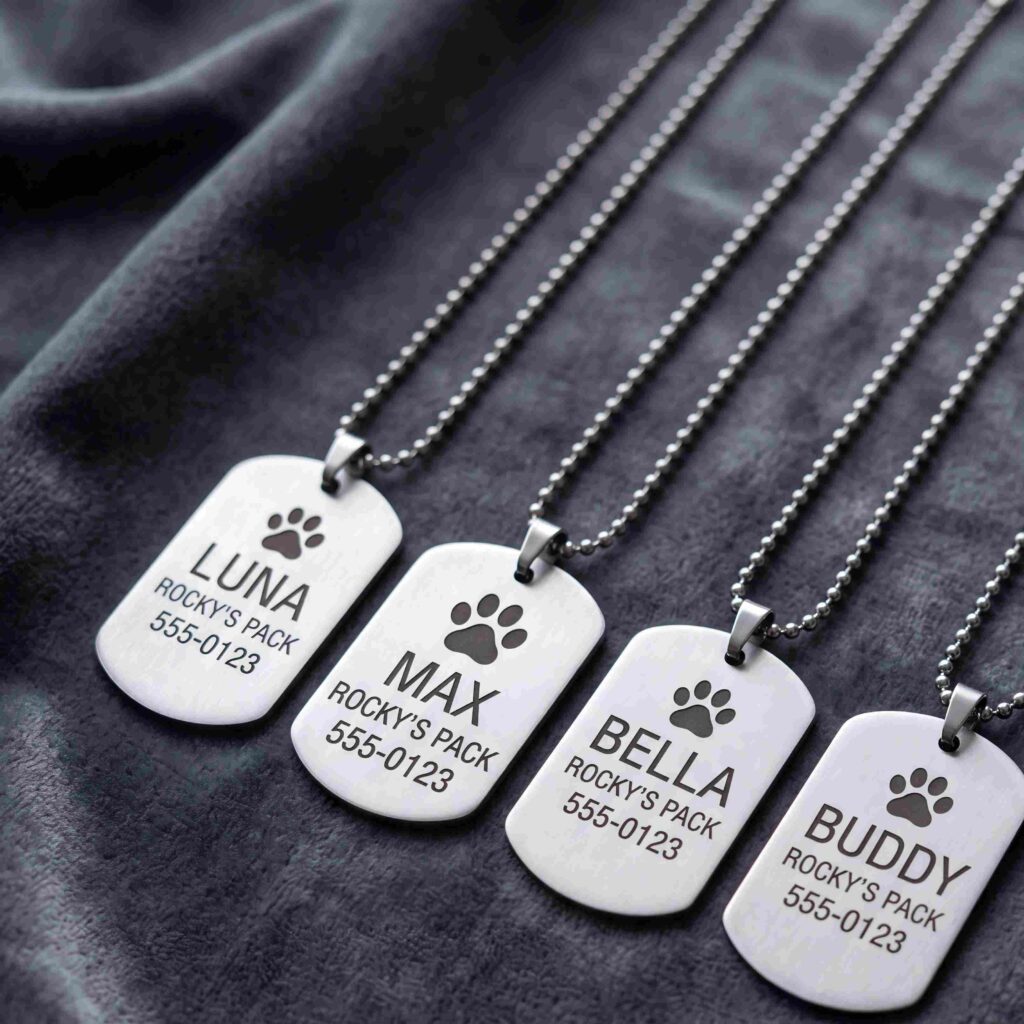
Discs, bars, dog tags, plates, nameplates, and geometric pendants offer clear front or back marking areas. We confirm chain direction, hole or bail position, usable border, target text hierarchy, thickness, edge finish, and whether the logo should face forward during wear. Double-sided layouts require separate front/back files and orientation approval.
ID Bracelets
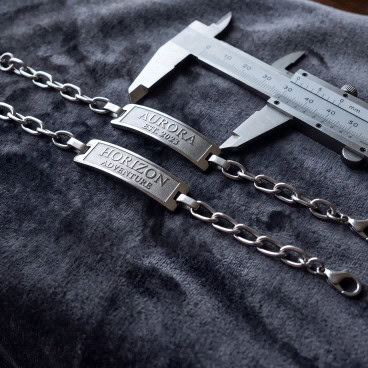
Identification bracelets combine a plate, chain or band, connection rings, clasp, and optional extension chain. The plate must remain readable without weakening connection areas or placing text under high-friction points. We specify plate curvature, wrist-facing direction, engraving boundary, bracelet length, clasp position, logo tag, and packing method to prevent tangling.
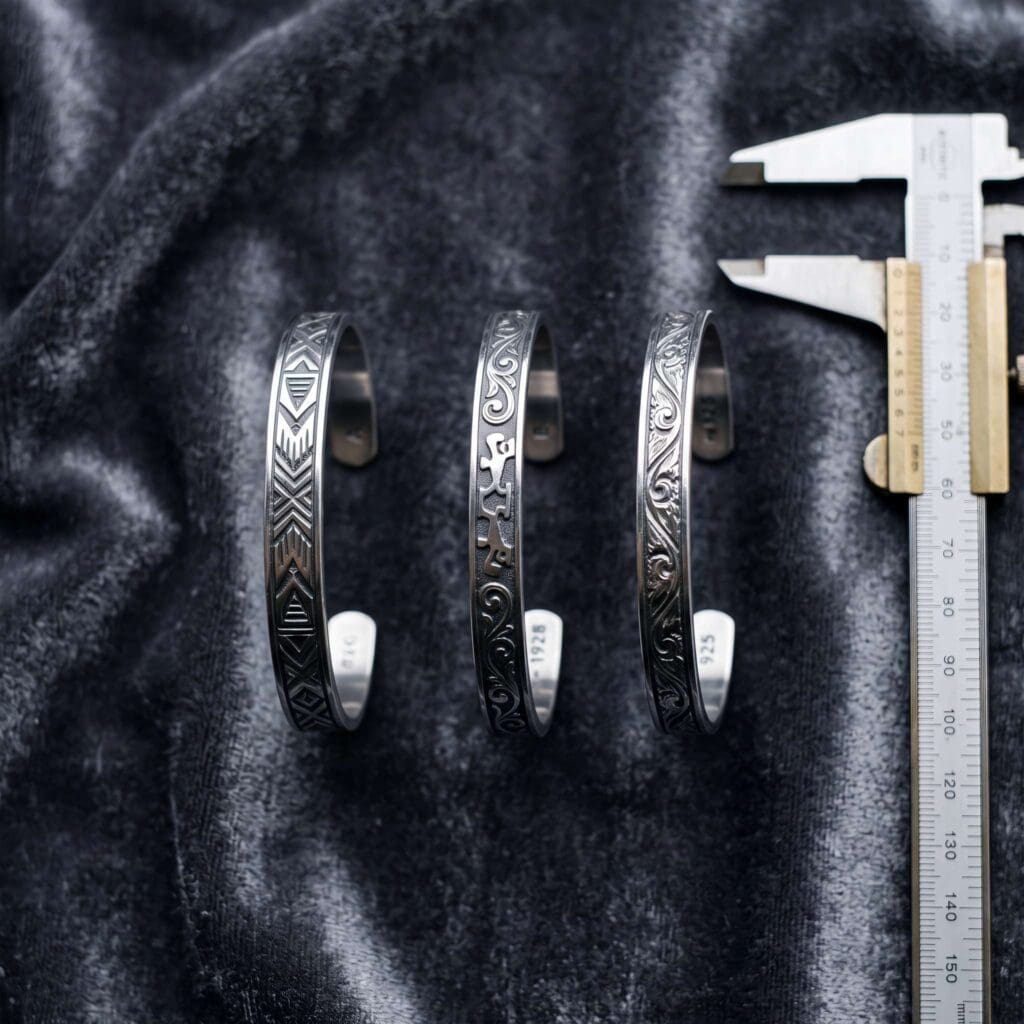
Cuffs and Bangles
Flat or gently curved cuffs can carry exterior or interior messages, while narrow and highly curved surfaces restrict line length and visual consistency. We review opening size, wall thickness, spring behavior, inner and outer marking positions, edge comfort, reading direction, fixture access, surface finish, and any dimensional change created by forming or polishing.
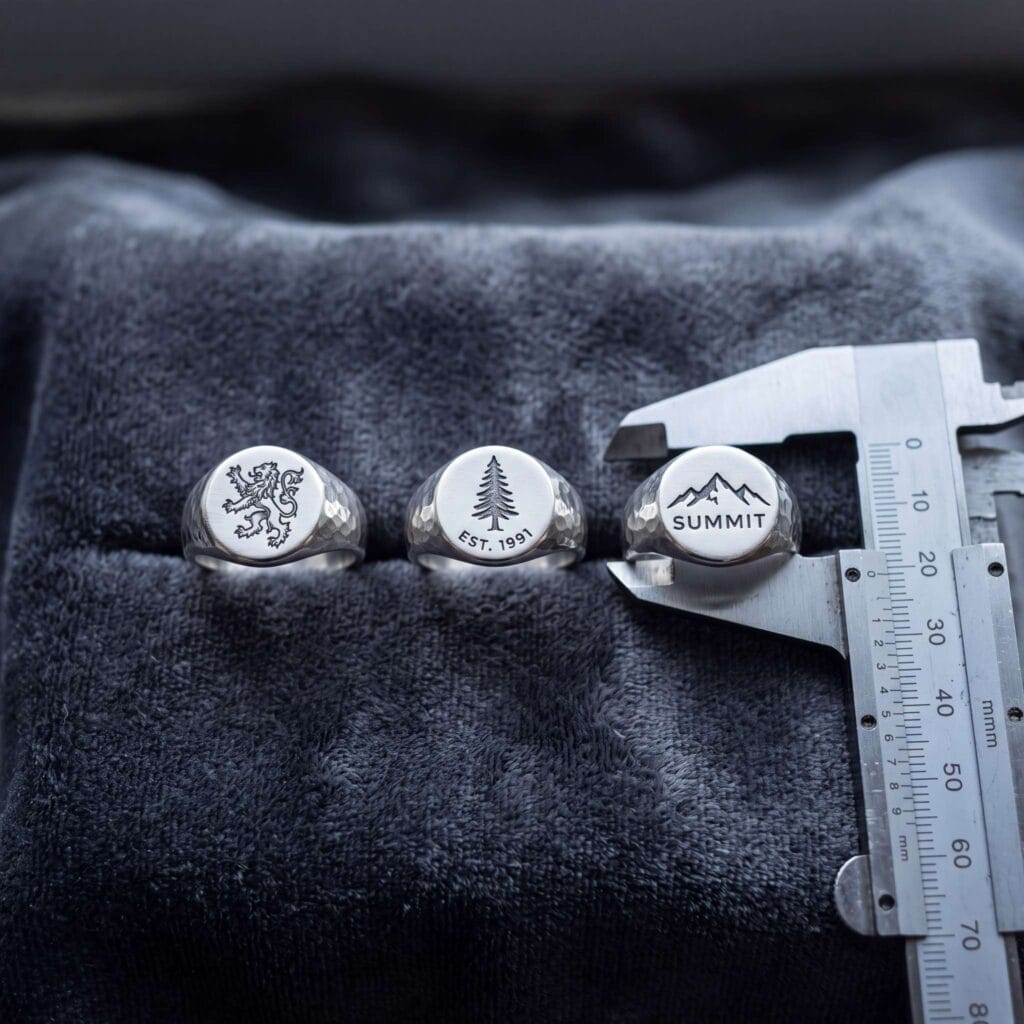
Signet and Band Rings
Signet faces support logos, initials, or symbols; band interiors can support short text when tool access and curvature permit. Required inputs include ring-size system, actual millimeter dimensions, face geometry, text direction, start and stop positions, font size, finish, and size assortment. Each approved ring size may need a separate position check.
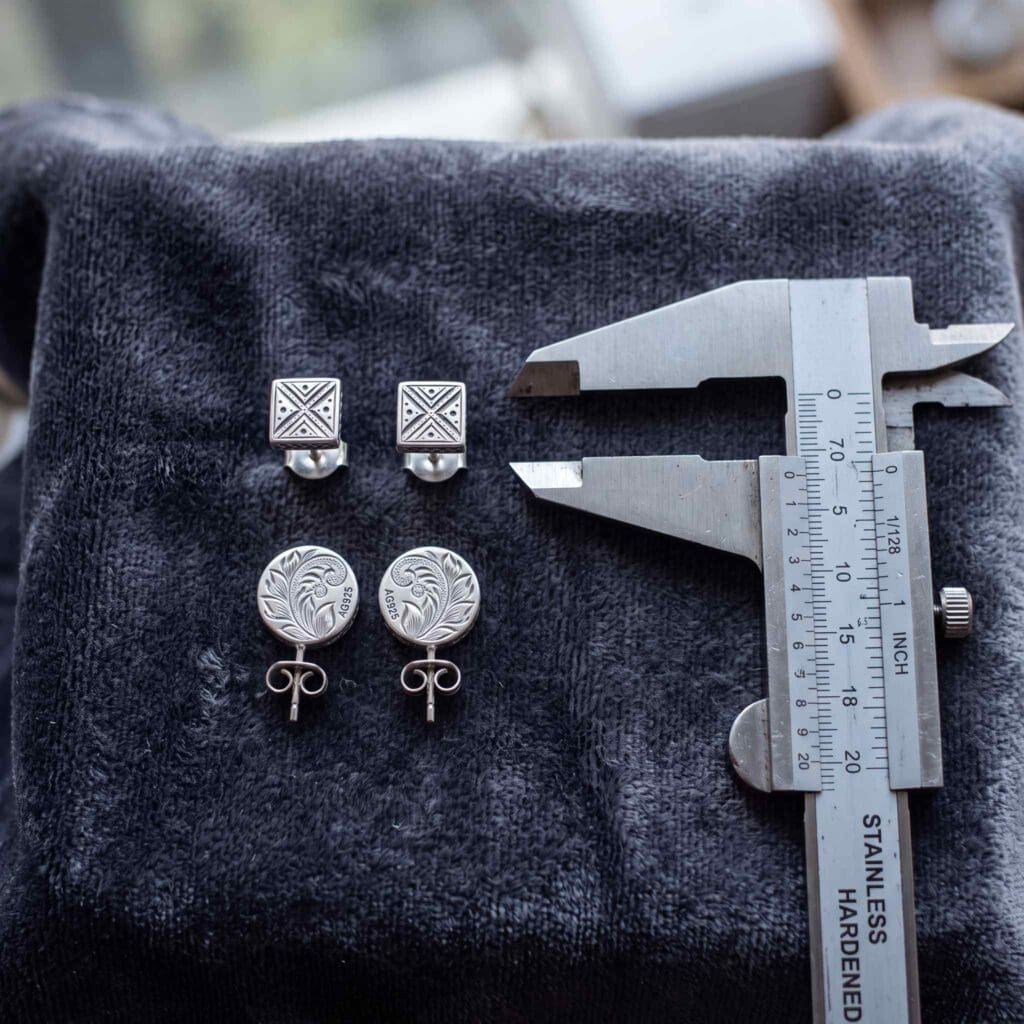
Earrings and Studs
Small earring surfaces make line width, contrast, left/right orientation, and post location critical. We distinguish a pair from a single piece, define mirrored or identical artwork, protect ear posts during processing, and check whether logos remain upright when worn. Tiny artwork may require simplification before a readable production sample can be made.
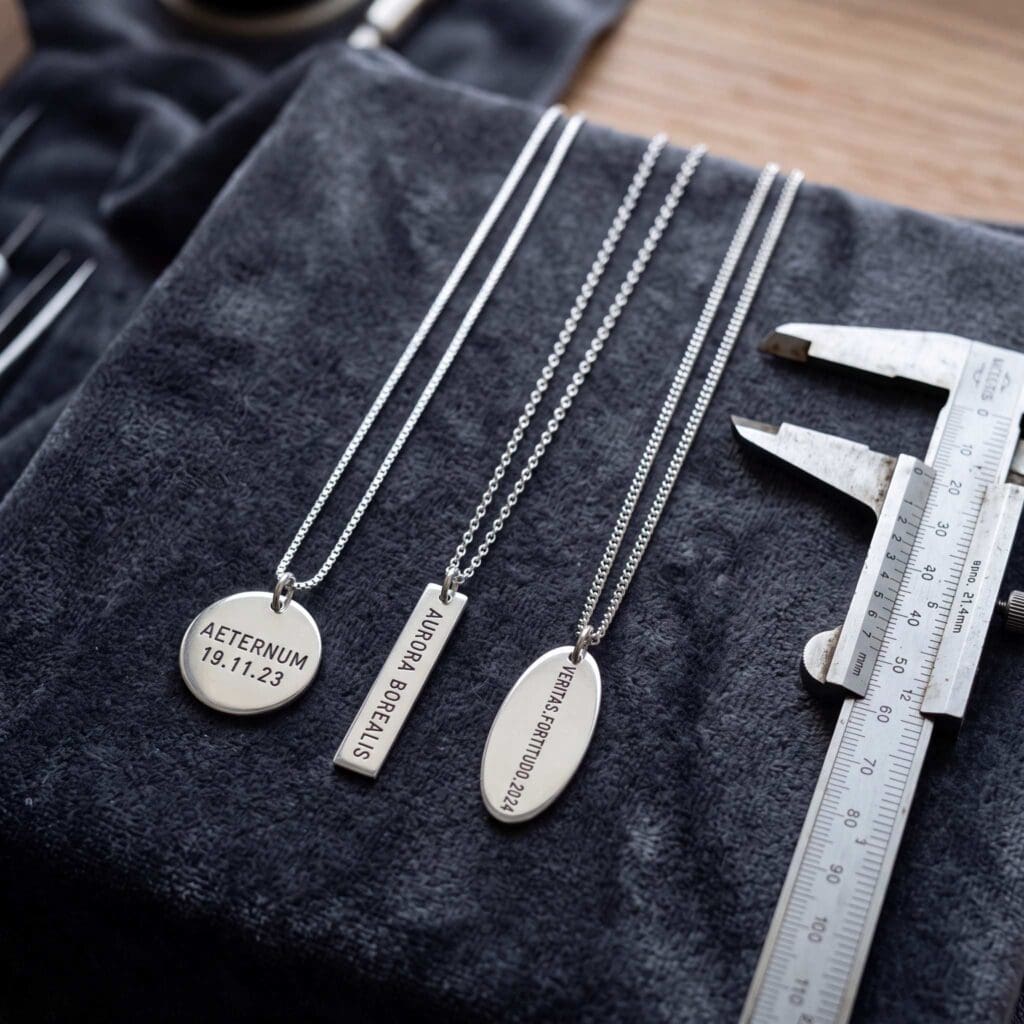
Chain Logo Tags
Logo tags on necklaces, bracelets, and anklets are compact identity components rather than decorative afterthoughts. We control tag shape, thickness, hole size, connection ring, logo scale, front/back direction, and matching PVD color. Tag and chain specifications are linked so replenishment does not introduce a different brand signature or assembly fit.
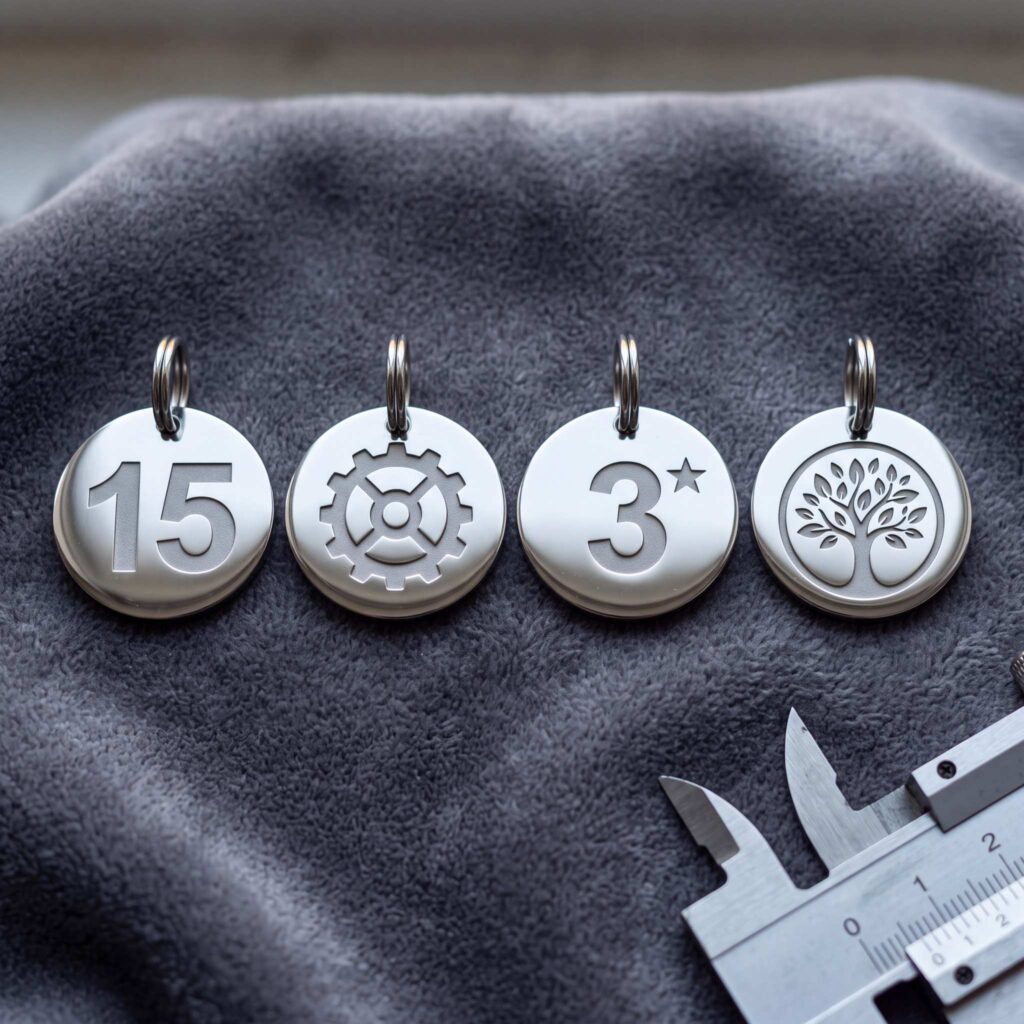
Charms and Tokens
Collectible charms, event tokens, coordinates, dates, and symbolic pieces can use a shared dimensional family with different artwork. We define which dimensions remain common, which graphics change, how variants are coded, and whether stamping, embossing, etching, or laser engraving is appropriate. Safe margins protect narrow bridges, holes, borders, and polished edges.
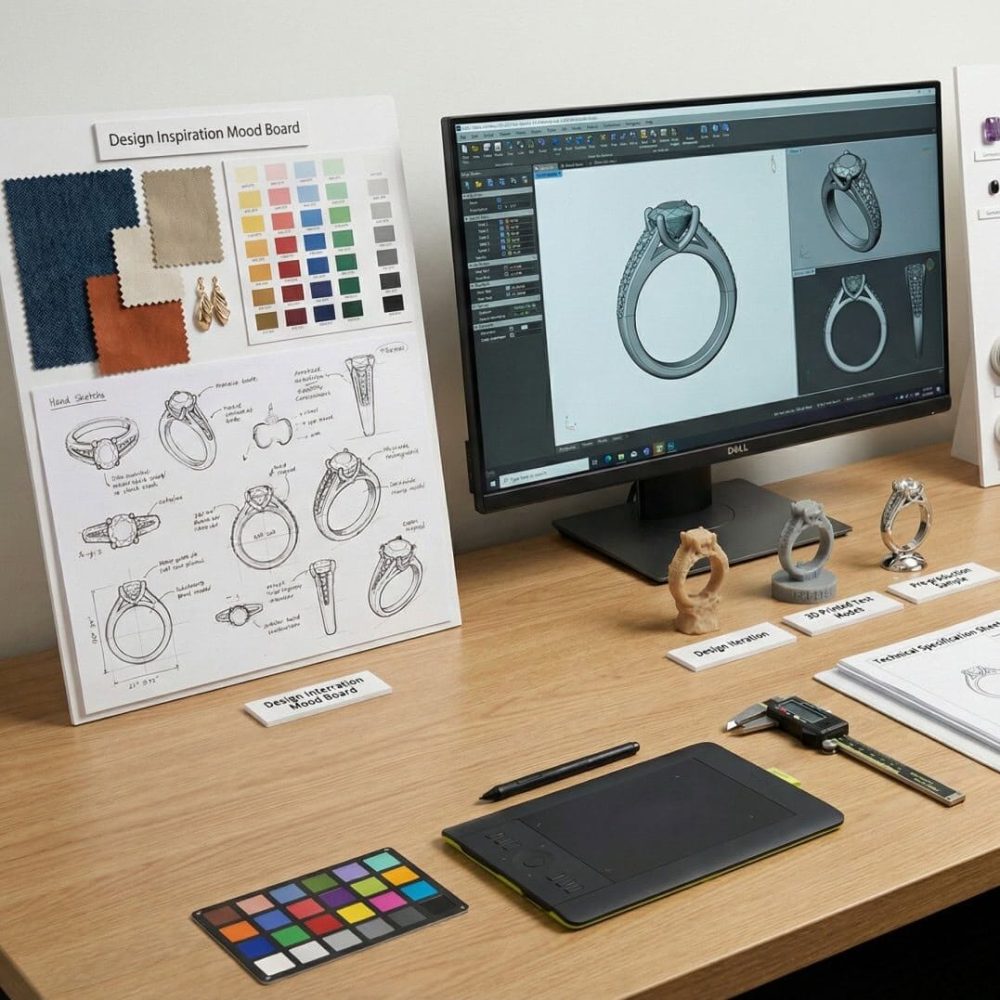
Custom Engineered Forms
Sculptural, layered, movable, stone-set, or mixed-finish products require engineering review before an engraving method is promised. Chicolink checks tool or laser access, internal corners, welding, stone and resin sensitivity, coating sequence, fixture contact, cleaning, and inspection visibility. The review concludes with producible, modification required, sample validation required, or temporarily unsuitable.
Match the Production Model to the Data Complexity
The correct production model is determined by how often the engraved content changes, not only by the jewelry design. Chicolink separates fixed artwork, controlled SKU variants, and unit-level personalization because each requires different files, approvals, production release rules, inspection records, and commercial assessment.
Model A: Fixed Artwork
A logo, symbol, message, or pattern remains identical for all units of one SKU. This is the most direct model for private-label collections, brand tags, event pieces, and wholesale products. We approve one artwork version and one physical sample, then control the logo size, position, direction, appearance, and product specification during bulk production. Quantity commonly follows the applicable existing-style or OEM/ODM MOQ. Repeat orders reference the approved SKU, artwork version, finish, and sample standard.
Model B: Controlled Variants
A base product remains constant while a limited set of initials, words, symbols, dates, sizes, or graphic versions changes by SKU. We create a variant matrix that links each artwork version to product, material, finish, quantity, packaging, and label. One representative sample may not validate every risk, so Chicolink identifies which extremes require proof: longest text, smallest detail, lightest contrast, largest size, or most complex layout. Quotation reflects the number of versions and handling complexity, not only total pieces.
Model C: Unit-Level Data
Every piece carries unique information such as a name, serial number, or customer-specific message. These programs are accepted only after engineering and operational review. The buyer must provide a final data source, unique line identifier, allowed characters, character limit, spelling responsibility, replacement policy, and data cut-off. Chicolink then defines proofing, file locking, production grouping, inspection, and item-to-package matching. QR codes, photos, fingerprints, 360-degree marks, and other specialized inputs are evaluated separately and are not assumed capabilities.
Decision Note
- Choose Model A when every unit is identical and repeatability is the priority.
- Choose Model B when variants are finite, forecastable, and managed as distinct SKUs.
- Request review for Model C before committing retail launch dates or accepting consumer orders.
- A change in personalization model may change MOQ, unit cost, proofing cost, lead time, scrap allowance, and packing method.
Select the Marking Method by Result and Risk
Chicolink does not select a process from artwork alone. We consider product geometry, line width, depth, tactile effect, finish, order volume, tooling, repeat-order consistency, skin contact, and expected wear. Laser engraving is appropriate for many shallow marks, but etching, stamping, embossing, CNC patterning, a separate logo tag, or localized logo plating may better serve the intended result. Final feasibility and parameters are confirmed through engineering review and sample approval.
| Method | Typical Result | Suitable Applications | Main Confirmation Points |
|---|---|---|---|
| Laser engraving | Shallow text, patterns, serial numbers, and logos | Flat or accessible surfaces requiring controlled graphic placement without dedicated stamping tooling | Marking area, focus and fixture access, font and line readability, depth/contrast target, finish sequence, orientation, and approved sample |
| Etching | Recessed graphic created by an etching process | Logos, text, or patterns where an etched appearance is preferred and material/process compatibility is confirmed | Artwork resistance, depth expectation, edge definition, cleaning, masking, finish sequence, and acceptable variation |
| Pattern embossing or press | Raised or recessed pattern formed by tooling or controlled pressing | Repeating brand textures, motifs, and volume programs where tactile form is part of the design | Tooling cost, draft and relief, material thickness, deformation, polishing loss, alignment, and minimum economic quantity |
| Stamping | Indented mark made by a die or character tool | Simple symbols, characters, maker marks, or product identifiers with an intentionally pressed appearance | Material hardness and thickness, reverse-side distortion, force, location, character set, tool wear, and consistency standard |
| CNC patterning | Machined lines, recesses, or controlled geometric details | Precision structures or patterns where tool access and machining time are commercially workable | Tool radius, inside corners, depth, surface marks, cycle time, deburring, polishing allowance, and cost |
| Separate logo tag | Brand identity on an attached metal component | Chains, bracelets, anklets, earrings, and collections where the primary product has no suitable marking area | Tag size, hole, connection ring, attachment strength, logo direction, matching finish, and anti-tangle packaging |
| Localized logo plating | Selected logo area differentiated through plating after evaluation | Approved designs requiring a controlled color contrast rather than a recessed mark | Masking feasibility, base and top layers, boundary quality, adhesion, color tolerance, test plan, and handling protection |
Decision Note
We provide the selected method, information gaps, sample requirements, quality risks, and expected commercial effect after reviewing the actual design. A visual reference is not treated as a production specification.
Engineer Engraving and Surface Finish as One System
An engraved mark changes with the substrate, polish, texture, coating color, and production sequence. A mark that is readable on bare polished stainless steel may lose contrast on brushed steel or expose the substrate when applied after PVD. Chicolink records material grade, A/B/C surfaces, finish direction, PVD color reference, layer structure, engraving sequence, and test requirement in one specification. Replenishment follows that approved combination rather than a color name alone.
| Surface System | Engraving Consideration | Procurement Risk | Chicolink Control |
|---|---|---|---|
| Bare polished stainless steel | Shallow laser marks can provide clean identity when line width, reflection, and viewing angle are approved | Fine marks may become difficult to read; handling can scratch mirror surfaces | Define polish level, logo contrast, primary viewing angle, protective film or separation, and sample acceptance |
| Brushed or satin steel | Directional texture can support an understated mark but affects visual contrast | Grain direction may vary across parts or compete with fine text | Lock brushing direction, texture reference, logo direction, and acceptable appearance under agreed lighting |
| Sandblasted or matte steel | Low reflection can improve broad graphic visibility while reducing fine-edge distinction | Texture may soften small characters and trap polishing or cleaning variation | Confirm media/texture, minimum readable detail, cleaning access, and approved reference sample |
| PVD before engraving | Marking may remove or alter the coating and expose a contrasting substrate | Exposed areas may behave differently in corrosion or wear tests; edge quality can vary | Approve the intended exposed effect, marking depth, location, post-process cleaning, and project-specific test plan |
| Engraving before PVD | Coating may cover the recess and reduce contrast while preserving a uniform color system | Fine or shallow marks can become less visible after coating | Confirm recess geometry, layer structure, color, contrast expectation, and a finished plated sample before bulk |
| Mixed finishes | Polished, brushed, matte, engraved, and plated zones may be combined after process review | Masking boundaries, polishing access, and batch color variation can affect appearance and yield | Establish process sequence, boundary standard, A/B/C surfaces, fixture points, and inspection images |
Supporting Note
Chicolink operates an in-house plating workshop with 6 PVD vacuum coating machines. Layer structure, target thickness, color tolerance, and tests are project specifications. Reference structures such as E1 at 0.4 micrometers TiN plus 0.05 micrometers gold or E2 at 0.7 micrometers TiN plus 0.1 micrometers gold may be evaluated; neither is an automatic standard for every engraved product.
Turn Artwork into a Controlled Production Specification
A clear logo file is necessary but not sufficient. Chicolink converts the design into a measurable engraving instruction linked to the exact product version. When information is missing, we issue confirmation points instead of silently turning assumptions into production requirements.
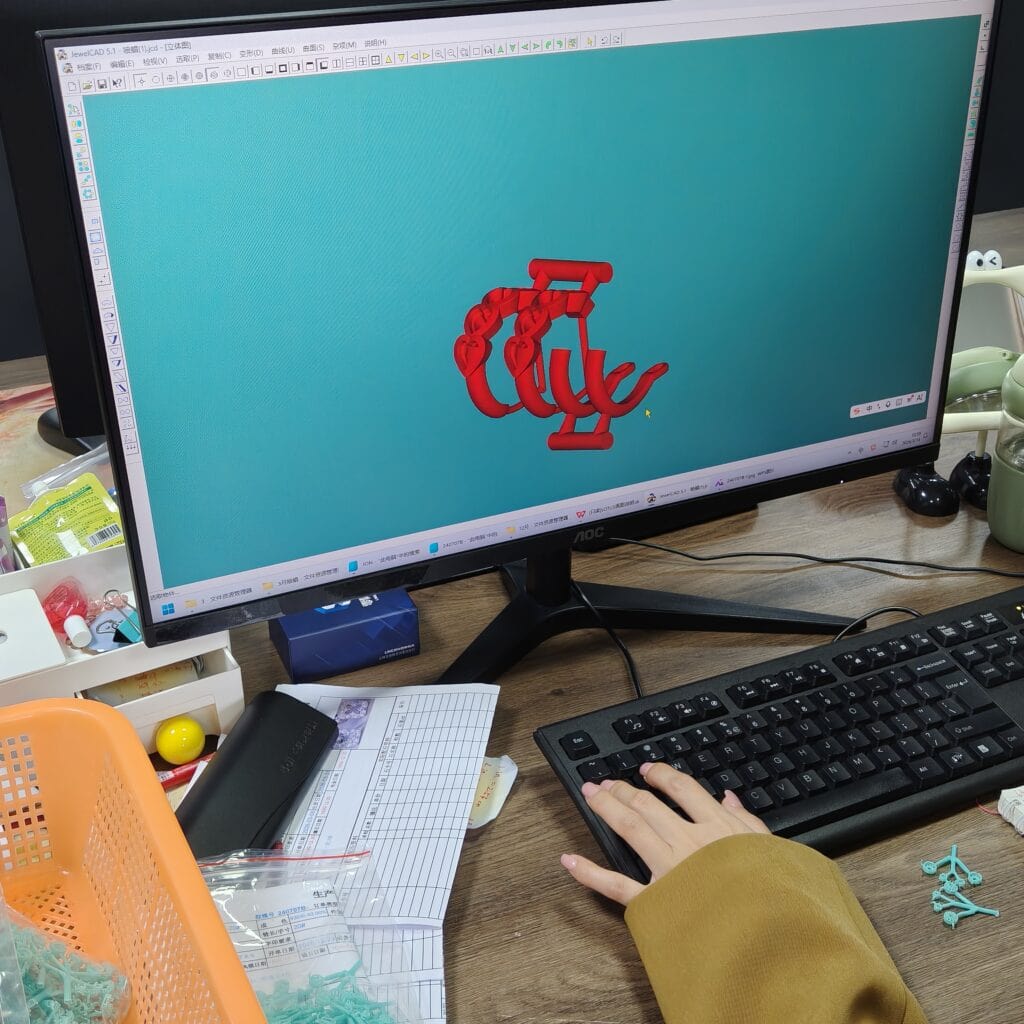
Files We Can Review
- Preferred vector formats: AI, EPS, SVG, CDR, or editable PDF
- Engineering formats when relevant: DWG or DXF
- High-resolution JPG or PNG may be used as a visual reference, not automatically as production artwork
- Fonts should be converted to outlines, or the required licensed font file and usage authority should be clarified
- Separate artwork versions should be supplied for product logo, logo tag, packaging, and different product orientations
- The buyer remains responsible for authorization to use trademarks, fonts, names, symbols, and submitted designs
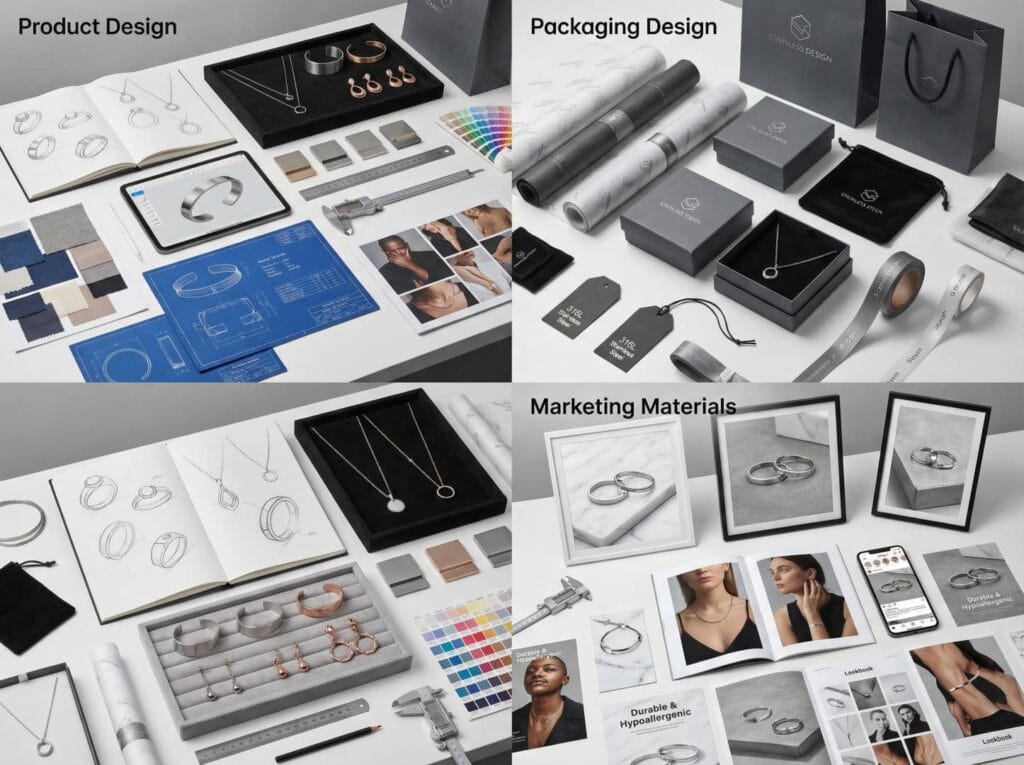
Layout Fields We Lock
- Exact text, spelling, capitalization, punctuation, and line breaks
- Logo dimensions, location, direction, centerline, and safe margin
- Front, back, inside, outside, left, right, top, and intended wearing orientation
- Character height, line width, spacing, negative space, and intended depth or appearance
- A-side, B-side, and hidden C-side visual priorities
- Material, product size, polish or texture, plating color, and marking sequence
- Variable fields versus fixed fields, including allowed character count and template boundary
- Drawing, artwork, sample, and approval version numbers
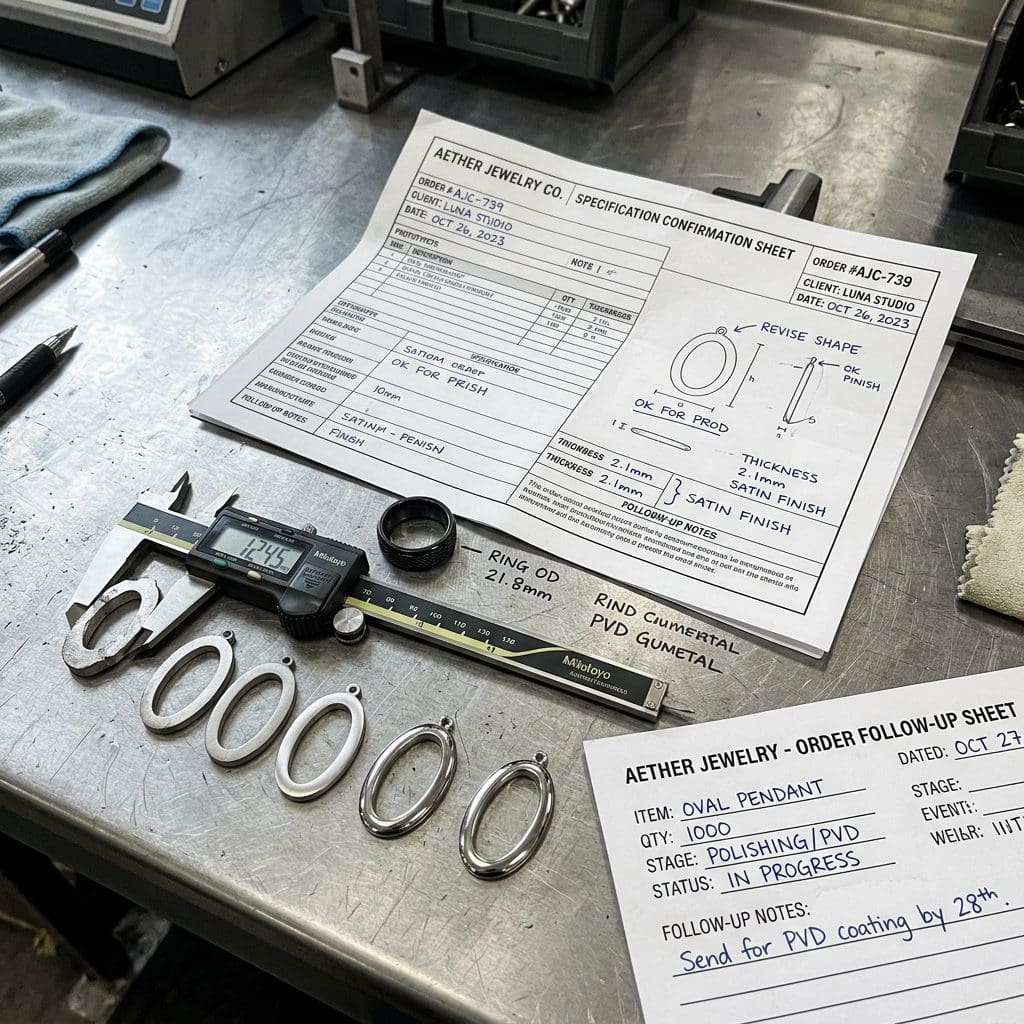
DFM Review Output
Our 3 jewelry engineers review whether the submitted concept is producible as drawn, producible after modification, dependent on sample validation, or temporarily unsuitable. The review can identify fine-line merging, broken negative space, unreadable text, polishing loss, reverse-side distortion, fixture limits, curve distortion, inaccessible surfaces, conflict with stones or joints, and PVD compatibility. The output records proposed process, critical dimensions, quality risks, buyer confirmations, validation sample, and conditions that must close before bulk release. Numeric limits are product-specific and are not promised from a generic online rule.
Control Every Name, Number, SKU, and Package
For approved variable-personalization projects, error prevention begins before the machine. Chicolink and the buyer agree one controlled data source, one ownership rule, and one release status. The protocol is scaled to quantity, character complexity, product variants, replacement policy, and packing requirements.
One Data Source
The buyer supplies one final structured list with a unique line ID, SKU, product size or color, exact engraving content, quantity, and packaging identity. Data spread across email bodies, screenshots, chat messages, and multiple revisions is consolidated and reapproved before production release.
Validation Rules
We agree allowed characters, maximum length, capitalization, punctuation, blank-field treatment, sequence format, duplicate handling, and unsupported symbols. Automated correction is not assumed. Questions and apparent anomalies are returned for buyer confirmation because Chicolink does not rewrite personal names or confidential identifiers without written approval.
Template Proof
The longest entry, smallest graphic, widest character group, multiple lines, and relevant product-size extremes are identified for proofing. The approved template defines placement and scaling behavior. Any entry that falls outside that boundary is held as an exception rather than reduced until it becomes unreadable.
Version Freeze
A dated release file receives a revision identifier and approval status. Changes after the agreed cut-off are assessed for work already processed, materials reserved, new proofing, schedule effect, and extra cost. An informal message does not overwrite the frozen production file or approved physical sample.
Production Matching
The agreed line ID links engraving content to the applicable product and packing instruction. Production groups are separated by SKU, finish, size, or artwork version as required. Blank, processed, inspected, rejected, and replacement quantities are controlled so an item does not move forward under the wrong identity.
Exception Closure
Illegible text, missing data, duplicate serials, damaged pieces, failed inspection, and replacement requests are recorded against the affected line or batch. Chicolink confirms disposition before remake or shipment. The final method, record format, and retention period are agreed for the individual program.
Responsibility Notice
Personal information should be limited to data necessary for production and supplied through the agreed channel. Unit-level personalization, specialized codes, or high-volume direct-to-consumer handling remains subject to operational assessment and written project terms.
Approve the Engraving Before Releasing Bulk Production
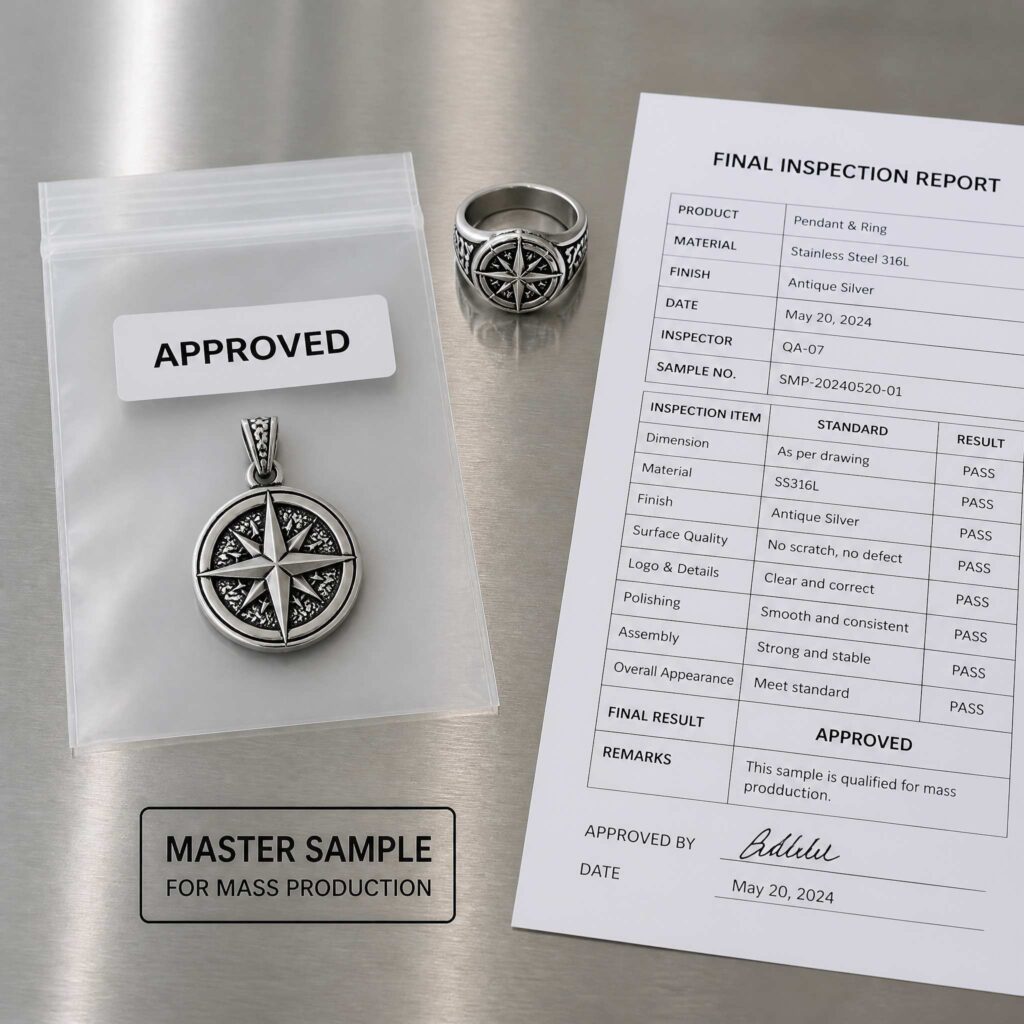
Sampling validates the complete product and process combination, not only whether a laser can reproduce a logo. Chicolink links the sample to its drawing, artwork, material, finish, dimensions, packaging, and unresolved issues so the approved reference can guide production and inspection.
Approval-Gated Sample Workflow
1. Inquiry receipt: We target an initial response within 6 working hours to confirm receipt, request missing information, or state the evaluation status. This is not automatically a formal quotation.
2. Project definition: Confirm product, artwork, personalization model, material, size, finish, quantity, target market, tests, packaging, and required delivery date.
3. Engineering review: Complex projects receive a preliminary assessment target within 24 hours, covering information gaps, feasibility, major risks, and next review steps.
4. Quotation: Price is calculated from product version, quantity by style/color/size, marking method, number of artwork variants, tooling or fixtures, sample work, PVD, tests, packaging, and handling.
5. Artwork and drawing approval: Lock dimensions, marking position, orientation, font outlines, safe margin, surface specification, and file revision.
6. Sample production: Existing-style samples usually require 3–7 working days. Custom OEM/ODM samples usually require 25–30 working days after required specifications and commercial arrangements are confirmed.
7. Sample inspection: Review dimensions, appearance, engraving content, readability, location, finish, function, packaging compatibility, and project-specific tests.
8. Buyer approval or revision: Comments must identify the sample, artwork version, required change, and acceptance status. Revised samples may affect cost and schedule.
9. Golden-sample release: The approved physical sample and controlled files become the bulk reference. Open issues must be closed or explicitly accepted in writing before production.
Approval Note
- Sample number, purpose, date, quantity, and status
- Related drawing, BOM, process, artwork, and color version
- Inspection result and approved photographs
- Buyer approver, approval date, and confirmation method
- Factory and buyer sample retention arrangement when required
Sample and tooling fees normally apply. Whether a fee is credited against a later order depends on order value and the written commercial agreement.
Integrate Engraving into the Full Manufacturing Route
Chicolink selects the product-forming route first, then places engraving or another marking process at the correct stage. The sequence affects edge quality, logo contrast, coating coverage, cleaning, assembly access, and final inspection. One routing template cannot cover every pendant, ring, bracelet, earring, chain tag, or mixed-material product.
Controlled Production Route
1. Controlled inputs: Release the approved drawing, BOM, artwork, personalization file, color reference, quality plan, and packaging instruction.
2. Material and component preparation: Verify stainless steel, chain, findings, stones, packaging, and other required components through incoming quality control.
3. Product forming: Use the approved route, which may include casting, stamping, pressing, laser cutting, wire cutting, CNC, lathe work, drilling, bending, or component preparation.
4. Joining and structure: Complete welding, assembly, connection rings, posts, hinges, clasps, or other interfaces as specified.
5. Deburring and surface preparation: Remove burrs, correct edges, clean, polish, brush, sandblast, or prepare controlled texture while protecting critical dimensions.
6. Marking stage: Apply the approved laser engraving, etching, stamping, embossing, CNC pattern, or logo-tag route at the defined point in the sequence.
7. In-house surface treatment: Transfer applicable products to Chicolink’s plating workshop for approved PVD/IP, water plating, or other confirmed treatment, with process and batch records.
8. Final assembly: Add chains, clasps, tags, stones, resin or other approved parts in the specified order, considering process compatibility.
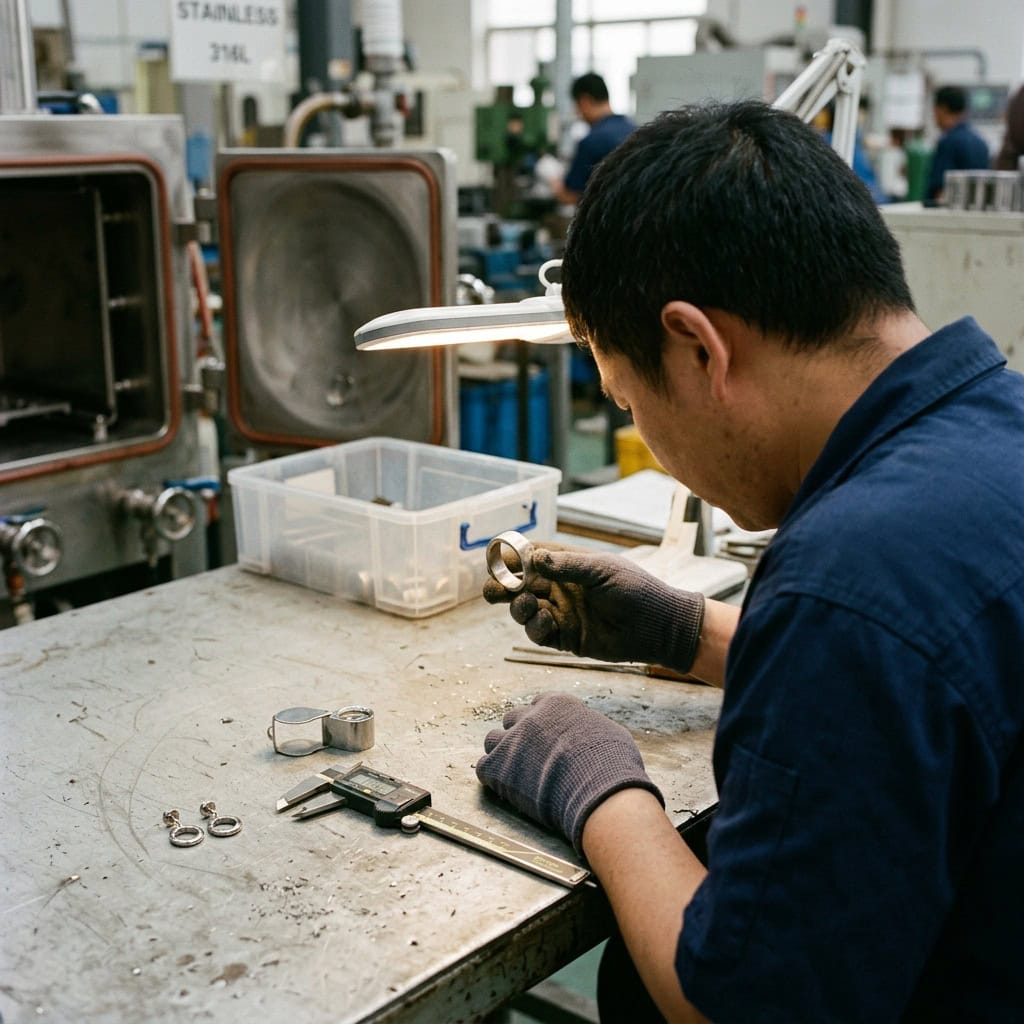
9. Cleaning and inspection: Check engraved content, position, direction, finish, dimensions, function, appearance, and batch status through IPQC and FQC.
10. Controlled packing and shipment: Match the correct item, label, card, box, barcode, and shipping carton; retain inspection and dispatch records by order, SKU, and batch.
Release Note
A change to material, size, curvature, PVD structure, stone, engraving location, data model, or packaging can change the process sequence and must be reviewed before use on repeat production.
Inspect What Makes Personalization Correct and Repeatable
Engraving quality cannot be reduced to “logo present.” Chicolink builds the inspection plan from approved content, geometry, product function, surface system, and packaging identity. Incoming quality control, in-process quality control, and final quality control cover the stages where a defect can be prevented, detected, or isolated before shipment.
Content Accuracy
Inspect exact letters, numbers, symbols, punctuation, capitalization, sequence, front/back version, and completeness against the released artwork or approved personalization record. For controlled variable projects, duplicate, missing, and exception entries follow the agreed data protocol. Chicolink does not treat a visually similar spelling as an acceptable substitute. The inspector records the applicable SKU, artwork revision, data reference, inspected quantity, discrepancy, and disposition.
Position and Direction
Check marking location, centerline, distance to edges or holes, reading direction, left/right pairing, inside/outside location, and orientation during intended wear. Inspection references the approved drawing and sample. Product movement, fixture error, and reverse-side confusion are assessed separately from graphic quality. Defined measuring points, visual overlays, fixtures, or approved reference photographs may be used according to the product and agreed inspection plan.
Readability and Appearance
Compare line continuity, character separation, negative space, depth or tonal effect, boundary definition, and visibility with the approved sample under agreed viewing conditions. Fine text is not accepted solely because it exists under magnification; the project’s intended retail or functional readability standard must be defined during sampling. Evaluation can also record viewing distance, lighting, magnification, contrast reference, and the difference permitted among production pieces.
Surface Integrity
Inspect scratches, pits, haze, discoloration, coating exposure, peeling, burning, residue, inconsistent brushing, and damage around the mark. PVD products are checked against the approved color and layer requirement. High-polish pieces receive separation or protective packing where specified to reduce post-inspection handling damage. Inspection distinguishes a marking effect intentionally approved in the sample from unintended substrate exposure, heat marks, contamination, or coating failure.
Product Function
Confirm that marking and handling have not introduced sharp edges, distortion, weakened holes, post damage, stiff hinges, blocked threads, loose connections, or stone and resin damage. Product-specific dimensions, clasp operation, ring size, connection strength, and other functional points remain part of acceptance even when the engraving looks correct. Applicable test method, sample quantity, load, cycles, measurement points, and acceptance result are recorded in the product quality plan.
Identity and Packaging
Match the finished item to SKU, size, color, artwork version, card, label, barcode, package, and quantity. For sets, pairs, or named pieces, inspection also checks completeness and correct grouping. Packing orientation, anti-scratch separation, anti-tangle control, and shipping-carton identification follow the approved packing specification. Inner-box counts, mixed-carton rules, carton marks, packing lists, and photographed packing references support dispatch verification and later batch investigation.
Record Note
- When the buyer does not provide another written standard, default sampling is normal inspection, General Inspection Level II.
- Critical defects: Ac 0 / Re 1; Major defects: AQL 1.0; Minor defects: AQL 2.5.
- A customer-specified inspection level, AQL, sample size, or acceptance rule takes priority when confirmed in writing.
- Traceability uses the order number, SKU, and production batch, linking applicable material, production, in-house plating, inspection, packing, and shipment records.
Build Compliance Around the Actual Product Configuration
Compliance is defined by target market, product use, material, color, coating structure, skin-contact parts, and current buyer requirements. Chicolink can coordinate project-specific testing through SGS, HKPC, or another agreed laboratory. A report applies only to the sample and conditions stated in that report; it does not automatically certify every style, color, material, engraving method, repeat order, or future regulation.
| Requirement or Test | Project Use | Default or Reference Condition | Scope to Confirm |
|---|---|---|---|
| REACH-related assessment | European-market chemical restrictions based on applicable product and component scope | Testing plan set by current requirement and product configuration | Material, plating color, skin-contact parts, applicable substances, laboratory, and report version |
| EN 1811 / EN 12472 | Nickel release assessment and wear/corrosion preparation where applicable | Third-party testing arranged to the agreed standard and version | Base material, post assemblies, chain/finding mix, coating, color, exposure, and sample count |
| California Proposition 65 | California-market exposure assessment based on applicable substances and buyer policy | Project-specific test or documentation route | Product components, surface layers, lead/cadmium/nickel-related scope, warning policy, and laboratory |
| Bare steel salt spray | Internal default when no written buyer standard supersedes it | 24 hours | Test standard, solution, pH, temperature, sample placement, scribing, cleaning, and acceptance |
| Plated/PVD salt spray | Internal default when no written buyer standard supersedes it | 48 hours; 72 hours for an agreed higher-corrosion requirement or customer standard | Exact color and layer structure, test sample, appearance/function criteria, and report need |
| Artificial perspiration | Internal default when no written buyer standard supersedes it | 40+/-2 C for 24 hours at pH 4.7+/-0.2 | Formula, contact method, sample areas, color change, coating, welds, clasps, and acceptance |
Commercial Reference
- Artificial perspiration test: approximately USD 100
- Salt spray test: approximately USD 2 per hour
- Abrasion test: approximately USD 120
- SGS nickel release test: approximately USD 500 per color
- HKPC nickel release test: approximately USD 120 per color
These are reference costs from the current internal information, not fixed quotations. Laboratory, standard version, sample count, color count, urgency, shipping, taxes, and retesting can change the final charge. Test samples affected by destructive testing are not shipped as saleable goods.
Plan the Commercial Terms Before Launch Commitments
Engraving cost is affected by more than machine time. Chicolink quotes the exact product version, material, size, finish, quantity, artwork count, personalization model, tooling or fixture work, sample plan, testing, packing, and delivery conditions. Dates are confirmed after inputs, approvals, payment, material readiness, and production capacity are reviewed. The figures below are usual starting points, not unconditional promises for every custom project.
| Commercial Item | Chicolink Reference | Conditions That Can Change It |
|---|---|---|
| Existing or regular style MOQ | Commonly 120 pieces per style | Stock, color, size, engraving setup, packaging version, and whether mixed variants are workable |
| OEM/ODM MOQ | Commonly 500 pieces per style | Tooling, material, PVD batch, size/color mix, artwork versions, stones, packaging, and production difficulty |
| Existing-style sample | Usually 3–7 working days | Stock availability, engraving artwork, finish, sample quantity, packaging, testing, and shipping time |
| Custom sample | Usually 25–30 working days | Engineering closure, drawing approval, tooling, components, PVD, revision rounds, test plan, and payment |
| Existing-style bulk | Usually 20–30 working days | Confirmed inventory, quantity, engraving model, finish, packing materials, inspection, and schedule |
| Custom bulk | Usually 25–45 working days after release | Material and tooling readiness, number of variants, data release, PVD, testing, packaging, approval, and capacity |
| Quantity tolerance | Common reference approximately +/-5% for custom orders | Written agreement must define acceptable variance, over/under handling, residual items, and freight responsibility |
| Payment | T/T, L/C, or PayPal may be supported; reference term is 50% deposit and 50% before shipment | Final method and ratio depend on customer credit, order value, contract, country, and banking conditions |
Commercial Reference
- Product, engraving, tooling, fixture, artwork preparation, and sample fees
- PVD or other finish by color and approved layer structure
- Third-party testing, inspection, certificates, and sample shipping
- Individual names, serials, multiple artwork versions, sorting, proofing, and replacement handling
- Jewelry cards, velvet pouches, gift boxes, custom logo boxes, manuals, tags, barcodes, and labels
- Amazon FBA packing and labeling based on the buyer’s current platform instructions
- Freight, insurance, duties, tax treatment, and agreed Incoterm
Packing Control Notes
- One piece, pair, or set per package; product-facing direction
- Anti-scratch separation and chain anti-tangle method
- Correct engraved identity matched to card, label, barcode, or gift message
- Package dimensions, material, color, logo version, and insert placement
- Inner-box quantity, carton quantity, mixed-carton rule, carton mark, and packing list
Prepare the Right Evidence for Engineering Review
Chicolink has not presented these as completed customer case studies or guaranteed outcomes. They are representative review scopes showing how we assess common engraving projects before quotation and sampling. Buyers can use the same fields as an inquiry checklist. A specific conclusion is issued only after our engineers review the submitted product, files, quantity, finish, tests, packaging, and delivery requirements.
PVD Pendant Logo
Representative Project Scope: A brand wants one fixed logo on a polished PVD pendant for repeated wholesale orders. We would review pendant thickness, front/back direction, usable area, logo safe margin, line readability, engraving before or after PVD, desired exposed-metal effect, color reference, coating structure, salt-spray requirement, scratch protection, approved sample, and repeat-order color control. The decision records method, sequence, sample tests, visual acceptance, and open risks.
Interior Ring Message
Representative Project Scope: A collection uses several ring sizes with a short internal message. We would require the buyer’s size system plus actual millimeter dimensions, band width and curvature, text length, font outlines, start/stop positions, reading direction, finish, and quantity by size. The longest message and limiting ring size are checked for access and readability. Each size is linked to its approved placement rule; specialized full-circumference marking is not assumed.
Serialized ID Bracelet
Representative Project Scope: A buyer requests a fixed logo plus a different serial number on each bracelet and matching packaging. Review covers number structure, sequence ownership, duplicate rule, final-data format, line identifier, plate curvature, engraving boundary, bracelet variant, proof method, replacement policy, barcode link, packing match, inspection record, and data cut-off. Chicolink would accept production only after the unit-level handling method and commercial terms are approved.
Multi-SKU Gift Set
Representative Project Scope: A gift set combines a pendant, bracelet, logo tag, card, and box with coordinated personalization. We would separate fixed and variable artwork, define orientation on every component, establish which message is repeated, link pieces into a complete set, approve surface and PVD references, protect polished areas, prevent chain tangling, control missing parts, and specify label/carton identity. Sampling must validate both jewelry and packing presentation before bulk release.
Downloadable Checklist Content
- Company, market, sales channel, and intended launch or delivery date
- Product category, reference image, drawing, size, target weight, and physical sample if available
- Stainless steel grade or material requirement, surface finish, PVD color, and test expectation
- Vector logo/artwork, fonts outlined, exact content, dimensions, position, direction, and safe margin
- Fixed, controlled-variant, or unit-level personalization model
- Quantity by style, color, size, artwork version, and packaging version
- Sample purpose, approval contact, inspection/AQL requirement, and report needs
- Product packaging, label/barcode data, carton rule, destination country/postcode, and trade term
Custom Jewelry Engraving FAQ
These answers set practical starting points for stainless steel jewelry engraving and personalization. Final feasibility, MOQ, price, sample route, test scope, and lead time depend on the actual product, artwork, variants, finish, quantity, packaging, and target market.
Which engraving methods does Chicolink support?
We support laser engraving for shallow text, patterns, serial numbers, and logos. Depending on the intended result, we can also evaluate etching, stamping, pattern embossing or pressing, CNC patterns, separate logo tags, and localized logo plating. The method is selected after reviewing geometry, access, depth, readability, finish, quantity, tooling, wear, and sample requirements.
What is the MOQ for engraved jewelry?
Existing or regular styles commonly start at 120 pieces per style. OEM/ODM projects commonly start at 500 pieces per style. The final MOQ may be calculated by style, color, size, PVD batch, artwork version, or package version. Tooling, material, stones, production difficulty, and whether variants can be mixed also affect the confirmed quantity.
Can every piece have a different name?
Unit-level names, numbers, or messages are considered after engineering and operational review. We must approve the product, usable area, data format, character rules, proofing, version cut-off, inspection, replacement handling, and item-to-package matching. Please do not commit consumer orders or launch dates until Chicolink confirms that the proposed volume and workflow are workable.
Which artwork files should we provide?
Preferred formats are AI, EPS, SVG, CDR, or editable PDF. DWG and DXF are useful for applicable engineering layouts. A high-resolution JPG or PNG can guide visual review but may not be production-ready. Convert fonts to outlines and identify exact content, size, position, direction, safe margin, front/back version, product SKU, and your authorization to use submitted intellectual property.
How long does custom sampling take?
Existing-style samples usually require 3–7 working days. Custom OEM/ODM samples usually require 25–30 working days after the required specification, artwork, commercial terms, and approvals are ready. Tooling, multiple versions, PVD, special components, revisions, packaging samples, third-party tests, and shipping can extend the schedule. We confirm the applicable plan for the individual project.
Should engraving happen before or after PVD?
There is no universal sequence. Engraving after PVD can expose or alter the coating and create contrast, while engraving before PVD can reduce contrast as the coating covers the recess. We review the intended appearance, line size, coating structure, corrosion and wear expectations, cleaning, fixture contact, and repeat-order needs, then validate the selected sequence on a finished sample.
How do you inspect engraving quality?
Inspection can cover content, spelling, sequence, position, direction, line continuity, readability, appearance, finish integrity, product function, SKU identity, and packaging match. Chicolink uses IQC, IPQC, and FQC. Without another written buyer standard, the default is normal inspection, General Level II, with Critical Ac 0/Re 1, Major AQL 1.0, and Minor AQL 2.5.
Can you support EU and US testing?
We can coordinate project-specific REACH, California Proposition 65, EN 1811, EN 12472, and lead/cadmium/nickel-related testing through SGS, HKPC, or another agreed laboratory. Scope depends on the target market and actual material, color, coating, components, and contact areas. A report covers only the stated sample and test conditions, not all products automatically.
What determines the engraving price?
Price depends on product, material, size, surface, marking method, quantity, setup, engraving area, number of artwork versions, unit-level data handling, tooling or fixture needs, sample plan, PVD, testing, quality standard, sorting, packaging, and delivery terms. Chicolink provides a formal quotation after the required technical and commercial inputs are reviewed.
What should we send for a quotation?
Send the product reference or drawing, vector artwork, material, dimensions, finish, quantity by style/color/size, personalization model, sample need, target market, tests, packaging, destination, and required delivery date. For variable data, also provide character rules, example entries, volume, SKU mapping, proofing expectation, and replacement policy. We target an initial response within 6 working hours.