
Jewelry Quality Control and Testing
- 22-person QC team covering material, process, final, and shipment checks.
- IQC, IPQC, FQC/OQC inspection stages support stainless steel jewelry orders.
- AQL baseline can use ISO 2859-1 logic, General Inspection Level II, Critical Ac=0.
- Nickel release, REACH-related, Prop 65, RoHS, and function-test files are available.

QC Starts With The Jewelry Style, Not Only A Standard
Product Use And Wearing Point
Surface And Color Route
Decoration And Assembly Risk
Cost And Presentation Balance
Release And Record Plan
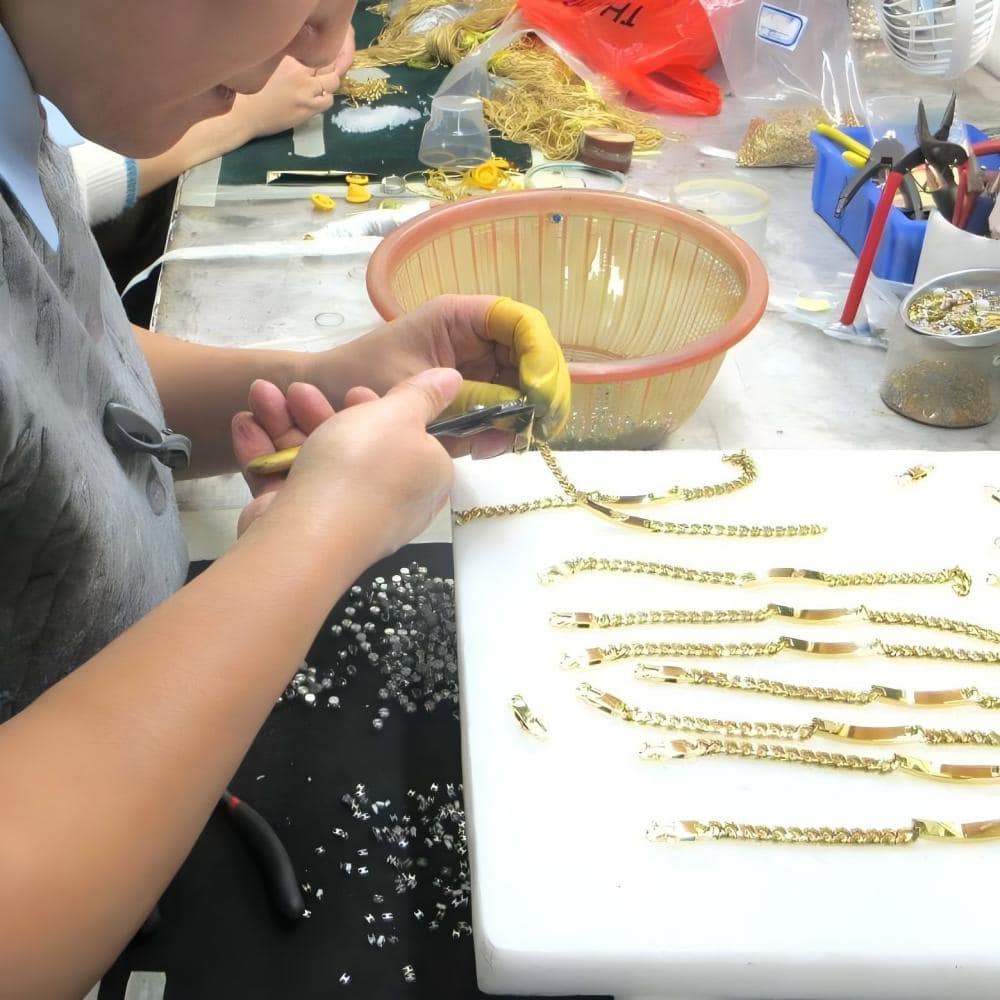
Incoming Checks That Keep Production Inputs Clear
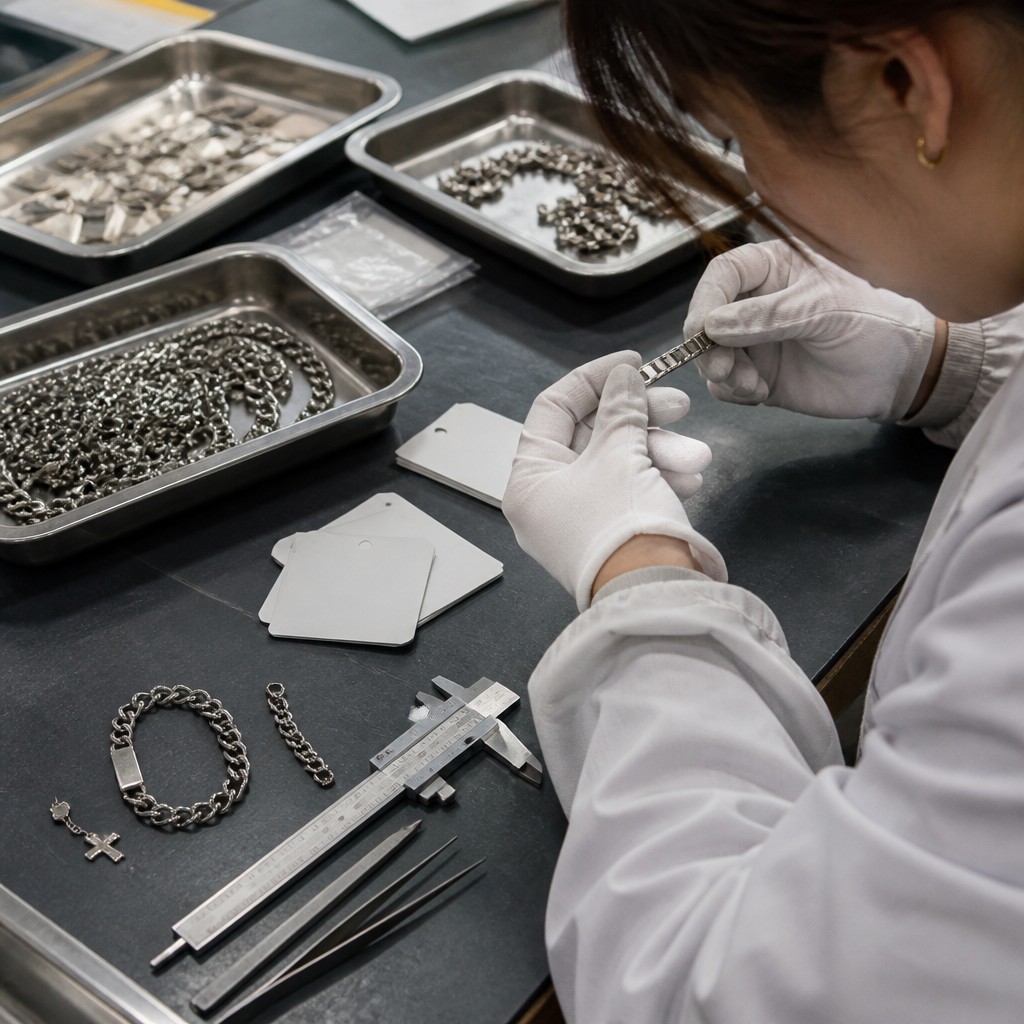
Stainless Steel
- Material review can include grade information, batch or heat number, dimensions, surface condition, and material-provider documents.
- Chicolink identifies 304, 316L, and 201 stainless steel by actual grade rather than market wording.
- XRF screening supports alloy review, while order documents and material-provider files keep the material decision traceable.
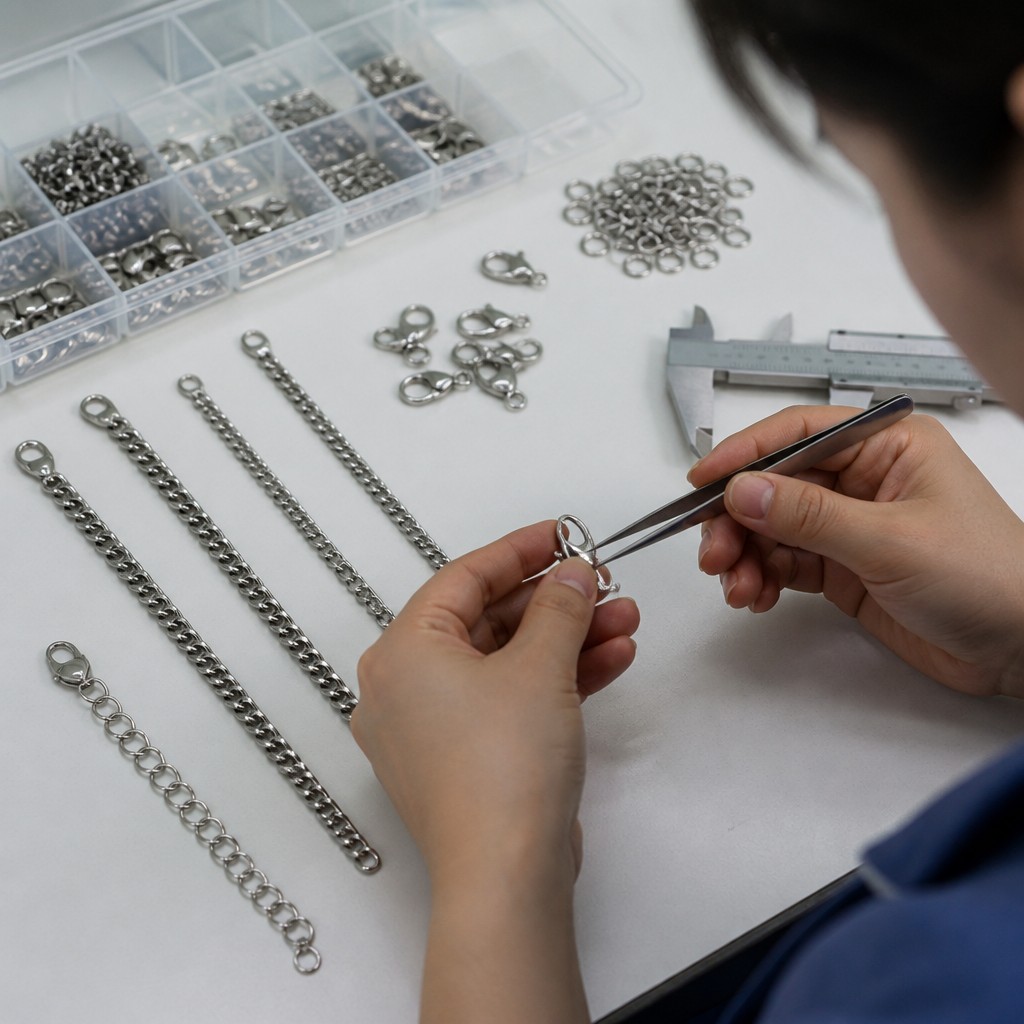
Chains And Clasps
- Chain width, link pitch, weld condition, jump-ring closure, clasp movement, and surface finish are reviewed before assembly.
- We apply separate pull force limits and handling requirements for fine chains versus heavier Cuban chains, based on link structure and intended use.
- Early component review reduces broken-clasp, open-jump-ring, and tangled-packaging issues.
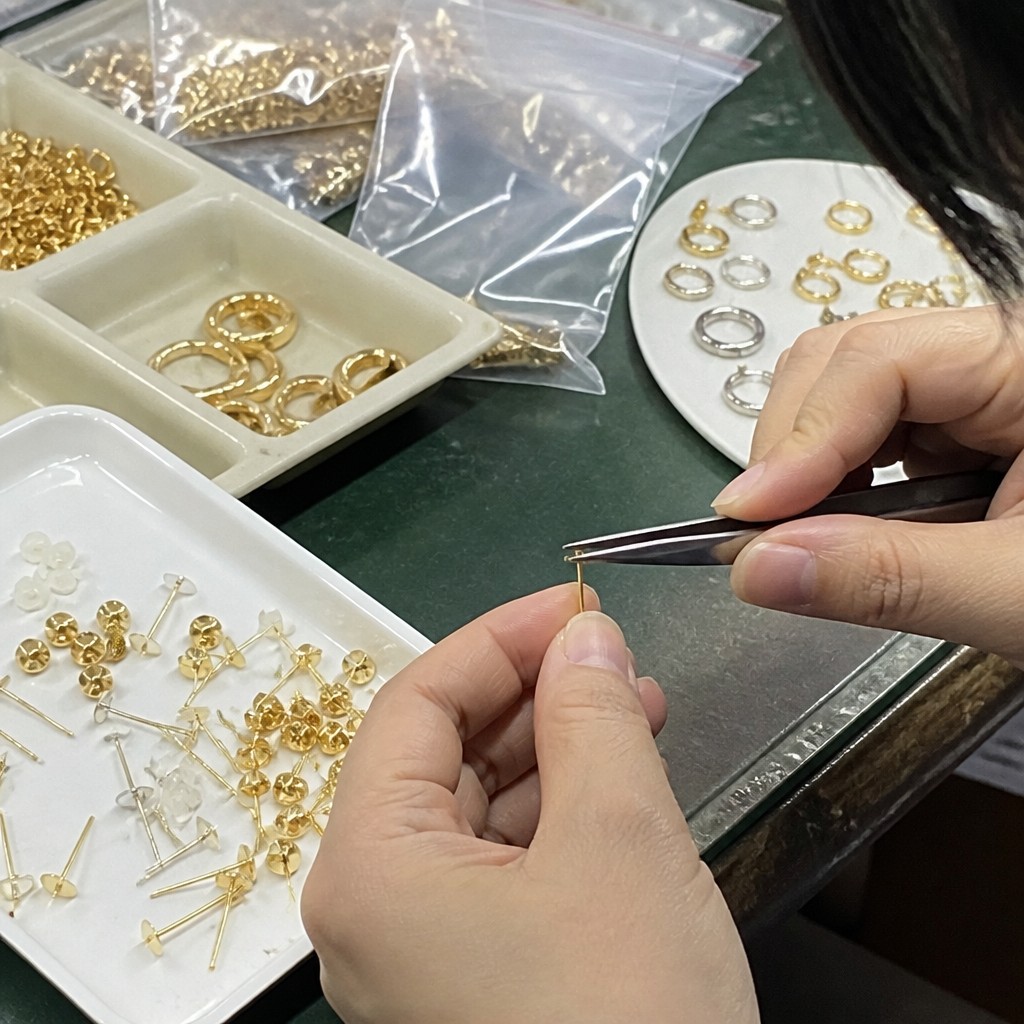
Ear Posts And Hinges
- Ear posts, backs, huggie hinges, hoop latches, and ear cuffs need fit and touch checks before bulk assembly.
- Post diameter, post length, hinge gap, latch engagement, and pair direction affect both comfort and final inspection.
- For skin-contact projects, nickel-release file review helps align material, contact area, and market-entry requirements.
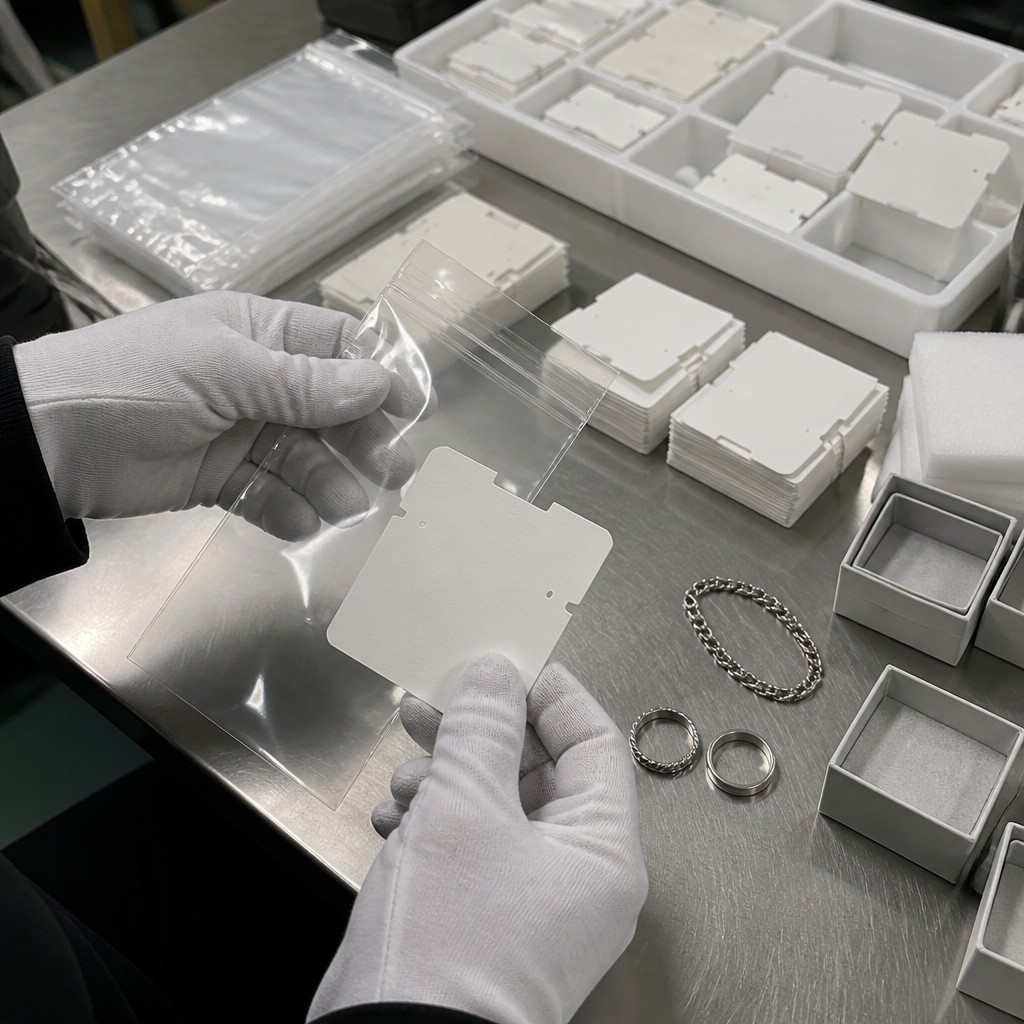
Packaging Materials
- Jewelry cards, OPP or PE bags, velvet pouches, gift boxes, labels, inserts, and carton materials are checked for size, print, surface, barcode area, color transfer, and product fit.
- Packaging material can scratch, stain, press, or confuse finished goods when it is not reviewed before packing.
- An initial packaging sample helps the product and package work together before bulk packing starts.
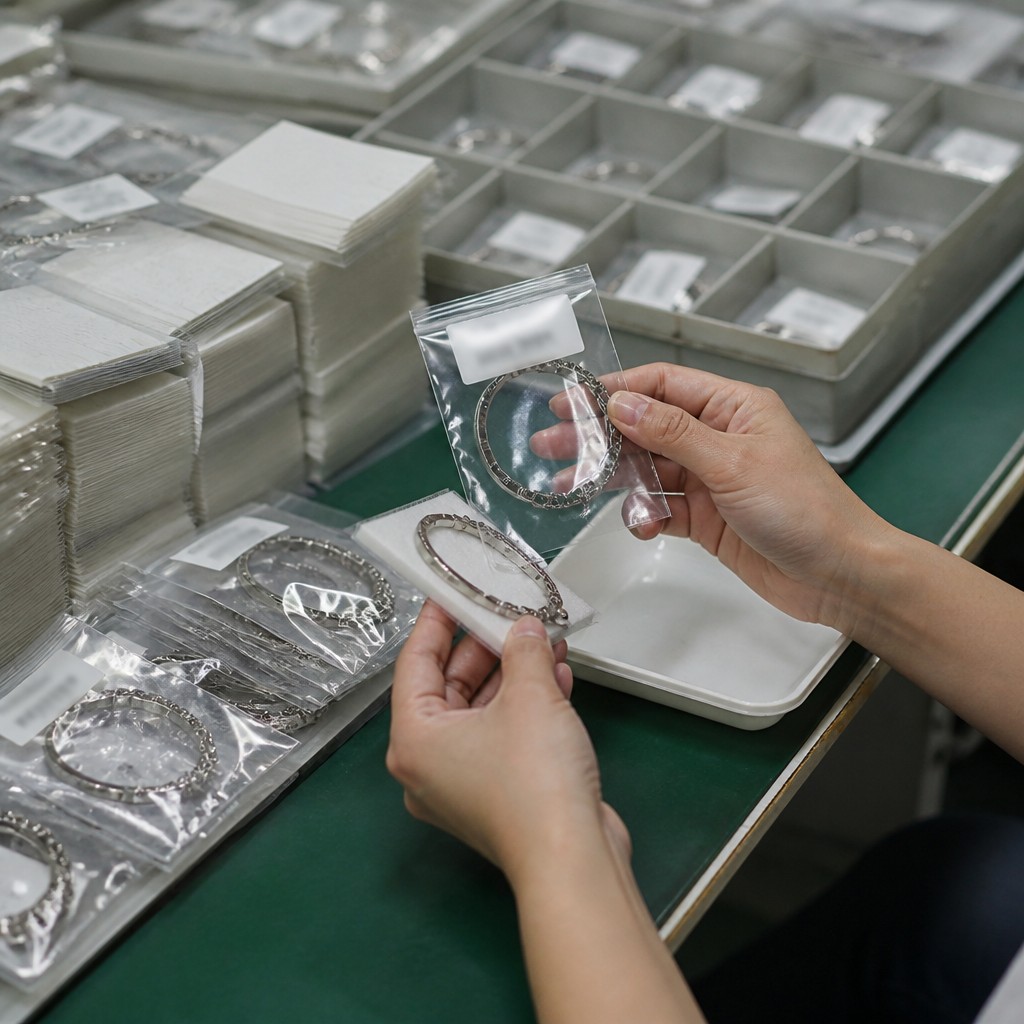
Barcode Data
- SKU, FNSKU, UPC/EAN, QR code, set code, and carton labels are verified against approved master data before printing and application.
- Barcode scan checks can compare decoded value with SKU, color, size, packaging version, and carton plan.
- Controlled label data reduces mixed-SKU and wrong-receiving risk.

Material Files
- Material declarations, batch references, packaging artwork, label versions, and component information help Chicolink keep inspection tied to the real order.
- Files are especially useful when the same style runs in different colors, sizes, or packaging versions.
- Clear input records make repeat orders easier to review.
Process Inspection That Catches Defects Early
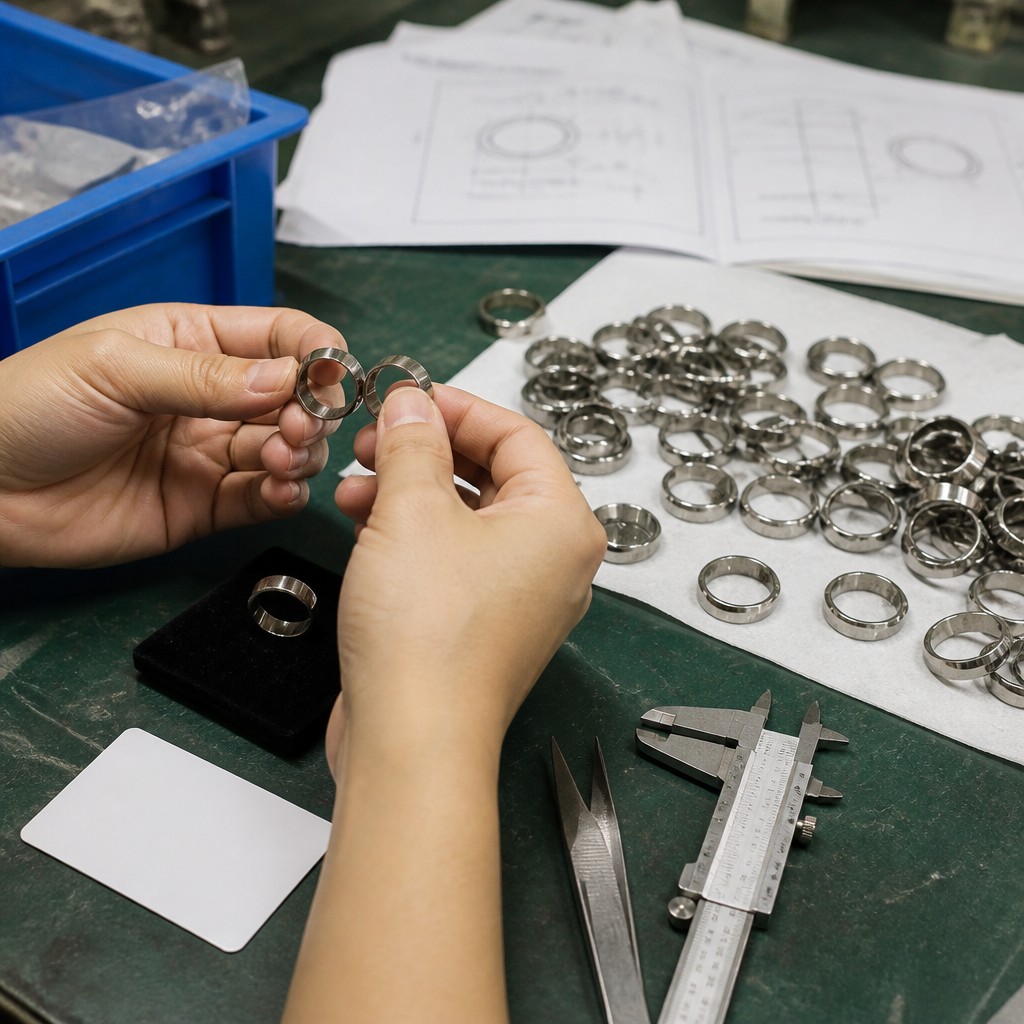
Initial Batch Check
- At production start, Chicolink checks early pieces from the first running batch against the approved reference sample, specification, drawing, and key function before the process continues.
- Tool change, material change, mold repair, or process restart can trigger another early-batch confirmation.
- This early read sets the line-side focus before a batch-wide defect has room to grow.
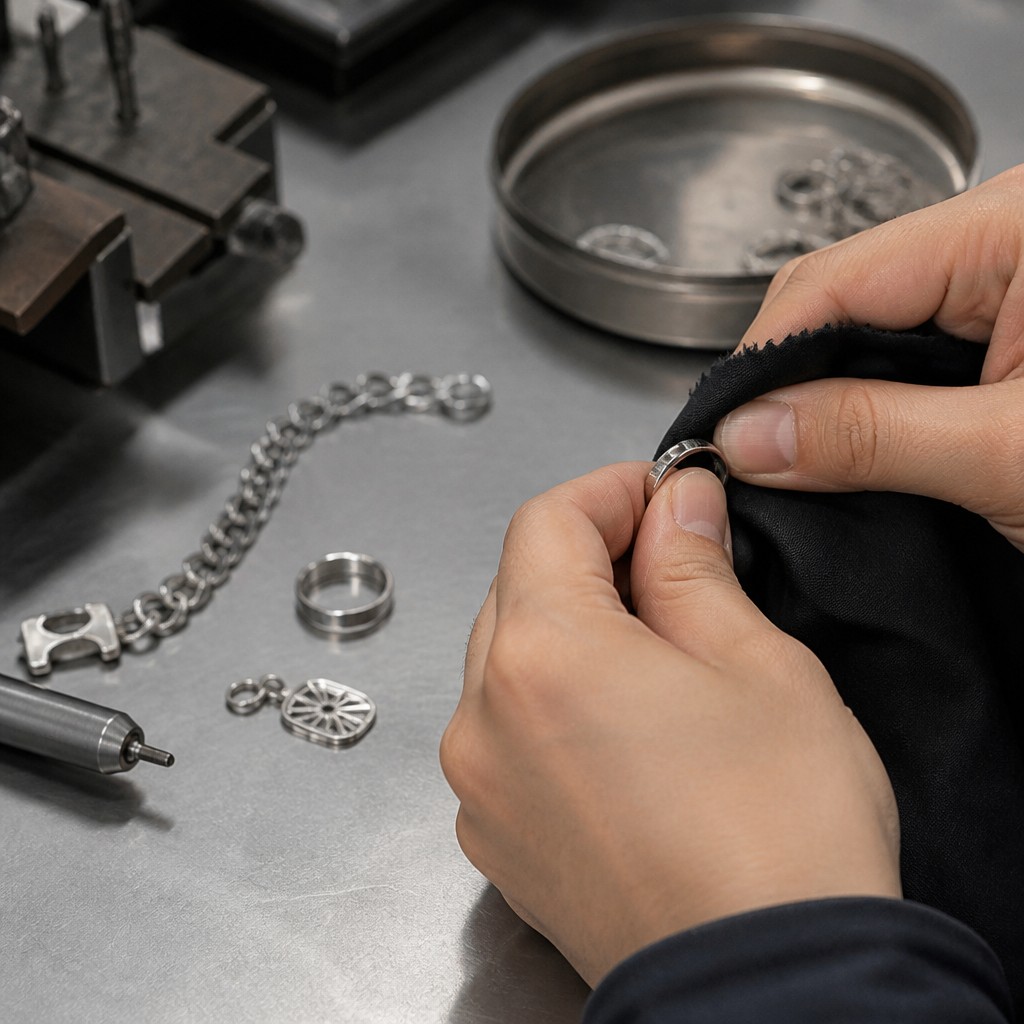
Polishing Before Finish
- Polishing inspection checks scratches, pits, waves, burrs, weld marks, wax residue, fingerprints, and edge comfort before PVD/IP or final packing.
- Mirror and high-polish styles need stronger visible-surface review because PVD can amplify base-surface defects.
- Brushed, satin, and sandblasted styles need texture direction and boundary review.
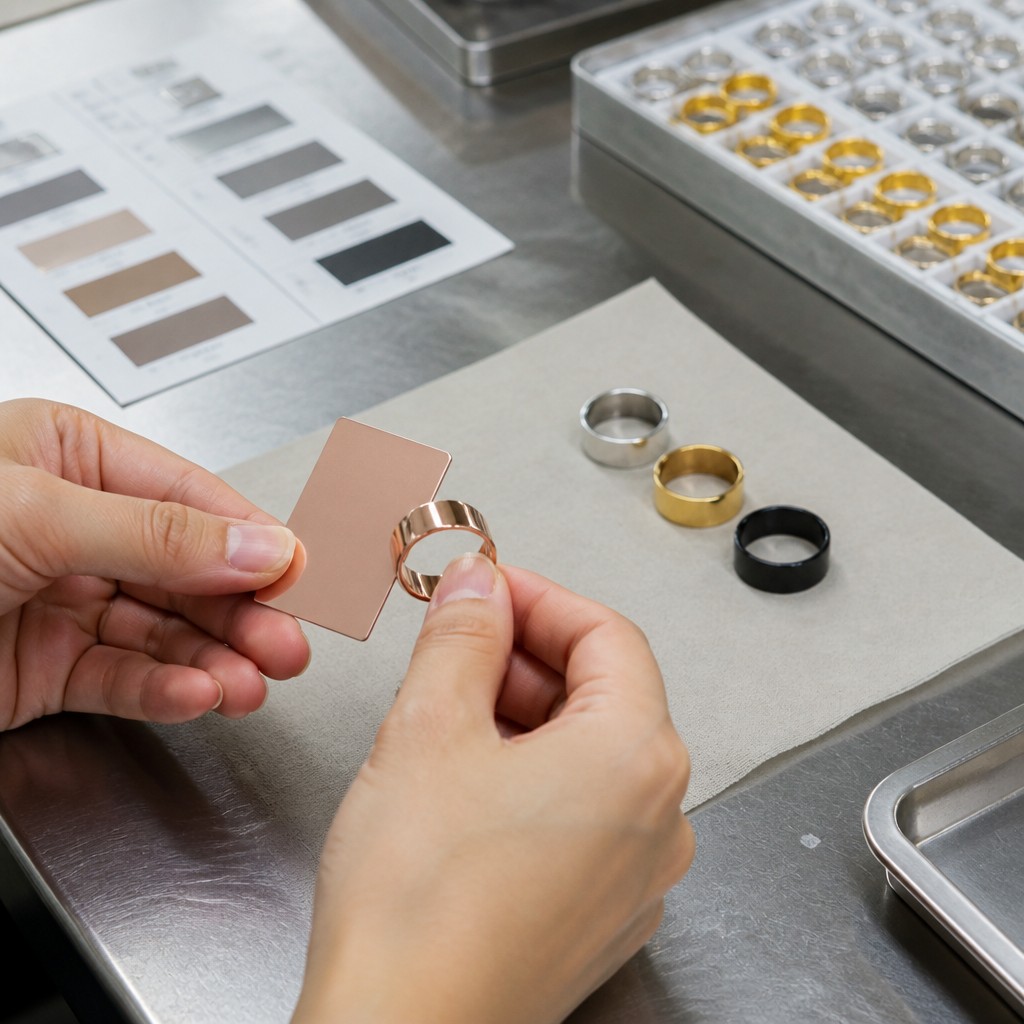
PVD Color Route
- PVD/IP inspection can review approved color direction, batch photos, visible surface zones, hanging marks, edge coverage, clasp movement, and packaging contact.
- Gold, rose gold, black, gunmetal, steel color, and rainbow finishes need approved color samples and batch comparison, not color names alone.
- Paired earrings and jewelry sets benefit from closer same-batch comparison.
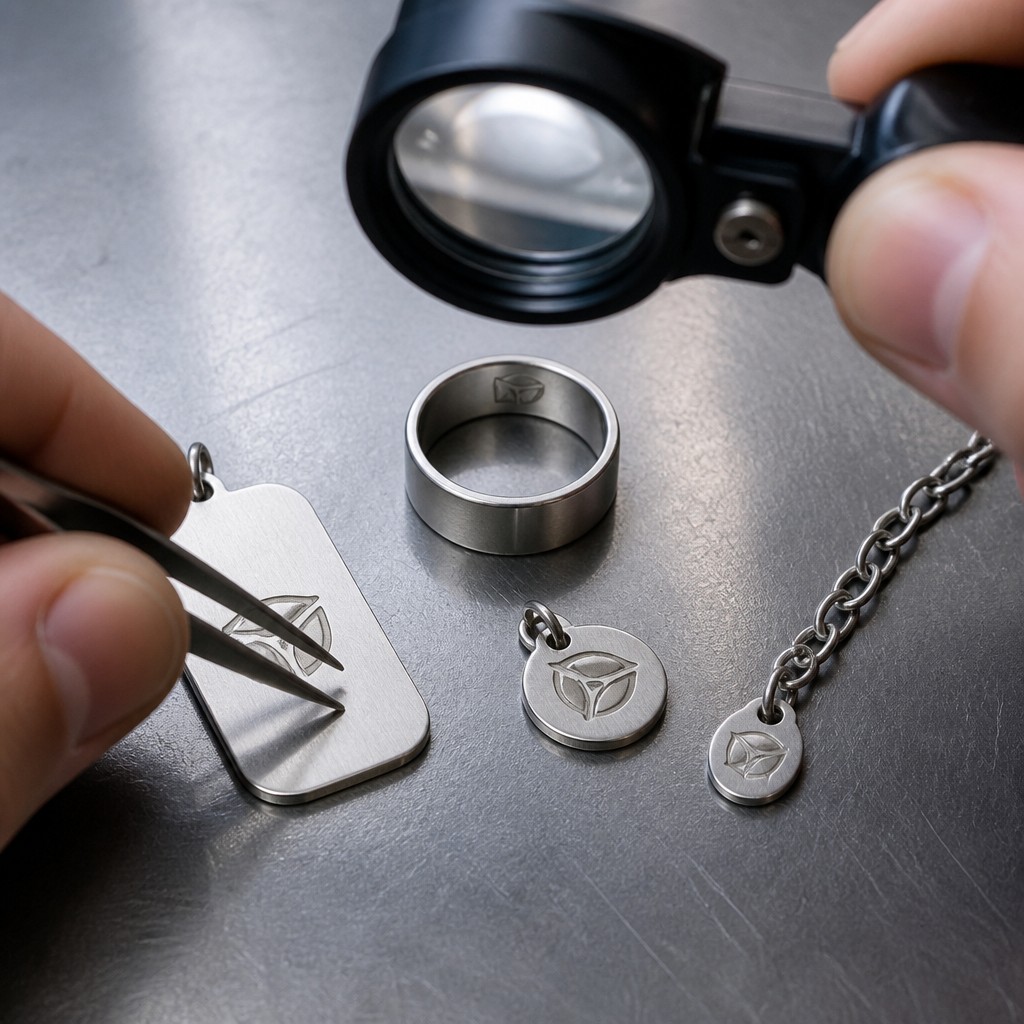
Logo And Engraving
- Logo inspection checks artwork version, position, orientation, clarity, depth, line width, spelling, and readability after surface treatment.
- Engraving accuracy acceptance reference is 98.2% when approved artwork and inspection requirements are controlled.
- Serial numbers, QR codes, memorial text, and brand marks need additional readability checks.
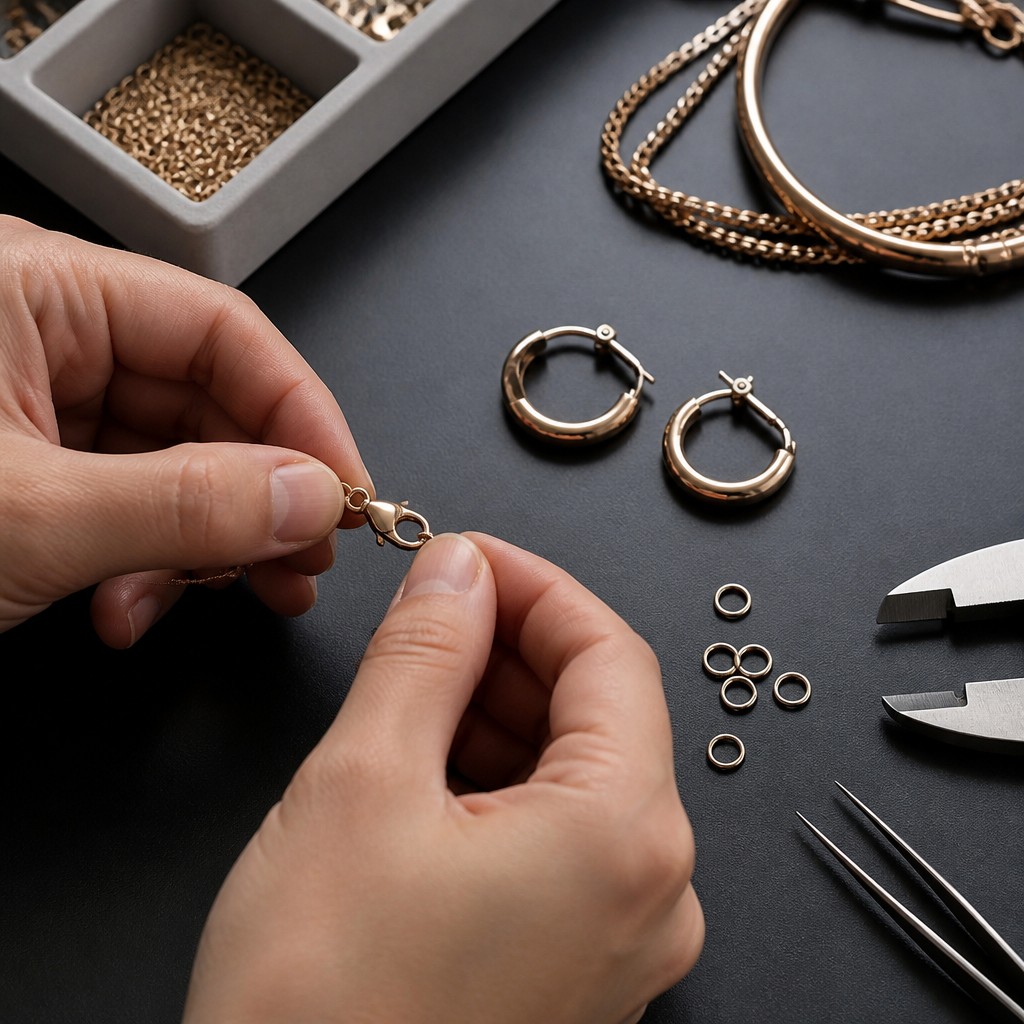
Assembly Function
- Assembly checks cover clasp function, hinge movement, chain flexibility, pendant orientation, ear-pair direction, ring comfort, and moving-part feel.
- Function checks are selected by structure: a huggie latch, hinged bangle, magnetic clasp, and chain bracelet each need a different release question.
- Approved reference samples help align hand feel and movement.

Initial Packaging Check
- Initial packaging confirmation compares product, SKU, color, size, quantity, card, bag, pouch, box, barcode, and carton mark when the packing line starts.
- Packaging accuracy uses a public control reference of >=99.8%.
- Catching a wrong card or label during the initial packaging check keeps the packing line from repeating the same mistake across the batch.
AQL-Based Pre-Shipment Inspection
Inspection Area | Chicolink Reference | Examples In Jewelry Orders | Practical Use |
|---|---|---|---|
Critical defects | Critical defects use Ac=0 logic | sharp edge injury risk, wrong material causing compliance risk, safety label error, immediately detached structure | Usually not accepted because the risk can affect safety, regulation, or product use. |
Major defects | Major AQL 1.5 can be used as a baseline when the customer standard accepts it | clasp failure, loose stone, serious scratch, wrong logo, obvious color mismatch, packaging/barcode error | Helps decide batch release, rework, or hold decision for functional or visible defects. |
Minor defects | Minor AQL 2.5 can be used as a baseline when the customer standard accepts it | slight C-side mark, minor packaging dent, small non-functional visual deviation | Allows controlled judgment for appearance issues that do not affect function or saleability. |
Inspection level | General Inspection Level II is the baseline reference | pre-shipment inspection for regular bulk orders | Customer standard, product risk, and order agreement take priority when stricter inspection is required. |
Feature-specific checks | Selected 100% checks can be used for shipment-critical features | barcode, SKU, paired earrings, critical functions, logo spelling, sharp edges, set quantity | Reduces shipment-stopping errors that AQL sampling alone may not catch. |
Third-party inspection | Customer-appointed or mutually accepted agencies can be coordinated | pre-shipment inspection, audit order, platform order, retailer order | Supports independent review when the buyer or channel requires additional release checks. |
Product-Specific QC For Different Jewelry Structures
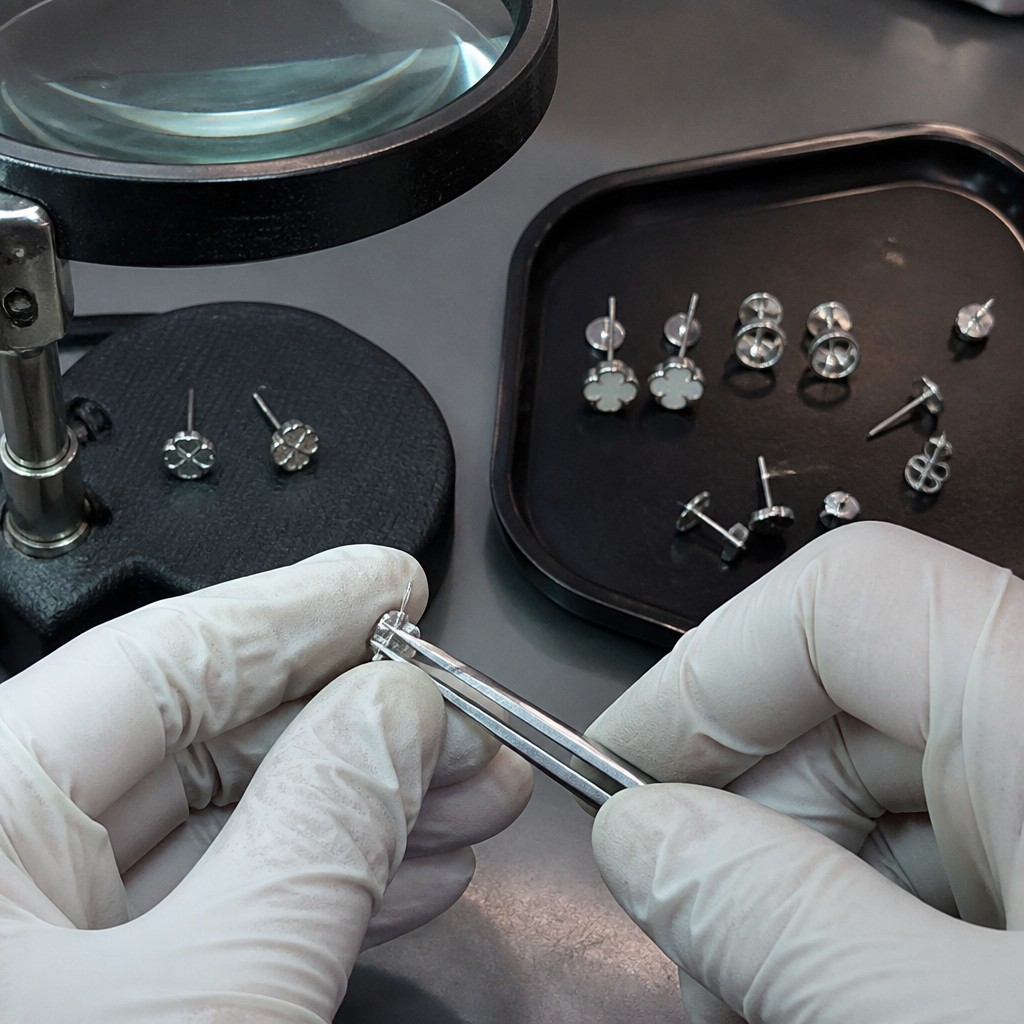
Stud Earrings
- Stud earrings focus on post diameter, effective post length, tip smoothness, backing fit, pair direction, and skin-contact documentation.
- A 0.7-0.9 mm earring post reference gives suitable stud designs a clearer fit target.
- A comfortable post and secure backing reduce daily-use complaints.
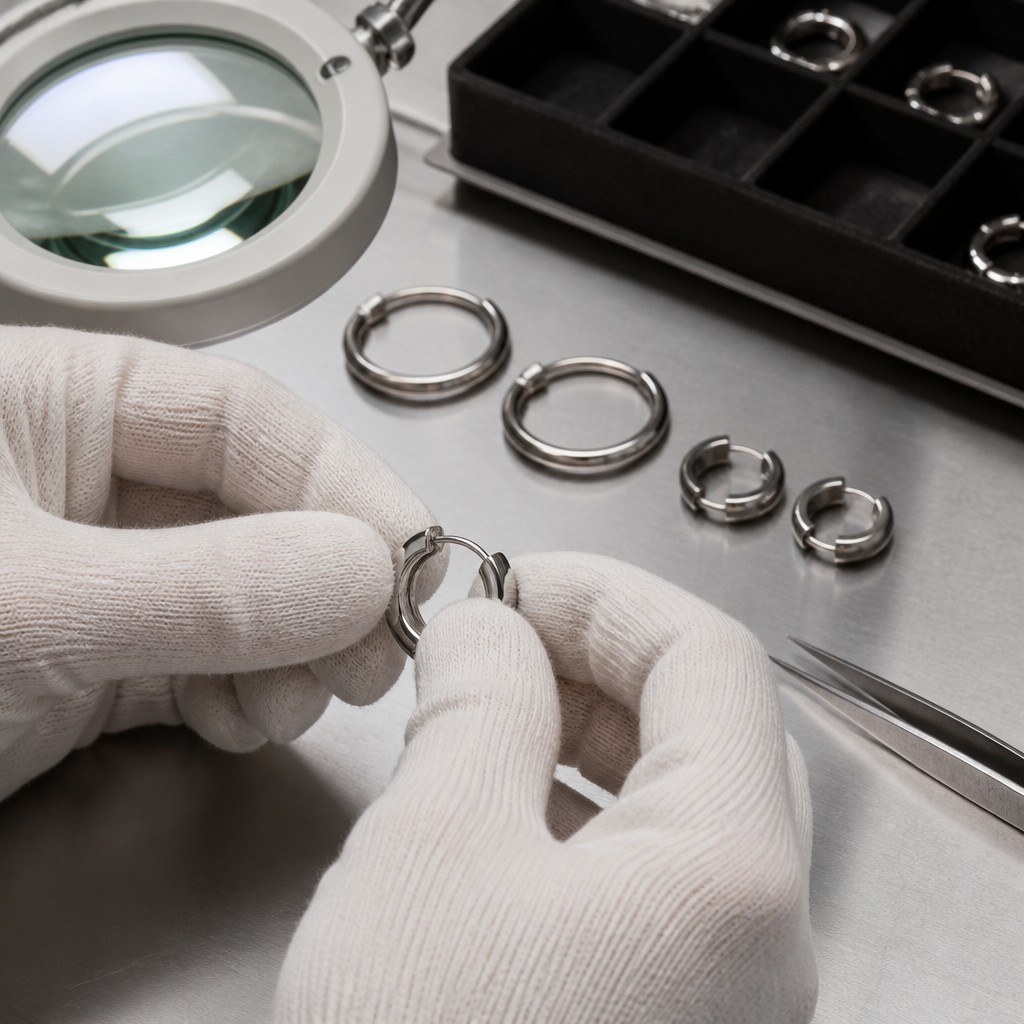
Hoops And Huggies
- Hoop and huggie QC focuses on outer diameter, hinge gap, latch engagement, opening feel, cycle review, left/right pair matching, and color consistency.
- A <=0.2-0.4 mm hinge-gap reference after sample approval helps suitable hoop and huggie styles keep the closure line clean.
- The goal is a secure closure without making the earring hard to wear.
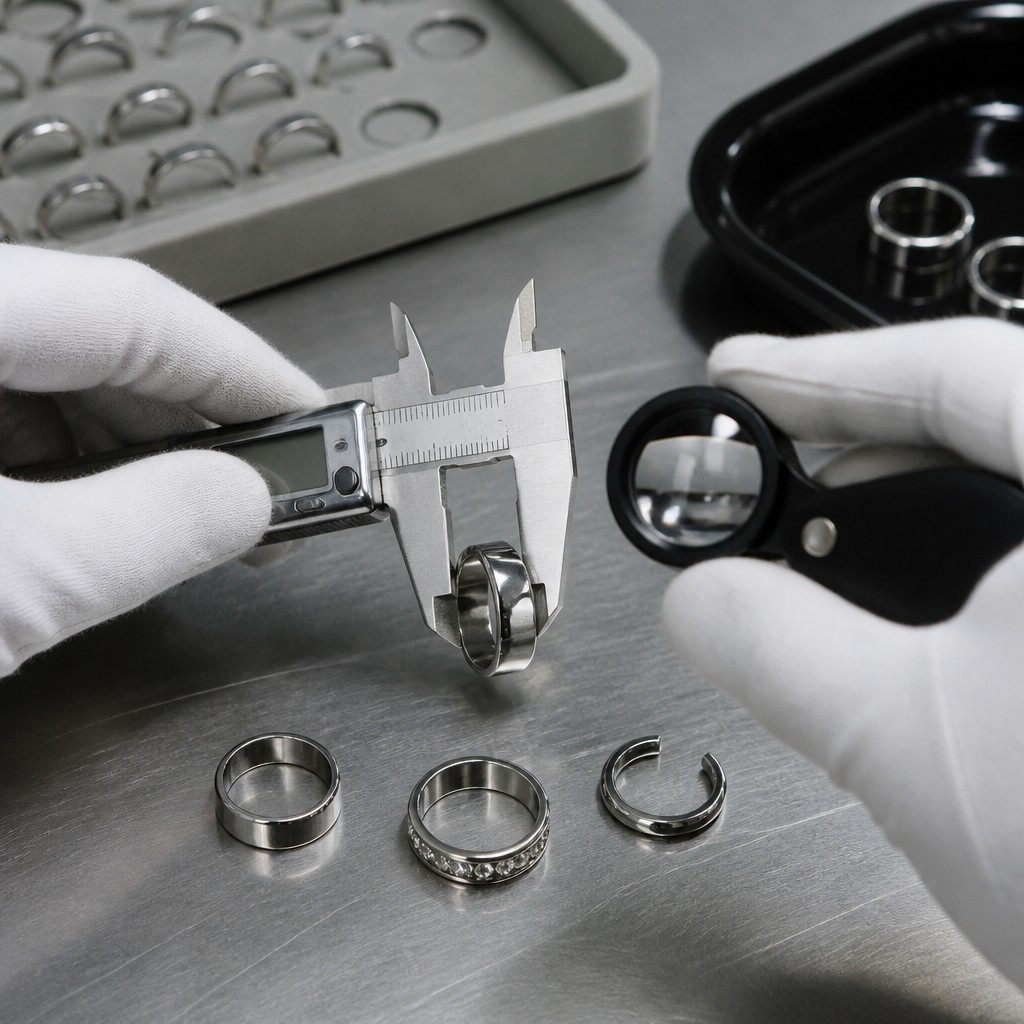
Rings
- Ring QC can review inner diameter, roundness, band width, edge comfort, stone setting, engraving, surface finish, and PVD/IP color inside the ring.
- A +/-0.10-0.15 mm inner-diameter reference gives suitable ring structures a clearer size target.
- Size and comfort records help reduce fit complaints.
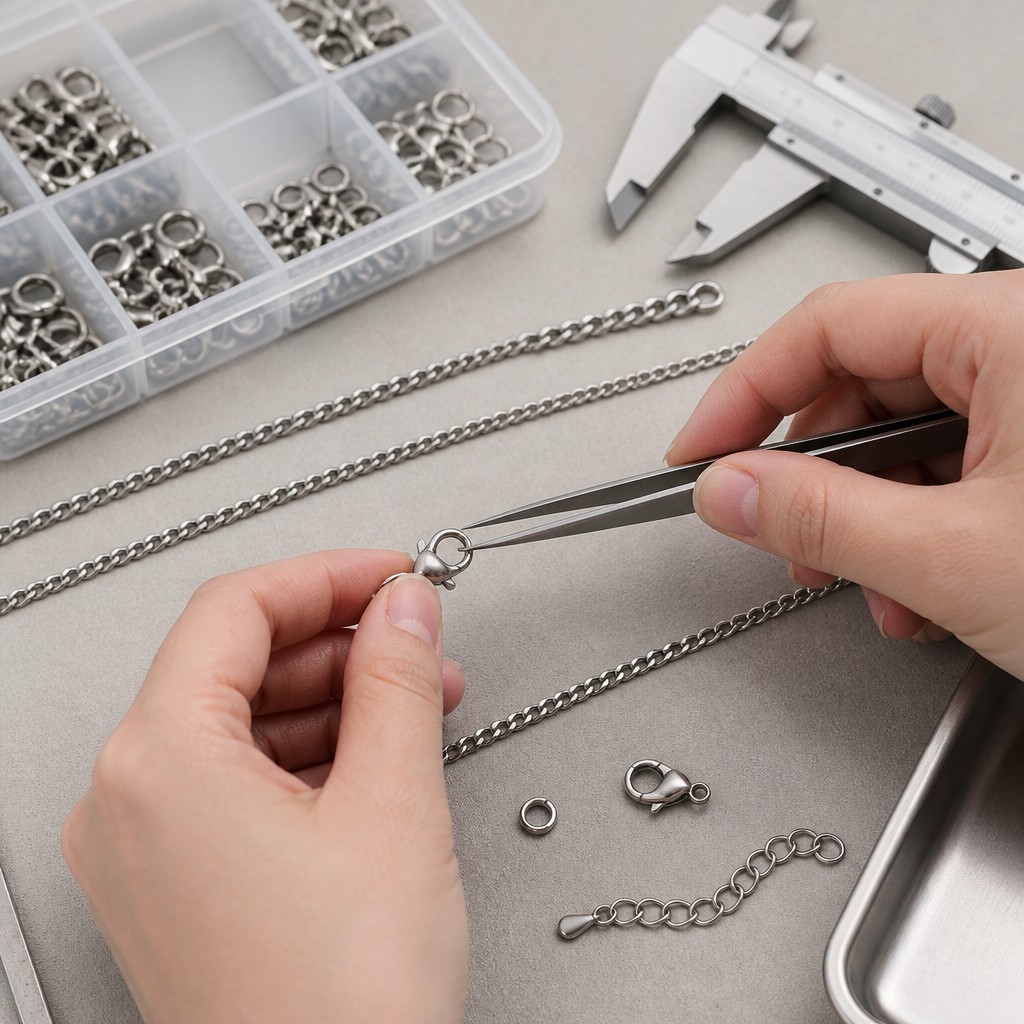
Necklaces And Chains
- Necklace QC can include total length, chain movement, clasp function, jump-ring closure, pendant orientation, welding, PVD rub points, and anti-tangle packaging.
- For chain lengths up to 500 mm, a +/-5 mm reference gives suitable structures a clear length target.
- Chain, clasp, and pendant balance affect both presentation and wearing experience.
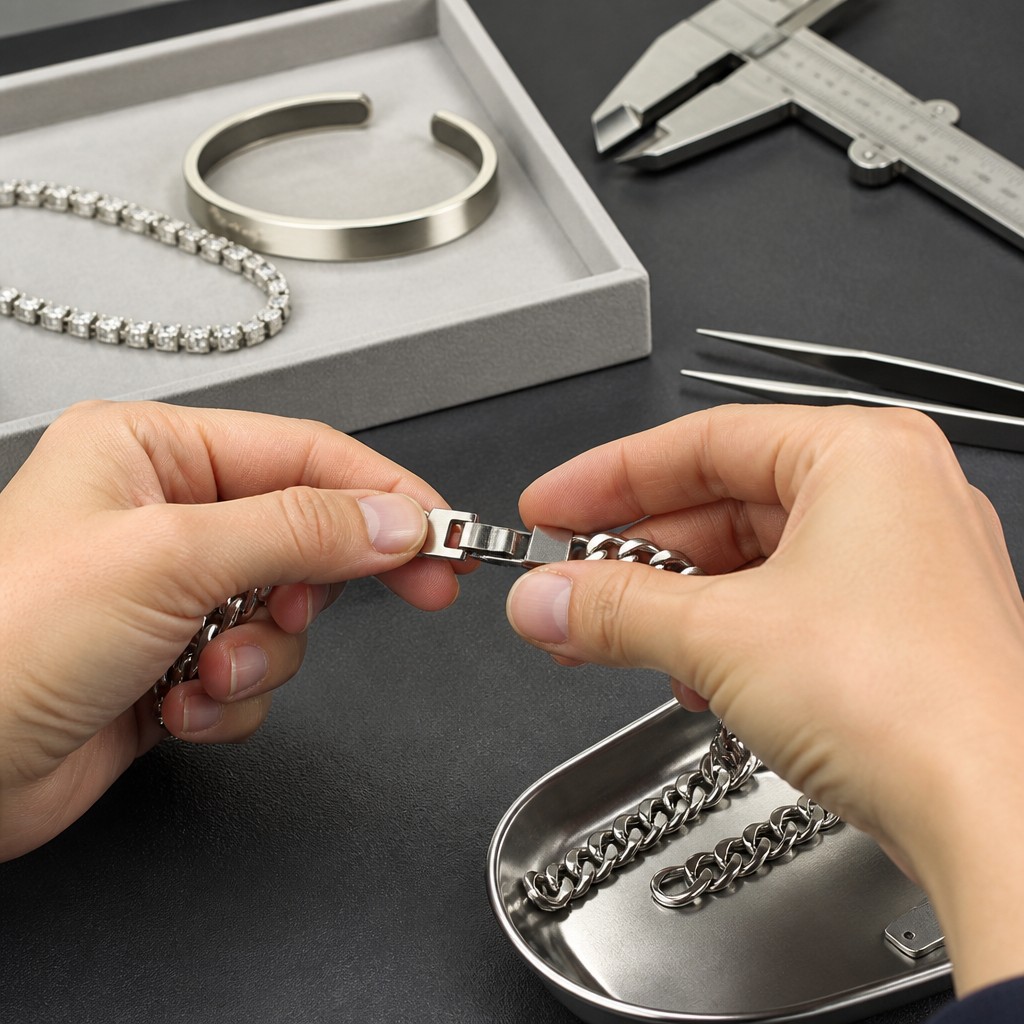
Bracelets And Bangles
- Bracelets and bangles need wrist-fit review, clasp or hinge movement, opening width, edge comfort, chain strength, charm position, and surface protection.
- Bangle inner diameter can use a +/-0.20-0.30 mm reference, and opening width can use a +/-0.30 mm reference after the approved sample fixes the wearing feel.
- Box or pouch fixation reduces metal-to-metal rubbing.
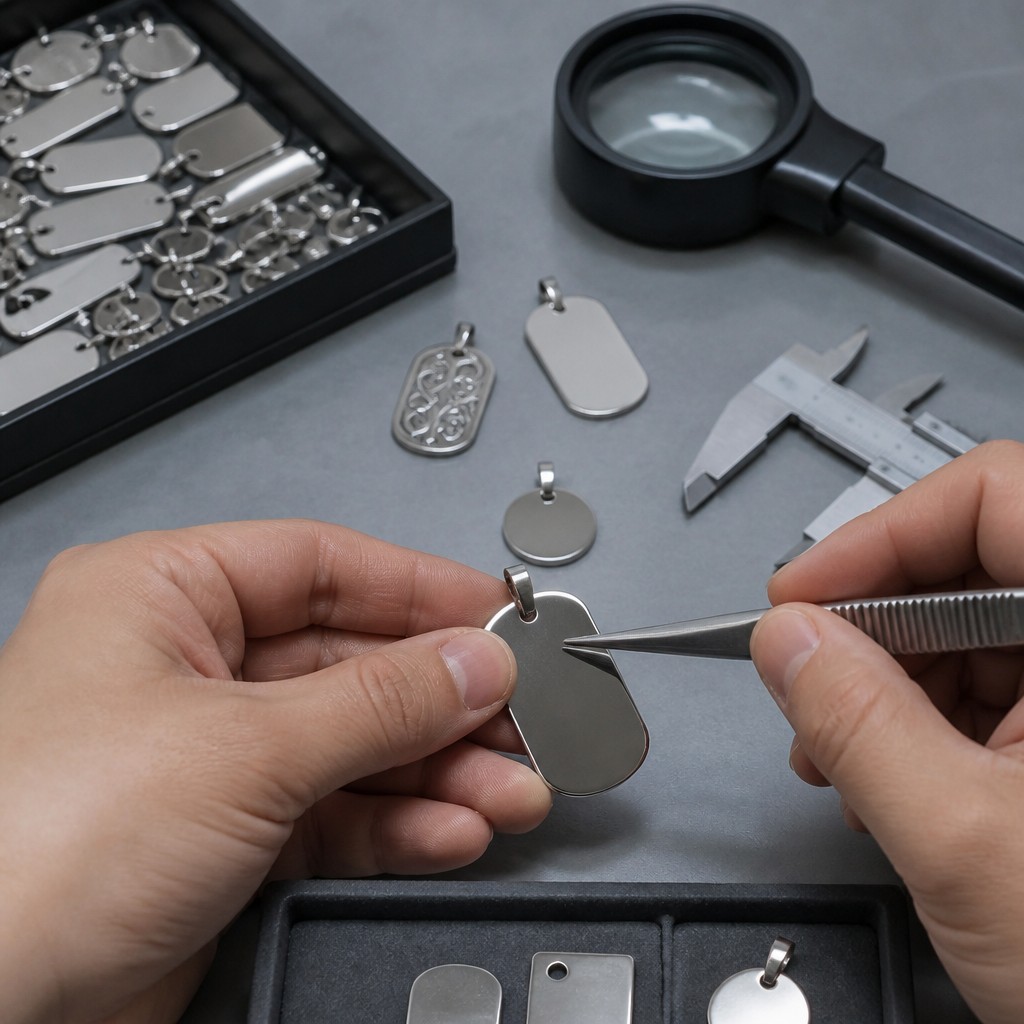
Pendants And Plates
- Pendants, flat plates, keychains, memorial pieces, and logo plates need edge radius, hole size, flatness, engraving readability, front/back direction, and packaging protection.
- Standard pendant thickness can use a 1.2-3.0 mm reference; heavier memorial or flat accessories can use 2.0-4.0 mm when the design needs more presence or impact resistance.
- Clean edges and readable details improve product presentation.
Stone, Pearl, Resin, And Decorative Component QC
CZ Stones
- CZ stones are checked for size, cut appearance, color batch, bottom film, count, brightness, and fit with the setting.
- Marketing grades such as AAAAA need a physical reference or material-provider standard because they are not one universal international quality level.
- Size and color control help keep stone rows and paired pieces visually consistent.
Glass Stones
- Glass stones are reviewed for size, color coating, foil backing, surface chips, edge damage, brightness, and compatibility with the setting or glue method.
- Chicolink separates glass-stone review from CZ because material behavior, backing film, chipping risk, and price expectation are different.
- Clear glass-stone boundaries help prevent a low-cost decorative choice from weakening the finished product presentation.
Pearl Details
- Pearl details need luster direction, surface-scratch review, shape range, color range, drilling or cup fit, glue method, and natural-flaw boundary.
- We confirm pearl and imitation-pearl material descriptions against the actual material source and customer requirements.
- We define the approved appearance boundary for pearls to accept natural character while rejecting visible cracks, chips, or coating loss.
Shell Details
- Shell details need color layer, texture direction, surface scratch, cutting edge, thickness, bonding method, and packaging-pressure review.
- For shell and selected natural materials, Chicolink controls the production route to avoid high-temperature curing and strong solvent cleaning.
- Clear color and texture boundaries help keep shell designs attractive without forcing every piece to look identical.
Natural Stone
- Selected natural stones and semi-precious stones need color band, texture, crack, size, treatment, and sourcing information review.
- We control natural variation through approved color ranges and boundary samples
- Material-provider files and approved appearance ranges help keep natural-stone styles commercially consistent across bulk stainless steel jewelry orders.
Resin, Acrylic And Enamel
- Resin, acrylic, enamel, color filling, and UV print details need color, bubble, shrinkage, edge overflow, yellowing, cracking, curing, and surface-contact review.
- Product structure, groove depth, surface cleanliness, and material compatibility affect the final visual result.
- These details often decide whether a complex style looks clean enough for online photos.
Setting And Glue
- Prong, bezel, channel, wax, micro, adhesive, and resin-covered settings need different inspection logic.
- Decorative stone retention can start from 5 N for <=2 mm non-load-bearing stones, 10 N for 2-5 mm stones, and 15-25 N for larger or protruding stones, with final values set by design validation.
- Glue records can include batch, ratio, pot life, curing route, and compatibility with PVD and cleaning.
Complex Style Review
- Complex stone, pearl, resin, and mixed-material styles need appearance, assembly, cost, rework, and packaging pressure considered together.
- Chicolink can use approved reference samples, boundary samples, photos, and selected aging or drop checks to keep visual standards realistic.
- The goal is a better product display effect without creating an inspection standard that is impossible to produce at the target price.
Testing Files For Jewelry Quality Review

Skin-Contact And Restricted Substance Files
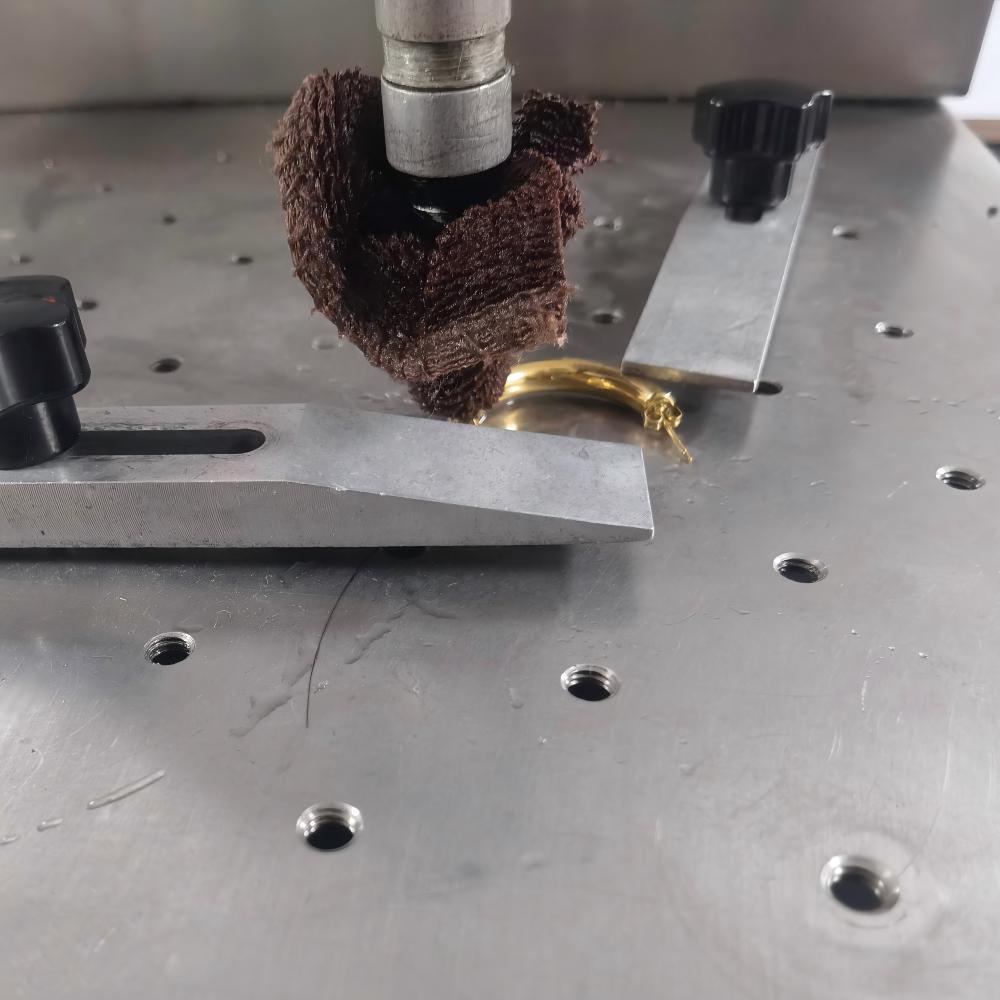
Surface And Durability Files
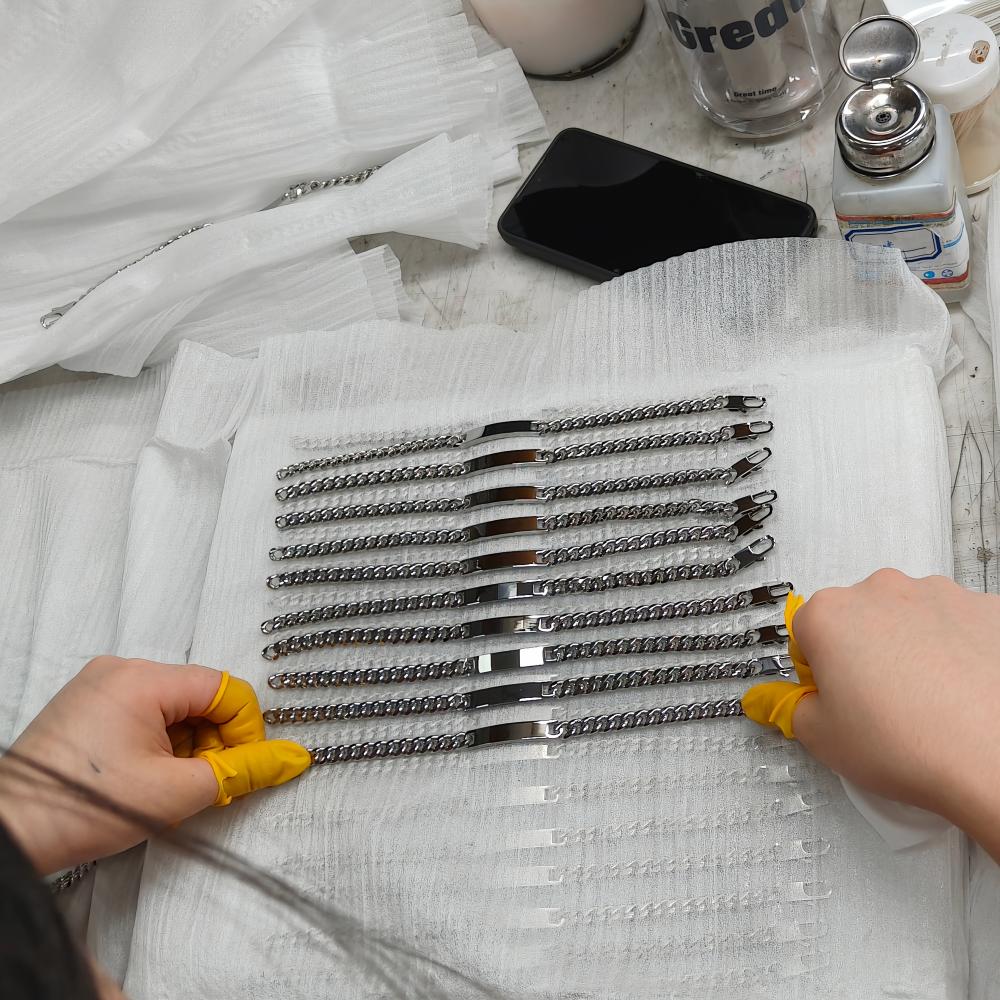
Function And Packaging Tests
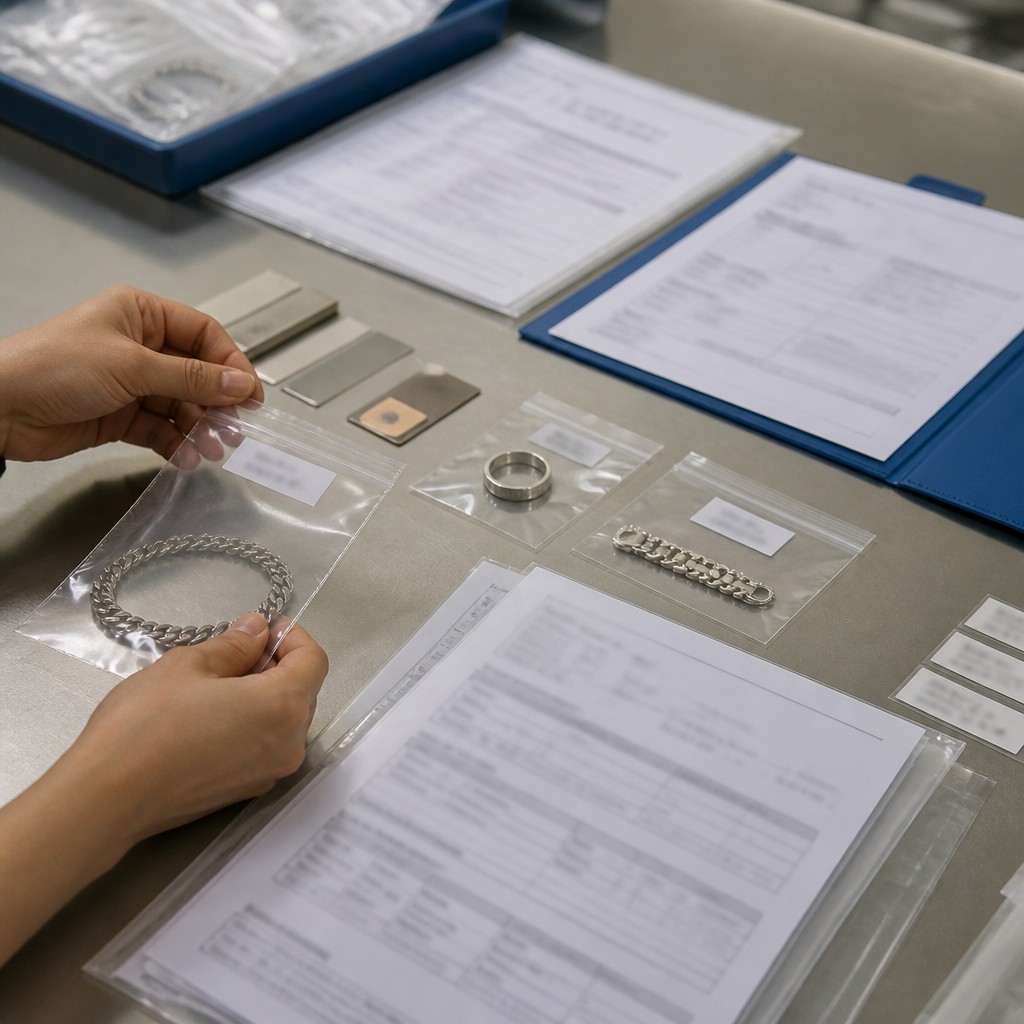
Third-Party Lab Coordination
Traceability, Complaints, And 8D Follow-Up
Traceability Fields
Complaint Information
Temporary Containment
Root Cause And 8D
Quality Plan Fields To Confirm Before Production
QC Plan Field | What Chicolink Reviews | Why It Matters Before Production |
|---|---|---|
Product and SKU | product type, version, material, PVD/IP color, size, structure, packaging version | Keeps inspection scope connected to the actual product and order version. |
Target market | EU, US, retailer, marketplace, gift, distributor, or private label route | Helps select testing files, warning text, label checks, and documentation needs. |
Critical-to-quality items | sharp edge, clasp function, ear post, stone retention, color pair, logo, barcode, set quantity | Defines which features need tighter checks or selected 100% inspection. |
Defect definitions | Critical, Major, Minor examples and boundary samples | Reduces disagreement when appearance, function, packaging, or label defects are judged. |
AQL and inspection level | General Inspection Level II, Critical Ac=0, Major AQL 1.5, Minor AQL 2.5 baseline for suitable orders | Gives the buyer and Chicolink a shared release reference before pre-shipment inspection. |
Testing files | nickel release, lead/cadmium, REACH-related, Prop 65 related, RoHS-related, pull, torque, drop, surface tests | Connects material, market, product use, and report boundary to the order. |
Packaging and labels | packaging BOM, barcode, SKU/FNSKU, carton mark, packing matrix, carton photos | Helps prevent wrong packaging, mixed SKU, unreadable labels, and receiving delays. |
Traceability and complaints | order, batch, QC record, retained sample, complaint information, 8D timing | Supports issue review, corrective action, and repeat-order improvement. |
Inspection Records And Third-Party Inspection Support
Inspection records work best when they tie the product, sample, inspection scope, packaging version, and shipment batch together. Chicolink prepares pre-shipment inspection information and coordinates third-party inspection according to order requirements.
Pre-Shipment Records
Pre-shipment records can include approved sample photos, inspection date, inspector, SKU, quantity, product appearance, size, function, color, logo, stone, packaging, label, carton mark, and shipment photo information. These records are more useful when the inspection scope is agreed before packing.
Approved Reference Sample And Boundary Samples
An approved reference sample defines expected product appearance, size, color, logo position, packaging version, hand feel, and inspection direction. Boundary samples make the line between acceptable and not acceptable easier to see for minor appearance variation, surface marks, stone color, polishing line, packaging condition, and other limits.
Customer Standard
Some customers want their own AQL, defect definitions, inspection level, label rules, testing requirements, photo requirements, or third-party inspection format. Chicolink reviews customer standards before quotation or order confirmation so differences are not discovered at shipment.
Third-Party Inspection
Third-party inspection can be arranged through customer-appointed or mutually accepted agencies. Inspection time, location, sampling method, defect criteria, report language, cost responsibility, and reinspection handling are confirmed in the order arrangement.