Stainless Steel Rings Manufacturer
Chicolink manufactures stainless steel rings for jewelry brands, wholesalers, retailers, marketplace sellers, distributors, gift companies, and private label programs. Our ring projects connect style selection, size systems, material grade, ring comfort, PVD/IP color, engraving, stone or enamel detail, packaging labels, sample approval, QC checks, and bulk production into one controlled manufacturing path.
- Ring types include plain bands, open rings, signet rings, stackable rings, engraved rings, stone rings, couple rings, and men's rings.
- Stock wholesale orders usually start from 120 pcs/style; OEM/ODM custom ring orders usually start from 500 pcs/style.
- Existing-style samples usually take about 3-7 working days; OEM/ODM samples usually take about 25-30 working days after details are confirmed.
- Ring packaging can combine boxes, cards, pouches, size labels, barcode labels, FNSKU labels, and separated anti-scratch packing.
What Professional Stainless Steel Ring Manufacturing Must Control
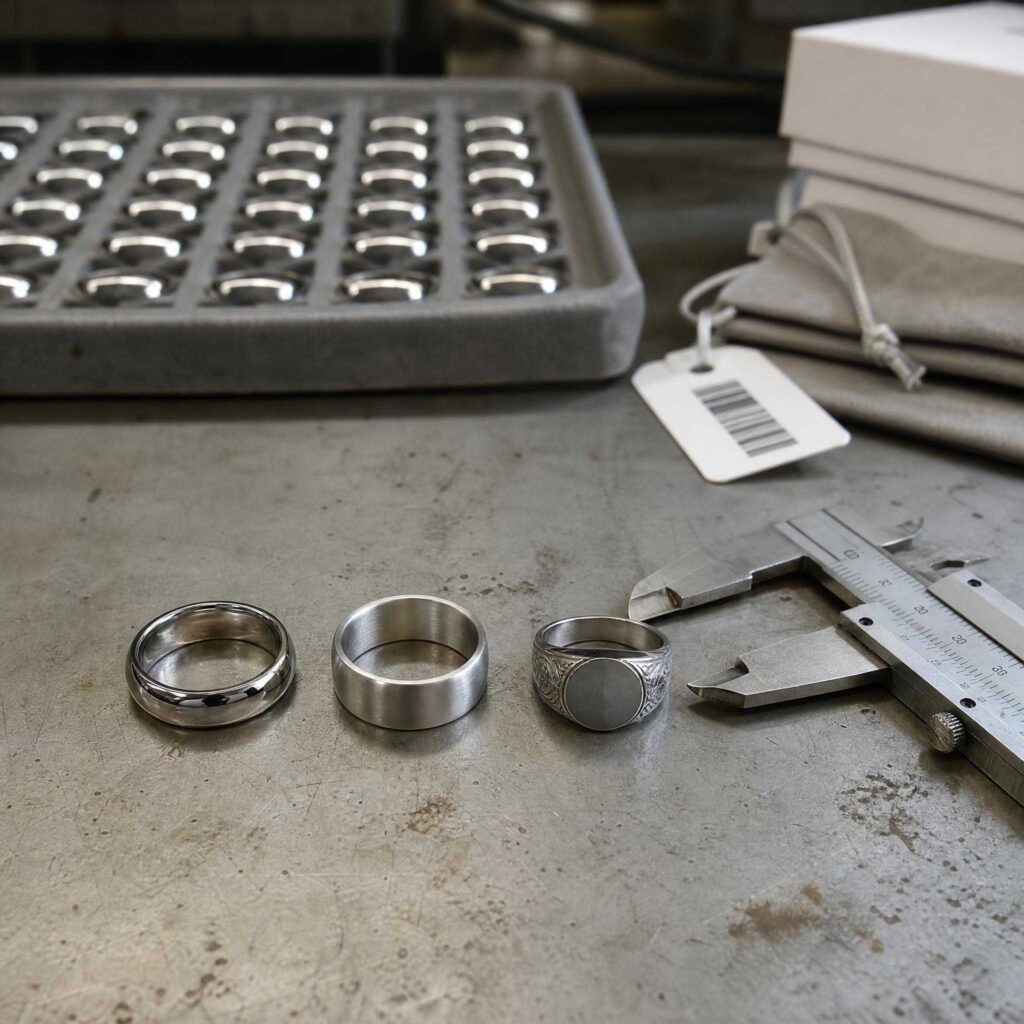
A stainless steel ring looks simple only when the manufacturing plan is already clear. Chicolink treats ring orders as a connected product system: physical size, comfort, material hardness, surface route, decoration method, packaging fit, and repeat-order records are reviewed together before production moves forward.
Fit And Size System
- Ring fit starts with the selling market's size language, not only a number on a purchase order.
- Chicolink aligns US, EU, UK, JP, HK, Korean, and inner-diameter references with the buyer's listing and packing data.
- Clear size records help reduce relabeling, wrong-size receiving, and repeat-order confusion.
Band Shape And Comfort
- Width, thickness, inner curve, edge radius, and roundness decide whether a ring feels wearable after purchase.
- Chicolink reviews comfort polish, shoulder transition, open-ring gap, and raised-face balance before sample approval.
- Comfort control matters most for wide bands, signet rings, men's rings, and daily-wear reorder styles.
Material And Cost Balance
- Stainless steel grade affects hardness, processing difficulty, polish time, documentation, and target price.
- Chicolink usually recommends 304 for broad commercial ring programs because it balances cost, processability, and appearance.
- 316L is reserved for suitable premium or documented routes, especially when the design is not overly complex.
Surface And Color Route
- Polished steel, brushed finish, antique effect, gold PVD/IP, rose gold, black, gunmetal, and two-tone looks are judged by different visual and surface risks.
- Chicolink confirms surface reference, approved color sample, exposed-edge review, and packing-contact check before bulk work.
- Repeat batches then have a clearer standard for product photos, sample comparison, warehouse inspection, and reorder matching.
Decoration And Components
- Engraving, signet faces, CZ stones, enamel, shell, resin, acrylic, ceramic, silicone, leather, and charms change the inspection focus.
- Chicolink checks artwork depth, stone-seat access, enamel borders, bridge strength, glue route, and box pressure separately.
- Decorative details stay useful only when they can be produced, inspected, packed, and repeated cleanly.
Packaging And Reorder Data
- Ring packaging must protect the finish while keeping size, color, barcode, and carton data readable.
- Chicolink links ring cards, boxes, pouches, labels, FNSKU data, carton marks, and packing photos to the order file.
- Reorders move faster when the ring and its pack follow the same approved reference.
Where Stainless Steel Ring Programs Usually Need Different Planning
Different ring programs fail for different reasons. A marketplace seller may struggle with size labels, a boutique brand may need better style mix, a DTC brand may need color consistency, and a gift program may need paired packaging. Chicolink adjusts ring planning around the selling job instead of forcing every order into one catalog format.
Marketplace Size Runs
- Amazon and marketplace ring programs need variation names, size labels, FNSKU labels, and carton data to match exactly.
- Chicolink connects size chart, SKU split, barcode files, and first-piece packing photos before shipment.
- This structure supports mixed-size receiving without repacking every ring after arrival.
DTC Brand Capsules
- DTC ring lines often need a clearer mood, repeated color reference, and packaging that matches the brand story.
- Chicolink supports approved PVD/IP color boards, logo routes, ring cards, boxes, and product-photo packing references.
- The same style capsule becomes easier to reorder when color, card, and pack version stay recorded.
Boutique Style Testing
- Boutique sellers often test small style groups before committing to deeper custom development.
- Chicolink helps combine existing bands, signets, stackables, open rings, and light customization into trial assortments.
- This path lets the seller compare size response, color response, and reorder potential before mold investment.
Distributor Replenishment
- Distributor programs need stable SKUs, clean carton marks, and repeatable packing more than constant design changes.
- Chicolink keeps product codes, size split, color split, packing method, and inspection focus in reorder files.
- Ring lines stay easier to replenish when every repeat order follows a stable data structure.
Gift And Couple Sets
- Couple rings, anniversary rings, and seasonal gift rings need paired styling without losing size separation.
- Chicolink links pair labels, engraving alignment, size matching, insert fit, and gift-box presentation in one record.
- Matched sets stay easier to sell, pack, count, and reorder across campaign seasons.
Men's And Unisex Lines
- Men's and unisex ring programs often use wider bands, black PVD/IP, gunmetal, brushed finish, and bold signet faces.
- Chicolink reviews weight, inner comfort, edge radius, color route, and separated packing together.
- Stronger structures stay wearable while darker finishes receive better surface-contact protection.
Regional Launch Mix
- Regional markets respond differently to minimal bands, signets, gold-tone rings, black rings, and delicate stackables.
- Chicolink translates the target market into width, color, finish, size spread, packaging tone, and material route.
- The first launch mix becomes more focused without rebuilding the whole ring family.
Private Label Reorders
- Private label rings need logo files, packaging artwork, color reference, label files, and approved sample photos to stay aligned.
- Chicolink records these details with the ring master sheet before bulk release.
- Future orders can repeat the same brand presentation instead of restarting approval from memory.
Stainless Steel Ring Styles For Wholesale And Custom Programs
Ring style selection should tell the factory how the product will be worn, photographed, packed, and reordered. Chicolink manufactures common stainless steel ring styles while checking the structure, finish, comfort, decoration method, size logic, and packaging fit behind each look.
Minimal Bands
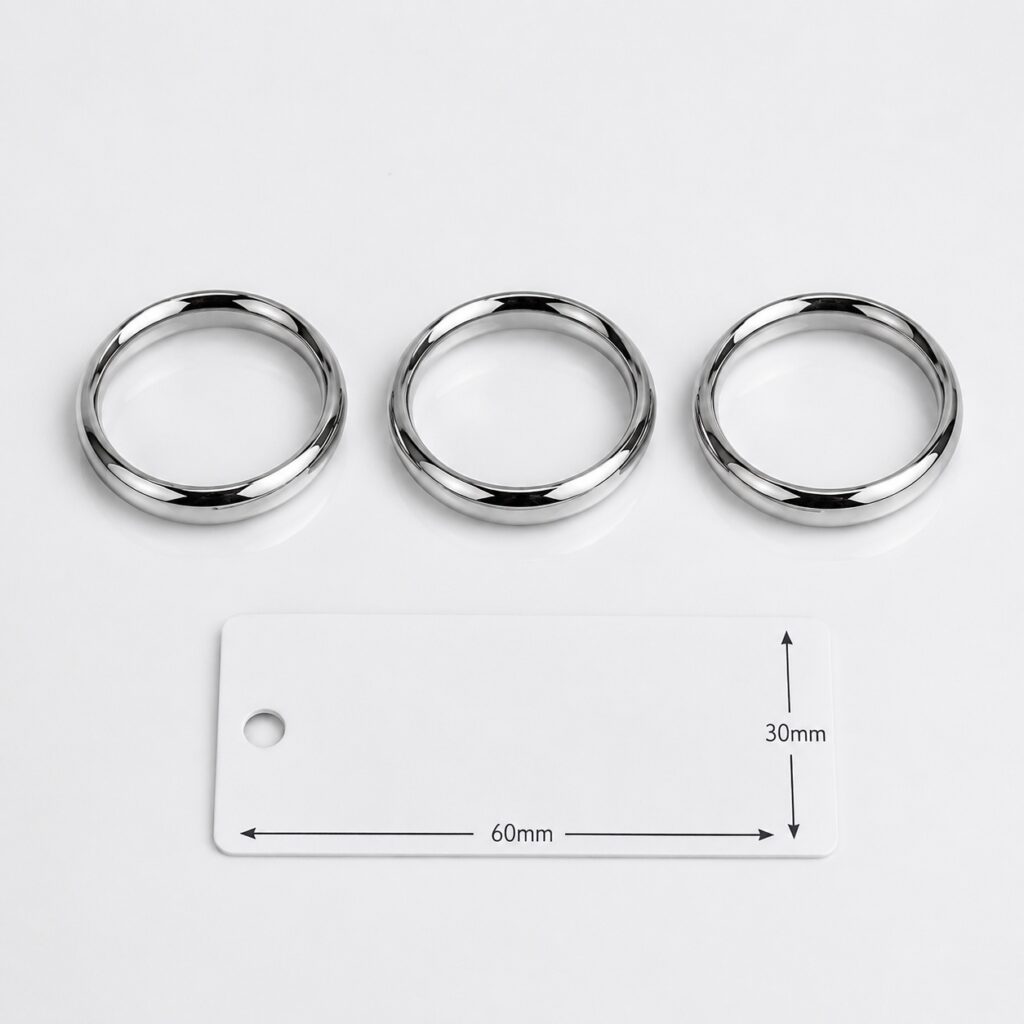
- Minimal bands are the safest base for daily-wear catalogs, broad size runs, and repeat replenishment.
- Chicolink keeps width, roundness, inner comfort, surface finish, and size-label wording stable.
- Simple rings still need clean polish access, accurate size labels, and consistent packaging because small surface defects are easy to see in inspection and marketplace photos.
Open Rings
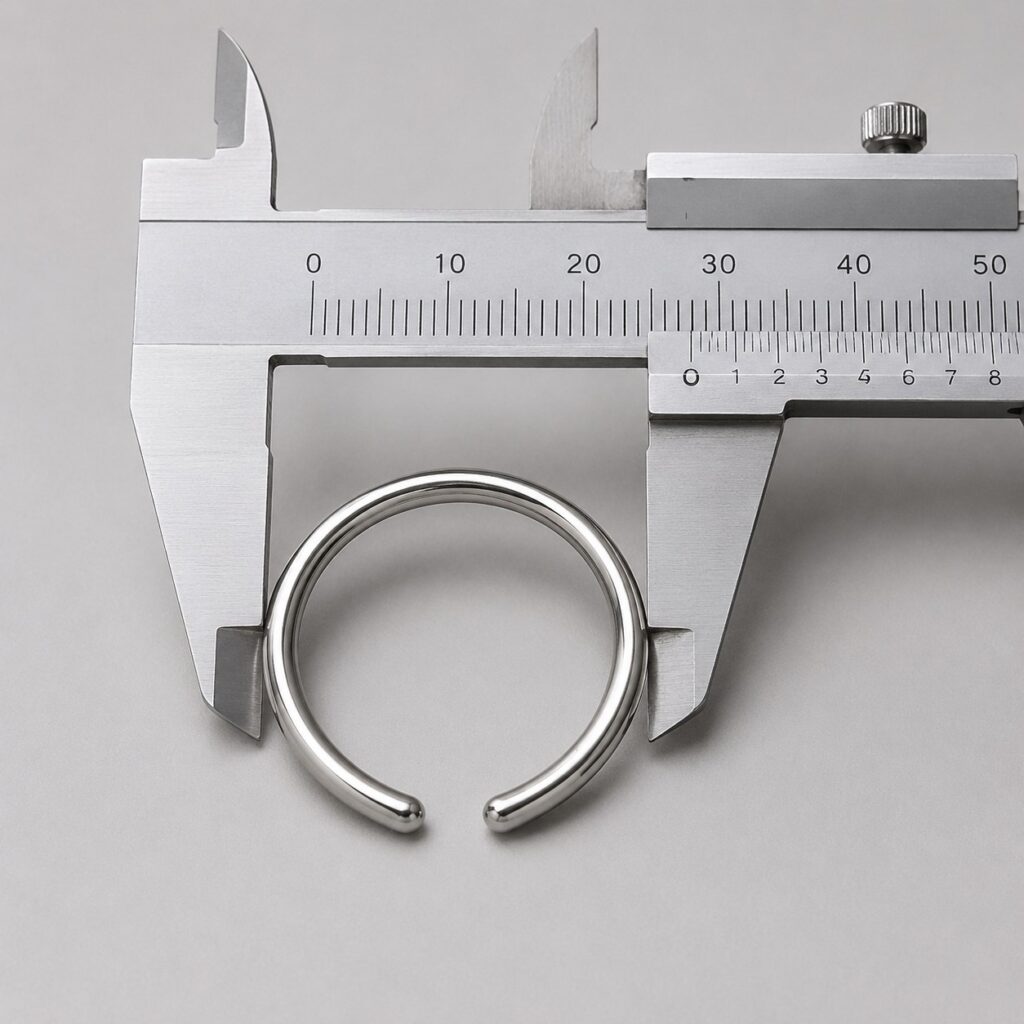
- Open rings help sellers cover flexible sizing, but the gap design affects comfort and customer expectation.
- Chicolink reviews opening width, end shape, adjustment force, edge smoothness, and roundness after adjustment.
- We clearly mark adjustable styles with size ranges on listings, stickers, and labels to support accurate retail and e-commerce selling.
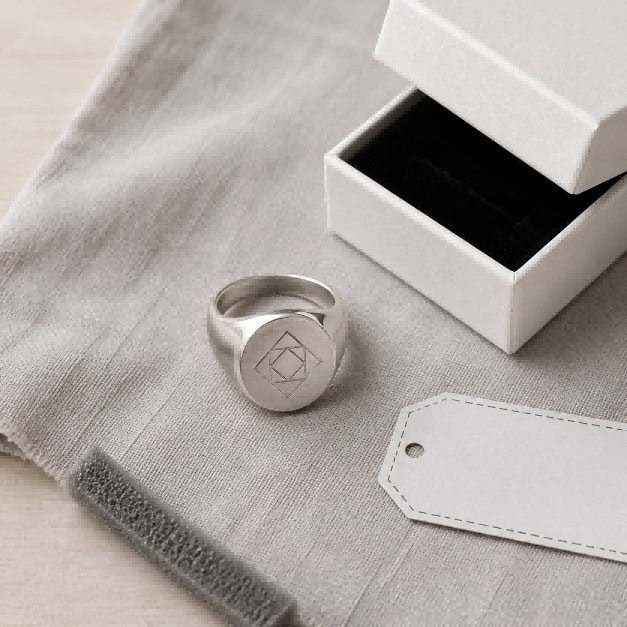
Signet Rings
- Signet rings give logos, initials, symbols, and crest-style artwork a larger visible face.
- Chicolink balances face size, shoulder thickness, band weight, engraving contrast, and box clearance before sampling.
- Signets need early structure review because heavy tops can affect comfort, polish access, engraving visibility, packing pressure, and repeat bulk consistency.
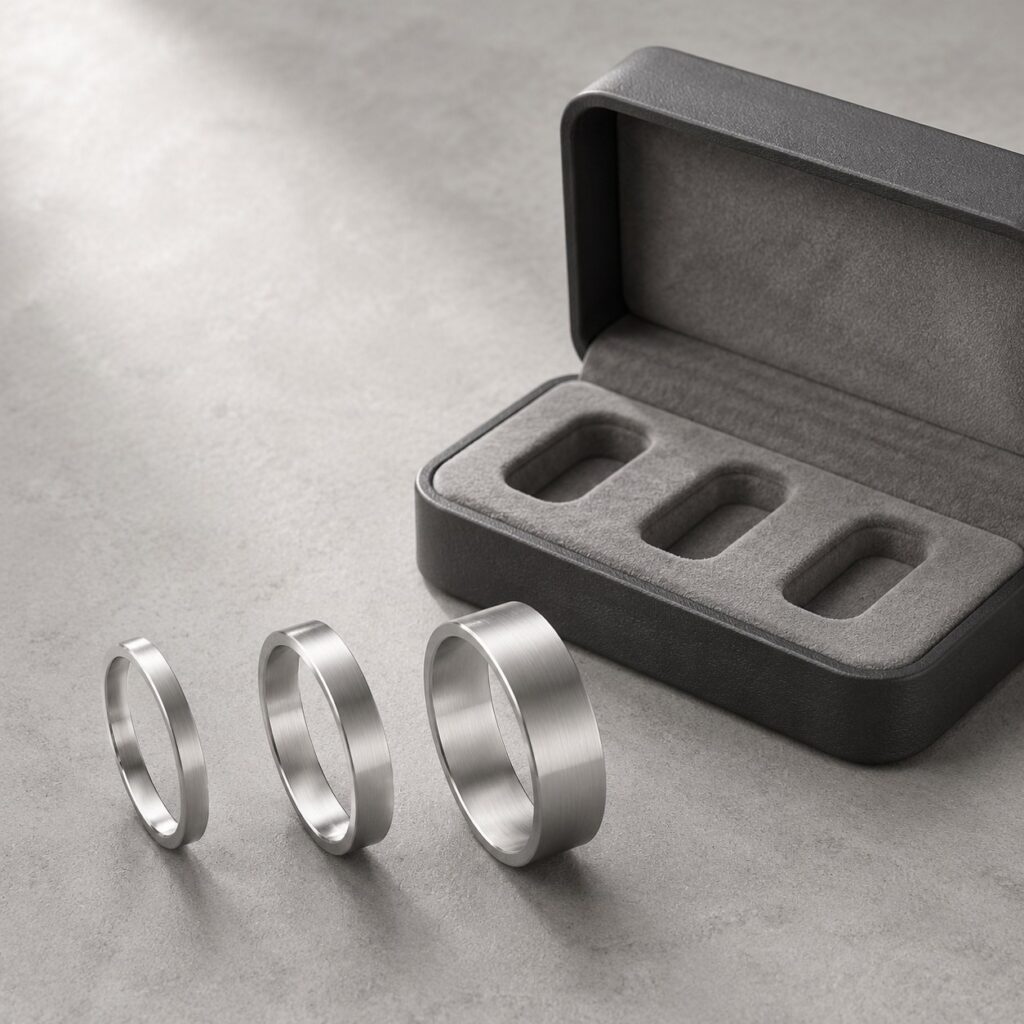
Stackable Rings
- Stackable rings create set value through narrow widths, matched profiles, and repeatable finish direction.
- Chicolink maps the width ladder, size range, color split, and set packing before production.
- The same base pieces can support singles, bundles, layered capsules, seasonal color drops, and reorderable gift sets with controlled SKU data.
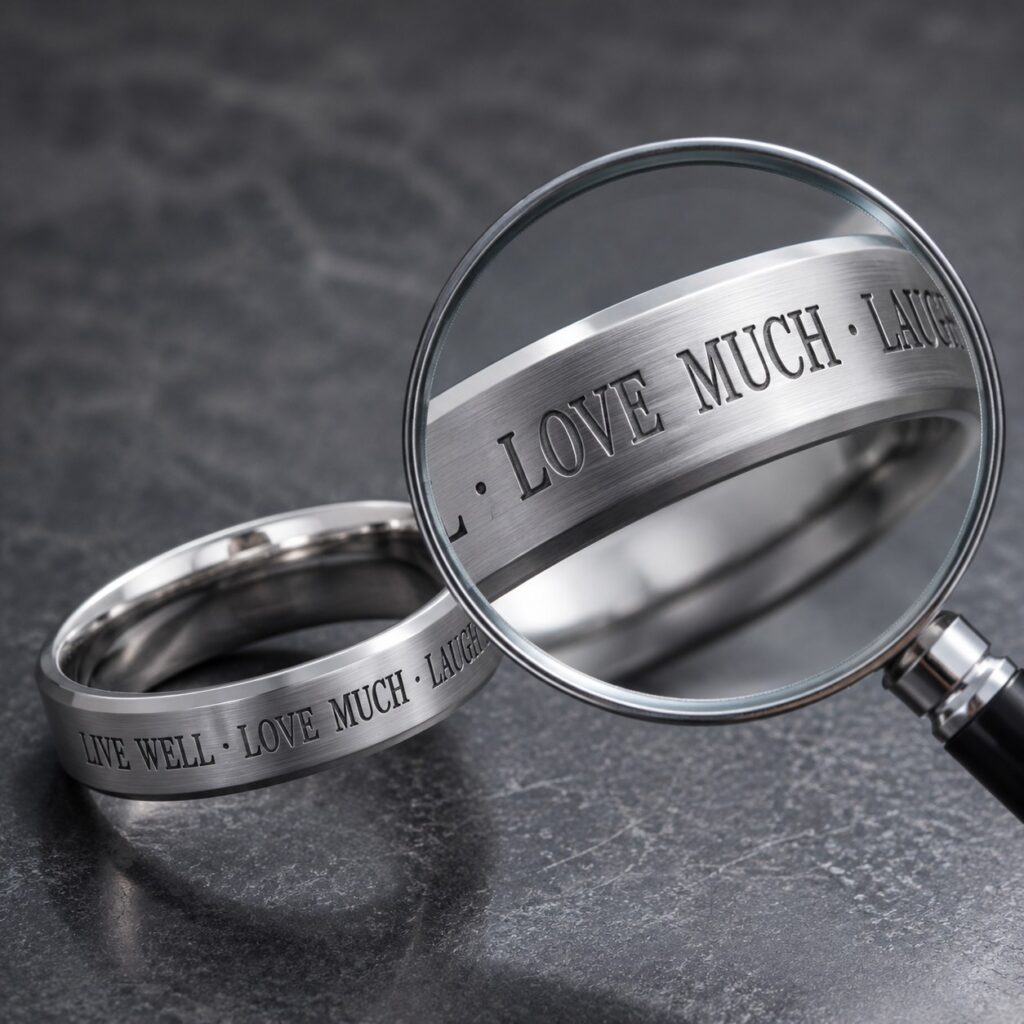
Engraved Rings
- Names, dates, coordinates, inner messages, and short slogans need a route that matches ring curvature.
- Chicolink separates inner-band text, outer-band text, and signet-top engraving before artwork approval.
- Locked spelling files, approval photos, and position references help personalized orders stay readable across repeat batches and direct-to-consumer packing.
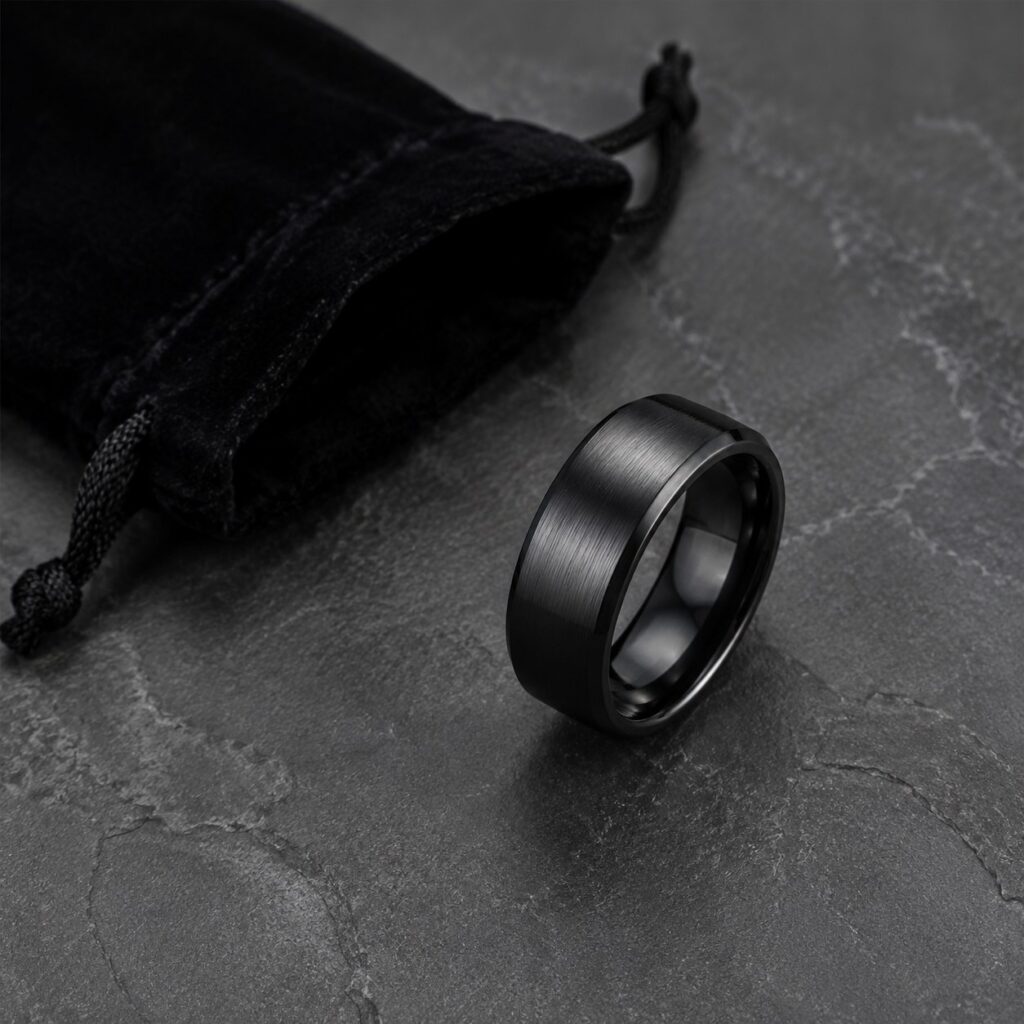
Men's Dark Rings
- Wider bands, black PVD/IP, gunmetal, brushed steel, and bold signet faces support men's and unisex lines.
- Chicolink checks weight, edge radius, inner comfort, surface-contact sensitivity, and separated packing.
- Dark rings need stronger packing discipline because pressure marks, edge exposure, and rubbing show quickly during storage, transport, and product photography.
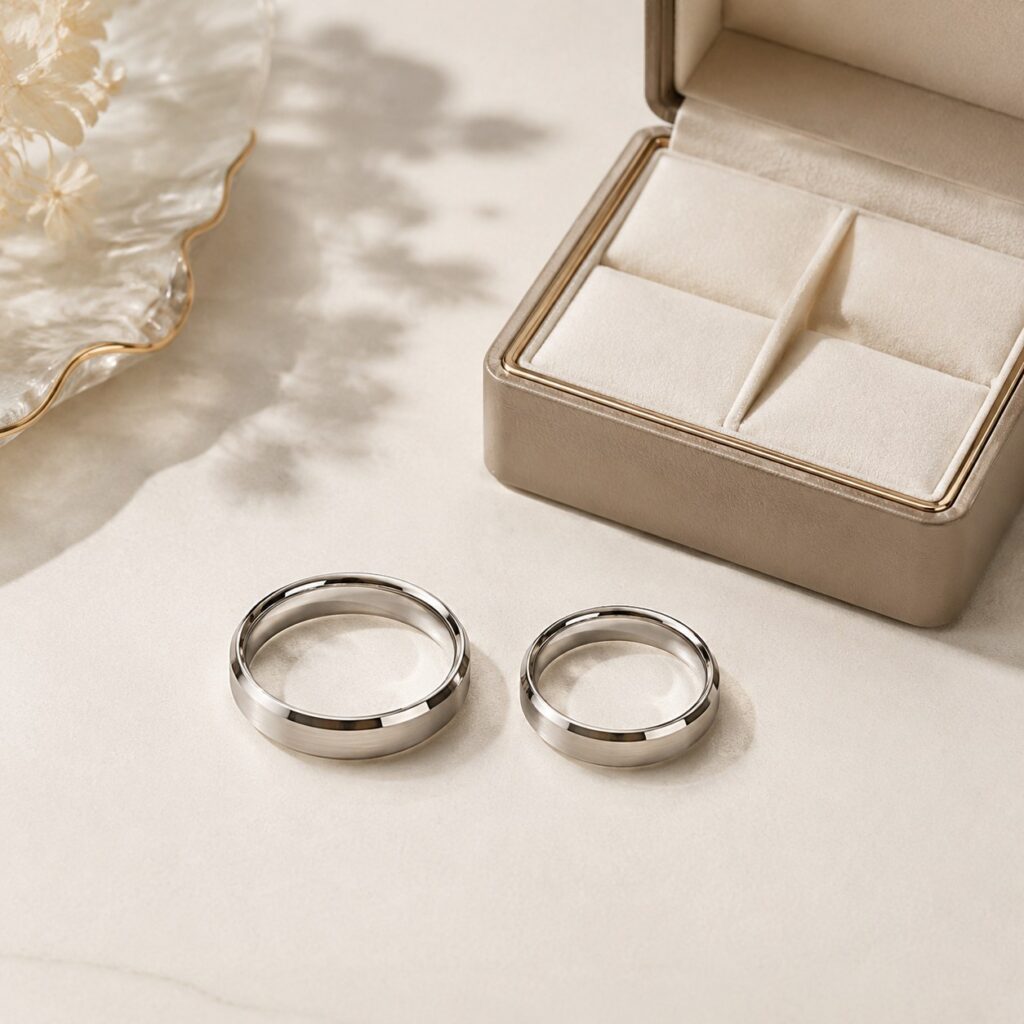
Couple Rings
- Couple rings need shared design language while each ring may use different size, width, color, or engraving.
- Chicolink ties pair labels, size matching, engraving alignment, and gift-box layout to one set file.
- Paired presentation works best when the box, insert, label, and SKU data preserve the relationship from packing to retail display.
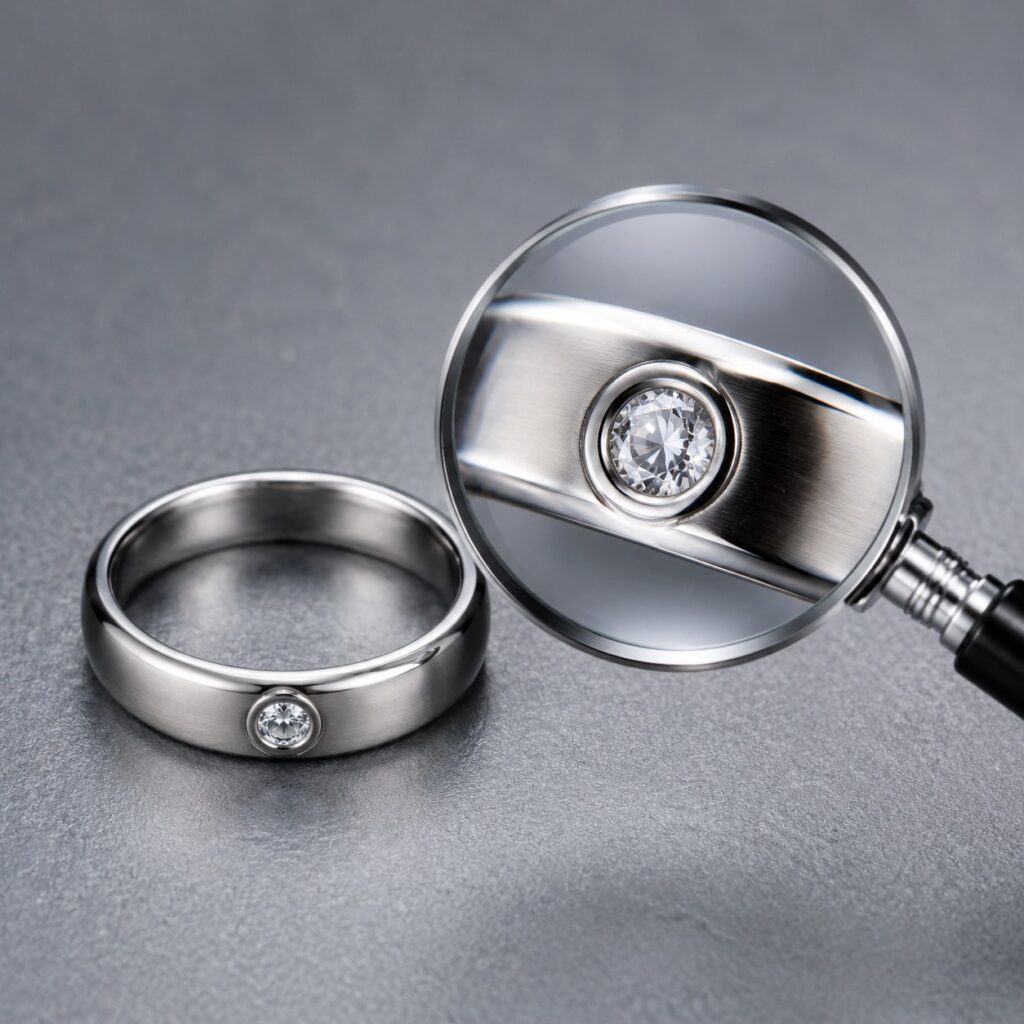
Stone Accent Rings
- CZ, glass stone, or selected decorative centers add a visible upgrade without making every ring a heavy statement.
- Chicolink reviews stone-seat depth, setting route, edge cleanup, and box pressure before sample approval.
- Stone styles need inspection focus on security, surface scratches, raised-detail packing, product-photo cleanliness, and gift-box clearance.
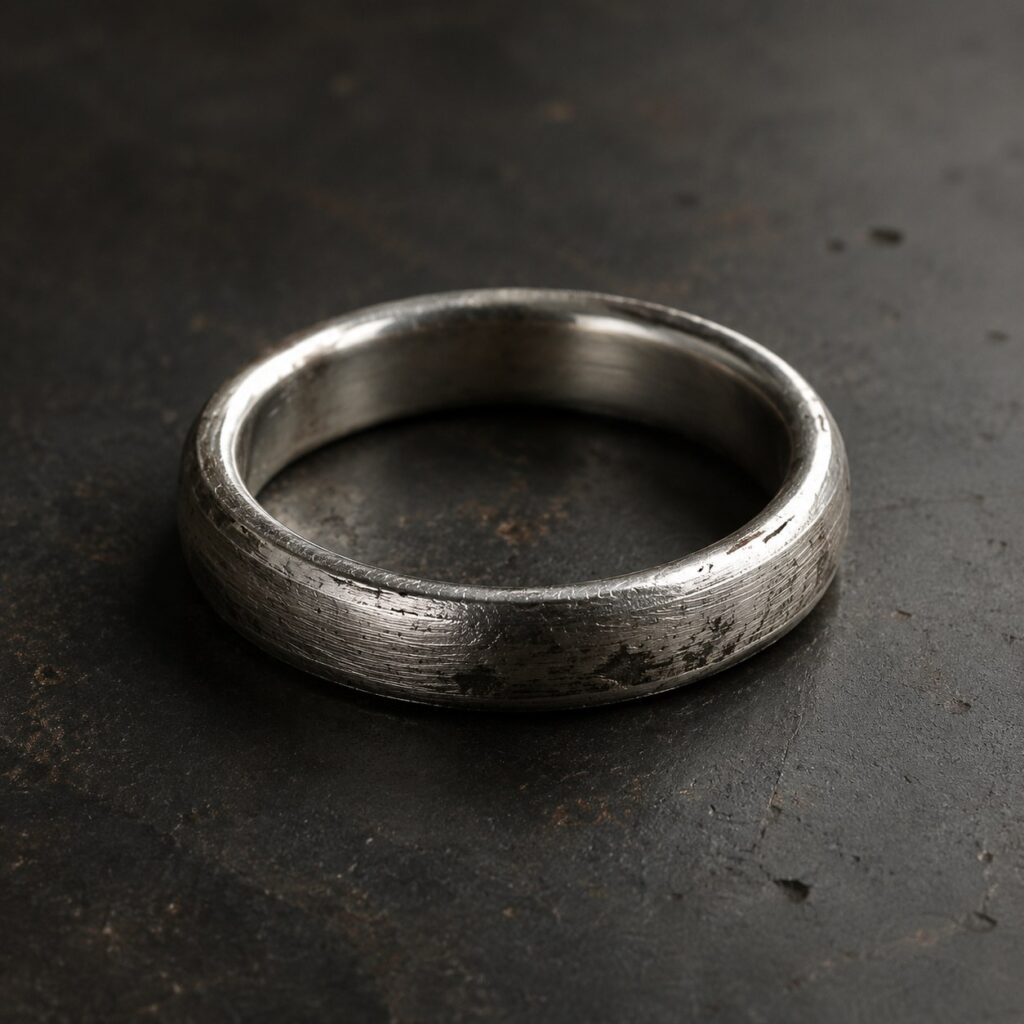
Vintage Antique Rings
- Vintage rings use brush marks, softened contrast, darkened recesses, worn edges, or retro surface direction.
- Chicolink defines contrast, brush direction, edge finishing, and approved finish references before bulk production.
- This route suits heritage, craft, museum-gift, and seasonal collections without rebuilding the ring family, size plan, or packaging route.
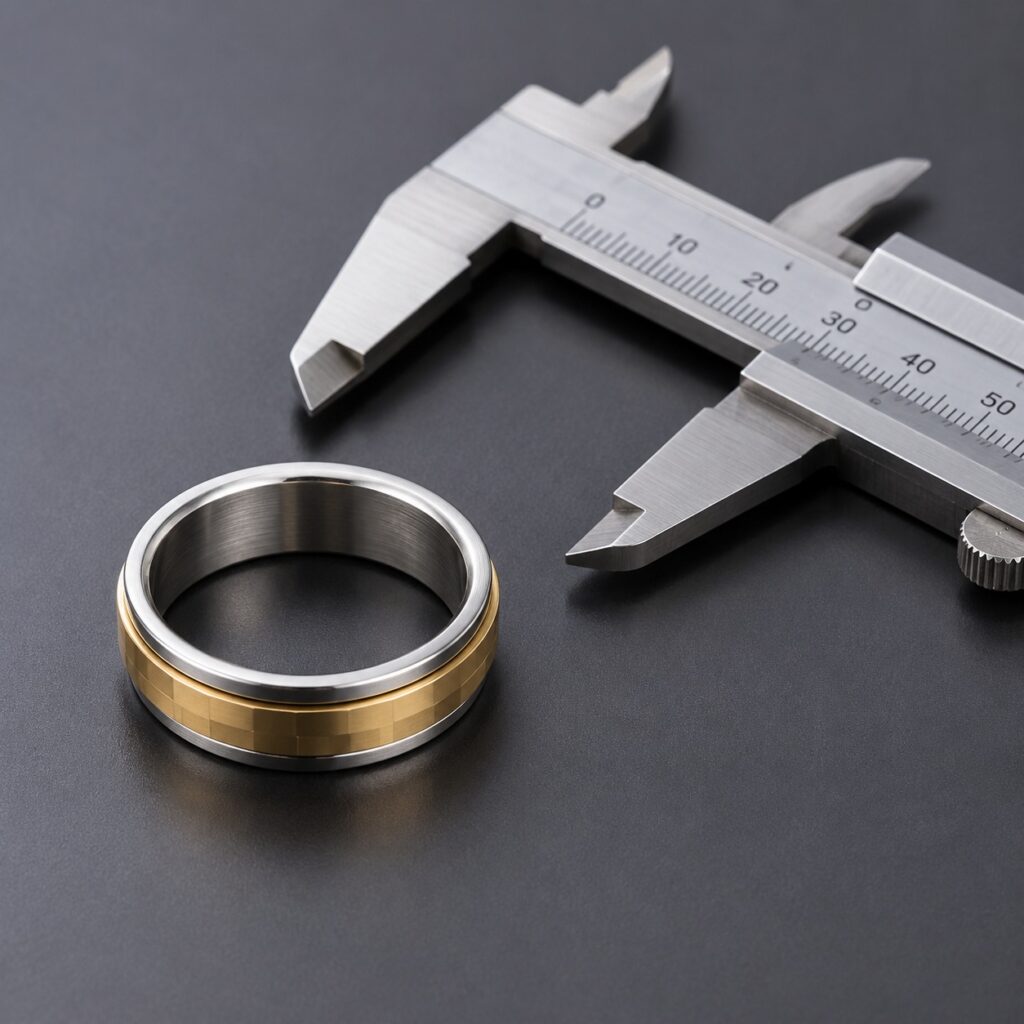
Spinner Or Moving Rings
- Spinner or moving rings add interaction, but rotation clearance and assembly feel need earlier review.
- Chicolink checks outer-band movement, inner-band comfort, gap consistency, polishing access, and packaging pressure.
- Moving styles should be sampled carefully because small tolerance changes affect rotation, sound, comfort, inspection judgment, and final user experience.
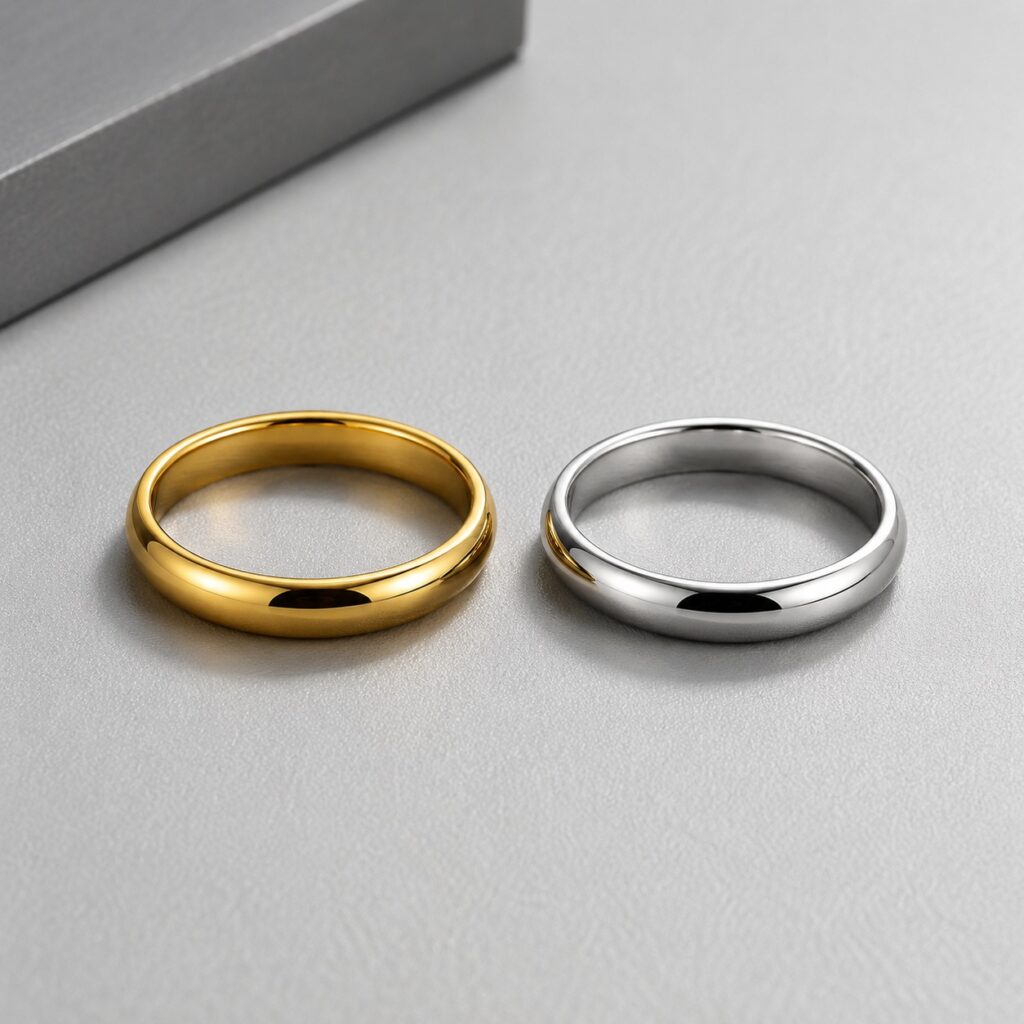
Color PVD Rings
- Gold, rose gold, black, gunmetal, rainbow, and two-tone PVD/IP rings help sellers build market-specific capsules.
- Chicolink confirms color target, layer route, edge exposure, sample reference, and packing protection.
- Color rings need a recorded reference so repeat orders match the intended product photos, packaging display, and approved color board.
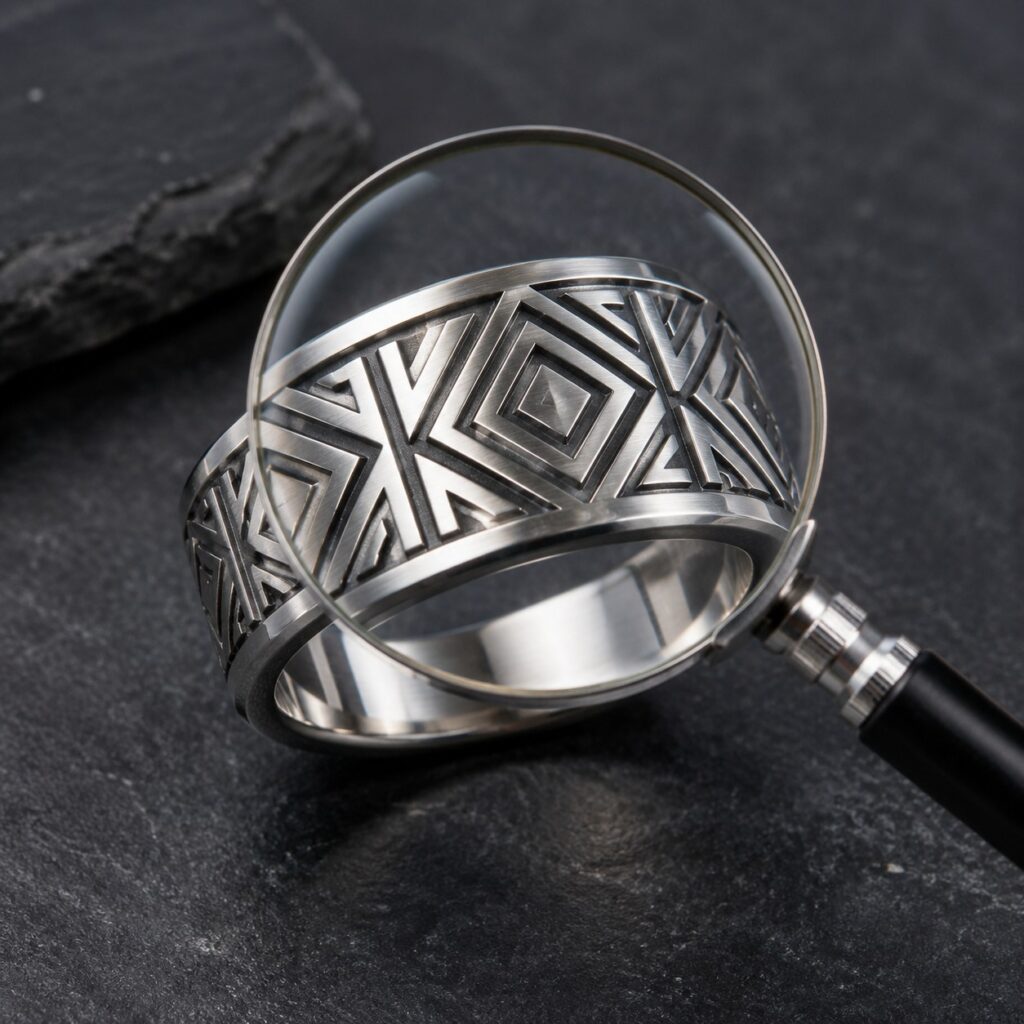
Symbol And Motif Rings
- Religious, memorial, zodiac, initial, geometric, and campaign motifs need readable detail on a small surface.
- Chicolink reviews relief depth, cut-out strength, engraving line width, polish access, and finish contrast.
- Motif rings stay stronger when artwork is simplified before sampling instead of corrected after bulk visibility and polishing issues appear.
What Makes Stainless Steel Ring Orders Go Wrong
Most ring problems begin before production. A vague size chart, an over-specified material, an artwork file that does not fit the surface, or a box that presses against the ring can create avoidable problems in sampling, receiving, customer reviews, and repeat orders. Chicolink moves these decisions earlier.
How We Lock In Exact Ring Sizing
- Chicolink controls physical inner diameter to match each approved size code, so the label reflects the true fit.
- Our size control system combines approved size charts, inner-diameter references, roundness inspection, and label wording before bulk release.
- Size accuracy is solved at the manufacturing stage, reducing downstream adjustment work and avoiding warehouse-level relabeling fixes.
316L Is Over-Specified For Complex Styles
- 316L gives stronger premium positioning, but its higher hardness and cost can burden complex ring styles.
- Chicolink compares 304 and 316L against the buyer's structure, tooling route, polishing access, target price, and documentation needs.
- For many signets, cut-outs, engraved faces, and stone-seat designs, 304 gives the more workable production balance unless the market specifically requires 316L.
Artwork Ignores Ring Curvature
- Logo files that look clear on a flat screen may fail on curved bands or small signet faces.
- Chicolink reviews line width, depth, contrast after finish, readable area, and engraving position before sample.
- Artwork control protects personalized orders from spelling, placement, and visibility problems.
How We Protect Dark PVD Finishes In Packing
- Black and gunmetal PVD/IP coatings show scratches, pressure marks, and edge wear more visibly than plain steel, so they need gentler handling.
- Our packing process treats coated rings separately and checks bagging, box fit, card pressure, and carton stacking to reduce surface friction during transit.
- Carton quantities are capped when needed to reduce inter-layer pressure, because packing decisions follow finish sensitivity, not only maximum units per box.
Balancing Decorative Details With Structural Integrity
- Stones, enamel, relief faces, cut-outs, and moving parts can reduce polishing access or weaken thin-wall areas if they are not reviewed early.
- Chicolink evaluates bridge width, seat depth, enamel borders, cleaning paths, and inspection points before sample tooling starts.
- The manufacturing route is finalized at the sample stage, reducing rework and keeping decorative rings both visually strong and production-ready.
Sample Approval Has No Data Behind It
- A nice sample is not enough if the size, finish, logo, packaging, and QC records are incomplete.
- Chicolink links the approved sample to a master sheet, product photos, packaging BOM, and inspection focus.
- Repeat orders use a controlled reference instead of relying on memory.
Design Decisions That Change Ring Cost, Comfort, And Production Risk
Ring design is a small-format engineering problem. One extra millimeter of width, a deeper logo, a sharper edge, a harder material, or a raised stone can change polish time, tooling difficulty, PVD exposure, packaging pressure, and final cost. Chicolink reviews these decisions before sample work begins.
Size System And Range
- The order should define whether the market uses US numbers, EU circumference, UK letters, JP codes, HK codes, or millimeter data.
- Chicolink builds the ring size plan from the physical reference first.
- Clear size structure supports samples, labels, barcodes, listings, cartons, and repeat orders.
Width And Thickness
- A 2 mm stackable band and an 8 mm men's band need different comfort, polish, and cost expectations.
- Chicolink checks width, thickness, edge radius, inner curve, and target weight together.
- Wider rings need stronger fit review because comfort changes faster than the size number suggests.
Inner Comfort
- Inner edges, burr cleanup, weld marks, and high shoulders affect daily wear more than exterior photos show.
- Chicolink reviews comfort polish and edge smoothness during sample and QC planning.
- This control is especially important for wide bands, open rings, signets, and men's rings.
Face And Relief Depth
- Signet faces, raised symbols, carved relief, and deep motifs must stay readable without becoming too heavy.
- Chicolink reviews face size, shoulder balance, relief depth, cut-out strength, and polish access.
- Face details are adjusted for readable relief height, cleaner negative space, and safer shoulder strength before the artwork is pushed into metal.
Open Gap And Adjustment
- Adjustable rings need controlled opening width, end shape, and adjustment force.
- Chicolink checks whether the open gap remains comfortable, round, and presentable after adjustment.
- We match size descriptions to each ring’s true wear range, avoiding fit surprises.
Stone Seat And Enamel Border
- Stone, CZ, enamel, shell, or resin details need room for setting, cleanup, and inspection.
- Chicolink reviews seat depth, border thickness, adhesive or mechanical setting, and box pressure.
- The detail should survive packing and handling, not only look correct in CAD.
PVD/IP Exposure
- Coated rings need attention around edges, recesses, inner curves, and high-contact surfaces.
- Chicolink confirms color sample, layer route, polish condition, edge exposure, and separated packing.
- Early exposure review shows whether the ring needs softer edges, a different polish sequence, adjusted color sampling, or separated packing before bulk finishing.
Packaging Clearance
- Raised stones, signet faces, wider bands, and dark finishes all change box and card requirements.
- Chicolink checks card slot, insert pressure, lid clearance, pouch friction, and carton movement before bulk packing.
- Packaging should protect the ring and still present the product cleanly for sale.
Ring Size Systems For Different Selling Markets
Ring size planning is one of the biggest differences between rings and other stainless steel jewelry categories. Different markets do not use the same unit: some sell by numeric size, some use letters, some use inner circumference in millimeters, and some use local retail charts that look similar but do not match physically. Chicolink uses the buyer's selling-market labels for listings and packaging, while keeping inner diameter and roundness as the factory master reference.
| Selling Market / Size System | Unit Or Numbering Logic | Common Commercial Range | Where Problems Start | Chicolink Size Control |
| US / Canada | Numeric ring sizes such as 5, 6, 7, 8, usually with half sizes and sometimes quarter sizes | Women's launch lines often focus around US 5-8.5; men's and unisex lines often focus around US 8-12 | Buyers may send only US numbers without inner diameter, and wide bands can feel tighter than narrow bands at the same label size | Confirm US display size, inner diameter in mm, band width, comfort curve, and size-label wording before sampling |
| UK / Ireland / Australia / New Zealand | Alphabet letters such as K, L, M, N, O, P, Q, with half-letter sizes in many charts | Women's ranges often sit around L-Q; men's ranges often sit around Q-Z depending on style | Letter codes are easy to copy into artwork or labels without the matching millimeter reference | Cross-map each letter code to inner diameter and keep the same chart for product labels, packing lists, and carton data |
| EU / France / Germany common retail charts | Metric circumference language, where numbers such as 52 or 54 normally refer to inner circumference in millimeters | Broad commercial ranges often sit around EU 49-68 depending on gender, channel, and ring width | EU numbers are sometimes mistaken for inner diameter, which creates a large physical size error | Lock circumference, inner diameter, and market-facing listing text together before production data is released |
| Italy / Spain / Switzerland local charts | Local numeric retail labels may be offset from EU circumference charts instead of matching the visible millimeter number | Fashion and boutique programs often need buyer-supplied conversion charts when selling locally | The same physical ring can carry different local labels across neighboring European markets | Use inner diameter as the master measurement and build local label data from the buyer-approved conversion file |
| Japan | Local numeric sizing is commonly shown as JP numbers and mapped through local retail charts rather than US numbers | Women's assortments often sit around JP 7-15; men's and unisex lines often sit around JP 15-25 | JP numbers can look close to other Asian numeric systems but may not equal HK, China, Korea, or US sizes | Confirm JP display size, inner diameter, circumference reference, and variation-name format before SKU creation |
| Mainland China / Hong Kong / Taiwan | Local numeric systems are often used for retail, gift, and marketplace sales, with HK and mainland charts needing separate confirmation | Common commercial ranges often sit around local sizes 7-24 or 7-25 depending on the chart | Similar local numbers may represent different physical sizes, especially when the buyer mixes CN, HK, and international listings | Prepare market-specific size stickers, barcode data, packing list terms, and inner-diameter master records from one approved chart |
| Korea | Local numeric sizing is usually planned through Korean retail or marketplace charts and should be checked against millimeter references | Women's fashion rings often focus on smaller local sizes, while men's and unisex rings need wider upper ranges | Platform listings may show Korean size, US size, and millimeter data together, creating label mismatches if the master chart is unclear | Align Korean display size, inner diameter, product variation name, and label file before sampling or FNSKU creation |
| Factory master measurement | Inner diameter in millimeters, roundness, band width, thickness, and open-ring gap are the factory control data | Fixed rings need a size-by-size table; open rings need both base size and adjustable range | A selling label alone cannot control fit, because different systems may describe the same ring differently | Chicolink keeps inner diameter and roundness records as the master data for sample approval, QC, and repeat orders |
| Adjustable / open rings | Sold by a range, such as fits US 6-8, instead of one fixed closed-ring size | Works for flexible fashion programs, gift programs, and mixed-size assortments | Opening width, end shape, adjustment force, and metal hardness affect comfort and customer expectation | Review open-gap design, end polish, adjustment range, and market-facing size wording before bulk production |
| Multi-market size labels | One SKU may need US, EU, UK, JP, HK, or Korean labels for different channels | Useful when the same ring is sold through Amazon, local retail, DTC, and distributors | Wrong labels create returns, marketplace receiving problems, and repacking work | Prepare a conversion matrix, barcode/FNSKU data, carton marks, and first-piece packing photo from the approved chart |
Material Selection Should Be Driven By Ring Structural Requirements, Not Marketing Claims Alone
Stainless steel grade affects cost, hardness, polishing, engraving, stone setting, and sample difficulty. For many commercial ring programs, 304 is the practical default because it balances appearance, processing, cost, and product performance. 316L should be used selectively when the market position or documentation route justifies the higher cost and processing difficulty.
| Grade / Route | Commercial Position | Processing And Cost Reality | Best-Fit Ring Use |
| 201 stainless steel | Lowest-cost fashion route among the common stainless steel options | Easier on budget, weaker premium positioning, and less suitable for higher-claim skin-contact positioning | Simple fashion rings, basic price-led programs, and short-cycle styles where cost is the main driver |
| 304 stainless steel | Recommended balance for most commercial stainless steel ring programs | Easier to cut, form, polish, engrave, and finish than 316L in many ring structures | Minimal bands, signets, open rings, engraved rings, stackables, gift rings, and mixed-style launches |
| 316L stainless steel | Premium-positioned route for suitable markets and documentation needs | Highest cost and highest hardness among the common options; complex details can raise tool wear, sampling difficulty, and polish time | Simpler premium bands, documented skin-contact positioning, and projects that specifically request 316L |
| Complex signet or relief face | Style impact depends on clean face, readable details, and manageable weight | Dense relief, deep engraving, and difficult shoulder cleanup become harder when the material is harder | 304 often gives the better cost and processing balance unless 316L is required by the market |
| Cut-out or openwork ring | Visual effect depends on bridge strength, edge cleanup, and polish access | Narrow bridges and tight corners can raise cleanup time and deformation risk | Confirm material and process route before sample so the final cost does not jump late |
| Stone-set or enamel ring | Detail quality depends on seat depth, borders, and inspection access | Harder material and dense details can complicate seat cleanup and final polish | Use the material that supports both decorative detail and stable production, not only the highest-grade claim |
From Ring Idea To Approved Production Reference
Custom stainless steel rings need more than a product photo. Chicolink turns reference files, size charts, material requests, logo files, finish samples, packaging artwork, and label data into a production reference that can guide costing, sampling, QC, packing, and repeat orders.
01
Reference Files And Master Data
- Chicolink reviews product photos, drawings, CAD files, physical sample photos, logo files, target market, quantity, material direction, finish, and packaging ideas together.
- Usable inputs are turned into a ring master sheet covering ring type, size system, inner diameter, width, thickness, face or stone detail, finish route, logo method, packaging version, and quantity.
- Costing, sampling, QC, labels, packing records, and repeat orders then follow one measurable reference instead of scattered files.
02
Structure, Material, And Process Route
- Chicolink checks band profile, signet face, open gap, stone seat, relief depth, cut-out bridge, polish access, and comfort edge before tooling decisions.
- Material is matched to structure: harder 316L can suit simpler premium routes, while detailed faces, dense cut-outs, and stone-seat designs often need 304 for cleaner processing and cost balance unless 316L documentation is required.
- The process route is then selected from stamping, CNC machining, casting, laser cutting, polishing, PVD/IP, engraving, stone setting, enamel filling, or assembly according to the approved structure.
03
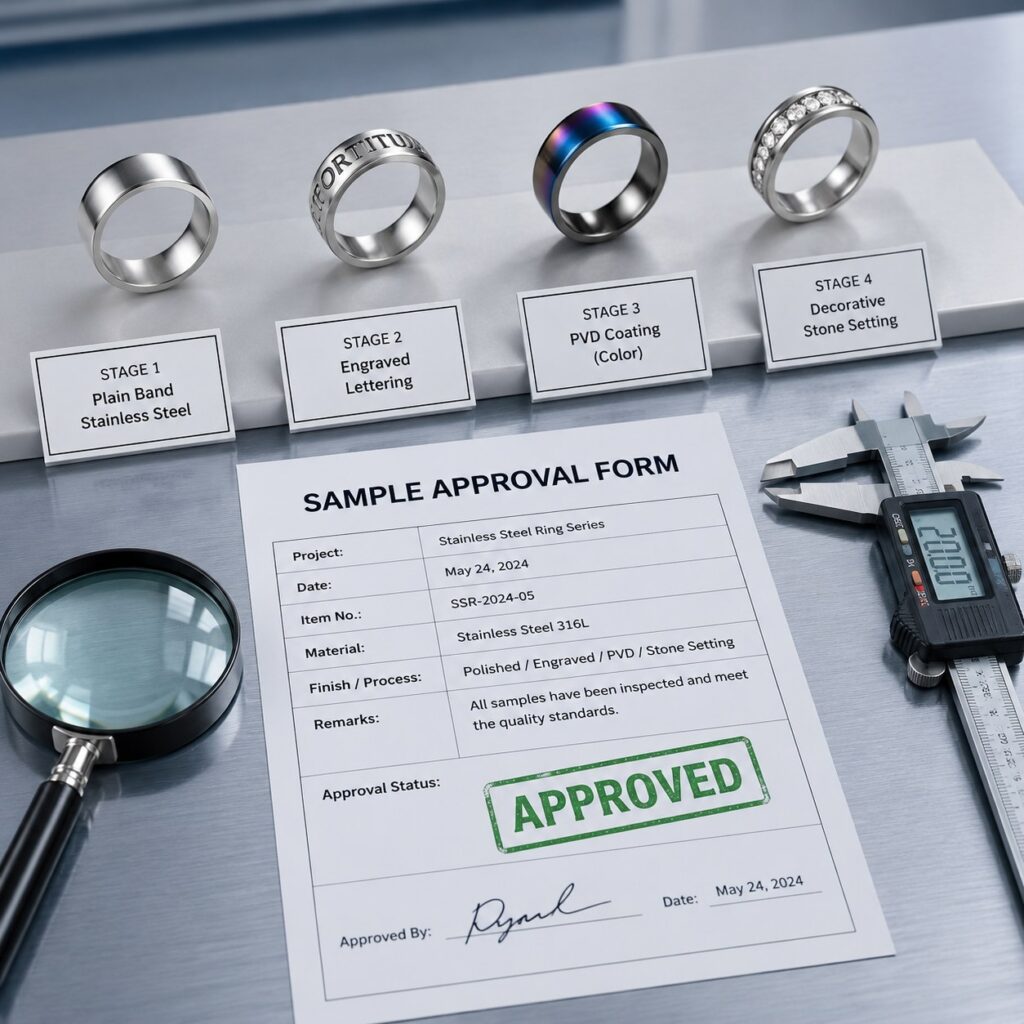
Sample Review And Approval Record
- Sample work confirms physical size, face balance, edge comfort, engraving visibility, stone security, surface finish, color direction, and packaging contact.
- Revision notes stay tied to photos, measurements, artwork files, size charts, and finish references so the next version follows written decisions.
- The approved sample becomes a production reference only when visual approval, measurements, material route, finish route, and packaging contact are recorded together.
04
Packaging, Labels, And Bulk Release
- Ring cards, boxes, pouches, size labels, barcode labels, FNSKU labels, care cards, and carton marks are confirmed before bulk packing.
- Chicolink connects label files with size split, color split, barcode/FNSKU data, carton marks, and first-piece packing photos so mixed orders stay traceable from packing table to receiving.
- Bulk production and repeat orders follow the approved sample, packaging BOM, inspection focus, shipment plan, and retained project records.
Ring Sampling: We Confirm Fit, Finish, Detail, and Packing Together
Ring samples should not confirm appearance only. A useful sample checks the physical size, comfort edge, color reference, engraving readability, stone or enamel security, box fit, label direction, and production route before bulk work begins.
Existing Style Sample
- Existing-style samples usually take about 3-7 working days after details and availability are confirmed.
- This path is useful when the seller wants to check ring size, surface finish, weight, packaging direction, or catalog fit quickly.
Logo Or Engraving Sample
- General logo customization usually takes about 3-7 working days after artwork, position, process, and product style are confirmed.
- Complex logo detail usually needs about 10-12 working days when deeper engraving, cut-out work, or difficult contrast is involved.
PVD/IP Color Sample
- Color approval should use a physical sample or approved color reference instead of relying only on a screen image.
- Chicolink records color name, surface condition, layer route reference, edge exposure, and packing protection for repeat orders.
OEM/ODM Custom Sample
- OEM/ODM custom samples usually take about 25-30 working days after complete project details are confirmed.
- The sample stage checks structure, material, size, decoration, comfort, surface, packaging contact, inspection focus, and revision path.
Revision And Approval
- Revision comments are linked to sample photos, measurements, artwork files, color references, packaging records, and approval dates.
- The final approved production sample becomes the reference for bulk production, QC checks, packing release, and repeat-order comparison.
How Chicolink Controls Bulk Stainless Steel Ring Orders
Bulk ring orders depend on coordination across material preparation, forming or machining, surface finishing, PVD/IP color, engraving or component assembly, inspection, packaging, and shipment files. Chicolink keeps these stages connected to the approved sample and final production details.
Material Preparation
- Material grade, component route, supplier documents, size plan, and production quantity are confirmed before bulk scheduling.
- Chicolink keeps 201, 304, and 316L decisions tied to the approved ring structure.
- This avoids changing the cost or process route after sampling has already set expectations.
Forming And Machining
- Ring structures may involve stamping, CNC, casting, laser cutting, forming, welding, or mixed route preparation.
- Chicolink checks relief details, cut-outs, opening gaps, stone seats, and signet shoulders during route planning.
- The process route should match the ring's actual geometry instead of the simplest drawing view.
Polishing And Surface Work
- Polishing affects comfort, edge cleanup, engraving contrast, PVD/IP appearance, and final photo quality.
- Chicolink reviews polish access, brush direction, matte or satin texture, antique contrast, and inner edge finish.
- Surface work is controlled as part of the structure, not as a late cosmetic step.
PVD/IP Color Control
- Gold, rose gold, black, gunmetal, steel color, rainbow, and project colors need approved physical references.
- Chicolink connects color sample, surface condition, product structure, and batch review before packing.
- Color consistency is easier to repeat when the order carries a recorded reference.
Decoration Assembly
- Engraving, stones, enamel, shell, resin, acrylic, ceramic, silicone, leather, or charm parts require separate inspection focus.
- Chicolink reviews line depth, setting security, adhesive or mechanical fixing, component movement, and box pressure.
- Decorative details stay reliable when assembly and packaging are planned together.
Packaging And Shipment
- Bulk packing connects ring cards, boxes, pouches, size labels, barcodes, FNSKU labels, carton marks, and shipping files.
- Chicolink uses first-piece packing checks and packaging records before mass packing.
- Packed units stay easier to receive when product, label, and carton data match.
Flexible Custom Details Without Starting Every Ring From A New Mold
Many stainless steel ring projects can begin from a workable base style and still become private label, campaign-specific, or market-specific. Chicolink helps layer logo, engraving, finish, PVD/IP color, stones, enamel, components, and packaging onto a controlled ring structure.
Inner-Band Engraving
- Inner messages, dates, coordinates, and short text require readable depth on a curved inside surface.
- Chicolink checks font size, line spacing, engraving route, polish effect, and spelling file before sample.
- Inner engraving works best when personalization accuracy is treated as a production-control point.
Outer-Band Logo
- Outer-band logos, initials, slogans, and repeated marks need enough area and contrast after finishing.
- Chicolink reviews laser, CNC, stamping, or cut-out routes according to band width and surface direction.
- Logo placement stays more stable when artwork approval and sample photos are locked together.
Signet-Face Artwork
- Signet faces can carry initials, symbols, crest-like artwork, campaign marks, or private label graphics.
- Chicolink simplifies line detail, balances face size, and checks engraving contrast before bulk production.
- Clearer artwork helps the ring photograph well and remain readable after surface finishing.
Surface Finish
- High polish, brushed, matte, satin, antique, sandblasted, and mixed finishes change the ring's commercial mood.
- Chicolink confirms brush direction, polish access, shoulder transition, and inner comfort together.
- A surface reference keeps product photography and repeat batches closer to the approved sample.
PVD/IP Colors
- Steel color, gold, rose gold, black, gunmetal, rainbow, and two-tone directions support different markets and style lines.
- Chicolink confirms color target, approved sample, edge exposure, and packing protection before bulk release.
- Dark and warm-tone rings are packed according to surface-contact sensitivity.
Stone And CZ Details
- CZ, glass stone, or decorative stone accents need controlled seat depth, setting route, and box clearance.
- Chicolink checks stone security, surface scratches, raised detail, and packing pressure during sample review.
- Stone details add selling value only when they survive inspection, handling, and shipping.
Enamel And Color Fill
- Enamel or color fill adds a graphic effect but requires stable borders and clean surface preparation.
- Chicolink reviews border thickness, fill area, cleanup method, color reference, and curing or fixing route.
- Filled details work better when the ring design leaves enough metal support around the color area.
Packaging Branding
- Ring cards, gift boxes, pouches, care cards, barcode labels, size stickers, and carton marks carry the brand system.
- Chicolink connects packaging artwork with SKU sorting, gift display, marketplace receiving, and repeat-order records.
- Branding stays consistent when the pack is approved as part of the product, not after production.
Ring Packaging That Protects Finishes and Keeps SKU Data Clear
Ring packaging is part of the product plan. It protects polished and PVD/IP surfaces, displays the brand, separates sizes, keeps barcodes readable, and helps warehouses receive mixed-style orders without re-sorting the whole shipment.
Size-Separated Packing
- Mixed-size ring orders should arrive with size logic visible on the unit pack, inner bag, and carton.
- Chicolink links style number, size, color, packaging version, and quantity across labels and packing lists.
- Receiving teams can count each size without opening and re-sorting the full shipment.
Ring Boxes
- Paper boxes, drawer boxes, flip boxes, inserts, and sleeves raise gift value for signets, couple rings, and stone styles.
- Chicolink matches insert pressure, lid clearance, and ring-to-box gap to raised faces, wider bands, and stones.
- The box protects the finish while keeping the ring centered for gift display and product photos.
Ring Cards
- Ring cards support retail display, brand logo presentation, size labels, and clean marketplace photography.
- Chicolink sets slot shape, card thickness, printing, lamination, hole position, and ring angle by style.
- Approval photos record how the carded ring should look and pack in repeat orders.
Anti-Scratch Packing
- OPP/PE bags, anti-oxidation bags, protective film, and separated compartments reduce surface-to-surface contact.
- Chicolink separates polished, brushed, and dark PVD/IP rings according to surface sensitivity and packing pressure.
- Packing choices follow finish contact risk, storage movement, ring profile, and the visible surface area.
Barcode And FNSKU Labels
- SKU, UPC/EAN, FNSKU, internal barcode, size code, and carton labels must match the final variation data.
- Chicolink checks label content against style, size, color, pack quantity, and carton records before shipment.
- Barcode scanning helps mixed-size and mixed-SKU shipments move through marketplace receiving accurately.
Packing Records
- Packaging BOMs, label samples, carton marks, SKU splits, product photos, and first-piece packing photos build the reorder file.
- Chicolink uses the approved file to repeat box, card, pouch, label, and carton details in later orders.
- Complete records keep future replenishment aligned with the first approved packing version.
Chicolink Align QC Checks with Actual Ring Failure Modes
Ring quality is not only surface appearance. Size fit, roundness, comfort edge, stone security, engraving clarity, PVD/IP appearance, packaging protection, label accuracy, and market-specific testing files all affect returns, reviews, receiving work, and reorder confidence.
| QC Area | Common Failure Point | Chicolink Inspection Focus | Buyer Input Needed |
| Size and roundness | The size label is correct, but the physical fit feels oval, tight, or inconsistent | Size system, inner diameter, ring mandrel, roundness, and suitable tolerance reference such as +/-0.10-0.15 mm for suitable projects | Confirmed size chart, tolerance expectation, and target market size terms |
| Inner comfort | Burrs, sharp edges, rough cleanup, or bulky inner curves affect daily wear | Inner polish, edge radius, shoulder transition, burr removal, and wide-band comfort | Width, thickness, inner profile, and comfort expectation |
| Surface and PVD/IP | Scratches, uneven polish, color variation, or bright marks on dark finishes reduce perceived value | Polish access, brush direction, color reference, PVD/IP exposure, edge protection, and anti-scratch packing | Color sample, surface finish requirement, and packaging contact expectation |
| Stone, enamel, and components | Stones loosen, enamel edges look messy, cut-out bridges feel weak, or components shift | Seat depth, setting route, enamel border, bridge strength, adhesive or mechanical fixing, and pressure points | Component spec, layout drawing, accepted visual range, and box fit requirement |
| Logo and engraving | Text is unclear, spelling is wrong, logo depth is inconsistent, or placement shifts | Artwork version, font, line width, depth, position, contrast after finish, and spelling control | Vector logo, text file, position drawing, and approved sample reference |
| Packaging and labels | Mixed sizes, wrong barcode, FNSKU mismatch, carton mark error, or box pressure marks create receiving problems | Size-label match, barcode/FNSKU readability, SKU/color/quantity match, card/box fit, carton mark, and first-piece packing photo | Label data, packing method, SKU split, carton rules, and warehouse requirements |
| Testing file support | The target market may require test files that were not part of the original brief | Nickel release, lead/cadmium, REACH-related, California Proposition 65 related, RoHS-related, salt spray, artificial sweat, abrasion, adhesion, pull, torque, and drop testing support where relevant | Target market, claim language, required test family, and sample/report scope |
Project Examples For Ring Style, Color, Size, And Packaging Control
Ring projects become easier to judge when the control point is visible. These examples show how Chicolink connects size labels, PVD/IP color reference, style testing, packaging verification, artwork approval, and repeat-order records to practical factory work.
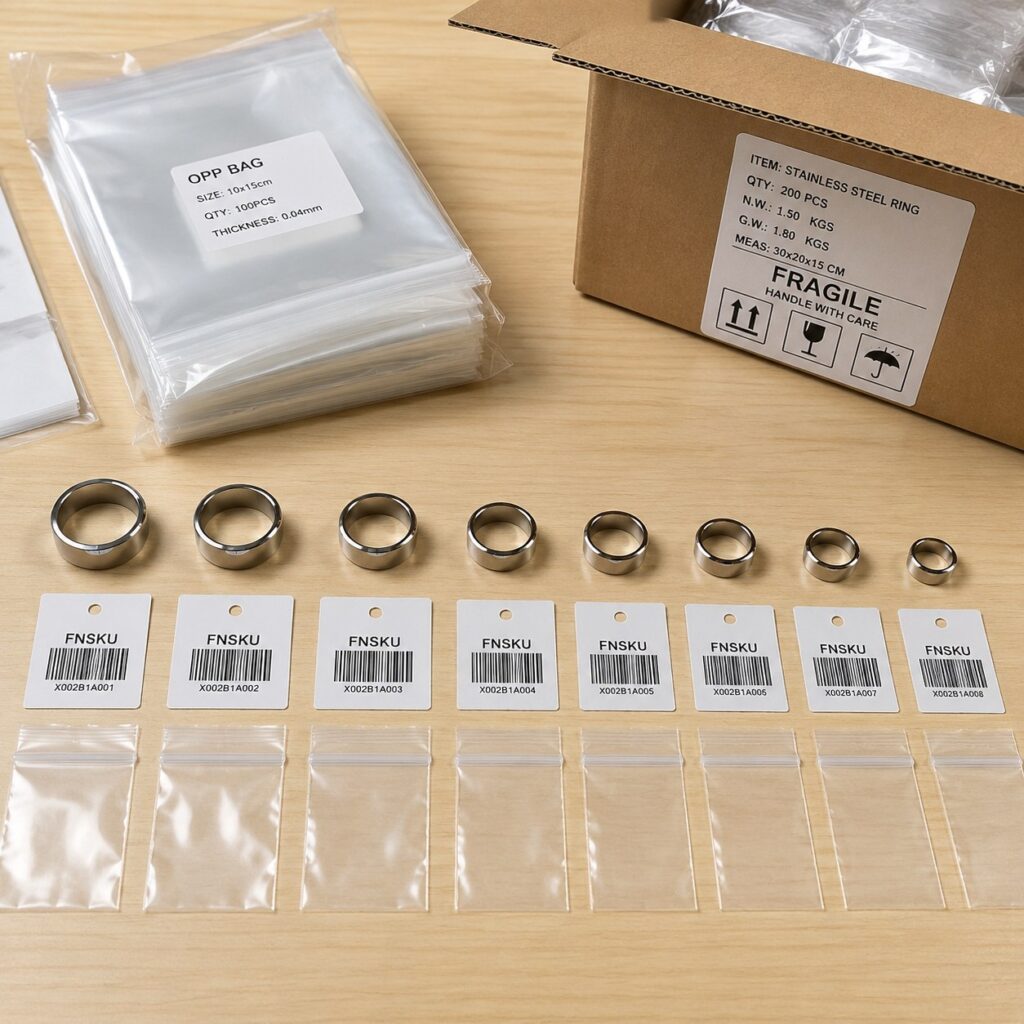
Amazon Mixed-Size Ring Packing
- A marketplace ring launch combined multiple sizes, two colors, ring cards, OPP bags, barcodes, FNSKU labels, and carton marks.
- Chicolink built a size and SKU matrix, checked label versions, photographed first-piece packing, and verified package-level matching before shipment.
- The confirmed case showed packaging error rate reduced from about 4.8% to 0.6% and rework rate down 62.5%.
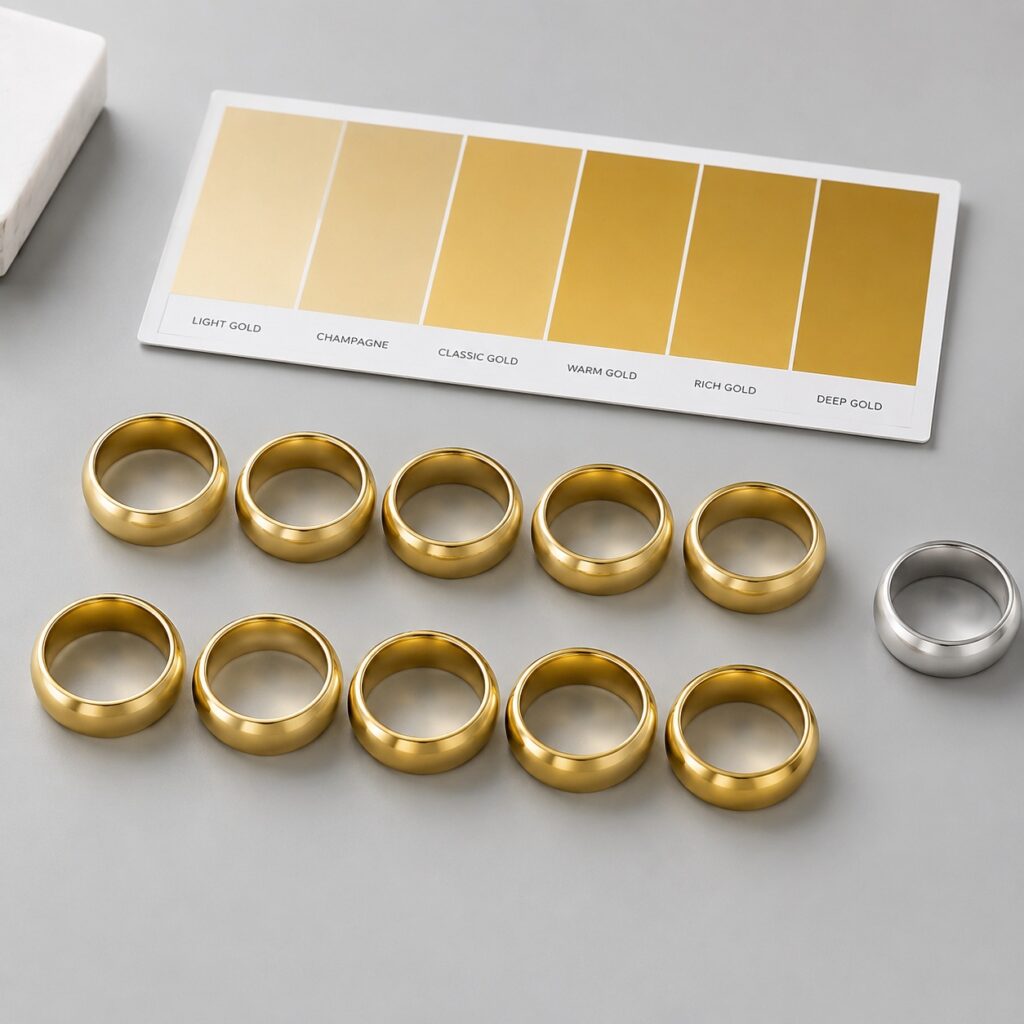
DTC Gold PVD Ring Color Reference
- A DTC brand project included gold PVD stainless steel rings, earrings, and bracelets with private label packaging.
- Chicolink prepared PVD color boards, confirmed the approved tone, recorded color references, separated dark and bright finishes in packing, and inspected plating color by batch.
- The confirmed case recorded color complaints down 81.0% and a second order within 60 days.
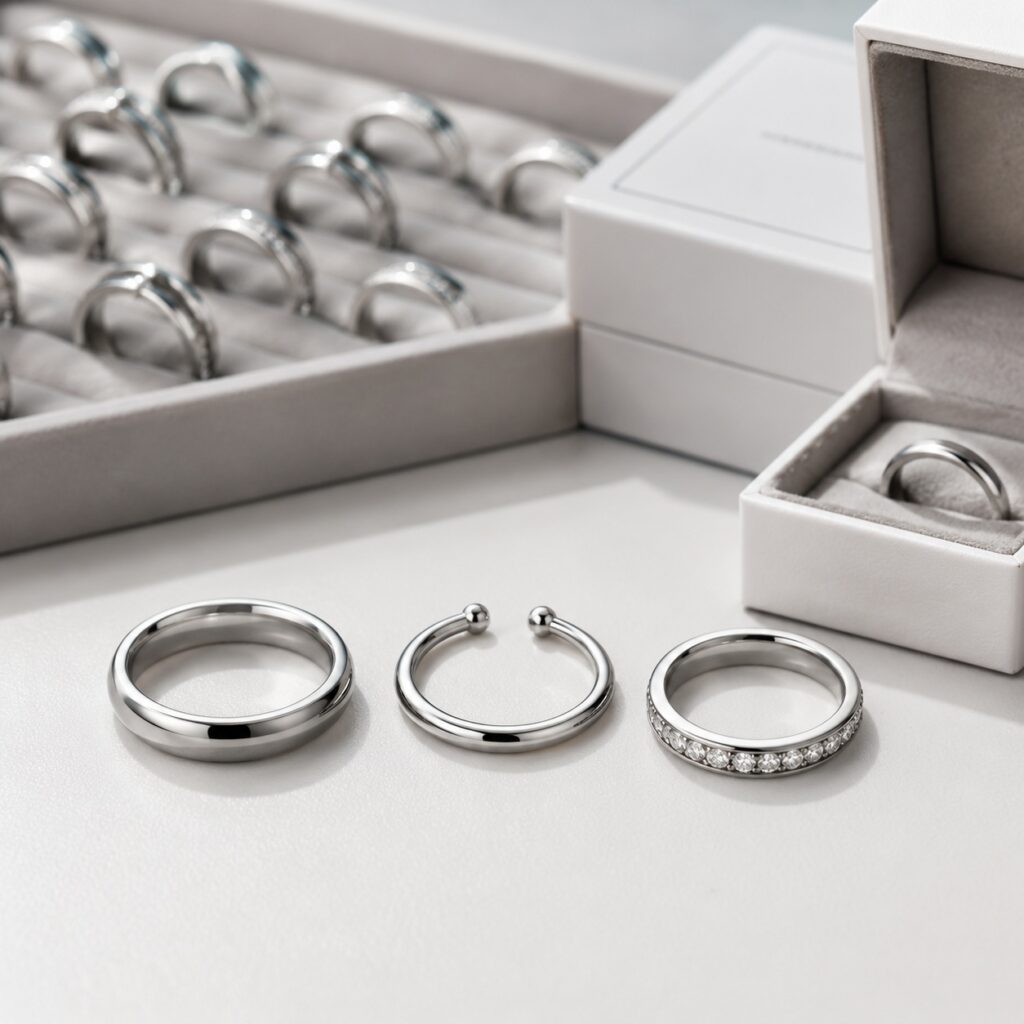
Boutique Multi-Style Ring Testing
- A boutique program needed small-batch testing across minimal bands, open rings, signets, stackables, black PVD styles, and stone-accent rings.
- Chicolink kept the first launch lean with mixed-style wholesale, light customization, boutique packaging, size-spread review, and reorder tracking.
- The confirmed boutique case recorded 7 of 12 SKUs becoming stable reorders and inventory pressure down 42.0%.
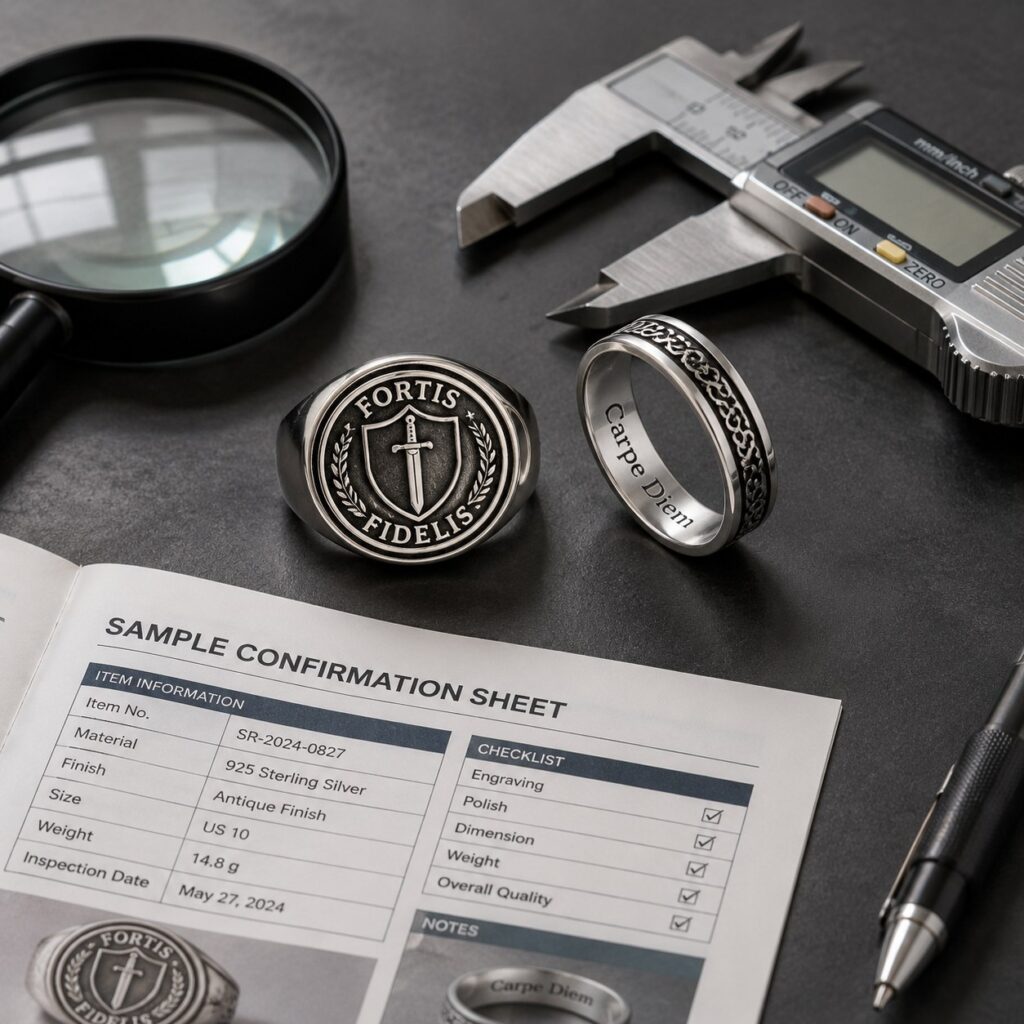
Custom Signet And Engraving Sample Control
- A private label ring project needed signet faces, inner-band text, logo engraving, PVD color, and gift-box clearance to work together.
- Chicolink reviewed face size, shoulder balance, engraving contrast, relief depth, material route, box fit, and sample photos before bulk release.
- The approved reference helped the buyer avoid late artwork revisions and gave repeat orders a locked file for logo, size, finish, and packaging.
Typical Timeline For Stainless Steel Ring Orders
Ring timing depends on whether the order uses existing styles, light logo customization, deeper OEM/ODM development, PVD/IP color, packaging artwork, testing files, and mixed-size packing. Chicolink confirms timing after the product details are clear.
Inquiry Review
- Chicolink reviews ring type, size system, quantity, material, color, logo, decoration, packaging, target market, and testing needs.
- Regular custom quotation feedback is usually prepared within 48-72 business hours after complete information is clear.
- Early detail review keeps sampling and costing from starting on incomplete assumptions.
Existing Style Sample
- Existing-style samples usually take about 3-7 working days after details and availability are confirmed.
- This path works for catalog selection, material feel, size checking, surface review, and packaging direction.
- Stock wholesale orders usually start from 120 pcs/style after order details are confirmed.
Logo Sample
- General logo customization usually takes about 3-7 working days after artwork, product style, position, and process are confirmed.
- Complex logo details usually need about 10-12 working days when deeper engraving, cut-out, or difficult contrast is involved.
- Artwork review should happen before sample timing is promised.
OEM/ODM Sample
- OEM/ODM custom ring samples usually take about 25-30 working days after complete project details are confirmed.
- Custom sample timing depends on structure, material, size matrix, finish, decoration, packaging, and revision scope.
- This route is stronger for new signets, special structures, moving rings, or detailed private label designs.
Bulk Production
- Existing-style bulk production usually takes about 20-30 working days after order confirmation.
- OEM/ODM custom bulk production usually takes about 25-45 working days after sample approval and final production details.
- Bulk timing must include size split, color split, packaging BOM, inspection scope, and shipment preparation.
Repeat Supply
- Repeat orders work best when the approved sample, color reference, size chart, packaging file, and QC notes are retained.
- Chicolink uses reorder files to repeat product, label, carton, and packaging details more consistently.
- Stable records help ring lines move from first launch to replenishment without restarting the full development path.
Questions Before Starting A Ring Project
These answers cover the practical information Chicolink needs before ring quotation, sample work, packaging setup, and bulk production.
What is the MOQ for stainless steel rings?
Stock wholesale ring orders usually start from 120 pcs/style after availability, size, color, packaging, and order details are confirmed. OEM/ODM custom ring orders usually start from 500 pcs/style, depending on structure, size matrix, material, PVD/IP color, decoration, packaging, testing, and production requirements.
How long do ring samples usually take?
Existing-style ring samples usually take about 3-7 working days after details and availability are confirmed. General logo customization usually takes about 3-7 working days, complex logo details usually need about 10-12 working days, and OEM/ODM custom ring samples usually take about 25-30 working days after complete project details are confirmed.
How should I prepare ring sizes for a quote?
Send the size system, size chart, inner diameter reference, target size split, open-ring adjustment range if relevant, and any marketplace or retail label requirements. For suitable projects, the inner diameter tolerance reference can start at +/-0.10-0.15 mm, with roundness reviewed together.
Is 316L always better than 304 for stainless steel rings?
No. 316L has stronger premium positioning, higher cost, and higher hardness, which can make complex signets, cut-outs, dense stone seats, deep engraving, and difficult polishing access harder to process. For many commercial ring programs, 304 is the better balance of cost, processability, appearance, and product performance unless the project specifically needs 316L positioning or documentation.
Can Chicolink support ring packaging and testing files?
Yes. Ring packaging can include boxes, cards, pouches, OPP/PE bags, anti-oxidation bags, size labels, barcode labels, FNSKU labels, care cards, and carton marks. Relevant testing and compliance file support can include nickel release, lead/cadmium, REACH-related, California Proposition 65 related, RoHS-related, pull, torque, drop, salt spray, artificial sweat, abrasion, and adhesion testing where the project scope requires them.