Stainless Steel Pendants Manufacturer for Global Jewelry Brands
Develop custom, wholesale, and private-label pendants with one Dongguan manufacturing team from engineering review through bulk delivery.
Chicolink Jewelry manufactures stainless steel pendants for brands, wholesalers, retailers, and eCommerce businesses. We provide ready-made supply, custom OEM production, ODM development, matched chains, in-house PVD/IP plating, private-label delivery, inspection, and export coordination. Start with a drawing, reference image, physical sample, or commercial brief. We will identify the workable production route, information gaps, commercial conditions, and next approval step. Repeat programs can include controlled specifications, batch records, and replenishment planning.
- Dongguan manufacturer established in 2012
- 5,500+ m2 factory with 400+ employees
- 200,000+ pieces monthly factory-wide capacity
- 6 jewelry designers and 3 jewelry engineers
- 6 in-house PVD vacuum coating machines
- Stock MOQ commonly 120 pieces per style; custom MOQ commonly 500 pieces per style

Pendant Categories for Focused Brand and Wholesale Collections
We develop pendants as individual components or complete necklace products. This portfolio matrix organizes eight commercially distinct product lines rather than presenting a mixed catalog. Each line can be developed through original shape, engraving, relief, texture, PVD color, stones, enamel, matched chains, or coordinated SKU planning. We use the matrix to define the intended customer, maintain consistent proportions across a collection, identify reusable components, and separate products that require different manufacturing or quality controls.
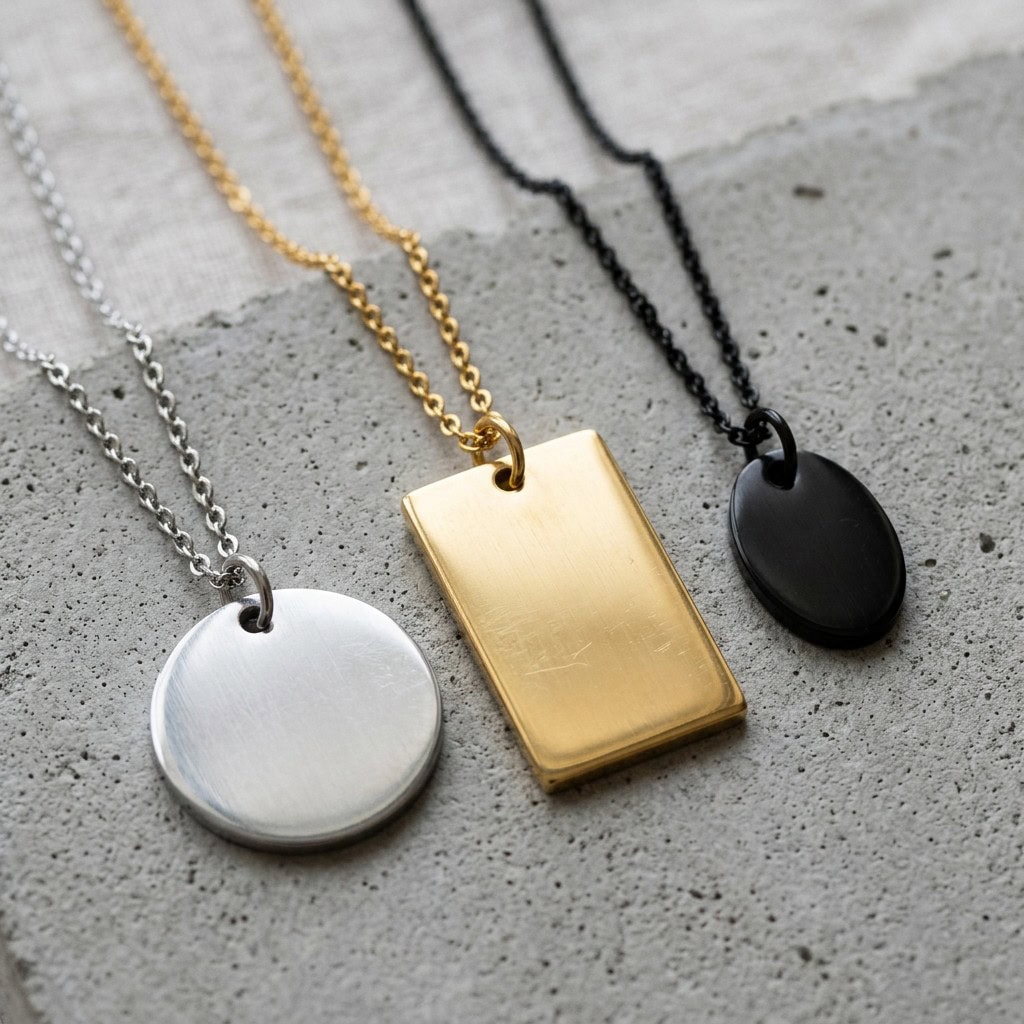
Engravable Identity Pendants
Blank discs, bars, dog tags, coordinates, dates, initials, and nameplates can be prepared for factory engraving or downstream personalization. We confirm the usable marking area, font size, line spacing, engraving direction, edge finish, hole position, and product orientation. The same base design can be supplied as a pendant component or assembled with selected chains, clasps, extension chains, and logo tags for a controlled personalization program.
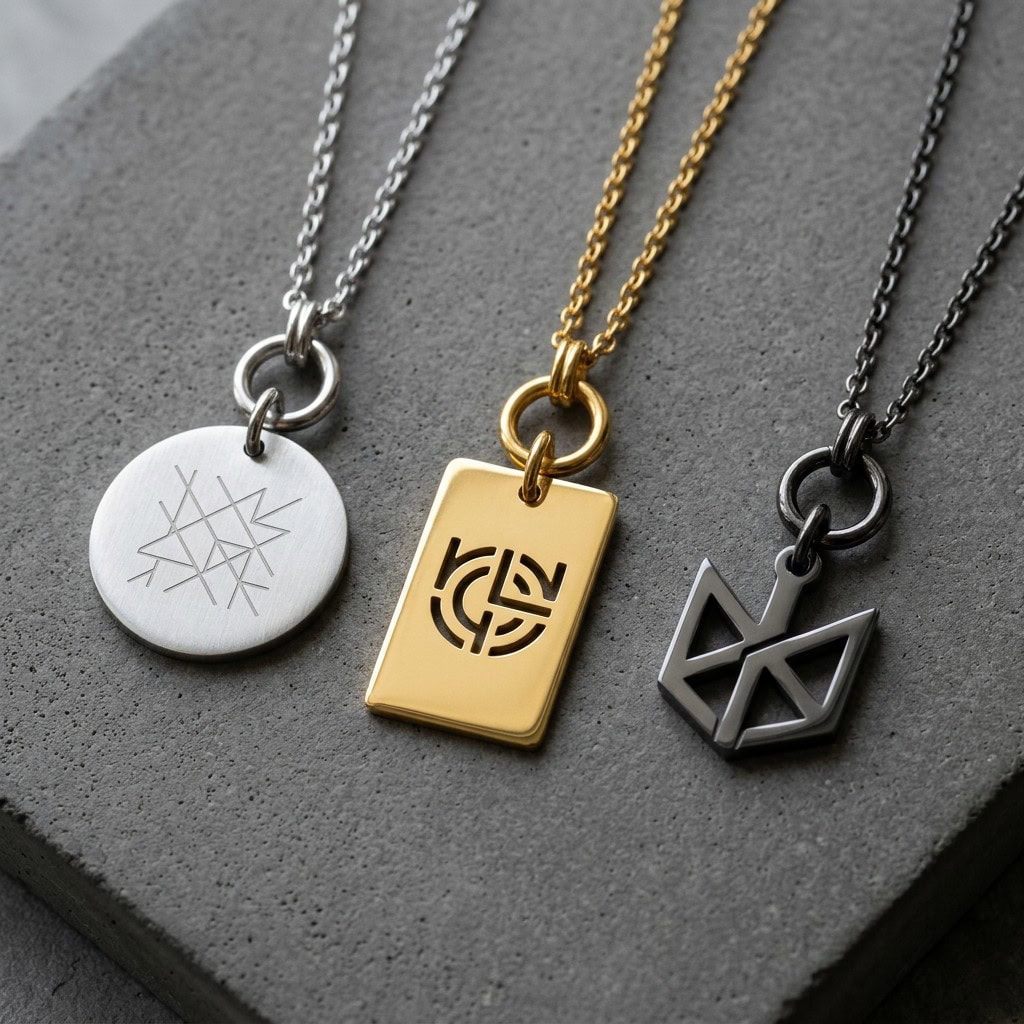
Logo and Symbol Pendants
Custom brand marks, icons, monograms, and graphic symbols can be developed from AI, EPS, SVG, CDR, editable PDF, DWG, or DXF files. Our review covers minimum line width, negative space, readability after polishing or plating, logo depth, front-and-back direction, trademark authorization, and the most suitable process among laser engraving, etching, stamping, embossing, cutting, CNC, or casting.
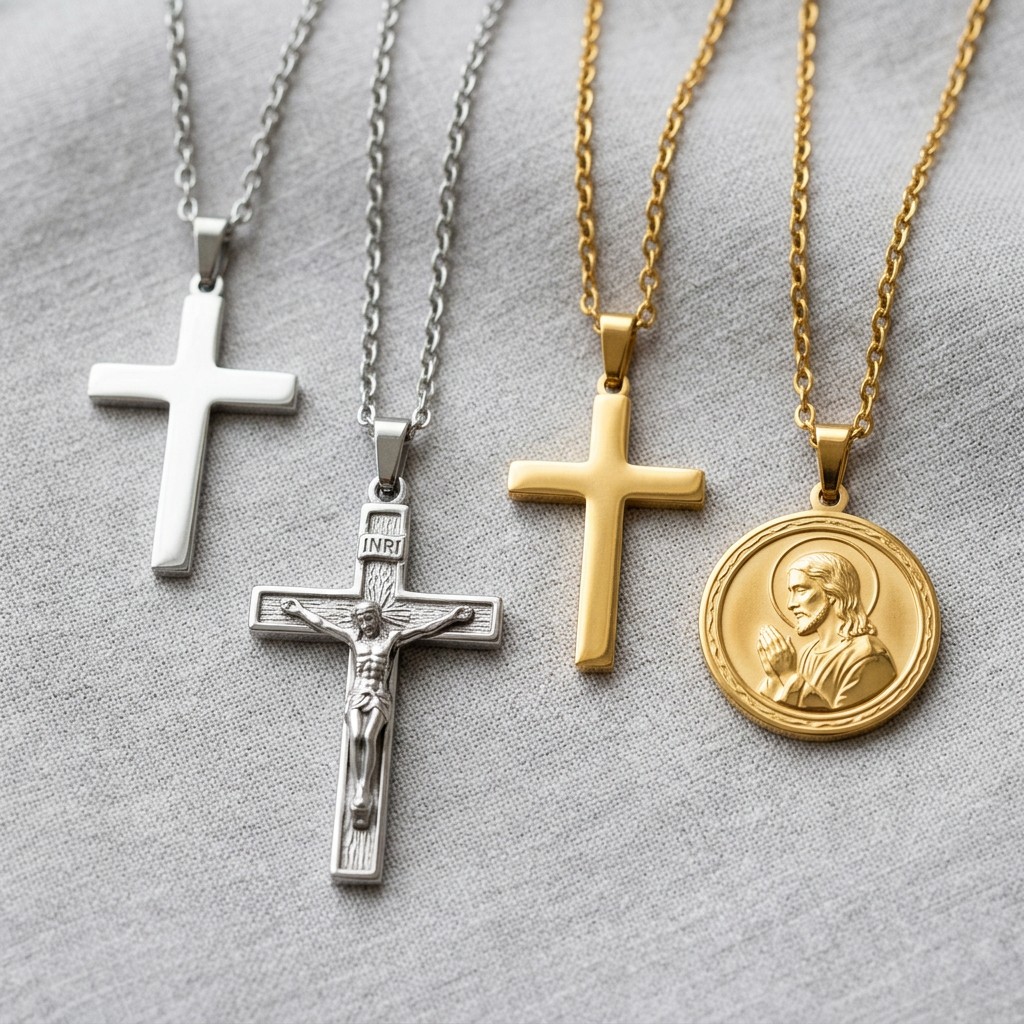
Religious and Memorial Pendants
Crosses, faith symbols, remembrance tags, commemorative dates, and message pendants require careful control of artwork proportions, fine details, readable text, smooth skin-contact edges, and respectful orientation. We can assess flat, relief, cutout, engraved, stone-set, or PVD-finished structures. Before sampling, we define symbol direction, chain position, intended wearer, visible surfaces, and any product-specific market or testing requirements.
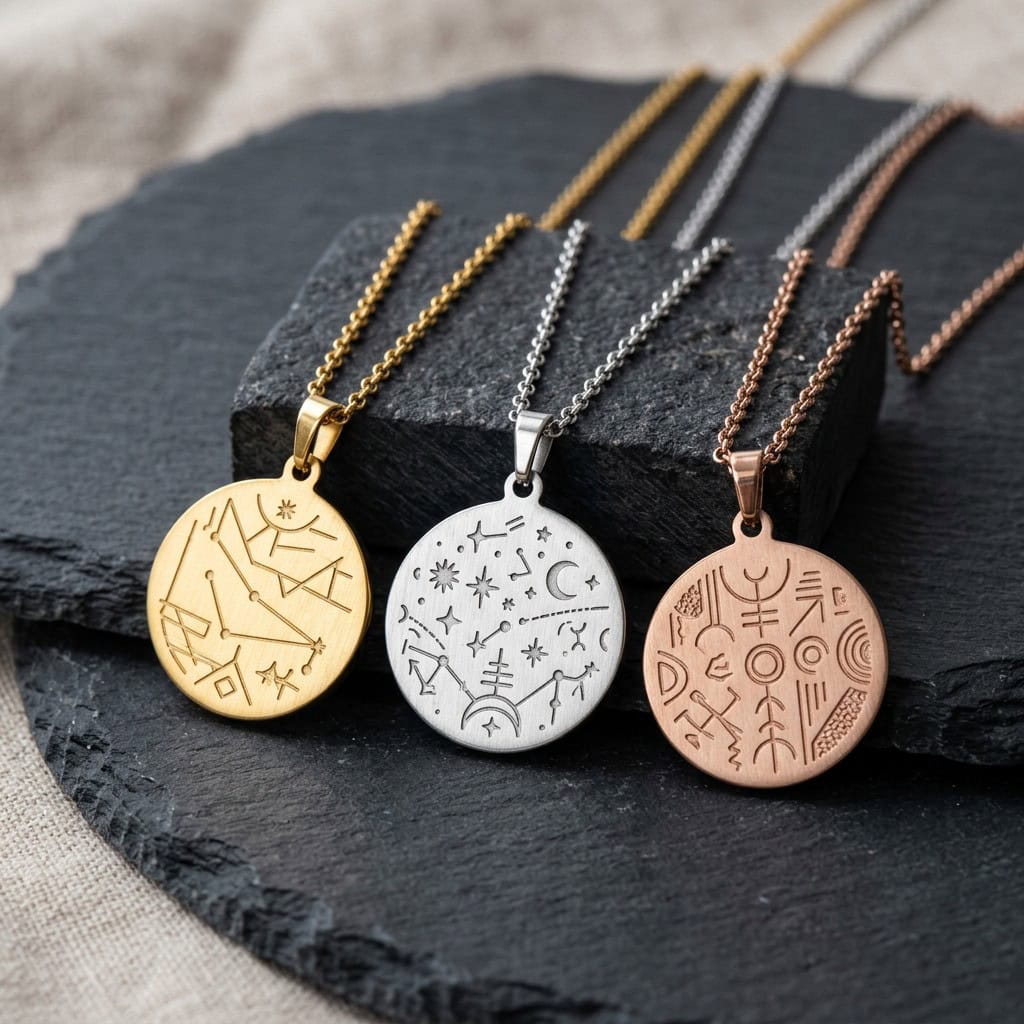
Zodiac and Motif Pendants
Zodiac signs, animals, hearts, stars, bows, celestial motifs, cultural symbols, and seasonal graphics can support coordinated launches and multi-SKU collections. We help determine whether a concept should be laser cut, stamped, CNC machined, cast, engraved, enamel filled, or assembled from multiple parts. Shared components, controlled size families, and repeatable finishes can improve collection consistency and production efficiency.
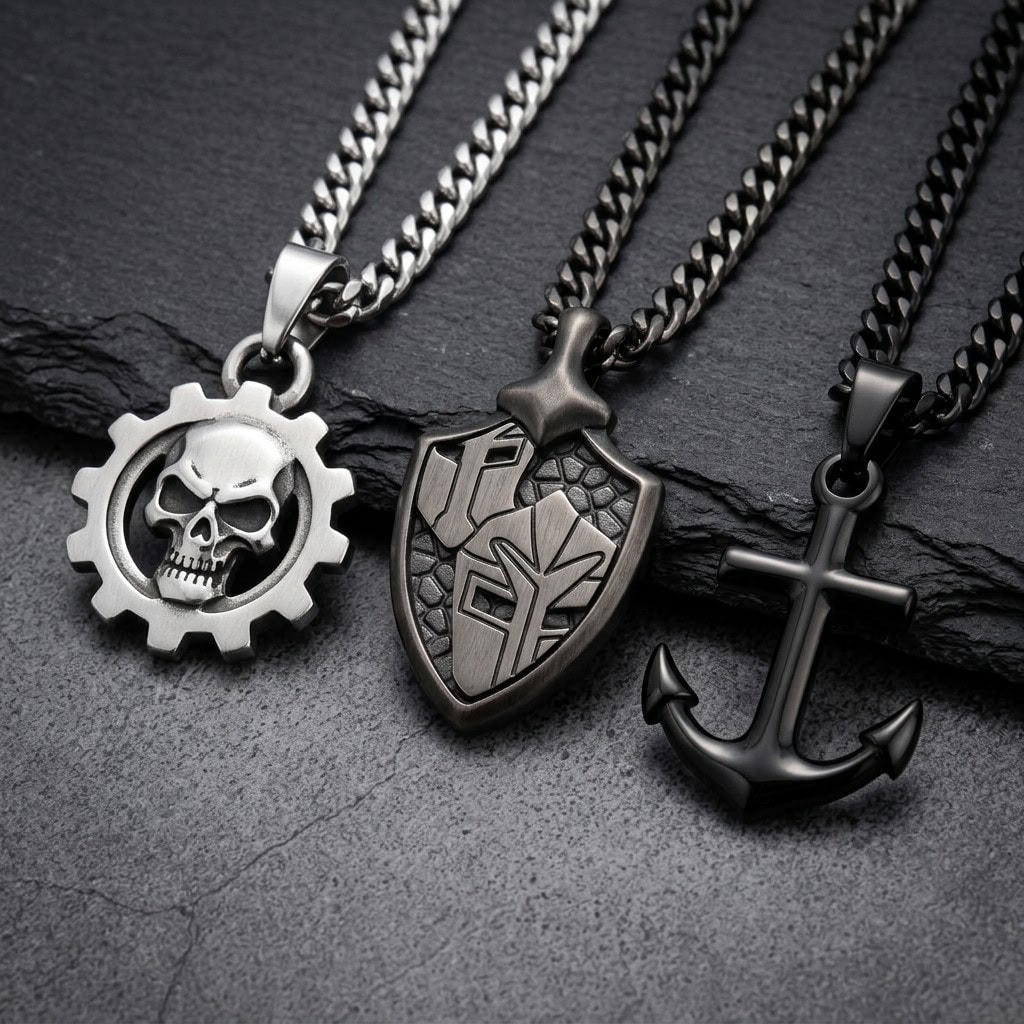
Men's Statement Pendants
Men's pendants often require greater visual weight, wider bails, heavier chains, deeper engraving, bold relief, or black and gun-metal finishes. We assess pendant weight, chain load, bail opening, connection strength, front-facing balance, sharp edges, and polishing access. Cuban, curb, Figaro, box, rope, or other chains can be matched to the final structure and intended wearing position.
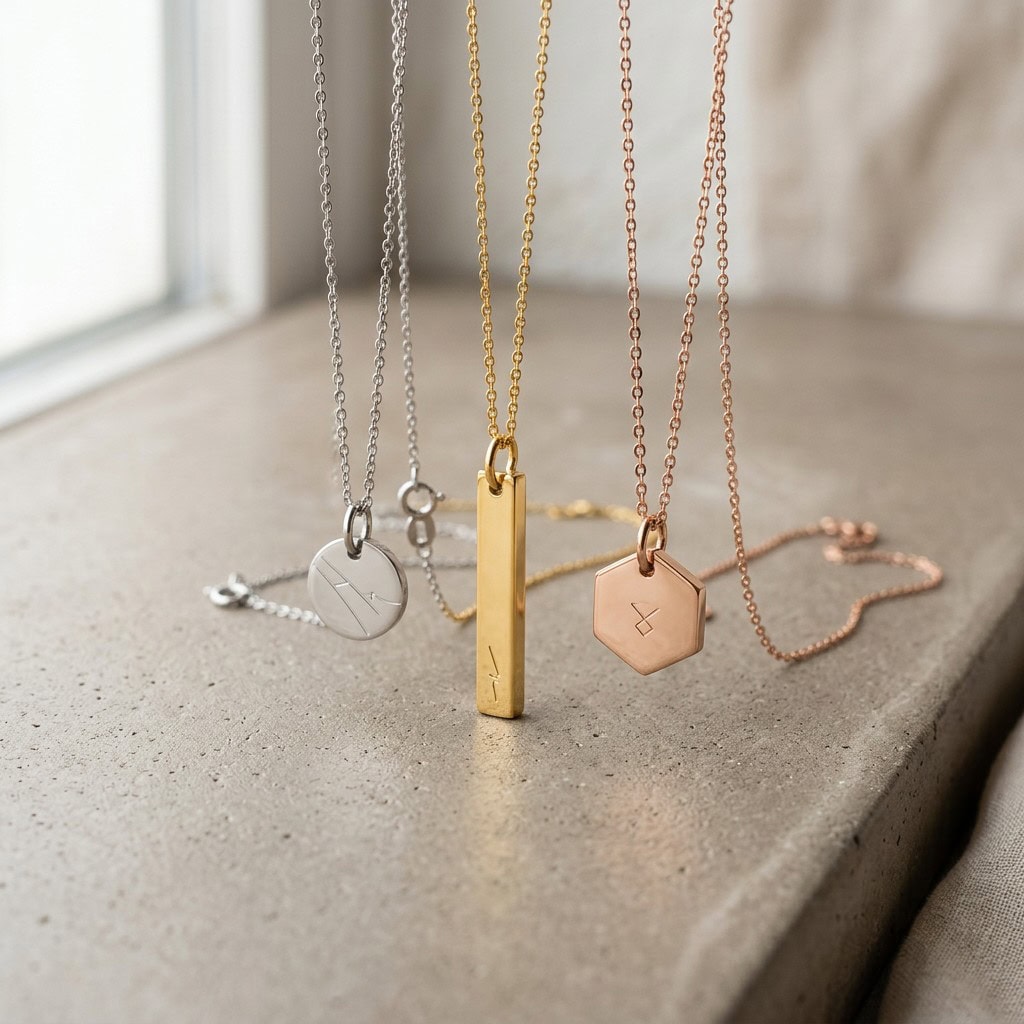
Minimalist Brand Pendants
Clean geometric shapes, polished tags, fine outlines, small initials, and compact charms depend on disciplined proportions rather than excessive decoration. Small errors in edge radius, hole position, surface waviness, or engraving alignment become visible on simple products. We define the primary appearance surface, dimensional references, polishing level, color standard, and acceptable visual limits for a consistent minimalist collection.
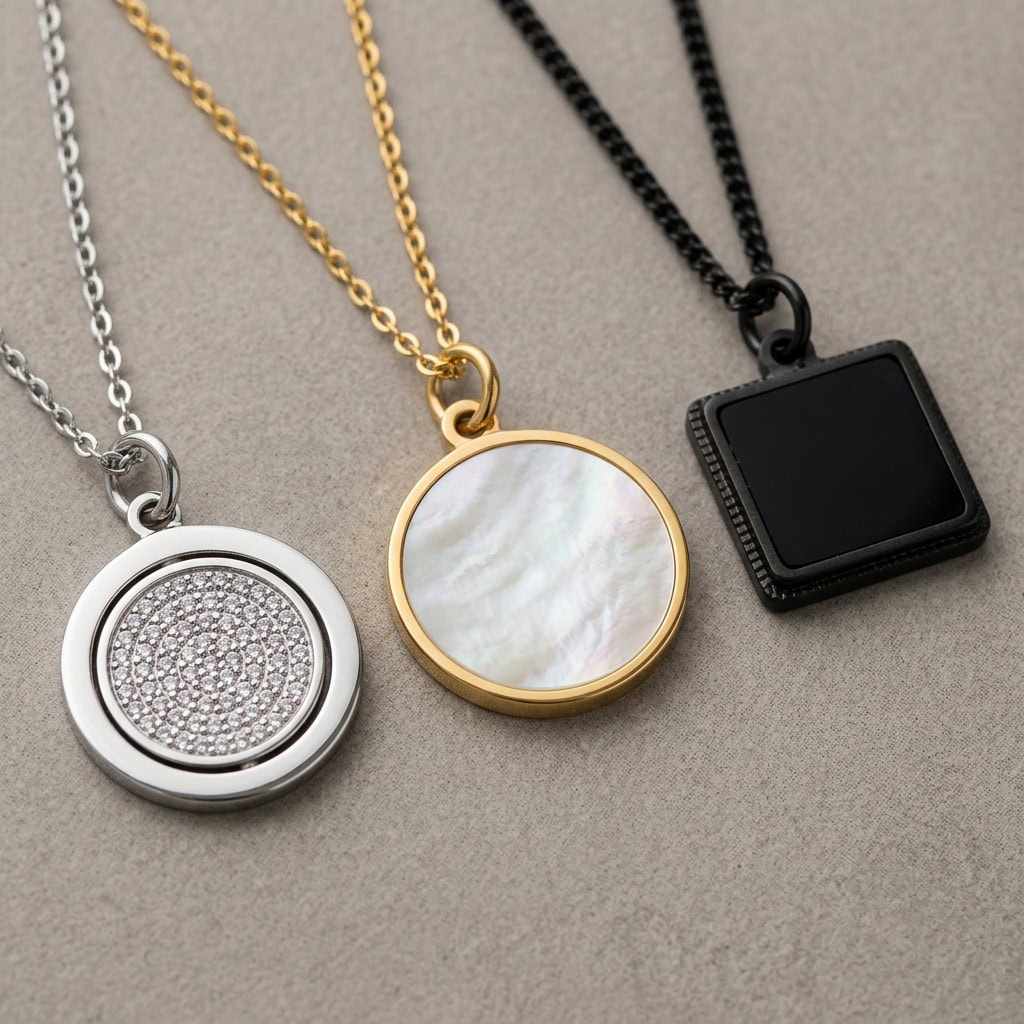
Stone and Inlay Pendants
We review structure and process compatibility before incorporating CZ, glass, crystal, synthetic stones, natural materials, shell, pearl, resin, or enamel. We define specifications that cover stone shape, size, color, setting method, adhesive or prong requirements, surface height, allowed natural variation, plating sequence, and pull/retention testing for bonded or prong-set stones. Our packaging to prevent stone pressure, surface impact, and friction during international transport.
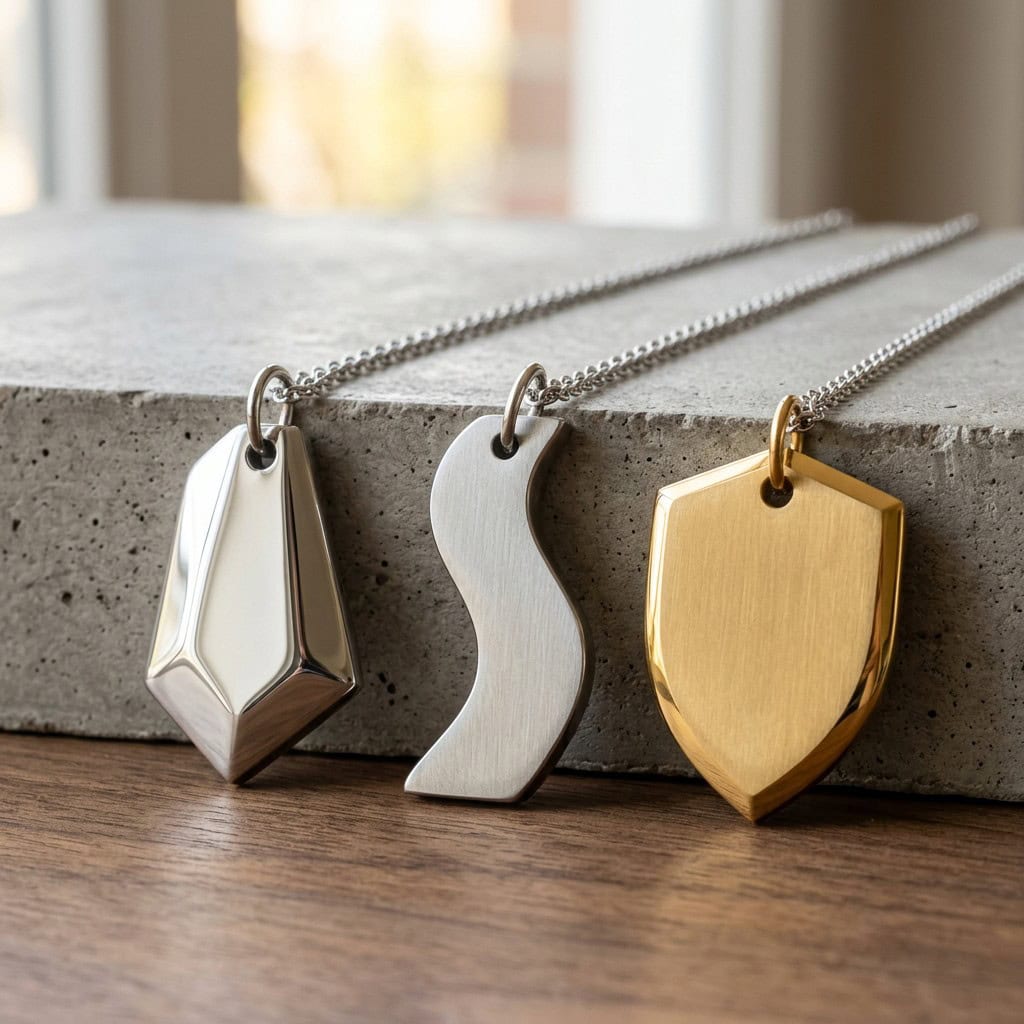
Custom Shape Pendants
Original silhouettes, sculptural forms, layered structures, movable parts, and mixed-finish pendants require an engineering route rather than a generic catalog selection. Chicolink reviews wall thickness, narrow bridges, holes, internal corners, welding access, drainage, polishing reach, plating contact points, assembly order, and inspection method. The output may be producible as submitted, producible after modification, sample-dependent, or temporarily unsuitable for production.
Engineer the Pendant Before Approving Its Appearance
Before sampling, Chicolink converts each pendant concept into measurable dimensions, functional interfaces, surface priorities, and acceptance points. The review concentrates on the features most likely to affect production or wear: hole or bail geometry, chain clearance, weight and balance, skin-contact edges, engraving position, finish access, and inspection references.
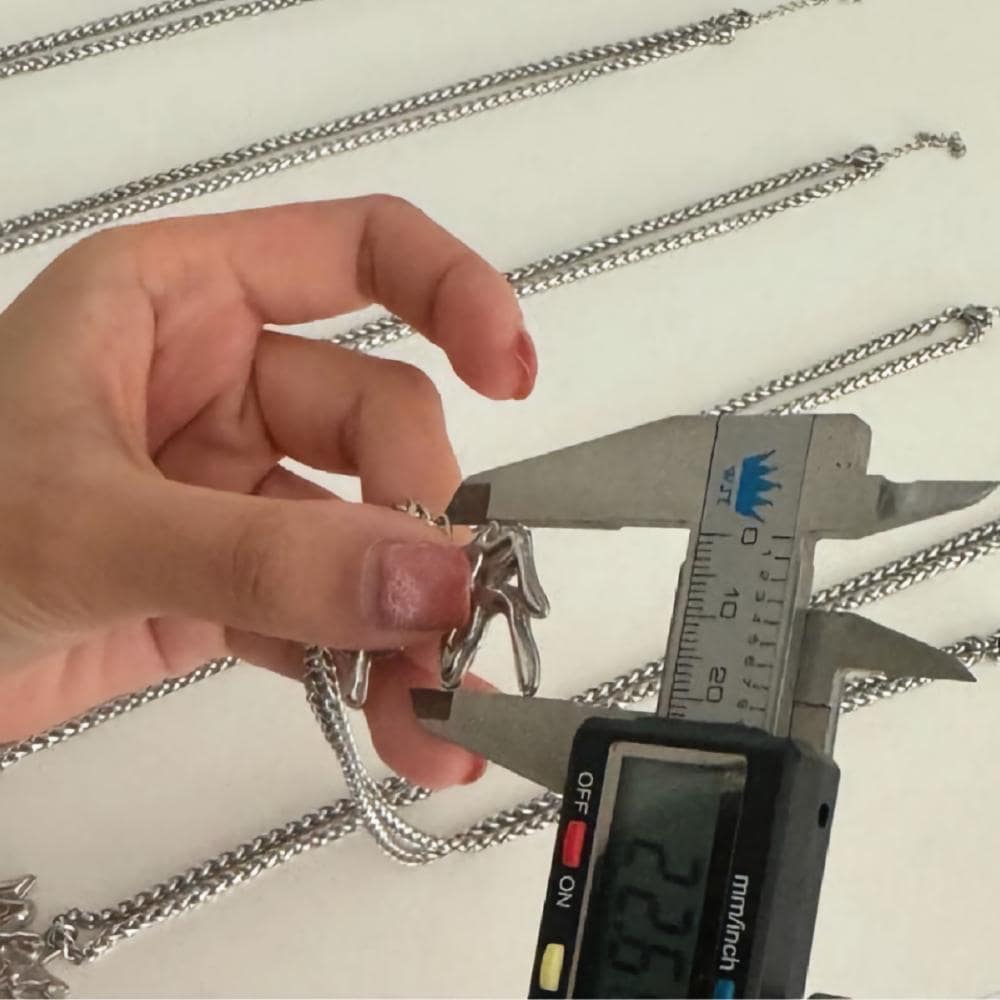
Define Every Functional Dimension Before Sample Production
Chicolink records the following in the drawing and product specification:
- Overall length, width, thickness, and target weight range
- Solid, hollow, sheet, tube, or cast construction
- Hole diameter, hole-to-edge distance, and hole orientation
- Bail type, internal opening, wire diameter, and connection method
- Maximum chain profile that must pass through the hole or bail
- Front, back, top, bottom, and intended wearing direction
- A-side, B-side, and hidden surface appearance requirements
- Logo position, size, depth, safe margin, and reading direction
- Edge radius, corner treatment, skin-contact surfaces, and burr limits
- Stone, enamel, resin, movable part, or multi-component assembly details
- Target polishing, texture, plating color, coating structure, and handling protection
Match Material and Finish to the Product Brief
We select material grade and surface finish as one system. Pendant geometry, target appearance, corrosion exposure, processing difficulty, price position, test plan, and repeat-order needs all affect the route. We do not treat 304, 316L, polished steel, brushed steel, or PVD colors as interchangeable specifications. This matrix sets out the commercial and technical consequences before sampling, allowing the quotation and prototype to use the same material and finish assumptions. We record the selected route in the product specification.
| Decision Area | Available Direction | Suitable Use | Points to Confirm Before Quotation |
|---|---|---|---|
| 304 stainless steel | Sheet, wire, bar, tube, cast material, and selected components | Mainstream commercial pendants, cut shapes, engraved blanks, and price-balanced collections | Product structure, material form, target market, finish, testing, and supply specification |
| 316L stainless steel | Selected sheet, machined, cast, or component applications after evaluation | Projects prioritizing improved pitting resistance or specific brand and market requirements | Higher forming, cutting, welding, polishing, and correction difficulty may affect cost and lead time |
| Polished steel | Barrel, electropolished, high-polished, or mirror-finish direction | Minimalist, identity, premium-looking, and engravable pendants | A/B/C surfaces, polish level, tool marks, edge condition, reflection quality, and scratch protection |
| Brushed or satin | Directional brushing or confirmed satin process | Men's, industrial, understated, and mixed-finish collections | Grain direction, texture coarseness, joint location, logo contrast, and acceptable variation |
| Sandblasted or matte | Non-directional textured surface | Contemporary, low-reflection, two-tone, and graphic designs | Media, texture uniformity, masked areas, edge condition, and cleaning accessibility |
| PVD gold | 14K, 18K, or 24K color references | DTC, boutique, gift, personalized, and premium-positioned collections | Color standard, base layer, top layer, target thickness, color tolerance, wear testing, and surface protection |
| PVD rose gold | Approved rose-gold reference | Women's, gift, bridal-inspired, and personalized collections | Reference sample, substrate, batch color control, top-layer structure, test plan, and replenishment needs |
| PVD black or gun metal | Black, gun metal, or hematite direction | Men's, alternative, industrial, and statement pendants | Surface preparation, approved shade, edge coverage, recess coverage, friction points, and matching chain color |
Supporting Note
We complete PVD/IP in our in-house plating workshop. Reference structures include E1 at 0.4 micrometers TiN plus 0.05 micrometers gold, and E2 at 0.7 micrometers TiN plus 0.1 micrometers gold. These are available reference options, not automatic specifications. We set the layer structure, color standard, test conditions, price, and surface-protection method for the individual project.
Turn Pendant Concepts into Controlled Production Specifications
Chicolink develops a pendant through five controlled gates: brief intake, engineering review, route confirmation, sample verification, and production release. Each gate records its required input, factory output, open decisions, and approval status. This prevents unconfirmed design assumptions from becoming tooling or bulk-production requirements.
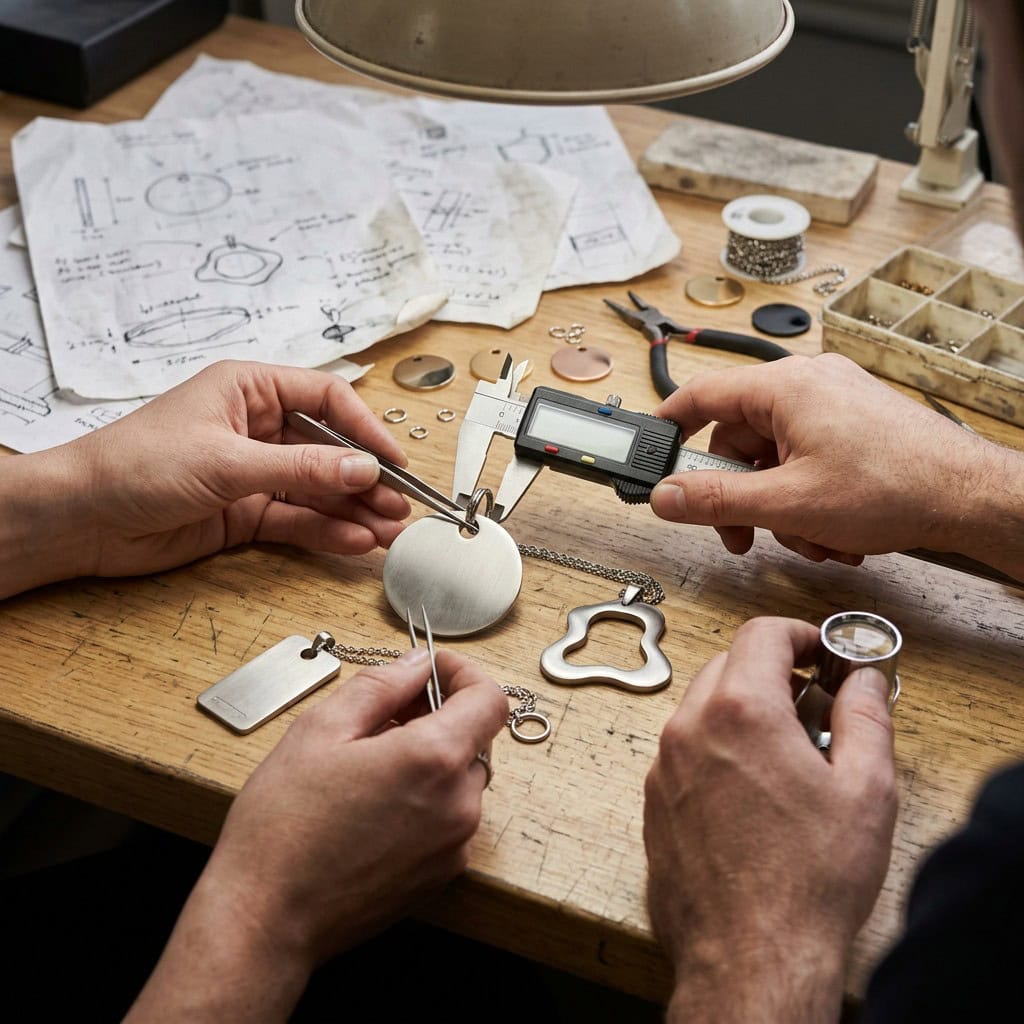
A Controlled Development Path from Input to Approval
1. Normalize the project brief. Send the intended market, artwork, dimensions, material direction, finish, order allocation, target price position, retail configuration, and launch schedule. We accept sketches, physical samples, raster references, editable artwork, 2D drawings, and 3D files. The output is a brief separating confirmed requirements, open decisions, and missing information.
2. Review pendant feasibility. Chicolink checks wall thickness, holes, narrow bridges, internal corners, weld locations, bail clearance, chain compatibility, polishing reach, plating contact points, stone or enamel interfaces, logo readability, and measurement references. The output records workable features, proposed corrections, sample-dependent risks, and items that cannot yet be released.
3. Confirm the production and commercial route. We define the proposed material, process sequence, tooling, sample type, quality focus, MOQ basis, provisional timing, and cost drivers. Drawing support, sample fees, tooling fees, and included revision scope are stated before development. Required customer decisions remain open until written confirmation.
4. Produce and verify the sample. The project may require a concept prototype, metal sample, plating color sample, functional sample, retail-pack sample, pre-production sample, or Golden Sample. We compare the relevant dimensions, bail and chain function, surface, color, logo, components, and pack-out, then issue an approval or revision list.
5. Freeze the production reference. After revisions close, we link the approved drawing, BOM, finish reference, chain, components, retail version, inspection points, and authorized sample to one current version. Superseded files are withdrawn from purchasing, production, inspection, and packing. Bulk release occurs only after applicable open items and approvals are recorded.
Use the Right Process for Each Pendant Structure
No single process suits every stainless steel pendant. We select the route according to geometry, material form, order level, surface requirements, tooling economics, detail, polishing access, and repeatability. The table shows our starting logic. Final selection depends on the product file, sample, equipment capability, material supply, and bulk quality standard. The route also determines tooling, correction allowance, inspection method, surface preparation, and risks to close before production. We document that choice before tooling or sampling begins.
| Pendant Structure | Primary Route to Evaluate | Typical Process Flow | Main Engineering Risks |
|---|---|---|---|
| Flat silhouette or cutout | Laser cutting or wire cutting | 2D drawing, sheet preparation, cutting, drilling or bending, deburring, polishing, in-house plating, inspection | Burrs, narrow bridges, heat effect, deformation, hole-to-edge distance, and polish loss |
| Repeated flat or formed design | Stamping or hydraulic forming | Tooling, sheet preparation, forming, drilling, assembly, polishing, in-house plating, inspection | Tooling cost, springback, edge cracking, press marks, and dimensional drift |
| Sculptural or relief pendant | Lost-wax casting | Master, mold, wax, casting, sprue removal, correction, polishing, in-house plating, assembly, inspection | Shrinkage, porosity, incomplete fill, heavy sections, hidden pits, and over-polishing |
| Precision recess or machined detail | CNC machining | Engineering model, material preparation, machining, deburring, drilling or assembly, polishing, plating, inspection | Tool access, internal radius, vibration marks, machining time, and sharp transitions |
| Circular, threaded, or bar component | Lathe plus secondary processes | Material preparation, turning, drilling, threading, deburring, polishing, plating, assembly | Concentricity, thread fit, wall thickness, tool marks, and plating effect on fit |
| Multi-part or mixed-finish pendant | Combined route | Cutting, casting, CNC, welding, fitting, surface preparation, selective finish, assembly, inspection | Tolerance accumulation, weld visibility, color matching, assembly order, and replacement control |
| Complex prototype | 3D printing for evaluation | Model preparation, prototype, structure review, revision, then approved metal route | Prototype properties do not automatically represent bulk metal performance |
| High-volume repeat program | MIM feasibility review | Engineering review, tooling, material and process validation, trial, controlled production | Higher tooling investment; generally evaluated for approximately 5,000+ pieces with repeat demand |
Supporting Note
Historical tooling references, such as copper masters, rubber molds, or stamping dies, are not fixed prices. Tooling, fixtures, artwork, and testing are quoted again for each design because complexity, size, quantity, and required life vary.
Choose the Right Pendant Development and Supply Model
We support different levels of brand ownership and factory involvement. The right model depends on whether the project starts with a finished design, needs engineering input, requires a new collection, or must arrive sales-ready. Before work begins, we define responsibilities, intellectual-property authorization, sample scope, retail files, quality standards, and decision rights. This prevents missing inputs, duplicated work, silent assumptions, and uncertainty about what the quotation and final shipment include. It also identifies who authorizes each project gate.
| Supply Model | What You Provide | What We Provide | Typical Final Deliverable |
|---|---|---|---|
| Ready-made wholesale | Selected SKU, order quantity, color, retail pack, target market, and delivery information | Stock or production status, quotation, available finish options, inspection, packing, and shipment coordination | Existing pendant or necklace styles in the selected pack format |
| OEM pendant production | Product file, sample, reference, dimensions, logo, order quantity, quality standard, and authorization | DFM, quotation, tooling, sampling, manufacturing, in-house plating, QC, packing, and export support | Product manufactured to the released specification and sample |
| ODM collection development | Brand direction, customer profile, price position, channel, launch timing, and approval feedback | Concept and structure support, material and process options, collection planning, sampling, production, and QC | Coordinated pendant collection developed for the approved commercial brief |
| Private-label product | Product selection or design, logo authorization, brand colors, retail artwork, SKU data, and labeling rules | Product branding, logo tag, jewelry card, pouch, gift box, care card, barcode, label, packing, and inspection | Sales-ready branded pendants or necklace sets |
| eCommerce-ready program | Channel rules, parent-child SKU structure, barcode or FNSKU, image and data requirements, packing standard | Product and packaging data coordination, labels, SKU separation, packing records, and shipment support | Products organized for your current platform and warehouse requirements |
| Long-term replenishment | Forecast, released SKU list, color standard, change notices, order quantity, and delivery schedule | Version control, batch records, production planning, color reference, QC records, packing control, and shipment tracking | Repeat orders produced against the current released version |
Supporting Note
Product and retail-pack development can proceed together, but each item requires a controlled version. We implement platform labels, FBA instructions, barcodes, and carton rules from the customer's current written requirements rather than carrying assumptions forward from an earlier order.
Set Commercial Conditions Before Engineering and Sampling Begin
Reliable sourcing requires more than a unit price. We build the quotation from the pendant specification, process route, tooling, finish, components, order allocation, retail configuration, verification plan, and delivery target. Clear inputs reduce revisions and prevent a low initial price from hiding an incomplete scope. The figures below are our common policies. Order allocation by style, color, and pack version matters because it can change plating batches, production efficiency, and MOQ feasibility.
| Commercial Item | Common Chicolink Policy | Conditions That May Change It |
|---|---|---|
| Initial response | Target within 6 working hours for receipt, information gaps, status, or preliminary guidance | Initial response is not a formal quotation |
| Complex project review | Preliminary evaluation guidance targeted within 24 hours | Formal quotation follows engineering and cost review |
| Ready-made MOQ | Commonly 120 pieces per style | SKU availability, color, pack format, and order composition |
| OEM/ODM MOQ | Commonly 500 pieces per style | Tooling, material, color, plating batch, stone, structure, pack version, and production difficulty |
| Existing-style sample | Commonly 3-7 working days | Stock, finish, requested changes, and inspection scope |
| Custom OEM/ODM sample | Commonly 25-30 working days | Technical release, tooling, complexity, revisions, plating, stones, and verification |
| Existing-style bulk production | Commonly 20-30 working days | Material, stock status, color, pack format, order level, and production schedule |
| Custom bulk production | Commonly 25-45 working days after approval | Order level, tooling, process route, plating, verification, and production loading |
| Sample and tooling fees | Normally applicable and quoted by project | Whether fees are credited depends on order value and written agreement |
| Quantity tolerance | Common reference approximately +/-5% | Accepted overage or shortage, surplus ownership, and freight responsibility must be agreed in writing |
| Reference payment | 50% deposit and 50% before shipment | Final terms depend on credit review, order value, contract, and payment method |
| Trade terms | EXW, FOB, CIF, DAP, and DDP support | Destination, taxes, freight, insurance, customs, and written quotation |
Supporting Note
For formal pricing, provide the product version, dimensions, target weight, material, finish, chain and clasp, stone or inlay, logo, retail configuration, order allocation, inspection standard, destination, and required date.
Capacity and Process Control for Repeat Pendant Programs
The figures below describe the factory-wide resources behind Chicolink pendant programs; they are not automatic capacity commitments for every SKU. We allocate equipment, people, and plating slots after confirming geometry, process route, quantity, finish, inspection scope, packing, delivery date, and current loading. Product-specific capacity is confirmed in the quotation and production plan.
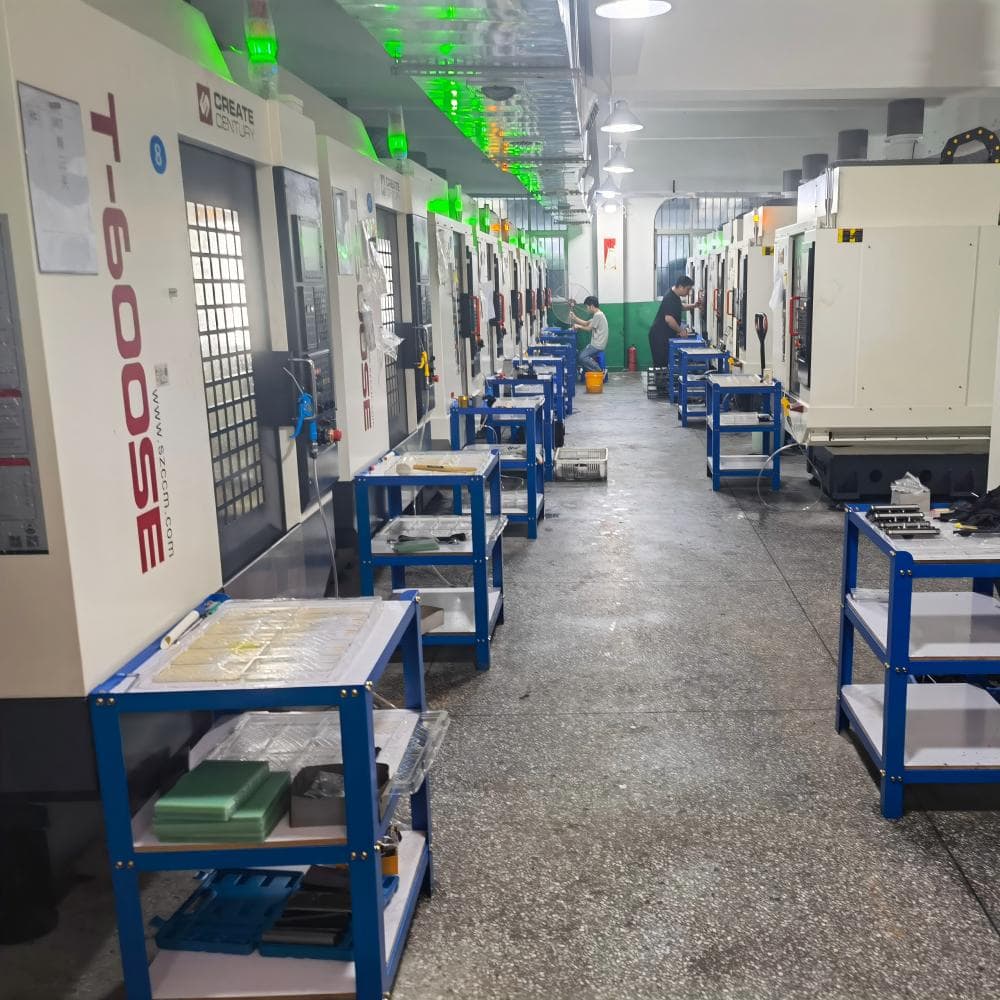
Manufacturing Resources Connected to the Pendant Workflow
- Established in 2012: We manage B2B wholesale, OEM, ODM, private-label, and export manufacturing projects.
- 5,500+ m2 factory: Production functions include CNC, stamping, casting, laser cutting, laser welding, polishing, engraving, plating, assembly, inspection, and packing.
- 400+ employees: Production planning, manufacturing, quality, purchasing, packaging, and export functions coordinate through the order and work-order system.
- 6 jewelry designers and 3 jewelry engineers: The team supports drawing conversion, structural review, sample development, process selection, and production problem resolution.
- 200,000+ pieces monthly factory-wide capacity: This is an overall factory figure, not a guaranteed pendant-only allocation. Project capacity is scheduled by SKU, route, quantity, and delivery date.
- 58 listed production machines: Equipment includes CNC, casting, laser cutting, laser welding, laser logo, stamping, bending, drilling, polishing, wax injection, lathes, and PVD systems.
- 6 in-house PVD vacuum coating machines: We manage PVD/IP color, process control, inspection, and plating-batch records within our own plating workshop.
- Inspection support: We conduct internal inspection and can coordinate customer-appointed or third-party pre-shipment inspection.
Controls That Support Enterprise Pendant Sourcing Programs
We organize long-term supply around controlled specifications, production records, inspection, packing data, and accountable project communication. Customer contracts and written quality agreements take priority when they differ from our internal defaults. We apply the controls below according to the supplier-qualification and order scope, with named responsibilities and decision points.
Factory Audit Support
We coordinate customer and authorized third-party factory audits in advance. Before the visit, we align the audit scope, required records, visitor information, confidentiality, production access, and schedule. We release certificates or audit records only after checking the legal company name, issuing body, scope, version, date, and validity.
Confidential File Control
We organize design files, logos, technical drawings, BOMs, color references, retail artwork, and authorization records by customer, project, SKU, and version. Trademark and artwork authorization remain the customer's responsibility. We document confidentiality, file access, sample ownership, mold ownership, and permitted product use in the applicable agreement.
Specification Governance
Each production SKU connects to its current product file, material, critical dimensions, tolerances, weight, bail and chain specification, finish, logo, components, verification requirements, retail version, and Golden Sample. Any controlled change receives an impact assessment, a new version, and authorization before release to purchasing, production, inspection, or packing.
Milestone Communication
Project updates can cover open information, technical release, tooling, sample status, revisions, material preparation, production scheduling, in-house plating, inspection, retail-pack release, external inspection, and shipment. We define the update frequency, responsible contacts, and decision channel for the project instead of relying on fragmented messages across multiple channels.
Inspection Coordination
We support internal inspection, agreed AQL inspection, customer inspection, and authorized third-party pre-shipment inspection. Before booking, we align the standard, sample size, defect classes, report format, required test documents, carton readiness, and release authority. The schedule must leave time for corrective action before dispatch.
Corrective Action Records
When an issue is reported, we collect the order number, SKU, batch, affected quantity, photographs or video, pack condition, receipt date, use or storage information, and requested resolution. We assess responsibility and disposition against the Golden Sample, product file, quality standard, and batch records before deciding repair, replacement, rework, remake, or compensation.
Keep the Approved Pendant Consistent in Bulk Production
Chicolink does not release bulk production from visual sample approval alone. We transfer the approved pendant into a controlled product file, BOM, finish reference, Golden Sample, inspection plan, and retail specification. Five release gates then control material preparation, first-article approval, bulk comparison, packing, and any change introduced after approval.
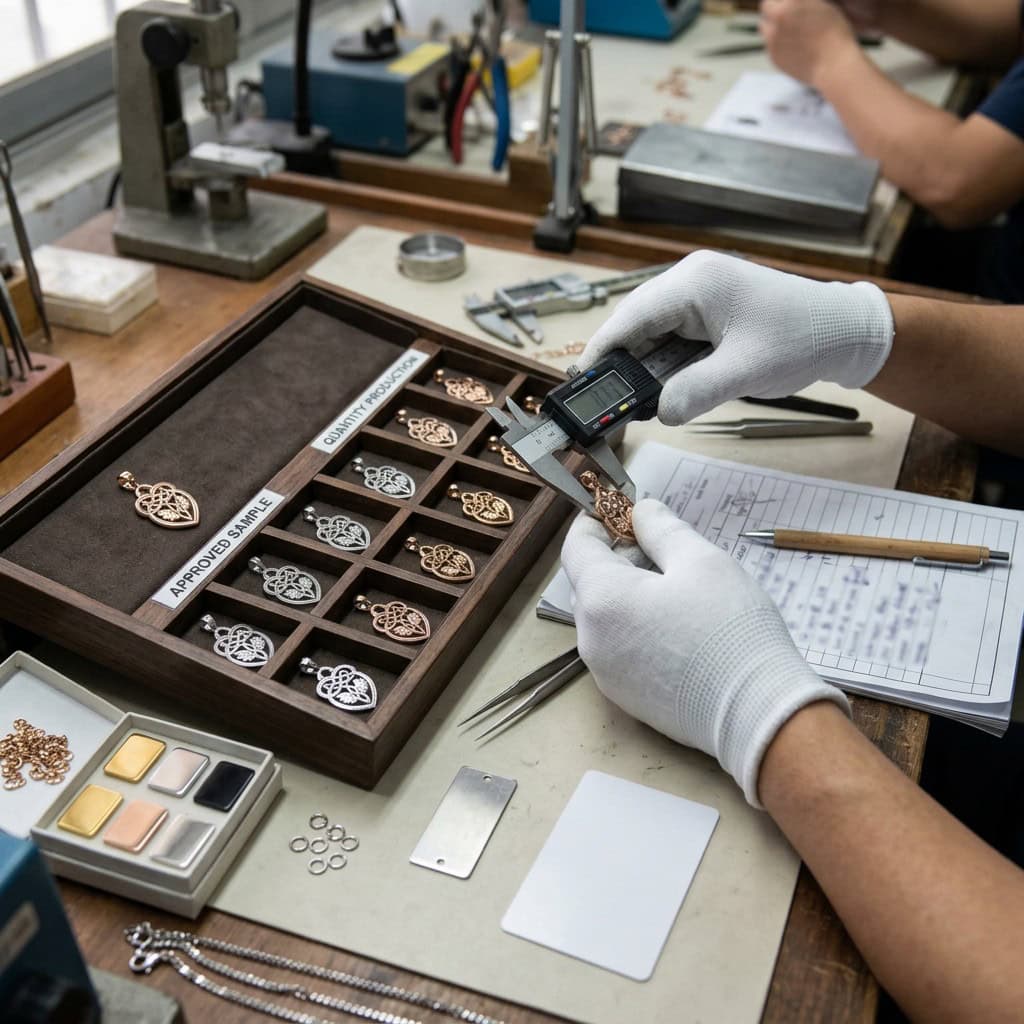
Five Control Gates Before Bulk Shipment
1. Freeze the specification: Release one current product version covering material, dimensions, target weight, hole or bail, chain, surface, logo, components, tolerances, retail configuration, and order allocation. Any unresolved characteristic remains visible as an open item and blocks the affected production activity.
2. Authorize the Golden Sample: Record the sample number, linked documents, production date, accepted characteristics, open deviations, approver, approval date, photographs, and intended use. Customer and factory retention samples can be arranged so both sides compare later output with the same physical reference.
3. Release material and process inputs: Purchasing and production work from the current BOM and route. Stainless steel, chains, findings, stones, plating color, retail materials, and critical supplier inputs are checked against that version before they enter the assigned order.
4. Approve the first article: Before full production continues, the first production output is checked for agreed critical dimensions, assembly function, finish, logo, chain fit, and appearance. Deviations are corrected and rechecked before they can multiply across the batch.
5. Compare bulk product and pack-out: Production and final inspection compare the batch with the Golden Sample and documented limits. The check covers product identity, dimensions, color, logo, assembly, chain orientation, accessories, labels, barcode-to-SKU matching, product protection, and carton allocation.
Control the Pendant Features That Create Sourcing Risk
We build the inspection plan around pendant structure and written customer requirements. Contracts, released product files, Golden Samples, and quality agreements take priority over our internal defaults. The values below apply only when no different requirement has been set. Before testing, we define the method, sample size, equipment, position, environment, acceptance rule, and record format. Pendant components and complete necklaces may need different load points, assembly checks, pack-out controls, and sampling decisions even when they share one pendant body.
| Inspection Area | Chicolink Default or Control Direction | Acceptance Focus |
|---|---|---|
| Overall dimensions | Up to 20 mm: +/-0.15 mm; 20-50 mm: +/-0.20 mm; above 50 mm: +/-0.30 mm | Drawing dimensions and stated measurement references take priority |
| Hole and assembly position | Default reference +/-0.05 mm | Chain clearance, bail fit, centering, orientation, and assembly function |
| Edge and skin-contact surfaces | Visual and tactile inspection against approved standard | No hazardous burr, sharp edge, exposed weld, or damaging projection |
| Surface appearance | Compare A/B/C surfaces with approved sample | Scratches, pits, waves, tool marks, polish level, texture direction, stains, and local defects |
| Logo and engraving | Drawing, artwork, and approved sample comparison | Position, direction, size, depth, line continuity, readability, and safe margin |
| Standard polished color | Default color difference Delta E00 <=1.5 | Color standard, fixed measuring condition, at least three representative positions when unspecified |
| Brushed, sandblasted, or antique color | Default color difference Delta E00 <=2.0 | Texture and visual uniformity remain required even when instrument values pass |
| Plating thickness | Batch average nominal +/-10%; single point nominal +/-20%; main appearance surface at least 80% of nominal | Confirm method, equipment, layer structure, measuring points, and product-specific target |
| Pendant ring and connector pull | Default 40 N, five pieces per style, held for 10 seconds | No break, detachment, open joint, failed weld, or obvious permanent deformation |
| Main necklace structure pull | Default 30 N, approximately 3 kgf, five pieces per style, held for 10 seconds | No break, detachment, open joint, failed weld, or obvious permanent deformation |
| Bare stainless steel salt spray | Default 24 hours when applicable | No red rust, pitting, blistering, peeling, exposure, or unacceptable color change |
| PVD or plated salt spray | Default 48 hours; 72 hours for confirmed higher-corrosion requirement | Test method, solution, pH, temperature, position, cleaning, and judgment must be specified |
| Artificial perspiration | Default 24 hours at 40+/-2 degrees C and pH 4.7+/-0.2 | No blackening, corrosion, blistering, peeling, exposure, major gloss loss; Delta E00 <=2.0 |
| Stone or inlay security | Test selected by fixing structure | Tape is only an auxiliary check for small stones; larger glued or set stones require suitable push, pull, probe, or load methods |
| Packing verification | Product, accessory, label, SKU, barcode, quantity, and carton check | Correct version, scratch separation, anti-tangle method, product orientation, and complete set contents |
Supporting Note
When the customer does not specify another sampling plan, our default is normal inspection at General Inspection Level II: Critical Ac 0/Re 1, Major AQL 1.0, and Minor AQL 2.5. We select the sample size and Ac/Re values from the controlled sampling table according to lot size and record the basis in the inspection report.
Prepare Every Pendant for Its Intended Market
Compliance is not a permanent label applied to an entire catalog. Requirements depend on the destination, product construction, material, components, plating layers, skin contact, sales channel, and current standard. We define the required evidence for the project and connect the released specification to production, plating, inspection, pack-out, and shipment records. This makes it possible to verify whether a report covers the same product, material, finish, and test conditions rather than relying on a general document.
| Supply Stage | Information We Control | Control Outcome |
|---|---|---|
| Target-market definition | Destination, age group, product use, material, plating, stones, labeling, retail pack, and customer-specific restricted-substance requirements | Identifies relevant evidence before production and avoids unrelated tests |
| Test planning | Applicable REACH, California Proposition 65, EN 1811, EN 12472, nickel-related, lead, cadmium, salt spray, perspiration, or other customer requirements | Aligns sample, color, report scope, laboratory, fee, and timing with the order |
| Report verification | Legal company name, tested sample, material, finish, layer structure, report number, issuing body, standard version, issue date, and validity | Prevents one report from being extended to unrelated products or batches |
| Independent verification | SGS, HKPC, or customer-appointed testing and inspection can be arranged when applicable | Provides an external verification route based on the written order requirements |
| Batch identification | Customer, order, SKU, drawing version, material batch, work order, production date, plating equipment and batch, quantity, and inspection records | Supports investigation from finished product back to material, processing, plating, QC, and packing |
| Pack-out and shipment record | Retail version, barcode or label, carton number, packing list, shipment date, logistics documents, and destination | Reduces SKU, label, carton, and replenishment errors across markets |
| Repeat-order control | Current Golden Sample, color reference, released BOM, retail file, change history, previous batch record, and new production check | Supports consistency while recognizing that new material and plating batches still require control |
| Complaint response | Order, SKU, batch, issue quantity, photographs, video, packaging condition, receipt date, use or storage information, and requested resolution | Enables evidence-based containment, responsibility review, corrective action, and disposition |
Supporting Note
RoHS is evaluated only when the product or customer channel falls within its applicable scope. CE is not presented as a general certification for ordinary non-electronic stainless steel jewelry. ISO 9001 or BSCI information must be checked against the current certificate or audit record before external use; BSCI is an audit result, not a product certification.
Our reference cost guidance is approximately USD100 for artificial perspiration, USD2 per hour for salt spray, USD120 for abrasion, USD500 per color for SGS nickel release, and USD120 per color for HKPC nickel release. We reconfirm the laboratory scope, fee, sample count, and lead time before testing.
How a Multi-SKU Pendant Program Can Be Controlled
This representative scope explains how Chicolink would control an eight-SKU pendant collection from quotation through replenishment. It is an operating example, not a customer testimonial or claimed result. The scenario shows how shared shapes, two finishes, chain options, engraving, barcodes, and retail packs are separated into versioned, inspectable SKU specifications. All figures remain subject to the actual brief.
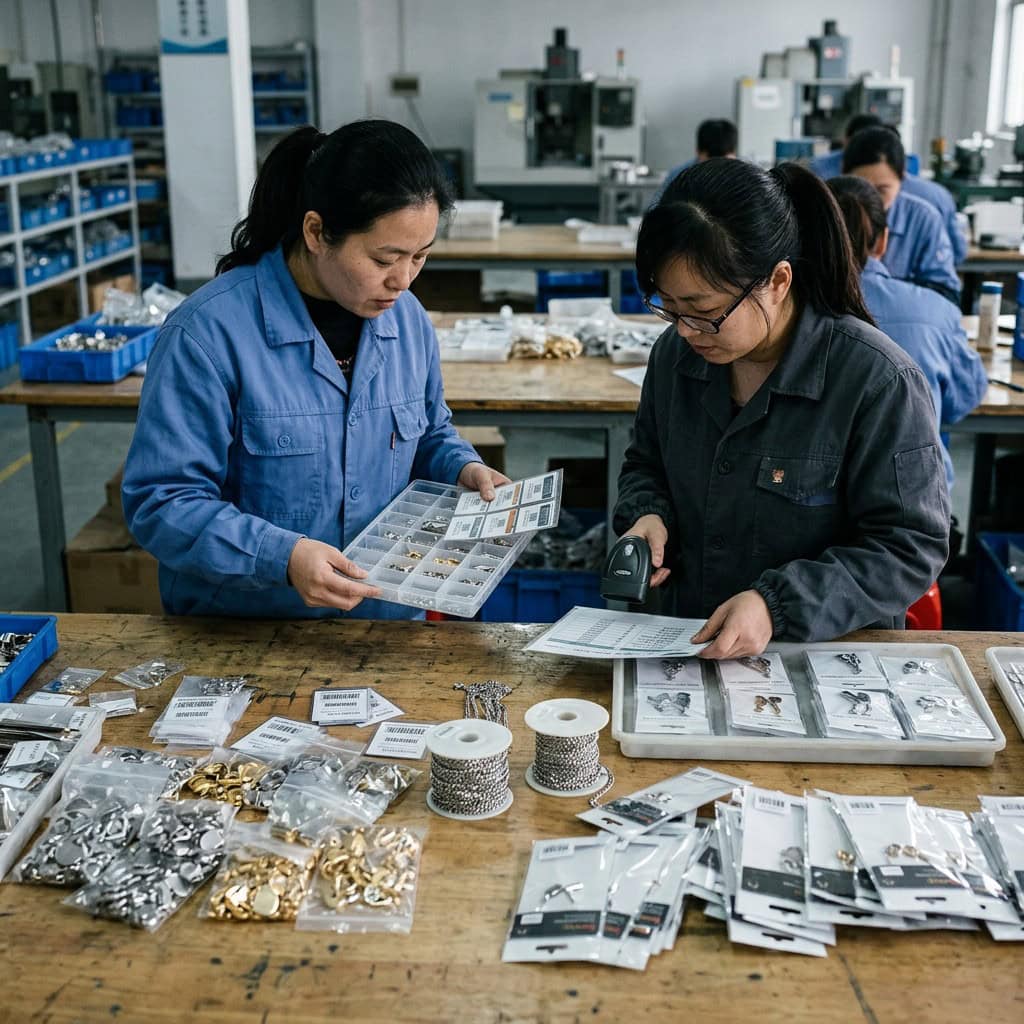
Build a Repeatable Collection, Not One Isolated Sample
Use Scenario
A European or North American jewelry brand plans an eight-SKU personalized pendant collection. The brief includes polished steel and 18K gold PVD, two matched chain lengths, front engraving, a back logo, jewelry cards, barcode labels, a gift-ready retail pack, and future replenishment. The projected order meets the normal OEM starting level, subject to allocation by style, color, and retail version.
Key Challenge
The collection uses shared visual proportions but different symbols and text. Hole position, bail clearance, pendant weight, chain movement, engraving readability, PVD color, barcode-to-SKU matching, and pack-out orientation must remain controlled. A visually accepted sample alone would not define every measurable characteristic needed for repeat production.
Chicolink Solution
We would create a project data sheet for each SKU, check the editable artwork, define dimensions and measurement references, select the production route, set 304 or 316L according to the brief, authorize steel and PVD color samples, match chain and connector specifications, establish the BOM and retail versions, produce samples, record revisions, and prepare the Golden Sample and control plan before bulk release.
Result
The planned output connects each sellable SKU to its current product file, material, color, chain, logo, retail version, inspection points, and shipment identity. This structure supports formal pricing, controlled sampling, first-article comparison, batch inspection, barcode verification, and later replenishment without relying on memory or unversioned reference images.
Stainless Steel Pendant Manufacturing FAQ
These answers address common questions before a pendant project begins. We set final specifications, pricing, sample scope, verification, and production timing after checking the actual product file, material, finish, order allocation, retail format, destination, and delivery requirement. Written project authorizations take priority over general website guidance.
Can you manufacture a pendant from a sketch?
Yes. We can work from a sketch, reference image, physical sample, 2D drawing, 3D model, or editable logo file. Before quotation, we identify missing dimensions, material, structure, process, finish, order, and retail information. Engineering, sample, tooling, and revision fees are set according to project scope.
Do you supply pendants without chains?
Yes. We can evaluate pendant-only components, pendants with separate chains, or fully assembled necklace products. For complete necklaces, the chain profile, length, clasp, extension chain, logo tag, connector, color, and packaging must be specified with the pendant.
Should I choose 304 or 316L?
The choice depends on product structure, use environment, destination, appearance, processing difficulty, verification, and price position. 316L generally offers improved pitting resistance but may increase forming, machining, welding, polishing, and correction difficulty. We set the material after assessing the complete brief.
What is your custom pendant MOQ?
The common OEM/ODM MOQ is 500 pieces per style. Ready-made or regular styles commonly start at 120 pieces per style. MOQ may be calculated by style, color, plating batch, packaging version, or other production condition, so mixed-color and mixed-version quantities require written confirmation.
How long does custom sampling take?
Custom OEM/ODM samples commonly require 25-30 working days after the necessary drawings, materials, tooling, color, and commercial conditions are approved. Complex structures, multiple revisions, stones, special plating, tests, or packaging samples may require additional time. Existing-style samples commonly require 3-7 working days.
Can you match our PVD gold color?
We can evaluate a physical color sample or controlled color reference and produce a plating sample. The specification should define substrate, polishing, base and top layers, target thickness, color tolerance, test conditions, surface protection, and replenishment plan. We do not describe plated products as permanently fade-proof.
How do you control sharp pendant edges?
Edge condition is reviewed during DFM, sample inspection, production, and final inspection. Drawings should define edge radius, chamfer, skin-contact areas, and acceptable finish. Laser-cut, stamped, cast, and CNC products require different deburring and polishing controls. Hazardous burrs or sharp projections are treated as critical defects.
What tests can you support?
Depending on the product and market, we can support dimensional, plating-thickness, color-difference, pull, salt-spray, artificial-perspiration, abrasion, nickel-related, lead, cadmium, stone-security, and other agreed tests. We set the standard, version, laboratory, sample quantity, cost, timing, and report scope per order.
Can you provide private-label packaging?
Yes. Options can include a product logo, logo tag, jewelry card, velvet pouch, gift box, care card, barcode, SKU label, FNSKU, and eCommerce pack-out. The customer provides authorized artwork, brand colors, dimensions, SKU data, current channel rules, order quantity, and delivery schedule.
Can you support third-party inspection?
Yes. We can arrange customer-appointed or authorized third-party inspection. We align the agency, booking process, inspection standard, AQL, defect definitions, required documents, report format, carton readiness, and release authority in advance. The schedule must allow correction before the planned shipment.