Stainless Steel Religious Jewelry Manufacturer for Global Brands
Develop faith-based collections with one Dongguan factory team covering engineering, sampling, plating, QC, private labeling, and repeat production.
Chicolink Jewelry manufactures stainless steel religious jewelry for brands, wholesalers, and retail programs. Send us authorized artwork, a technical file, an approved sample, or a collection brief. Before sampling, we review the religious details, structure, material, weight, process, finish, testing, packaging, quantity, and delivery requirements. Approved drawings and samples then guide bulk production, inspection, branded pack-out, and repeat orders through one documented workflow.
Build Religious Jewelry Collections Around Defined Sales Programs
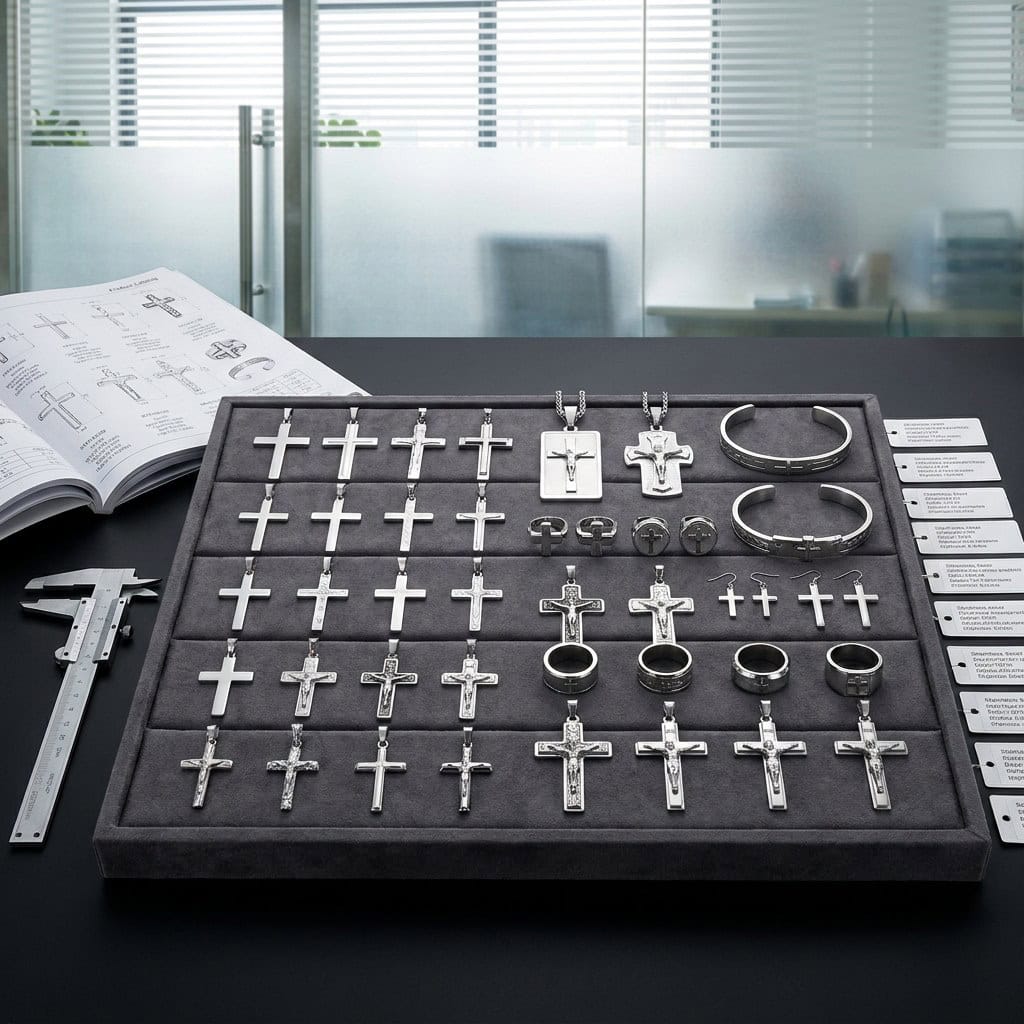
We build religious jewelry collections around product structure, sales channel, and production risk. Each approved SKU has defined artwork, dimensions, material, components, finish, quality points, packaging, and market requirements. This keeps cross necklaces, saint medals, scripture rings, faith charms, prayer-inspired pieces, and gift sets consistent as the collection moves from development to repeat production.
Cross and Crucifix Programs
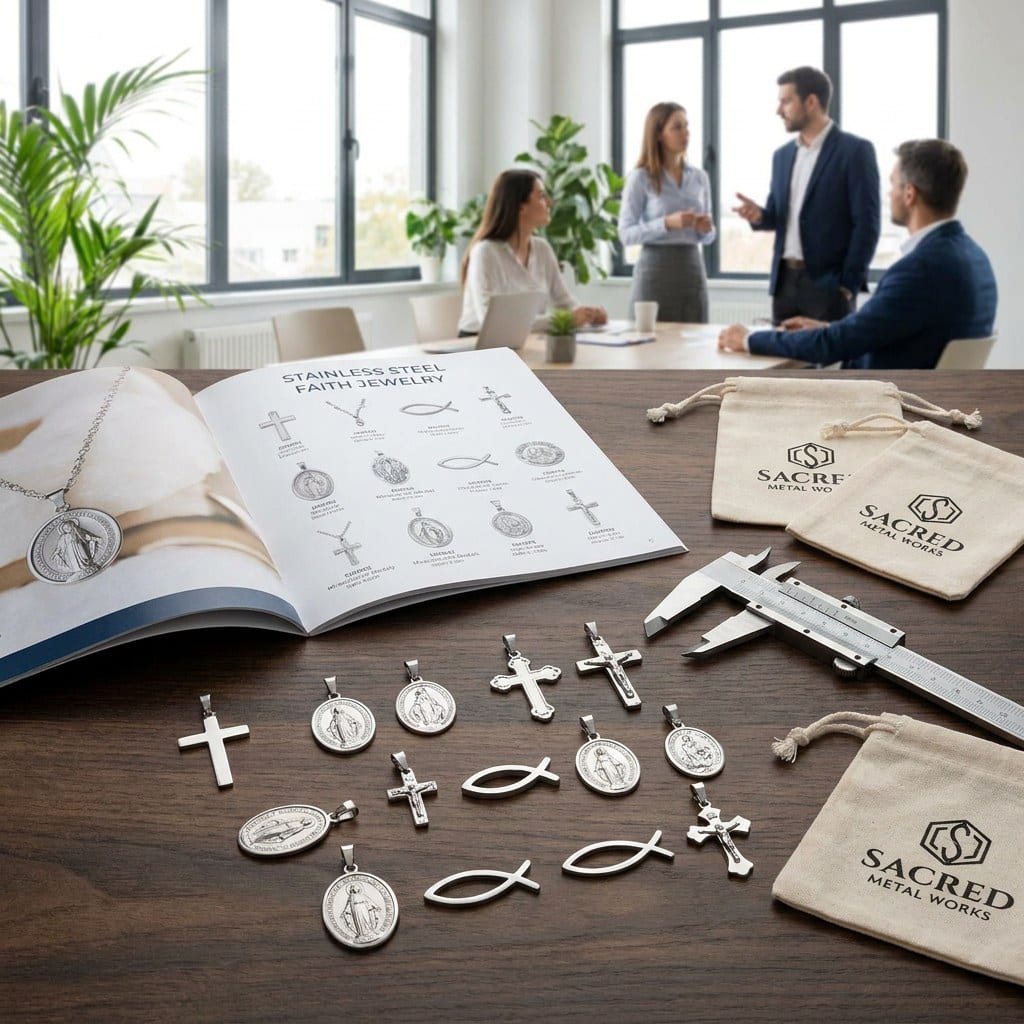
We develop minimalist crosses, crucifix reliefs, scripture crosses, men's pendants, rings, bracelets, earrings, charms, and coordinated sets. For each structure, we define symbol direction, proportions, relief, engraving, edges, pendant balance, chain interface, finish, and packaging. Our dedicated cross jewelry manufacturing program covers detailed cross-specific engineering, while this broader program coordinates cross products with your overall religious collection and channel requirements.
Saint and Angel Medals
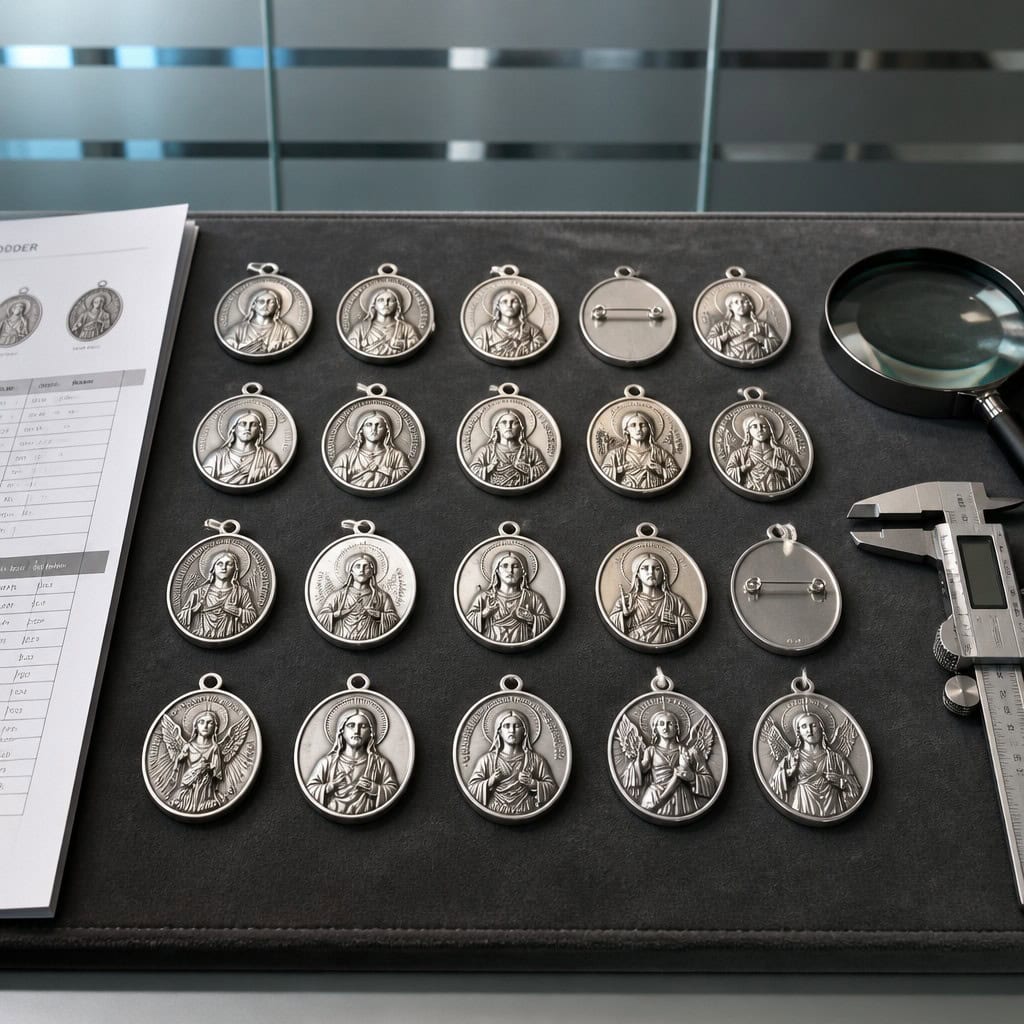
Saint portraits, guardian angels, devotional medals, shields, and commemorative medallions require approved artwork and controlled relief. We assess facial detail, clothing lines, halos, inscriptions, front-to-back orientation, medal thickness, bail position, polishing access, recess depth, and plating coverage. If the source image, wording, identity, or authorization is unclear, the item remains an open development question rather than an assumed production standard.
Scripture and Prayer Jewelry
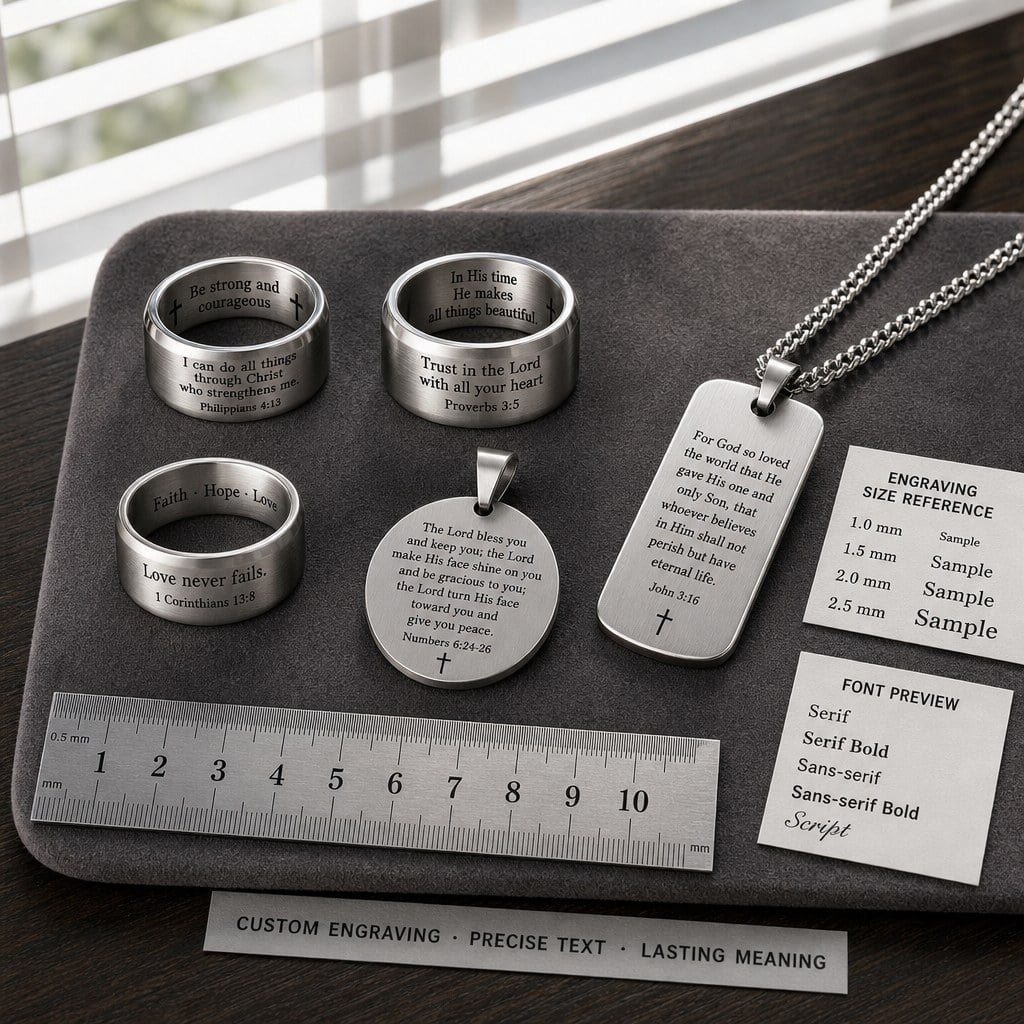
Bible verses, prayers, names, dates, coordinates, dedications, and short faith messages can be applied to rings, pendants, tags, bracelets, or gift pieces. We confirm the exact approved text, language, spelling, punctuation, font conversion, line breaks, engraving area, character size, depth, contrast, and reading direction. Fixed bulk artwork and variable personalization are treated as different quoting and production programs and approved separately.
Faith Rings and Signets
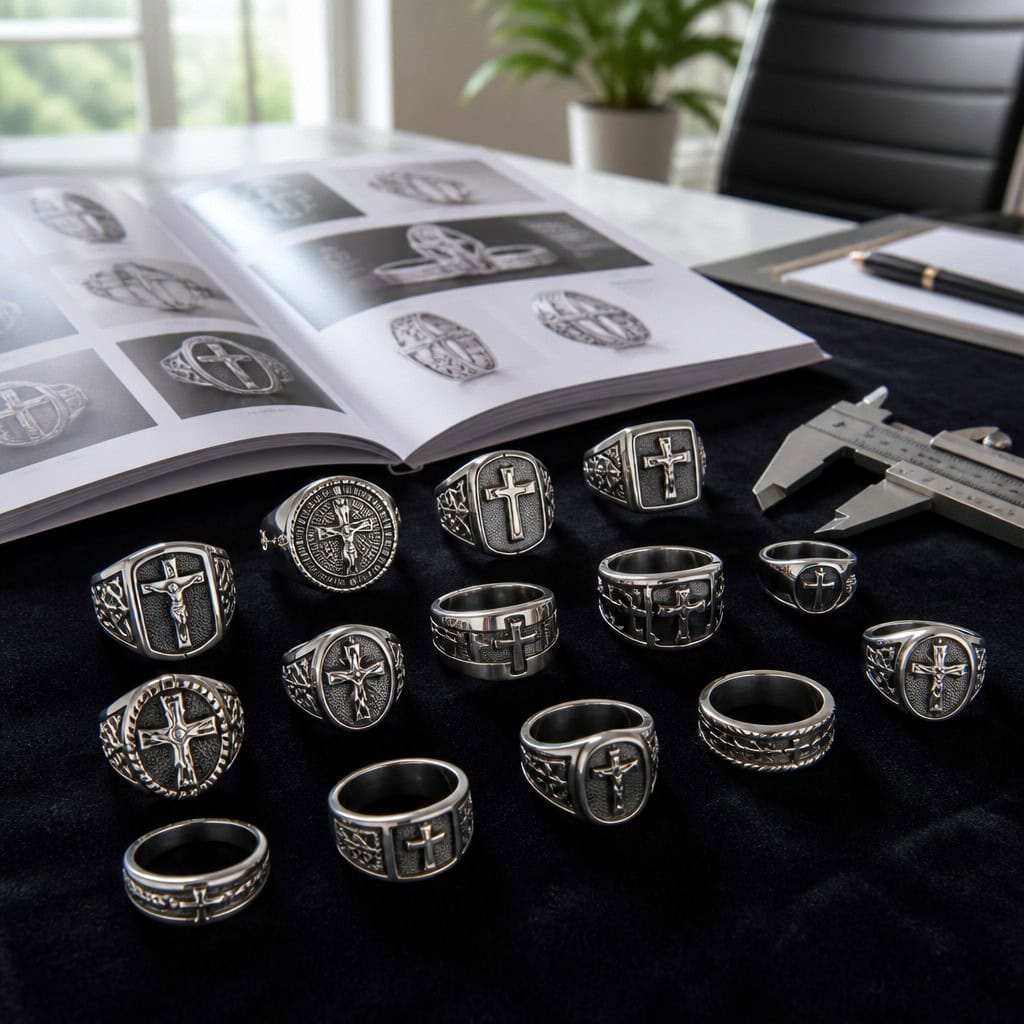
Religious bands, signet rings, prayer rings, symbol rings, and engraved inner bands require a defined size system and product-specific drawing. We control ring size, inner diameter, inner circumference, face dimensions, shank thickness, relief, engraving, stone seats, edge comfort, finish boundaries, and size assortment. Wide, open, adjustable, or non-round rings require sample-based fit confirmation rather than a simple size-table conversion across SKUs.
Prayer-Inspired Chains
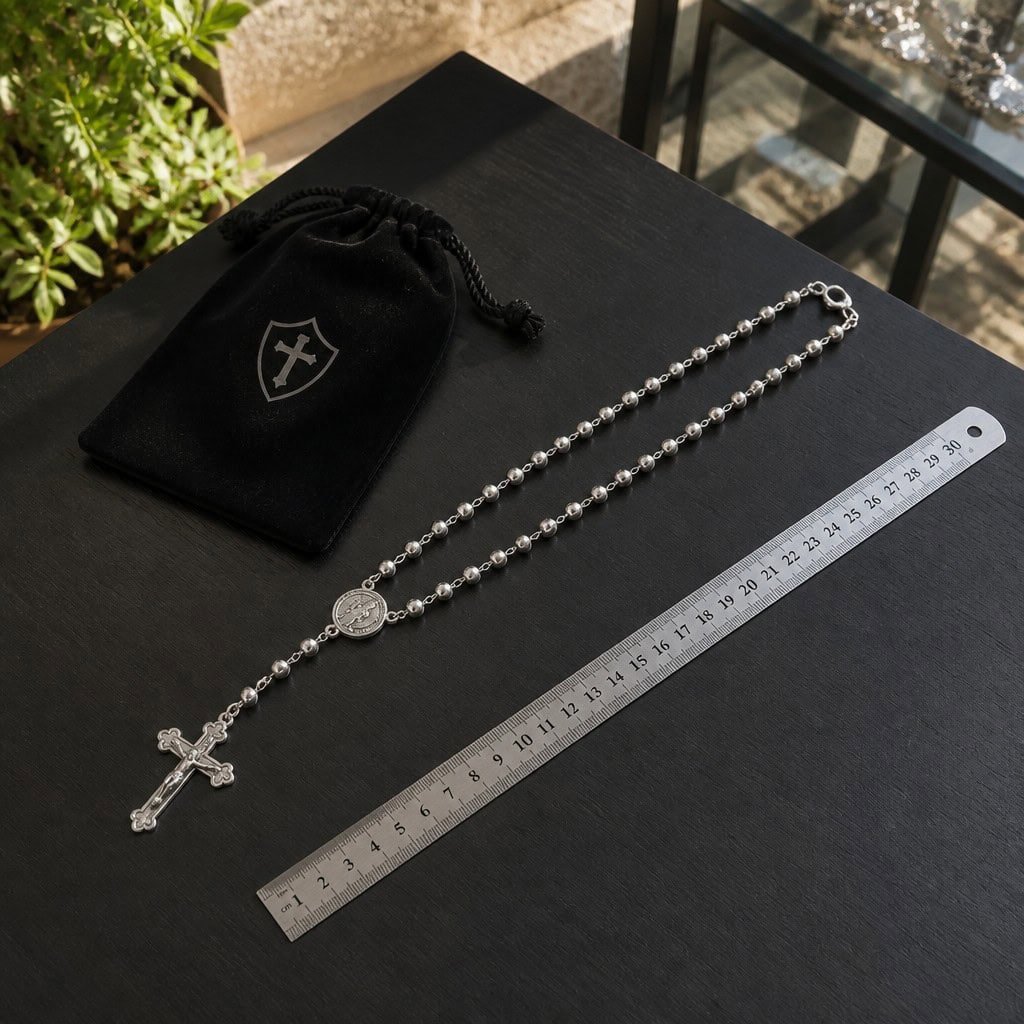
Rosary-inspired necklaces, bead-and-chain structures, symbolic stations, devotional bracelets, and multi-component faith pieces require a component-level specification. We confirm bead or charm count, sequence, spacing, connector direction, chain type, clasp, center piece, pendant interface, total length, assembly strength, and packing method. Religious layout and wording must be approved by the buyer before the sample is released as the approved production reference.
Branded Religious Gift Sets
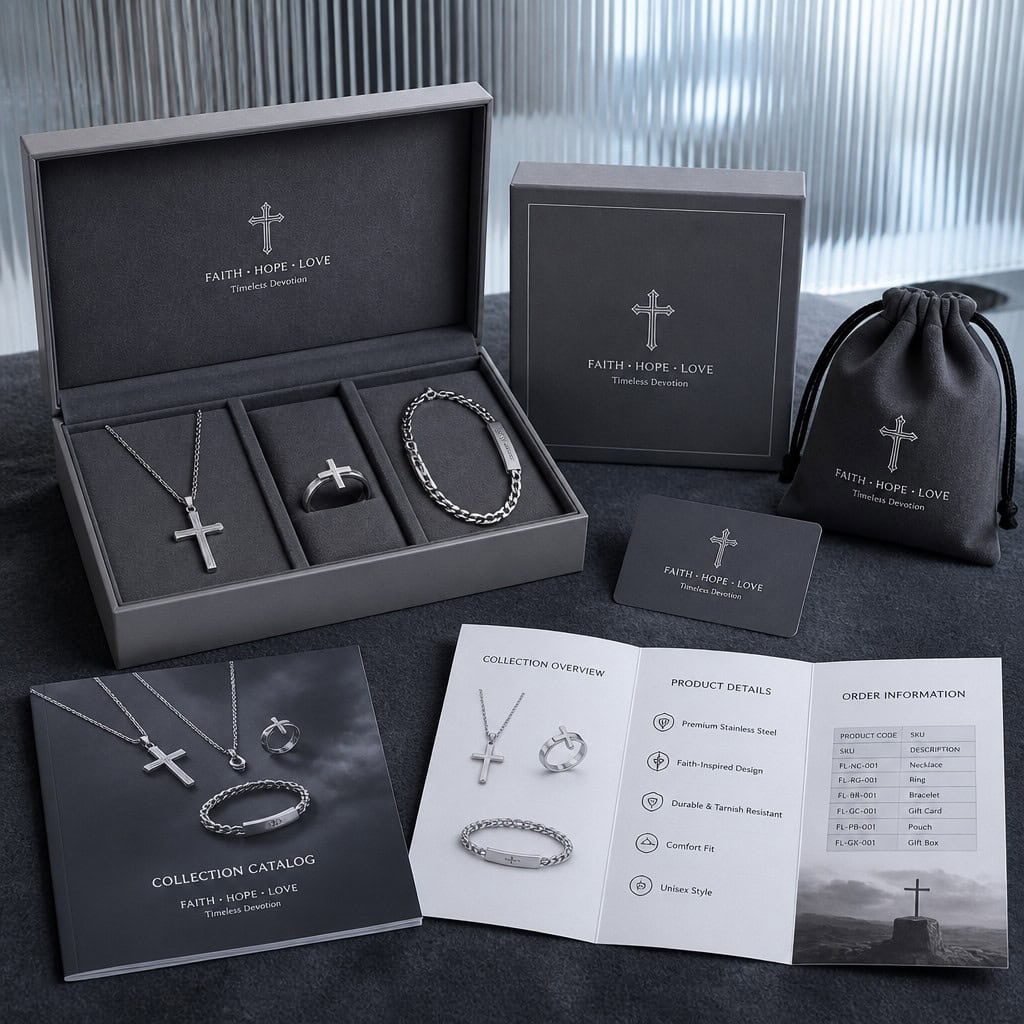
Combine necklaces, rings, bracelets, charms, cards, pouches, or boxes for church retail, boutiques, seasonal programs, corporate gifts, DTC launches, or distributor assortments. We plan set contents, color and size ratios, logo placement, story or care cards, barcode data, protective inserts, retail presentation, carton sorting, and missing-part controls. Every included SKU keeps its own drawing, BOM, inspection points, and approved packaging version.
Protect Religious Meaning Before Tooling and Sampling
Religious jewelry depends on accurate symbols, figures, text, orientation, and denominational details. Before CAD, tooling, engraving, or final quotation, we confirm the authoritative artwork, approved wording, intended product, target market, and authorized use. We document unresolved points for your written approval while our engineers assess structure, process access, detail retention, and manufacturing feasibility.

Approve Meaning, Direction, Text, and Rights First
- Authoritative artwork: Provide vector artwork, a controlled drawing, a licensed reference, or an authorized physical sample. A marketplace screenshot or low-resolution social image may support discussion but cannot serve as production artwork.
- Symbol identity: Confirm whether the design is a cross, crucifix, medal, saint portrait, angel, scripture piece, prayer symbol, denominational emblem, or another defined religious object. Similar visual forms may carry different meanings.
- Figure and orientation: Approve the front, back, left-right direction, face and body details, halo, garment, gesture, object placement, and any reverse-side imagery before relief work begins.
- Text accuracy: Confirm language, spelling, capitalization, punctuation, verse reference, line breaks, font, and reading direction. We convert fonts to production outlines and evaluate whether the text remains readable after engraving, polishing, and plating.
- Cultural and denominational review: We assess production feasibility; your team confirms theological, denominational, cultural, and market appropriateness.
- Intellectual property: The buyer must hold the right to use submitted logos, artwork, fonts, brand elements, and protected designs. We do not treat a public image as evidence of authorization.
- Revision control: We record the approved artwork number, drawing revision, text file, color reference, and sample together. Superseded versions are removed from purchasing, production, inspection, and packaging.
Define the Product Before Requesting a Production Quotation
We base each production quotation on information that can control drawings, samples, materials, manufacturing, inspection, packaging, and repeat orders. Our team converts the religious concept into measurable fields and records missing decisions as open items. An incomplete brief receives a preliminary engineering assessment, while the final specification follows the approved product structure and religious details.
| Specification Area | Information to Confirm | Religious Jewelry Risk Controlled |
|---|---|---|
| Product identity | Product type, SKU, symbol definition, intended wearer, sales channel, target market | Prevents artwork from being applied to the wrong structure or audience |
| Artwork authority | Vector file, controlled drawing, approved text, front/back direction, authorization | Controls symbol accuracy, wording, relief, engraving, and legal use |
| Overall geometry | Height, width, thickness, relief, cutouts, wall sections, target weight, tolerances | Controls appearance, strength, polishing access, cost, and process feasibility |
| Wearing interface | Bail, hole, chain, clasp, ring size, bracelet length, ear post, connector direction | Prevents poor fit, incorrect orientation, discomfort, or weak load paths |
| Material system | 304 or 316L body, chain and component materials, stones, resin, enamel, solid/hollow form | Links the product to processing, cost, inspection, and testing requirements |
| Visible surfaces | A/B/hidden surfaces, mirror, polish, brush, sandblast, texture, color, recess standard | Defines what the buyer will inspect and how finish differences are judged |
| Branding | Product logo, tag, card, pouch, box, care card, story card, barcode, SKU | Connects product development to retail and fulfillment execution |
| Order structure | Quantity by style, color, size, packaging version, sample quantity, reorder plan | Determines MOQ, plating batches, material planning, tooling, and schedule |
| Quality plan | Critical dimensions, color, strength, decoration, AQL, reports, third-party inspection | Aligns approval and bulk acceptance before production begins |
Select the Right Religious Jewelry Development Path
We select the development route according to your existing product definition and required exclusivity. Before quoting, we separate ready-style private labeling, buyer-led OEM execution, and Chicolink-supported ODM development. This keeps a stock recolor distinct from original tooling and keeps an early concept from entering production without engineering work. Each route records responsibilities, approvals, fees, and deliverables.
| Development Path | Buyer Provides | Chicolink Executes | Use Case and Commercial Notes |
|---|---|---|---|
| Ready style / white label | Selected SKU, quantity, color, logo, card, packaging, barcode, delivery target | Availability review, approved recolor or logo, packaging coordination, QC, pack-out, shipment | Supports market testing and replenishment; stock wholesale MOQ commonly starts at 120 pieces per style; availability and packaging MOQ require confirmation |
| OEM development | Controlled artwork, dimensions, material, finish, quantity, target market, tests, packaging | DFM, process route, costing, drawing confirmation, sample, revision control, golden sample, bulk production | Applies to defined buyer designs; custom MOQ commonly starts at 500 pieces per style, subject to structure, color, size, packaging, and test requirements |
| ODM development | Target customer, market, price position, religious direction, moodboard, sales channel, launch date | Product architecture, structure and process proposals, sample planning, set combinations, packaging direction, production preparation | Supports planned collections; scope, fees, development resources, exclusivity, and approval ownership require written confirmation |
Match Materials and Finishes to the Religious Design
We specify the body material, component materials, surface preparation, texture, plating, decoration, and protection as one product system. Selection follows the geometry, skin contact, weight, price position, quantity, market, testing, and repeat-order needs. Pendants, chains, clasps, springs, ear posts, connectors, stones, and decorative parts receive separate BOM specifications whenever their materials or processes differ.
| Decision | Chicolink Planning Basis | Important Conditions |
|---|---|---|
| 304 stainless steel | Practical for many sheet, wire, tube, chain, stamped, laser-cut, and selected cast products | Suitability depends on structure, use environment, target market, finish, and buyer requirements |
| 316L stainless steel | Its molybdenum content improves pitting resistance; suitable for premium or skin-contact products and buyer-specified programs | Higher processing difficulty can affect forming, cutting, welding, polishing, correction, cost, and timing |
| Component materials | Ear posts, springs, screws, magnets, clasps, jump rings, welding material, stones, and chains receive BOM-level specifications | A body-material claim does not automatically describe every component or test scope |
| Steel and textured finishes | Steel color, high polish, mirror, directional brush, satin, sandblast, or approved mixed surfaces | A/B/hidden surfaces, texture direction, edge rounding, recesses, and scratch protection must be defined |
| PVD/IP colors | 14K, 18K, or 24K gold-color references, rose gold, black, gun metal, or another approved shade | Final color, layer structure, thickness, rack points, tests, cost, and care conditions are project-specific |
| Stones and color details | CZ, glass, synthetic stones, shell, pearl, resin, paint, or approved enamel-like effects | Confirm dimensions, color, setting or adhesive, process sequence, allowed variation, and packing protection |
Choose the Manufacturing Route by Product Geometry
We select the manufacturing route from the product geometry, material form, quantity, tolerances, relief, surface access, and component interfaces. Before quoting, we assess casting, stamping, laser cutting, CNC, turning, welding, engraving, setting, and assembly options. The approved route is recorded with the drawing and sample plan so later process changes receive a new cost, quality, and approval review.
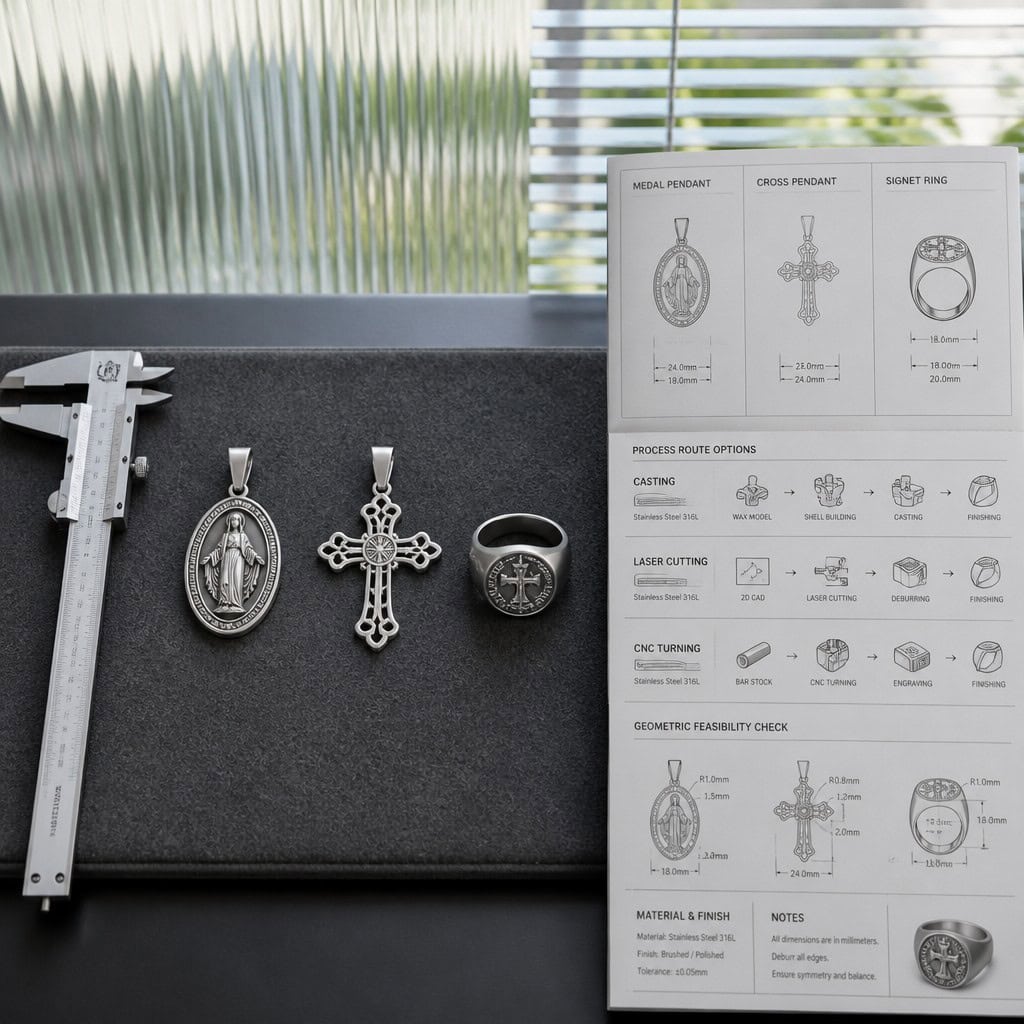
Build Each Structure With the Appropriate Process
- Flat symbols and cutout pendants: Laser cutting or wire cutting can support controlled outlines, letters, geometric crosses, tags, and flat icons. We evaluate material thickness, narrow bridges, hole-to-edge distance, heat effect, burr removal, edge polish, and post-cutting distortion.
- Relief medals and sculptural forms: Casting can support saint medals, crucifix figures, shields, dimensional symbols, and sculptural signets. We review master development, mold route, wax detail, heavy intersections, porosity risk, sprue and gate position, relief protection, polishing access, and recess cleaning.
- Precision rings and components: CNC or turning can support controlled profiles, grooves, screw or circular structures, precise seats, and selected signet details. Internal radii, tool access, machining time, burrs, and surface transitions are assessed before quotation.
- Thin repeated structures: Stamping or hydraulic forming can support suitable sheet pendants, tags, earrings, and high-volume shapes. Tooling, bend radii, hole position, edge condition, springback, and order continuity affect feasibility and unit cost.
- Connections and assemblies: Laser welding, closed rings, pins, clasps, bails, chains, stones, and decorative elements require a defined load path and assembly sequence. Welding access, heat effects, polishing, plating, movement, and functional inspection are planned together.
- Surface and detail application: Polishing, brushing, sandblasting, engraving, etching, stamping, stone setting, resin, or approved enamel-effect finishes are selected after the base structure is validated. Sequence matters because later operations can reduce text readability, alter dimensions, damage decoration, or expose unprotected surfaces.
Move From Approved Input to a Controlled Golden Sample
We use sampling to convert your design intent into a measurable production reference. Before a sample can release bulk production, we align the artwork, drawing, BOM, material, finish, text, components, quality requirements, packaging, and revision status. Open decisions remain documented, and superseded files cannot return to production because they look similar to the approved version.

Follow Seven Approval Steps Before Bulk Release
1. Project brief: Confirm product type, authorized artwork, dimensions, material, quantity, market, finish, tests, packaging, target cost, and required delivery date.
2. Engineering review: Classify the design as ready for sampling, requiring modification, requiring validation, or currently unsuitable. Record open buyer decisions and process risks.
3. Quotation and sample scope: Separate product, tooling, sample, decoration, testing, packaging, and logistics requirements. Sample fees normally apply; tooling and fee treatment follow the written agreement.
4. Controlled sample: Define whether the deliverable is a concept, structural, finish, functional, packaging, pre-production, or golden sample.
5. Measured review: Check dimensions, weight, text, relief, material, finish, color, chain fit, wearing interfaces, strength, decoration, logo, packaging, and unresolved deviations.
6. Revision control: Record each change against the drawing, BOM, artwork, color, or packaging version. Earlier unapproved files are removed from production use.
7. Golden sample release: Link the approved physical sample and photos to the effective production specification. The bulk-production first article, process QC, final inspection, packaging, and repeat orders follow this reference.
Control Religious Jewelry Risks at Defined Quality Gates
We place each inspection where the related defect can still be prevented or contained. Incoming material, first articles, polishing, plating, assembly, decoration, finished products, and packaging receive different checks. For every religious SKU, we link critical quality points to the drawing, approved sample, finish, function, test plan, and packaging instead of relying only on final visual inspection.
Artwork and Relief
Inspect symbol direction, figure identity, relief, text, engraving, front/back alignment, line continuity, recesses, and approved visual references before tooling and at the first article. A spelling error, reversed image, missing feature, or lost detail is contained before plating or bulk assembly makes correction more expensive.
Dimensions and Fit
Measure critical height, width, thickness, ring size, chain length, hole, bail, connector, ear post, bracelet length, stone seat, and assembly location using the defined datum and method. Flexible, adjustable, wide, or hollow structures receive a measurement condition that matches how the product is approved and used.
Surface and Color
Check burrs, scratches, dents, polishing, texture direction, welding marks, stains, plating coverage, shade, brightness, rack points, recesses, and local discoloration against the approved sample and surface zones. Mirror, brushed, sandblasted, antique, and PVD products use their agreed visual and instrumental criteria rather than one universal appearance rule.
Connections and Function
Verify bails, jump rings, chains, clasps, pins, springs, hinges, threads, ear posts, and assembled decorations at the locations that carry real use loads. We define the opening direction, welding or closure, movement, alignment, functional clearance, pull direction, and acceptance condition before destructive or repeated-use tests are assigned.
Stones and Decoration
We check stone type, size, color, quantity, orientation, setting, adhesive, surface height, and decorative boundaries. Retention tests follow the setting method and may include push, pull, probe, tape, or torque checks. We record permitted variation and acceptance criteria for each SKU before production.
Pack-Out Accuracy
Before packing, confirm product cleanliness, pair orientation, set completeness, spare parts, logo, card, pouch, box, care information, barcode, SKU, FNSKU, quantity, color, size, and carton sorting. Packaging errors can block retail, warehouse, or marketplace operations even when the jewelry itself is dimensionally and visually acceptable.
Plan Tests for the Product and Destination Market
We plan testing for the actual SKU, materials, color, components, use conditions, sales market, and quality agreement. Chicolink's internal defaults apply only when no higher written requirement exists. Your contract, approved drawing, approved sample, and test standard take priority. Before using a report for an order, we verify its sample, material, plating structure, color, method, date, issuing laboratory, and scope.
| Risk or Requirement | Chicolink Reference | Application Boundary |
|---|---|---|
| Dimensional control | Up to 20 mm: +/-0.15 mm; 20-50 mm: +/-0.20 mm; over 50 mm: +/-0.30 mm; ring inner diameter: +/-0.10 mm; chain length: +/-5 mm | Drawing and buyer requirements override defaults; critical holes and assembly positions may require tighter defined controls |
| Color difference | Delta E00 up to 1.5 for standard polished/mirror products and up to 2.0 for brushed, sandblasted, or antique products | Use the approved physical reference, defined instrument conditions, measuring locations, and visual rejection criteria |
| Plating thickness | Batch average target tolerance +/-10%; single-point tolerance +/-20%; main visible surface not below 80% of target | Test method, layer structure, points, and functional areas must be specified; total thickness cannot replace required individual layers |
| Pull strength | Five samples; 30 N small decoration/ear-post connections, 40 N bails/jump rings/clasps, 30 N necklace main structures, 60 N bracelet main structures; hold 10 seconds | Load direction and fixture must represent use; drawings, product risk, and buyer standards can require different loads |
| Artificial sweat | Internal default: 40+/-2 degrees C, 24 hours, pH 4.7+/-0.2 | Formula, exposure method, sample state, inspection, and color criteria must be agreed; the result is not a permanent no-tarnish guarantee |
| Salt spray | Internal default: 24 hours bare stainless steel, 48 hours plated/PVD, 72 hours high-corrosion programs or buyer requirement | Standard version, solution, pH, temperature, sample angle, cleaning, and acceptance must be defined |
| Nickel, lead, and cadmium | EN 1811, EN 12472, REACH-related or buyer-specified third-party testing can be supported as applicable | A report for one sample or color does not automatically cover another material, component, plating structure, batch, or market |
| US market review | California Proposition 65 and buyer-specific chemical, labeling, and retailer requirements may apply | Confirm product, exposure, distribution, buyer policy, and current legal requirements before testing or claims |
| RoHS and CE | Evaluated only when the product falls within the applicable regulatory scope | Ordinary non-electronic stainless steel jewelry must not be presented as automatically requiring or holding CE; RoHS is not a universal jewelry claim |
| Bulk inspection | Normal inspection, General Level II; Critical Ac 0/Re 1, Major AQL 1.0, Minor AQL 2.5 when no buyer plan is specified | Actual sample size and Ac/Re follow the approved AQL table, lot size, buyer standard, and inspection plan |
Prepare Religious Jewelry for Its Actual Sales Channel
We manage private labeling as part of the delivery specification. Each SKU connects to its religious artwork, brand files, card, pouch, box, instructions, barcode data, set configuration, and carton information. Because packaging has separate MOQ, sample, production, and approval timing, we develop it alongside the jewelry instead of waiting for production to finish.
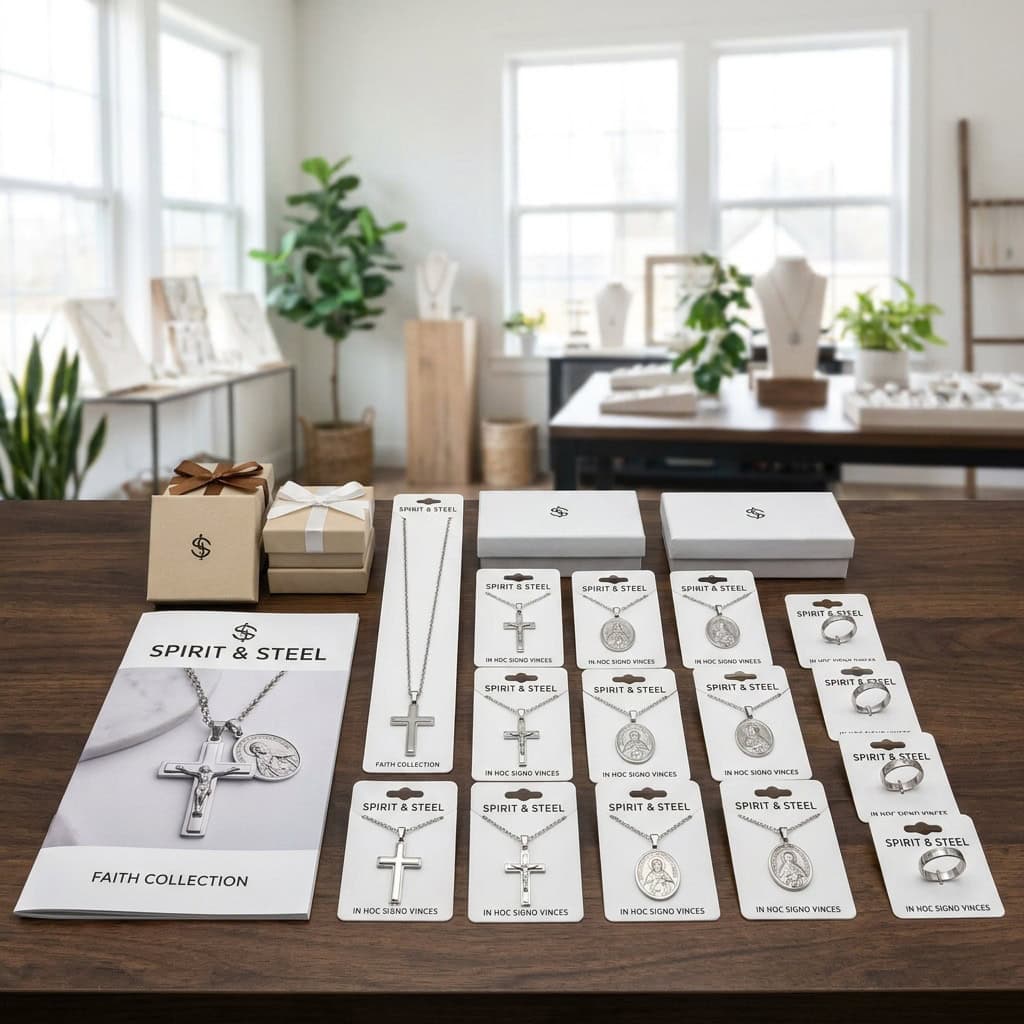
Religious Retail Stores
We configure hang-hole cards, product naming, denomination or theme identification, price-label space, barcode placement, gift boxes, story information, and display orientation for church shops, museum or cultural stores, boutiques, and retail chains. The product must remain secure and visible while the card, logo, wording, and assortment data stay consistent across related necklaces, rings, bracelets, charms, and sets through launch and replenishment.
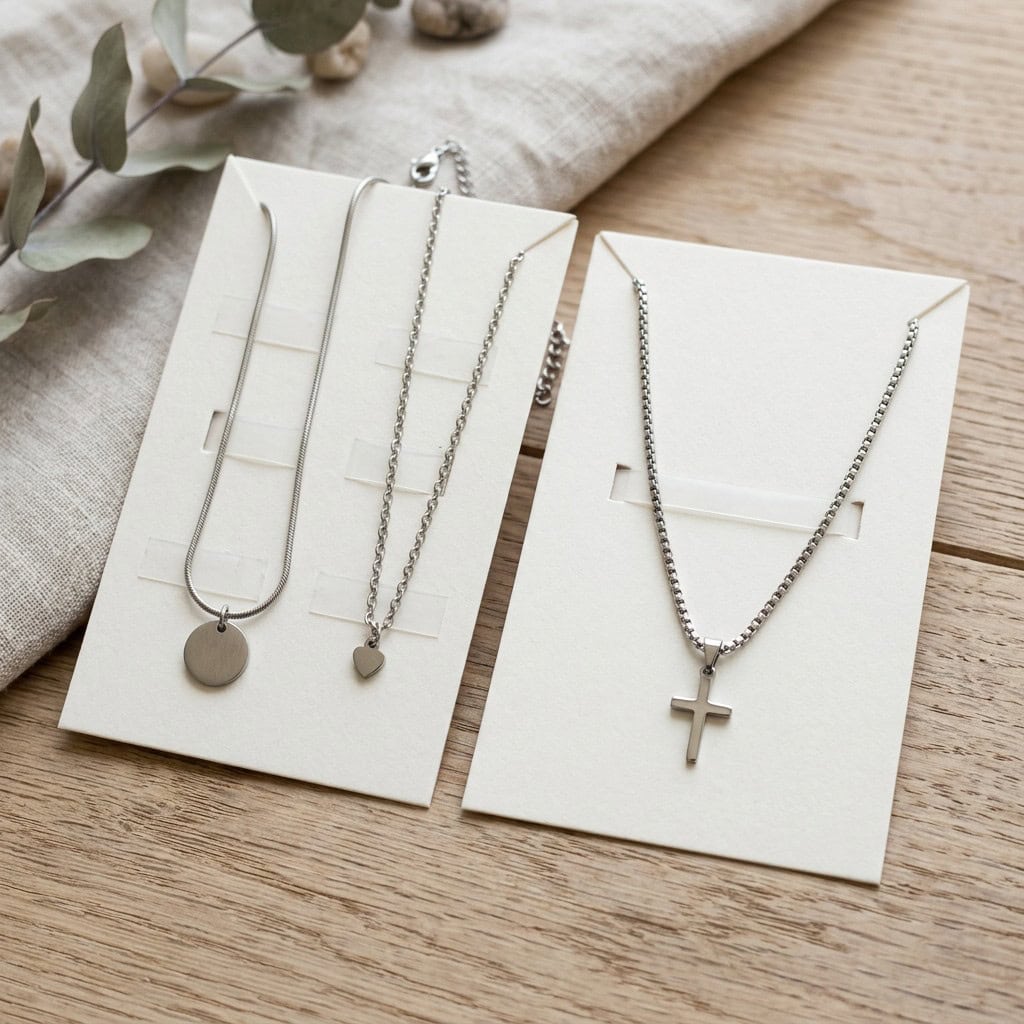
DTC Brand Delivery
We coordinate the jewelry, logo tag, pouch, box, story card, care card, thank-you message, collection name, QR code, and protective insert for an intentional unboxing sequence. Product claims and care wording must match the actual material and finish. Each packaging version is linked to its SKU so photography, customer service, pack-out, and repeat orders use the same approved product information and presentation.
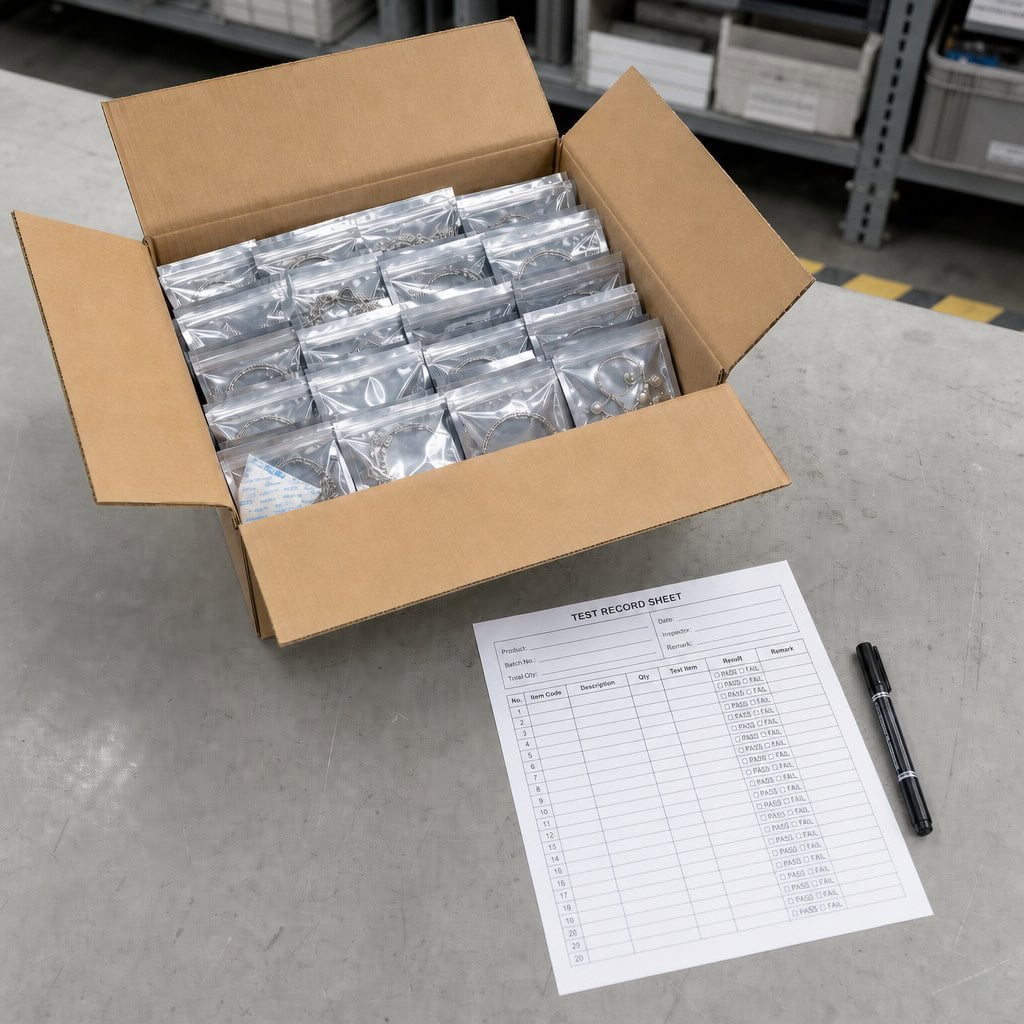
Marketplace Fulfillment
We configure individual bags, anti-scratch separation, sets, barcode, SKU, FNSKU, bundle labels, country or warehouse labels, and carton marks from your current platform instructions. We do not assume that a previous FBA or marketplace rule remains current. You provide the active label file and placement requirement, and we verify the packed product against the current approved version before shipment release.
Wholesale and Distribution
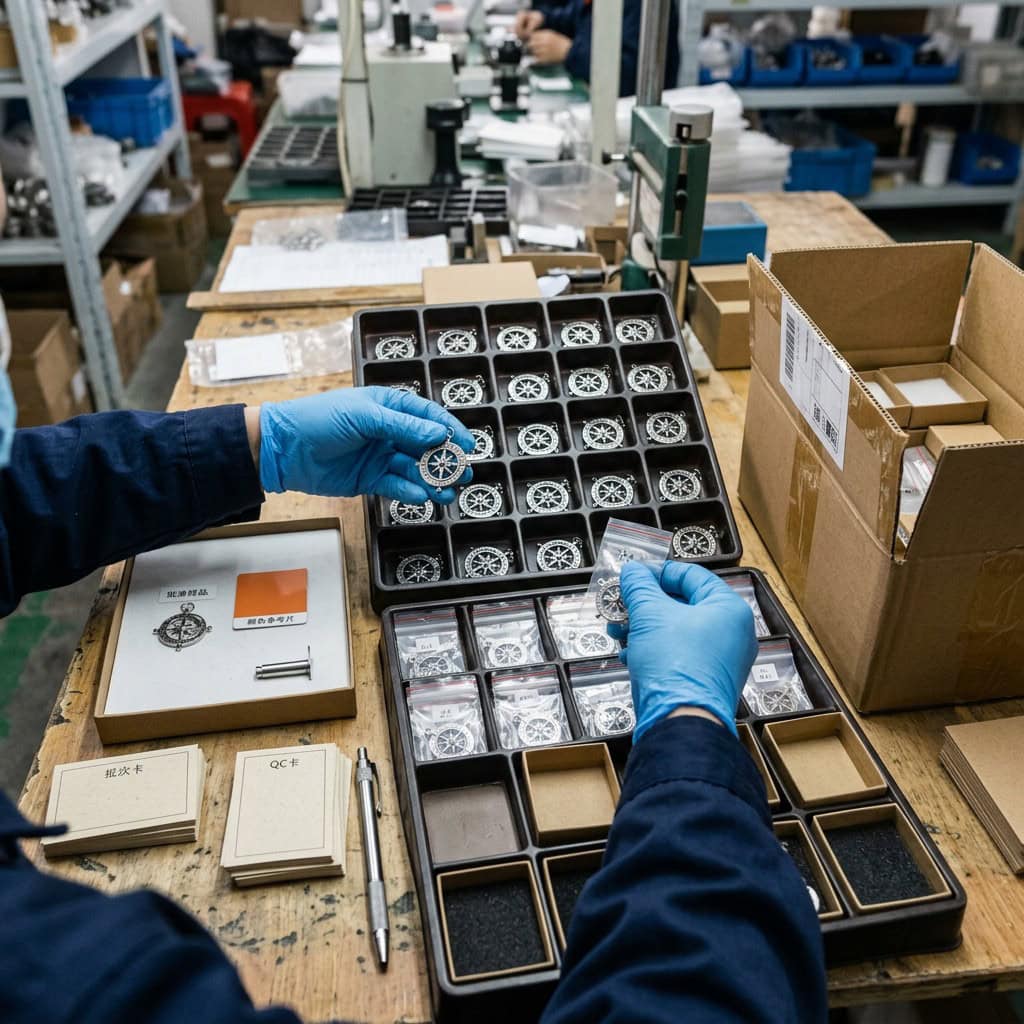
For wholesale and distribution, we prioritize protection, sorting, replenishment, and handling efficiency through individual bags, SKU labels, style and color separation, inner packs, carton quantities, carton marks, and packing-list alignment. We keep identification consistent, prevent mixed variants, protect finished surfaces, and define pack quantities so each shipment can move efficiently into wholesale replenishment or store allocation without repacking or resorting.
Plan MOQ, Sampling, Production, and Commercial Conditions
We calculate religious jewelry quotations from the structure, material, weight, tooling, finish, decoration, text, size range, packaging, testing, quantity, and delivery requirements. The values below are common Chicolink references, not fixed commitments. After reviewing the project, we confirm the final MOQ, fees, schedule, quantity tolerance, payment, trade term, and logistics responsibility in writing.
| Commercial Item | Common Chicolink Reference | Conditions to Confirm |
|---|---|---|
| Stock wholesale MOQ | 120 pieces per style | Inventory, color, size, mixed variants, packaging, and replenishment availability |
| OEM/ODM custom MOQ | 500 pieces per style | Structure, material, tooling, plating batch, color, size assortment, decoration, packaging, and test requirements |
| Existing-style samples | Usually 3-7 working days | Stock, approved recolor, logo, packaging, quantity, and shipping arrangements |
| Custom OEM/ODM samples | Usually 25-30 working days | Engineering closure, tooling, material, relief, engraving, plating, stones, revisions, and packaging samples |
| Existing-style bulk | Usually 20-30 working days | Availability, quantity, color, packaging materials, inspection, holidays, and shipping handover |
| Custom OEM/ODM bulk | Usually 25-45 working days | Starts from approved specifications and sample; quantity, tooling, material, plating, packaging, testing, and inspection affect timing |
| Sample and tooling fees | Sample fees normally apply; tooling depends on the selected production route | Any refund or credit arrangement is stated in the written quotation |
| Quantity tolerance | A common reference is approximately +/-5% | Agree acceptable overage/shortage, invoicing, residual goods, and additional freight before production |
| Payment reference | 50% deposit and 50% balance before shipment | Final ratio, method, credit terms, and documentary requirements depend on the customer, order, contract, and approval |
| Trade and logistics | EXW, FOB, CIF, DAP, and DDP can be supported | Destination, postcode, cartons, dimensions, weight, tax, insurance, documents, and required arrival date must be confirmed |
Resources for Repeatable Religious Jewelry Supply
We support repeat supply with controlled people, equipment, files, processes, inspections, and packaging. The evidence below shows how each resource supports religious jewelry production. You may request a factory audit or arrange third-party inspection. We confirm project capacity and timing after reviewing SKU complexity, quantity, current production load, approval timing, testing, packaging, and delivery requirements.
Design and Engineering
6 jewelry designers and 3 jewelry engineers support style development, drawings, structural review, process selection, sample evaluation, and production preparation. For religious jewelry, the team translates approved symbols, figures, wording, dimensions, relief, interfaces, and finish requirements into manufacturable specifications. We assign these resources to defined commercial projects while your team retains approval of religious accuracy, authorization, and final artwork before tooling and production.
Integrated Manufacturing
The 5,500+ square meter Dongguan factory has 400+ employees and factory-wide monthly capacity exceeding 200,000 pieces. Documented processes include CNC, casting, laser cutting, laser welding, stamping, bending, drilling, polishing, engraving, setting, assembly, and packaging. The confirmed route depends on the religious product geometry and approved specification rather than forcing every design through the same equipment sequence for each SKU.
In-House Plating
Chicolink operates an in-house plating workshop with six PVD vacuum coating machines and controlled PVD/IP, wet electroplating, and other approved electroplating processes. Specifications, color references, process records, inspection, and batch information remain within the manufacturing program. In-house control improves coordination, but color, layer structure, thickness, test conditions, handling, care, and acceptance still require project-specific written approval for each production SKU.
Production Quality Gates
IQC, IPQC, FQC, plating inspection, and pre-packing inspection address different stages of the order. Religious artwork, dimensions, relief, text, welding, stones, plating, components, function, branding, labels, and packaging are checked against the applicable drawing, BOM, approved sample, color reference, and inspection plan. Buyers can align these controls with their own AQL or third-party inspection requirements for shipment release and repeat orders.
Batch Traceability
Order number, SKU, production batch, material source, manufacturing record, plating batch, inspection, nonconforming product, packaging, carton, shipment, and complaint information can be connected through the traceability system. When a repeat-order issue occurs, the objective is to identify the affected scope and process history across potentially affected orders rather than relying on memory or comparing uncontrolled photographs from different production periods.
Export and Pack-Out
Chicolink supports branded packaging, barcode and SKU labeling, Amazon FBA packaging coordination, commercial invoices, packing lists, carton marks, inspection coordination, and shipment handover under agreed trade terms. The buyer provides current destination, platform, legal, and warehouse requirements. Product, packaging, test, and document deadlines are scheduled together so a completed jewelry batch is not delayed by an unapproved box, label, or report.
Religious Jewelry Manufacturing FAQ
We use these answers to clarify common project boundaries for religious artwork, engineering, validation, and repeat supply. Final requirements follow the approved drawing, sample, quotation, quality agreement, target market, and order documents. Send your artwork and commercial scope for a product-specific review.
Which religious jewelry categories can Chicolink manufacture?
We evaluate crosses, crucifixes, saint or angel medals, scripture pieces, faith rings, charms, prayer-inspired chains, bracelets, earrings, tags, and coordinated sets. We add a category to the formal quotation or production scope after engineering review, supply-chain confirmation, or sample validation. Special structures receive their own drawing, BOM, process route, inspection points, and packaging.
Can you reproduce detailed scripture and religious figures?
We can assess engraving, etching, casting relief, CNC details, approved stamping, resin, enamel-like effects, or other suitable methods. Feasibility depends on product size, minimum line width, character height, relief depth, tool and polishing access, plating coverage, and required readability. We may recommend enlarging text, simplifying details, changing the process, or producing a validation sample before confirming bulk feasibility.
Can we submit online images as design references?
Online images can support design discussion, but they do not prove ownership or provide a controlled production file. The buyer must have authorization for submitted designs, logos, fonts, images, and protected religious artwork. Before development, we require an approved source, clear dimensions, confirmed text, intended changes, and written authorization. We do not treat public availability as permission to copy a protected product.
Is 316L required for every religious jewelry product?
No. We select 304 or 316L according to product structure, material form, processing route, use environment, target market, buyer specification, testing, cost, and positioning. Components such as chains, clasps, springs, ear posts, screws, connectors, or welding material may use separate approved materials. The material grade must be recorded at SKU and component level rather than inferred from appearance.
How are repeat-order colors kept consistent?
We retain the approved SKU version, physical color reference, substrate, preparation, texture, plating structure, process and batch information, measuring or viewing condition, and inspection requirements. A repeat batch is compared with the controlled reference. Exact visual identity cannot be assumed from a color name or photograph, so acceptable tolerances and surface zones should be agreed before the first bulk order.
Does one test report cover every style and color?
Usually not. Report scope depends on the named sample, body and component materials, plating structure, color, production condition, test method, standard version, issuing laboratory, date, and target market. A result for one pendant or color must not be expanded to an untested chain, clasp, component, finish, batch, or product family without a justified technical and regulatory review.
Can you create branded religious jewelry packaging?
Yes. Projects may include product logos, tags, jewelry cards, pouches, boxes, story cards, care instructions, barcodes, SKU labels, FNSKU labels, sets, and carton marks. Packaging MOQ, samples, cost, production time, label data, material, dimensions, and placement require separate approval. Religious wording and claims on packaging remain subject to buyer approval and target-market requirements.
How many sample revisions are included?
Revision scope depends on the quotation and the cause of the requested change. We record feedback against dimensions, material, color, text, relief, structure, stones, logo, function, and packaging. A correction for failure to meet an approved specification is different from a buyer-requested design change. Additional tooling, samples, finish changes, or repeated revisions may affect fees and timing and require written approval.
Can we arrange audits or third-party inspections?
Yes. Chicolink supports factory audits and third-party quality inspection. Please confirm the inspection company, standard, lot definition, sample level, AQL, tests, packaging checks, document requirements, date, and release authority early enough for scheduling. Schedule the inspection early and agree how findings, corrective work, reinspection, and shipment release will be handled.
What information produces the most accurate quotation?
Provide authorized artwork, dimensions, material, quantity by variant, finish, branding, packaging, target market, testing needs, target cost, and delivery date. We record any missing decision as an open item before issuing the final quotation.