Original designs are one of the most valuable assets a jewelry brand can build. They help your products stand out, make your brand recognizable, and give customers a reason to choose you over competitors.
But creating an original design is only half the job. You also need to protect it, especially when working with outside manufacturers.
Think about how much goes into developing a new collection. You spend time exploring ideas, creating samples, refining details, and preparing for launch. Then you share your designs with a manufacturer to bring them to life. What happens if those designs are later used for another customer’s order or appear online before your collection launches?
These risks are manageable, but they’re much easier to prevent than to deal with afterward. Whether you’re starting your first jewelry brand or managing an established collection, understanding design protection will help you make smarter manufacturing decisions.
1. Why Are Original Designs a Competitive Advantage for Jewelry Brands?
1.1 How Original Designs Help Jewelry Brands Stand Out
Original designs give customers a reason to choose your jewelry beyond price. This matters in a market where shoppers can find hundreds of similar necklaces, bracelets, and rings with just a few clicks. When products look almost identical, price often becomes the deciding factor. A distinctive design changes that. It might be a recognizable pendant shape, an unusual texture, or a consistent style that customers associate with your brand. Over time, these details help build recognition and encourage repeat purchases. For wholesalers and private label jewelry brands, exclusive designs can also make products more attractive to retail partners looking for something different. Instead of competing only on price, you’re offering jewelry customers can’t easily find elsewhere.
1.2 What Business Value Is Behind an Original Jewelry Design?
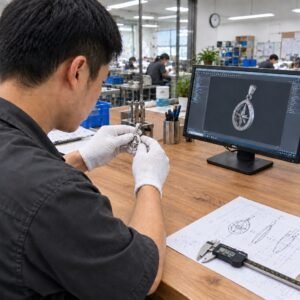
An original jewelry design represents much more than the cost of producing the finished piece. Behind a custom stainless steel bracelet, for example, there may be weeks of research, sketching, 3D modeling, sampling, and revisions. You might adjust the bracelet’s thickness for comfort, change its clasp for easier use, or test different finishes before approving production. Experienced jewelry manufacturers also review whether a design can be produced consistently, including details such as component strength, polishing access, and surface finishing. Then come photography, packaging, and marketing. All of these steps contribute to the product’s commercial value. A successful design can also lead to matching pieces, new collections, and repeat orders. Protecting that design means protecting the investment and future opportunities it represents.
1.3 Why Can Design Leaks Damage Long-Term Brand Value?
Unauthorized design leaks can reduce product exclusivity, weaken a launch, and put pressure on your pricing. Imagine preparing a new collection for the holiday season, only to discover similar products being sold before your official release. Customers may no longer see your designs as new, and lower-priced alternatives could make it harder to maintain your intended retail price. Repeated exposure can also make your brand less distinctive over time. Of course, not every similar piece is an infringement. Jewelry trends overlap, and common styles are often available from multiple suppliers. The real concern is unauthorized use of designs that belong to your brand. Protecting those designs helps preserve the competitive advantage you’ve worked to create.
2. What Design Protection Risks Can Arise When Working With Jewelry Manufacturers?
Custom jewelry manufacturing requires sharing design information with suppliers. That’s a normal part of the process, but it creates several areas where brands should establish clear boundaries. Here are five risks worth understanding before you begin production.
2.1 Unauthorized Use of Design Drawings and 3D Files
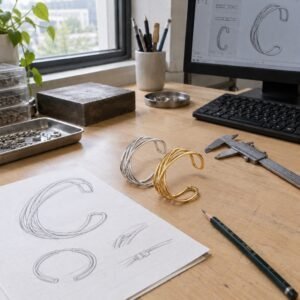
CAD drawings and 3D models contain the technical information needed to manufacture jewelry, including dimensions, shapes, structural details, and sometimes production specifications. These files can make it much easier to reproduce a design, which is why unauthorized access or reuse is a serious concern. For example, a manufacturer might receive your pendant model for sampling but later use it for another order without permission. To reduce this risk, your agreement should specify who can access the files, what they can be used for, and whether they must be returned or deleted after the project. Sharing a design file for manufacturing does not, by itself, mean you’re transferring ownership of the design.
2.2 Samples or Finished Products Used for Other Customers
Exclusive samples and finished products should not be offered to other customers without authorization. A physical sample can reveal enough information to reproduce a jewelry design, even without the original CAD file. Problems may arise if a manufacturer places your custom necklace in its general catalog, displays it in a showroom, or sells additional units beyond your approved order. One useful safeguard is to identify an approved master sample, sometimes called a golden sample, which serves as the reference for production and quality inspection. This helps both parties distinguish the approved product from prototypes or other similar styles. The key is to clearly identify which designs are exclusive to your brand and restrict their unauthorized reproduction, display, or sale.
2.3 Reuse of Custom Jewelry Molds
Custom molds and tooling should have clearly defined ownership and usage rights before production begins. Depending on the jewelry design, a manufacturer may use casting molds, stamping dies, or other specialized tooling. Once these tools are developed, they can make repeat production faster and more consistent. However, they may also allow an exclusive design to be reproduced for another customer if their use isn’t properly restricted. One thing new buyers should remember is that paying a mold fee does not automatically establish every ownership right. Your manufacturing agreement should identify who owns the tooling, who may use it, where it’s stored, and whether it can be transferred when you change suppliers. These details are especially important for designs you plan to reorder over several years.
2.4 Early Disclosure of Unreleased Jewelry Collections
Unreleased jewelry designs should remain confidential until the brand authorizes their disclosure. A manufacturer might want to photograph a new sample for social media, display it at a trade show, or use it in a sales presentation. Even if the intention is harmless, early exposure can interfere with your product launch. This is particularly important for seasonal collections, limited editions, and coordinated marketing campaigns. Make sure your supplier understands that prototypes, product photos, and unreleased designs cannot be published or displayed without your approval. It’s also worth confirming that the same rule applies to outside production partners who may see the products during development.
2.5 Design Exposure Through Subcontracted Production
Subcontracting can increase the number of people who have access to your designs, so confidentiality requirements should extend beyond your main manufacturer. Jewelry factories sometimes work with outside specialists for polishing, plating, stone setting, or other production processes. This is common and isn’t necessarily a problem. However, every additional handoff creates another point where design information must be managed. Working with a manufacturer that handles key processes in-house can reduce the need to transfer products and specifications between companies. For example, an in-house PVD/IP plating workshop allows color development and plating inspections to be coordinated directly with the main production team. This doesn’t replace confidentiality controls, but it can simplify oversight. Ask your supplier which processes are outsourced and how external partners are required to handle confidential information.
3. Why Aren’t Trust and Verbal Promises Always Enough?
3.1 Can a Good Supplier Relationship Replace a Written Agreement?
A good supplier relationship is valuable, but it shouldn’t replace a written agreement. Even manufacturers with good intentions may have different ideas about what they’re allowed to do with customer designs. For example, a supplier might believe it’s acceptable to show completed jewelry in its portfolio, while you expect the entire project to remain confidential. Without clear terms, both sides may think they’re acting appropriately. A written agreement removes much of that uncertainty by explaining the boundaries from the start. It isn’t about assuming your supplier will do something wrong. It’s about making sure everyone understands the same rules, especially as your business grows and more people become involved.
3.2 What Problems Can Arise From Verbal Agreements?
Verbal agreements can leave important details open to interpretation. Suppose you tell a manufacturer, “This bracelet is exclusive to our brand,” and they agree. Does that mean the factory can’t produce an identical bracelet for another buyer? What about a version with a different finish or a slightly modified shape? If those details aren’t documented, disagreements can be difficult to resolve. Verbal agreements may have legal significance in some situations, but proving their exact terms is often harder than referring to a signed contract. Written agreements, approved specifications, and saved communications provide a clearer record of what both parties accepted.
3.3 Why Should Design-Use Rules Be Set Before Production?
Design ownership and usage restrictions should be agreed upon before you share sensitive files or authorize development work. Once detailed drawings, samples, and molds have been distributed, controlling their use becomes more difficult. At a minimum, confirm who owns the original design, whether the manufacturer can reuse it, how exclusivity works, and what happens to project materials when production ends. If the factory will create new CAD files or make significant design adjustments, clarify the ownership of that work as well. These conversations are a normal part of professional custom manufacturing. Addressing them early helps prevent misunderstandings without interrupting production later.
4. How Can Jewelry Brands Protect Their Original Designs?
The strongest approach combines appropriate legal agreements with practical manufacturing controls. Different tools protect different interests, so it’s important to understand what each one actually does.
4.1 Non-Disclosure Agreements (NDA)
A Non-Disclosure Agreement (NDA) establishes rules for handling confidential information. In jewelry manufacturing, this may include sketches, CAD files, product specifications, pricing, and unreleased collection details. An NDA typically defines what information is confidential, who may receive it, and when disclosure is permitted. However, confidentiality and design ownership are separate issues. An NDA does not automatically transfer intellectual property rights or prohibit every possible use of a design. If you want to prevent a manufacturer from producing your jewelry for other customers, that restriction should be clearly covered by the agreement. The wording matters more than the document’s title.
4.2 Non-Disclosure, Non-Use, and Non-Circumvention (NNN) Agreements
An NNN agreement addresses three specific types of business risk: Non-Disclosure restricts unauthorized sharing of confidential information; Non-Use restricts using protected information outside the agreed purpose; and Non-Circumvention restricts certain attempts to bypass the brand in its protected business relationships. These agreements are often discussed in connection with manufacturing in China. For jewelry brands, non-use provisions can be particularly relevant because a supplier could potentially reproduce a design without sharing the original files with anyone else. However, an NNN agreement is not automatically enforceable simply because it includes these three terms. Its effectiveness depends on the actual provisions, applicable law, and circumstances. For valuable cross-border projects, have a qualified lawyer prepare or review the agreement for the relevant jurisdiction.
4.3 Intellectual Property and Design Rights
Intellectual property protection can help brands establish legal rights over qualifying designs and brand identifiers. The main options serve different purposes:
Design patents and registered designs protect eligible aspects of a product’s appearance. In the United States, a design patent can protect a qualifying new, original, and ornamental design. In the European Union, eligible product appearances can be protected through registered EU designs, while certain designs may qualify for more limited unregistered protection.
Copyright may protect original artistic expression, depending on the applicable law. However, not every jewelry shape, common style, or functional feature qualifies.
Trademarks protect qualifying brand identifiers, such as names and logos. They help customers recognize your brand but do not automatically protect every product design.
These rights vary by jurisdiction. A registration in one country does not necessarily provide protection in another. Timing is also important: publicly disclosing a design before filing can affect eligibility, although some jurisdictions provide grace periods. If you’re developing a collection you want to protect, review your filing options before launch. Official guidance is available from the USPTO, EUIPO, and WIPO.
4.4 Design Ownership and Usage Restrictions in Manufacturing Contracts
Your manufacturing contract should clearly establish who owns the designs and what the factory is allowed to do with them. This is particularly important in OEM and ODM projects, where the brand and manufacturer may both contribute to development. For example, you might provide the original concept while the factory creates production-ready CAD files, reviews manufacturing feasibility, and modifies certain details to improve strength or assembly. Those contributions should be addressed before the work begins.
The most important contract terms generally include:
Design ownership: Identify who owns the original designs, technical files, and agreed development work.
Usage restrictions: Define whether the manufacturer can reproduce, modify, display, or sell the designs outside your approved orders.
Product exclusivity: Specify which products are exclusive, including any agreed restrictions on variations or modifications.
Mold and tooling rights: Establish ownership, permitted use, storage, transfer, and return arrangements.
End-of-project obligations: Define how confidential files, samples, molds, and unused materials will be handled.
If you work with freelance designers or outside design agencies, confirm that you have the necessary rights to the work they create before sending it to a manufacturer. The contract should also distinguish your proprietary designs from the factory’s pre-existing designs, standard components, and general manufacturing knowledge. This keeps ownership clear without creating unnecessary restrictions.
4.5 Supplier Information Management and Subcontractor Controls
Confidential designs should be accessible only to people who need them for authorized work. In practice, this means controlling access to CAD files, keeping customer projects organized, identifying client-specific samples and molds, and managing information shared with subcontractors. A structured development process can make these controls easier to maintain. For example, linking approved drawings, material specifications, sample records, and production orders to the same project helps prevent confusion between versions and customers. These records support operational accuracy, although they don’t replace confidentiality restrictions. When evaluating a supplier, ask how confidential designs are stored, who can access them, and whether external production partners follow similar requirements. You’re looking for clear procedures that can be followed consistently, not complicated promises.
5. What Design Protection Steps Should Brands Take at Each Purchasing Stage?
The easiest way to manage design protection is to build it into your normal purchasing process. You don’t need to treat every supplier conversation like a legal negotiation. Instead, introduce the right precautions as your project moves from quotation to production.
5.1 Quotation and Supplier Selection
Share only the design information needed at the quotation stage, then provide more detailed files when the project requires them. When contacting several jewelry manufacturers, you can often begin with reference images, approximate dimensions, material requirements, and expected order quantities. This helps suppliers assess feasibility without immediately receiving your complete production files. Some designs will require more detail for an accurate quotation, so use appropriate confidentiality terms before sharing sensitive information. A professional OEM/ODM supplier should also be able to explain what it needs to evaluate manufacturing feasibility, such as material grade, construction method, surface finish, and tooling requirements. These questions aren’t just technical formalities. They help you identify suppliers capable of developing your product instead of simply copying its appearance.
5.2 Design Communication and Sampling
During sampling, keep design files organized and confirm ownership of newly created work. This stage often involves multiple revisions, particularly when developing custom stainless steel jewelry. A necklace might need a stronger chain connection, or a bracelet may require adjustments to improve comfort and fit. Manufacturers typically review these details through drawings, material specifications, and prototype testing before approving a design for production. Use clear file versions, document important changes, and confirm the final approved sample. For jewelry with plated finishes, an approved color sample should also serve as the reference for later production. These steps help prevent the wrong design or finish from being used and provide a reliable record of development. You should also clarify whether the manufacturer may retain, photograph, or reuse samples and technical files outside the project.
5.3 Mold Development and Mass Production
Before mass production, confirm tooling rights, the approved design version, and authorized production quantities. If your project requires custom molds, make sure ownership and permitted use have already been documented. Your purchase order should reference the final design specifications, including relevant dimensions, materials, finishes, and quantities. For stainless steel jewelry with PVD/IP or other plated finishes, production should also follow the approved color and coating specifications, with inspection requirements agreed in advance. It’s important to establish how extra units, defective products, and unused materials will be handled. For exclusive designs, the manufacturer should not assume it can produce or sell additional pieces without authorization. These details become increasingly important when you’re placing larger orders or arranging repeat production.
5.4 Long-Term Cooperation and New Collection Development
Review your protection arrangements as your product range and manufacturing relationship grow. A supplier you’ve worked with for several years may hold dozens of your design files, samples, and custom molds. That familiarity can make development faster, but it’s still important to keep project records current. A well-managed production system should connect each product’s SKU, approved design version, sample, and production batch so the correct specifications can be used for repeat orders. When launching a new collection, confirm whether existing agreements cover the new designs and whether subcontracting or production arrangements have changed. You may not need a new contract for every product, but significant changes should be documented. This makes it easier to develop new jewelry without losing track of earlier collections.
6. How Can Jewelry Brands Build a More Complete Design Protection Strategy?
6.1 Legal Agreements Are Only One Part of Design Protection
Legal agreements establish responsibilities, but practical procedures make those protections work. An NDA can restrict unauthorized disclosure, for example, but it cannot physically prevent someone from sending a file to the wrong recipient. Similarly, a contract may establish mold ownership, but the factory still needs accurate records to identify and manage that tooling. For brands, the best approach is to combine clear legal terms with reasonable day-to-day controls. This doesn’t need to create a complicated process. The aim is simply to make sure the people developing and producing your jewelry understand which materials are confidential, which design version is approved, and how the project should be handled.
6.2 Files, Molds, Production, and Supply Chain Management Must Work Together
Effective design protection should cover the entire manufacturing process, not just the first exchange of design files. Your jewelry moves through several stages before reaching the customer, and each stage involves information or materials that may need protection. Digital files should be shared with authorized personnel, sample versions should be tracked, custom molds should be identified by project, and production quantities should follow approved orders. Manufacturing records can also connect approved samples to material batches, finishing processes, quality inspections, and finished products. For example, when plating is managed in-house, approved color standards and coating requirements can be coordinated with production and inspection teams under one manufacturing operation. This supports consistency and reduces unnecessary handoffs, although legal and access controls remain essential. For growing brands managing several collections at once, an organized process offers both better oversight and more reliable production.
6.3 Build Long-Term Relationships With Trustworthy Jewelry Manufacturers
A trustworthy manufacturing partner is one of the best investments a jewelry brand can make. You want a factory that can produce your designs accurately, communicate clearly, and respect the commercial value of your original work. When evaluating a custom stainless steel jewelry manufacturer, look beyond pricing and minimum order quantities. Ask about its experience with exclusive collections, whether it has dedicated design and engineering support, and how it manages samples, tooling, and production approvals. Factories with established development teams and in-house manufacturing capabilities can often provide more direct technical feedback during sampling and production. Pay attention to the quality of their answers, especially when you ask about confidentiality and ownership. No manufacturer can eliminate every risk, but a responsible partner can make developing new collections far more predictable and secure.
Conclusion: Protecting Original Jewelry Designs Protects Your Brand’s Future
Original jewelry designs give your brand something competitors can’t easily replace. They help customers recognize your products, support your pricing, and create opportunities for future collections.
Protecting those designs doesn’t mean you need to become an expert in manufacturing contracts or intellectual property law. It means knowing what belongs to your brand, setting clear limits on how that work can be used, and choosing suppliers who respect those limits.
Start with the basics: document ownership, control access to sensitive files, clarify mold and production arrangements, and use appropriate agreements before sharing valuable designs. As your business grows, these habits will make it easier to manage larger collections and long-term manufacturing partnerships.
Your original designs are part of what makes your jewelry brand valuable. Protecting them helps you keep that value as your business grows.
Develop Your Custom Jewelry Collection With Chicolink
At Chicolink Jewelry, we understand how much work goes into creating a jewelry collection that truly reflects your brand. As a stainless steel jewelry manufacturer based in Dongguan, China, since 2012, we support jewelry brands, wholesalers, and private label businesses with OEM/ODM development, sampling, and bulk production.
Our design and engineering team helps turn product ideas into production-ready jewelry, with attention to materials, construction, finishing, and sample approval. With our own in-house plating workshop, we also manage PVD/IP and approved electroplating processes alongside production quality checks and batch traceability.
Whether you’re developing your first custom collection or expanding an established jewelry line, we’re happy to discuss your design requirements, production goals, and expectations for confidentiality and tooling ownership before development begins.
Build Your Stainless Steel Jewelry Collection with Chicolink
Whether you are sourcing proven wholesale styles, launching a private-label collection or developing an original OEM/ODM design, Chicolink helps control the material, dimensions, structure, finish, packaging and production requirements from the beginning.
Ready-to-order styles typically start from 120 pieces per style, while custom OEM/ODM projects normally start from 500 pieces per style. Send your SKU list, reference sample, drawing or 3D file for a practical review of manufacturability, pricing, sampling, packaging and delivery.
Chicolink is all about making the jewelry you dream up a reality! Just try us! Completely customized stainless steel jewelry — any design, any logo, any name, symbol, or slogan.
* Your data is securely protected for essential communications only. We won’t share your details or send spam emails, Privacy Policy *