Before a new jewelry collection reaches your customers, it usually goes through several stages of development. You may start with a sketch or reference image, work with a manufacturer to refine the design, review samples, and finally place a bulk order. Along the way, you’ll likely share product details that haven’t been made public, from original designs and CAD files to pricing information and launch plans.
For jewelry brands, sharing this information is often necessary to turn an idea into a finished product. But it also raises a few reasonable concerns. Who can access your designs once you send them to a factory? Can the manufacturer share your files with another supplier? What prevents confidential product information from being used for someone else’s order? These questions matter especially when you’re developing an original collection or investing in custom molds and tooling.
A Non-Disclosure Agreement (NDA) helps address these concerns. It’s a legal agreement that sets rules for how confidential information can be shared, used, and protected during a business relationship. In jewelry manufacturing, an NDA can help establish confidentiality expectations before a brand provides sensitive designs or commercial information to a supplier. However, it isn’t the same as owning a design, securing exclusive production rights, or having complete control over every part of the supply chain.
So, do you actually need an NDA before working with a jewelry manufacturer? The answer depends on what you’re sharing and how your products will be developed. In this guide, we’ll explain what an NDA covers, when it makes sense to use one, which terms deserve attention, and what additional protections may be worth considering for custom jewelry production.
What Is an NDA (Non-Disclosure Agreement)?
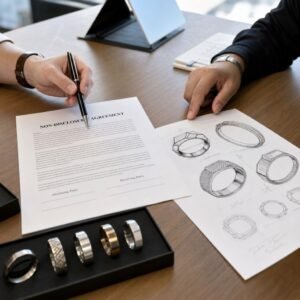
An NDA, short for Non-Disclosure Agreement, is a legally binding contract that establishes confidentiality obligations between two or more parties.
In jewelry manufacturing, it’s commonly used when a brand needs to share sensitive information with a manufacturer. This may include original designs, CAD files, product specifications, prototypes, pricing details, or plans for an unreleased collection.
For example, imagine you’re developing a new line of custom stainless steel bracelets. You send sketches and 3D design files to a manufacturer so they can review the design, calculate production costs, and create samples. An NDA can require the manufacturer to keep those files confidential and use them only for the agreed purposes.
The main purpose of an NDA is to prevent confidential information from being disclosed or used without authorization. It gives both parties a clear understanding of their responsibilities instead of relying on verbal promises.
One-Way NDA vs. Mutual NDA
There are two common types of NDAs, and the difference comes down to who is sharing confidential information.
- One-Way NDA (Unilateral NDA): One party mainly provides confidential information, while the other agrees to protect it. For example, a jewelry brand shares its original designs with a manufacturer for quotation and sampling.
- Mutual NDA (Bilateral NDA): Both parties share confidential information and agree to protect each other’s materials. A brand may provide designs and sales forecasts, while the manufacturer shares proprietary production methods or sensitive cost information.
For many early-stage jewelry sourcing projects, a one-way NDA may be sufficient. A mutual NDA may make more sense when both companies expect to exchange sensitive information throughout development.
The right choice depends on your actual cooperation, not simply which agreement sounds more comprehensive.
Why Might Jewelry Brands Need an NDA When Working With a Manufacturer?
The biggest reason is that custom jewelry manufacturing requires brands to share information they may not want competitors or other customers to see.
When developing custom jewelry, a manufacturer often needs more than a product photo. Depending on the design, you may need to provide dimensions, material requirements, surface finishes, construction details, CAD models, and physical samples. For a private label stainless steel jewelry collection, this could include specifications for 316L stainless steel, PVD coating colors, engraving, and custom packaging.
Some of this information is standard in the jewelry industry. Other details may come from months of design work, product testing, or commercial planning. Once shared, that information is no longer entirely under your direct control.
This becomes especially important before a new collection launches. Let’s say your brand has spent several months developing a series of original rings and pendants. Your manufacturer receives the full design package long before those products appear on your website. If the designs or samples are shared with unauthorized parties, competitors could learn about the collection early, potentially affecting your launch plans and market advantage.
There’s also the question of how a factory handles information internally. A custom stainless steel jewelry project may involve technical drawings, engineering reviews, mold development, metal processing, polishing, plating, and final inspection. Different teams need different information to complete their work. Some manufacturers also use outside specialists for certain processes.
Without clear instructions, a factory might assume it’s acceptable to share technical files with another supplier or display finished samples in its product portfolio. A brand, however, may expect those materials to remain private until the collection launches.
An NDA helps establish those boundaries in advance. Depending on its terms, it can restrict unauthorized disclosure, limit how confidential designs may be used, and define when information can be shared with third parties.
The point isn’t to assume your manufacturer will misuse your information. It’s to make sure both sides understand what is allowed before sensitive materials change hands.
What Information Can an NDA Protect in Jewelry Manufacturing?
An NDA can cover many types of confidential information, provided they’re properly defined in the agreement. In custom jewelry manufacturing, these are the main categories worth paying attention to.
3.1 Jewelry Sketches and Design Drawings
Original sketches and design drawings are often the starting point for a new collection. They may show the shape, proportions, decorative elements, and other details that make a jewelry piece distinctive.
Even if the design is still being developed, these materials may reveal your creative direction before the product reaches the market. An NDA can help prevent confidential sketches, technical illustrations, and renderings from being shared or used outside the agreed project.
Keep in mind that confidentiality protection is different from copyright or registered design protection. These are separate legal rights, with their own requirements.
3.2 CAD and 3D Design Files
CAD files deserve particular attention because they can contain much of the information needed to manufacture a jewelry piece.
CAD stands for Computer-Aided Design. In jewelry manufacturing, CAD and 3D models are used to define product geometry, dimensions, and construction details. A production-ready file may show the exact shape and structure of a ring, pendant, bracelet, or earring.
Unlike a product photograph, a detailed 3D model can make it considerably easier to reproduce a design.
For this reason, your NDA should clearly cover confidential CAD files, 3D models, technical drawings, and relevant revisions. It should also specify how those files may be used. For example, reviewing a model to prepare a quotation may be permitted, while using the same model to manufacture products for an unrelated customer may not be.
It’s also worth paying attention to file versions. During jewelry development, a design may go through several revisions before the final sample is approved. Keeping the latest drawings, specifications, and sample approvals linked to the correct version helps avoid production errors and confusion about which design is authorized.
3.3 Product Specifications, Materials, and Manufacturing Details
Custom jewelry production involves a range of technical specifications. For stainless steel jewelry, these may include:
- Material grades, such as 304 or 316L stainless steel
- Product dimensions, thickness, and weight
- Polishing, brushing, and other surface finishes
- PVD coating colors, thickness requirements, and approved color samples
- Engraving, stone-setting details, and clasp construction
These specifications help the factory manufacture products that meet your requirements.
Not every specification is confidential on its own. For example, 316L stainless steel and PVD coating are widely used in the jewelry industry. However, an unpublished combination of design details, custom dimensions, finishing requirements, and development information may have commercial value.
For a custom PVD-coated bracelet, the approved finish might involve a specific color sample, coating structure, surface preparation, and inspection requirements. These details should be recorded in the production specifications so the manufacturer can maintain consistency from sampling to bulk production.
An NDA can protect such information when it’s appropriately included within the agreement’s definition of confidential information.
3.4 Custom Molds, Tooling, and Samples
Custom jewelry projects often require prototypes, molds, or other production tooling. These items may contain design and manufacturing details that aren’t visible in ordinary product photos.
An NDA can restrict unauthorized disclosure or use of confidential information contained in samples and tooling. However, there’s an important distinction: protecting mold-related information doesn’t automatically mean you own the mold.
If your brand pays for custom tooling, ownership, storage, future use, and return of the tooling should be clearly addressed in a manufacturing or tooling agreement.
It’s also good practice to identify approved samples and keep a record of any design changes. In production, an approved sample—often called a golden sample—serves as a reference for appearance, dimensions, finishing, and other agreed quality requirements. This helps the manufacturer and brand work toward the same standard when bulk production begins.
3.5 New Collections and Product Launch Plans
Manufacturers sometimes see an entire collection months before it’s officially released. They may know the product designs, planned variations, launch dates, or marketing direction.
For jewelry brands, especially those preparing seasonal collections or coordinated product launches, this information can be commercially sensitive.
An NDA can establish whether the manufacturer is permitted to photograph unreleased products, post samples on social media, display them at trade shows, or include them in its catalog.
3.6 Pricing, Order Quantities, and Business Information
Confidential information isn’t limited to product designs. It may also include purchase prices, expected order volumes, sales forecasts, customer information, and distribution plans.
For example, a wholesale jewelry brand may share its projected annual purchase volume to negotiate pricing or secure production capacity. That information could reveal valuable details about its purchasing strategy.
An NDA can help keep these commercial details from being disclosed or used outside the agreed business relationship.
When Should You Consider Signing an NDA With a Jewelry Manufacturer?
The best time to consider an NDA is before you share information you want to keep confidential. You don’t necessarily need one for every supplier conversation, but it becomes more relevant as your project moves from general inquiries to detailed product development.
Initial supplier inquiry and quotation. If you’re simply asking about manufacturing capabilities, minimum order quantities (MOQs), materials, or approximate pricing, an NDA may not be necessary. For an initial quote, basic reference images, dimensions, materials, and estimated quantities may be enough. However, if accurate pricing requires original drawings or sensitive product details, consider agreeing on confidentiality terms before sending the complete files.
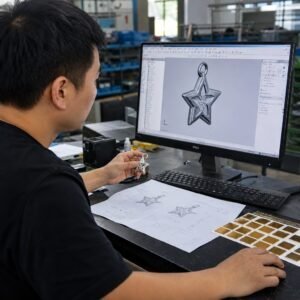
Sharing design and CAD files. Once you provide detailed sketches, CAD models, or production drawings, the manufacturer has access to information that may be used to reproduce your design. This is a common point to establish confidentiality obligations. It’s also good practice to keep records of which files and revisions you’ve shared.
Sampling and prototype development. During sampling, designs often change. A stainless steel pendant may need adjustments to its thickness, attachment point, or surface finish before approval. A manufacturer may review the design for manufacturability, recommend adjustments, and prepare updated drawings or samples. An NDA can cover confidential information exchanged during this process, while separate terms may be needed to clarify ownership of newly created design work.
Mold and tooling development. If your project requires custom molds or fixtures, discuss confidentiality and tooling rights before development begins. This is particularly important when your brand is paying for tooling intended for its own products.
Bulk production and long-term cooperation. Confidentiality doesn’t become irrelevant once production starts. A manufacturer may continue receiving new designs, revised specifications, pricing information, and repeat orders. Your NDA or manufacturing contract should explain how confidential information is handled throughout the partnership and, where appropriate, after it ends.
For most brands, the practical approach is to share only what a potential supplier needs at each stage. You can begin with general product information and provide more detailed materials once the manufacturer is qualified and the necessary agreements are in place.
What Should a Jewelry Manufacturing NDA Include?
A useful NDA doesn’t have to be unnecessarily complicated. What matters is whether it clearly addresses the information you’re sharing and how the manufacturer is expected to handle it.
Before signing, focus on these six key areas.
5.1 Definition of Confidential Information
The agreement should identify exactly what types of information are protected. In jewelry manufacturing, this may include original designs, CAD files, technical specifications, prototypes, custom samples, pricing, and business information.
It should also explain whether protection applies to digital files, physical materials, verbal discussions, and relevant information developed during the project.
Most NDAs include reasonable exceptions. For example, information that was already public, lawfully known to the manufacturer, independently developed without using protected information, or lawfully obtained from another source may be excluded.
5.2 Permitted Use of Confidential Information
A good NDA should explain what the manufacturer may do with your information, not just prohibit sharing it.
For example, you may authorize the factory to use your design files to evaluate manufacturing feasibility, prepare quotations, make approved samples, and fulfill confirmed production orders.
If you don’t want those files used for other customers or unrelated products, that restriction should be clearly stated.
This matters because an agreement that only restricts disclosure may not address every type of unauthorized use.
5.3 Restrictions on Third-Party Disclosure
Jewelry production may require access by multiple departments or outside specialists. CAD design, mold development, PVD coating, engraving, and packaging are common examples.
An NDA should explain who can receive confidential information and under what conditions. Access may be limited to personnel who need the information for authorized work and are subject to appropriate confidentiality obligations.
For sensitive projects, the brand may also require approval before confidential files or samples are sent to subcontractors.
These requirements should be practical enough to support normal production while keeping unnecessary information sharing under control.
It’s worth asking which processes are handled in-house and which are outsourced. For example, a manufacturer with its own plating workshop can manage coating specifications, approved color samples, process inspections, and related production records within its factory. This can reduce the need to transfer certain technical materials to outside coating providers, although other parts of the project may still involve external suppliers.
5.4 Confidentiality Period
The NDA should state how long confidentiality obligations remain in effect.
Some agreements use a fixed period, such as three or five years. Others provide longer protection for certain information, especially trade secrets.
There isn’t one standard duration that fits every jewelry project. Unreleased launch plans may lose much of their confidential value after publication, while proprietary development information could remain valuable for years.
The agreement should also clarify whether confidentiality obligations continue after the business relationship ends.
5.5 Return or Destruction of Confidential Materials
Your NDA should address what happens to confidential materials when the project ends or when their return or deletion is requested.
This may include CAD files, technical drawings, development records, and other confidential documents. The agreement should also account for legitimate backup, legal, or recordkeeping requirements where applicable.
Physical molds, tooling, and samples may need separate arrangements, particularly when ownership and future production rights are involved.
5.6 Breach of Agreement and Dispute Resolution
Finally, the NDA should explain what happens if confidentiality obligations are breached and how disputes will be resolved.
Depending on the agreement and applicable law, remedies may include financial damages, court orders restricting further misuse, or other legal relief.
For international manufacturing partnerships, pay attention to the governing law, dispute resolution process, and practical enforceability of the agreement. These details are particularly important when the brand and manufacturer are located in different countries.
What Are the Limitations of an NDA in Protecting Original Jewelry Designs?
An NDA is an important starting point, but it isn’t a complete intellectual property or supply chain protection solution. There are several situations where brands may need more specific contractual terms.
6.1 Can an NDA Stop a Manufacturer From Producing Your Design for Other Customers?
It may help, but only to the extent that the agreement restricts the relevant activity.
Suppose you send a confidential CAD file for an original stainless steel pendant to a manufacturer. If the agreement clearly prohibits using that file for unrelated orders, it may provide a contractual basis for addressing unauthorized use.
However, a basic NDA focused only on disclosure may not adequately address unauthorized production. It also may not prevent a manufacturer from independently developing a similar product without using your confidential information, unless separate legal rights or contractual restrictions apply.
If exclusive production matters to your brand, define the restrictions clearly rather than assuming an NDA provides exclusivity automatically.
6.2 Does an NDA Protect Mold Ownership and Exclusive Selling Rights?
No. An NDA does not automatically establish ownership of custom molds, CAD files, or intellectual property. It also doesn’t automatically grant exclusive selling or manufacturing rights.
For example, if you pay a factory to develop a custom mold, the contract should clarify who owns it, who may use it, and what happens when the partnership ends.
Similarly, if you need a design produced exclusively for your brand, those rights should be covered by specific contractual terms.
Depending on the design and jurisdiction, additional protection may be available through copyright, registered designs, or design patents.
6.3 Can an NDA Prevent a Manufacturer From Contacting Your Customers?
Not necessarily. An NDA may protect confidential customer lists and commercial information, but it doesn’t automatically prevent a manufacturer from approaching customers or business contacts.
If this is a concern, a specific non-circumvention clause may be appropriate. Such provisions should clearly identify the protected relationships and restricted activities.
6.4 Why Does the Exact NDA Wording Matter?
Two agreements may have the same title but provide very different protections.
One might simply restrict the disclosure of confidential documents. Another might also address unauthorized use of CAD files, third-party manufacturing, and subcontractor access.
The protection comes from the actual terms, not the document’s name.
This is why it’s worth reviewing an NDA against your specific project. A simple agreement may be suitable for preliminary discussions, while a custom collection involving original designs and significant tooling investment may require more detailed provisions.
6.5 Can an NDA Eliminate Every Supply Chain Risk?
No contract can eliminate every risk associated with sharing information.
Jewelry production may involve several suppliers, especially when specialized finishing, components, or packaging are required. A confidentiality agreement with the main manufacturer doesn’t automatically create direct contractual obligations for every outside supplier.
That’s why proper file management, controlled access, subcontractor requirements, and responsible sample handling still matter.
The most practical approach is to combine clear agreements with a manufacturer that follows reliable production and information-handling procedures.
What Should Jewelry Brands Check Before Signing an NDA?
Before sending original designs or sensitive information to a manufacturer, take a few minutes to check whether the NDA actually matches your project.
Start with the information you’re sharing. Does the agreement cover your sketches, CAD files, specifications, samples, and relevant business information? If you’re providing editable 3D models or production-ready drawings, make sure those materials are included rather than relying on vague references to confidential documents.
Next, consider who will access your information. A factory may need to involve its own technical team or approved subcontractors. Check whether the agreement sets reasonable limits on third-party disclosure and requires appropriate confidentiality obligations.
Finally, make sure the contract fits your sourcing arrangement. Buying standard wholesale jewelry is different from developing an exclusive private label collection. The more original design work, custom tooling, and sensitive commercial information involved, the more carefully the relevant rights and responsibilities should be defined.
You should also ask how the manufacturer manages design revisions and sample approvals. A clear project workflow should connect drawings, product specifications, approved samples, and production requirements. This makes it easier to identify which information belongs to each project and helps prevent mistakes when designs change.
If your project also raises concerns about exclusive manufacturing, customer relationships, or ownership of newly developed designs, additional contractual protections may be worth considering.
For significant international projects, it’s also sensible to confirm the manufacturer’s correct legal entity and have the agreement reviewed by a qualified legal professional familiar with the relevant jurisdiction.
How Do NDA, NNN, and Jewelry Manufacturing Agreements Work Together?
If you’re sourcing jewelry from overseas, particularly from China, you may also come across the term NNN agreement.
An NNN agreement addresses three areas: Non-Disclosure, Non-Use, and Non-Circumvention. In simple terms, these relate to keeping protected information confidential, preventing unauthorized use, and restricting certain attempts to bypass a business partner.
An NDA can also contain non-use and non-circumvention provisions. The difference depends on the wording, not just the title.
For jewelry brands sharing original designs, production-ready CAD files, or sensitive customer information with overseas suppliers, an NNN-style agreement may offer a useful framework for broader contractual protection. However, its suitability depends on the project, applicable law, and how the agreement is drafted.
Why a Manufacturing Agreement Still Matters
An NDA or NNN agreement mainly deals with confidentiality and related restrictions. A manufacturing agreement covers the actual production relationship, including pricing, payment, quality requirements, sample approval, delivery schedules, and responsibility for defective products.
For custom jewelry, it should also clarify matters such as CAD file rights, mold ownership, design modifications, approved production quantities, and any agreed exclusivity.
These agreements work best when supported by real production procedures. A well-organized custom jewelry project typically moves from design review and engineering evaluation to sampling, customer approval, bulk production, and quality inspection. Keeping approved drawings, material specifications, coating requirements, and sample records aligned throughout these stages helps maintain consistency.
You don’t necessarily need a separate contract for every issue. What matters is that the relevant protections are clearly documented, legally appropriate, and consistent with how the manufacturer actually operates.
Final Thoughts: Protect Your Designs Before Starting Jewelry Production
An NDA is a practical way to protect confidential information when working with a jewelry manufacturer. It helps establish clear expectations before you share original sketches, CAD files, product specifications, samples, or details about an upcoming collection.
But remember that confidentiality, design ownership, mold ownership, and exclusive manufacturing rights are different things. An NDA may address some of these concerns, but others require more specific contractual terms.
If you’re purchasing standard wholesale jewelry, your confidentiality needs may be relatively simple. If you’re developing original designs, custom stainless steel jewelry, or an exclusive private label collection, it’s worth giving these details more attention before production begins.
You don’t need to be a legal expert to start the conversation. Ask your manufacturer how design files are handled, who can access them, whether outside suppliers are involved, and how custom samples and tooling are managed. These are reasonable questions, and an experienced manufacturing partner should be able to discuss them clearly.
A successful jewelry manufacturing partnership isn’t just about good pricing and consistent product quality. It’s also about knowing that both sides understand their responsibilities and can work together with confidence.
Disclaimer: This article provides general information about NDAs in jewelry manufacturing and is not legal advice. Contract requirements, intellectual property rights, and enforcement options vary by jurisdiction. Consult a qualified legal professional when preparing or reviewing agreements for your business.
Planning a Custom Stainless Steel Jewelry Collection? Let’s Talk.
At Chicolink Jewelry, we’ve been working in stainless steel jewelry manufacturing since 2012, supporting brands, wholesalers, and private label businesses with product development, OEM/ODM customization, sampling, and bulk production.
Based in Dongguan, China, our factory brings together jewelry design, engineering, manufacturing, and quality-control capabilities. We also operate our own in-house plating workshop for PVD/IP and other approved plating processes, allowing us to coordinate finishing requirements, sample approvals, production inspections, and batch traceability within our manufacturing operations.
We understand that developing a custom jewelry collection involves more than getting the design and price right. Clear specifications, careful sample approval, reliable production management, and respect for your business information all matter.
If you’re considering a new stainless steel jewelry project, our team can help review your product requirements, discuss the manufacturing process, and clarify confidentiality expectations before detailed development begins.
Have a design or collection in mind? Visit Chicolink Jewelry or email us at info@chicolinkjewelry.com to discuss your project.