For jewelry brands, an original design is more than just a product. It’s part of what makes customers recognize your brand, choose your collection, and come back for more. Whether you’re launching your first private label jewelry line or expanding an established wholesale business, protecting those designs is an important part of bringing them to market.
The challenge begins when you move from design to manufacturing. To produce custom jewelry accurately, your supplier needs access to drawings, CAD files, samples, and detailed product specifications. Some projects also require custom molds or production tools. Sharing this information is a normal part of manufacturing, but once it leaves your hands, you need to know who can access it, how it can be used, and what happens to it after production ends.
This is where original jewelry design protection comes in. It’s not just about stopping competitors from copying your finished products. It also means preventing unauthorized production, keeping unreleased collections confidential, protecting your design files and tooling, and making sure sensitive business information isn’t misused. Legal agreements such as NDAs and NNNs can help establish these boundaries, while good manufacturing practices help put them into action.
You don’t need to be an intellectual property expert to manage these risks. What matters is understanding where problems can arise and addressing them before they affect your business. In this guide, we’ll cover five common design protection risks in custom jewelry manufacturing, practical ways to reduce them, and how to choose a manufacturing partner that respects your original work.
Why Is Design Protection More Challenging in Custom Jewelry Manufacturing?
The main reason is simple: your manufacturer needs access to your design information to make your products.
Unlike buying ready-made jewelry, custom manufacturing involves turning your ideas into production-ready designs. For example, if you’re developing a custom stainless steel pendant, the factory may need its exact dimensions, shape, engraving details, and CAD model. Depending on the manufacturing method, that information may be used for sampling, tooling, machining, polishing, or other production processes.
As the project moves forward, different employees and sometimes outside specialists may handle your designs. A well-organized factory will use approved drawings, product specifications, and sample records to keep production consistent. These records are valuable for quality control, but they also need to be managed carefully because they contain information about your products.
It’s also important to understand the difference between OEM and ODM manufacturing:
- OEM manufacturing: You typically provide your own design, and the factory produces it according to your specifications. Protecting your original design and preventing unauthorized production are the main concerns.
- ODM manufacturing: You may select an existing manufacturer design or work with the supplier to develop something new. In this case, ownership and exclusivity need to be agreed upon.
For instance, ordering a bracelet from a supplier’s existing ODM collection doesn’t mean other brands can’t purchase the same design. Even when you pay for custom development, you should confirm which design rights and technical files belong to you.
The best approach is to clarify ownership, confidentiality, and permitted use before the project begins. That way, both sides know exactly what is expected.
Risk One: Your Exclusive Jewelry Designs Are Used for Other Orders
One of the biggest concerns for jewelry brands is finding their exclusive designs being sold by someone else.
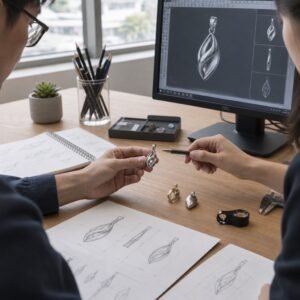
Imagine developing a custom stainless steel bracelet, paying for samples and tooling, and placing your first bulk order. A few months later, you discover a nearly identical bracelet in another supplier’s catalog. If your original design was reused without permission, it could damage the exclusivity you’ve worked to build.
Unauthorized reuse may involve:
- Production for other customers: Your proprietary design is used to fulfill someone else’s order.
- Unauthorized catalog listings: Your custom jewelry is offered for wholesale without permission.
- Production overruns: Extra pieces are produced beyond the approved quantity and sold through other channels.
- Reuse of design files: Your CAD files or protected design elements are used to develop competing products.
However, similar-looking jewelry isn’t always evidence of copying. Standard chains, clasps, basic shapes, and common design features may be used across different collections.
How a Non-Use Clause Helps
A clear Non-Use restriction is one of the most important contractual safeguards against unauthorized design reuse. It should specify that your proprietary designs and project files may only be used for approved activities, such as preparing quotations, developing samples, and manufacturing your orders.
This matters because a basic confidentiality agreement may focus on preventing information from being shared. But a factory could potentially reuse a design without sharing the files with anyone outside the company.
For exclusive collections, make sure your agreement addresses unauthorized manufacturing and commercial use, not just disclosure. It should also identify which designs are protected and distinguish them from the manufacturer’s existing products and standard components.
Risk Two: Your New Jewelry Collection Is Leaked Before Launch
The simplest way to protect an upcoming collection is to require approval before your manufacturer shares any product images or information publicly.
Let’s say you’re preparing a new necklace collection for a holiday launch. Your marketing campaign is scheduled, your retailers have received their previews, and production is underway. Then someone at the factory posts a sample photo on social media. Even if the post was meant to showcase the factory’s capabilities, your new designs are now public before you intended.
Leaks can also happen through supplier catalogs, factory videos, trade show displays, or communication with outside production partners. Early exposure may give competitors a head start, weaken your marketing campaign, or create problems with retailers expecting an exclusive launch.
There can also be legal implications. In some countries, publicly revealing a design before filing for intellectual property protection can affect your ability to register it. The rules vary by jurisdiction, so registration plans should be considered before a collection becomes public.
How an NDA Helps Protect Unreleased Products
An NDA (Non-Disclosure Agreement) helps by defining what information must remain confidential. For jewelry projects, this should cover not only CAD files and technical drawings but also sample photos, product renderings, packaging concepts, and unreleased collection details.
The manufacturer should also have practical rules for handling customer projects. Employees and approved production partners need to understand that customer designs cannot be used in promotional materials without permission.
If you’re preparing a particularly important launch, it’s worth confirming how sample photographs are managed, who can access the project, and whether any outside partners will receive information about your products.
Risk three: Unclear Ownership of Custom Jewelry Designs
Before paying for custom design development, make sure you know who will own the finished design. This is especially important when your manufacturer helps turn an initial idea into a production-ready product.
For example, you might send a rough sketch of a stainless steel ring to a factory. Its design team then develops the 3D model, adjusts the structure, and prepares the product for manufacturing. You pay the development fee and approve the final sample. But does that mean you own the complete design and can have it manufactured anywhere?
Not necessarily. Design ownership depends on the agreements between the parties and the laws that apply. Paying for development doesn’t automatically transfer every intellectual property right.
The same issue can arise with ODM jewelry. If you choose a product from a manufacturer’s existing collection and request a few changes, the original design may still belong to the manufacturer. Unless exclusivity has been agreed upon, other customers may be able to purchase the same or similar products.
How to Avoid Ownership Disputes
The best approach is to clarify design ownership before development begins, particularly when both your brand and the manufacturer contribute to the final product.
Your agreement should address:
- Existing designs: Which designs and components already belong to each party?
- New designs: Who will own the original work created specifically for your project?
- Design modifications: Who has the right to use, modify, or reproduce the finished design?
- Commercial rights: Can the manufacturer offer the design to other customers, or is it exclusive to your brand?
It’s also important to make sure you have the rights to any designs you provide. If you’re working with a freelance designer, confirm that your agreement covers the necessary commercial rights. If you’re using an online image as inspiration, don’t assume it’s free to reproduce.
For original jewelry brands, clear ownership isn’t just about avoiding disputes. It gives you greater confidence when launching new collections, expanding into other markets, or moving production to a different supplier.
Risk Four: Custom Jewelry Molds and Design Files Are Reused Without Permission
When developing custom jewelry, don’t focus only on the finished products. The molds and production files used to make them also need protection.
Depending on the design and manufacturing process, your jewelry may require custom stamping dies, casting molds, machining fixtures, or other specialized tooling. Once these tools are made, producing additional pieces can become much easier.
The same applies to digital files. A production-ready CAD model may contain enough information to recreate a jewelry component or develop new tooling, even without access to the original mold.
Make Tooling Ownership Clear From the Start
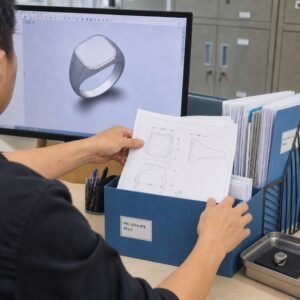
Many first-time buyers assume that paying a mold fee automatically means they own the mold. That’s not always the case. A tooling charge may cover development costs without clearly transferring ownership.
Before paying for custom tooling, make sure your manufacturing agreement answers four questions:
- Ownership: Who owns the physical mold or production tool?
- Usage: Can the manufacturer use it for another customer or order?
- Storage: Where will it be kept, and how will it be identified?
- Transfer: Can you request its return or transfer if you change manufacturers?
For exclusive designs, the agreement should prohibit unauthorized use of the tooling and clearly define your rights to customer-owned assets.
Protect CAD Files Separately
Physical molds, CAD files, and intellectual property rights are not the same thing. Owning one doesn’t automatically mean you own all three.
For example, you might provide a hand-drawn pendant design while the factory’s engineering team creates the production-ready 3D model. Your agreement should clarify who owns the resulting technical files, which files you are entitled to receive, and how the manufacturer may use them.
Good file management also matters. A production project should have clearly identified drawing versions, approved samples, and records of important changes. This helps prevent both unauthorized use and manufacturing errors caused by outdated information.
Plan for the End of the Project
If you stop working with a manufacturer, decide what happens to your molds, samples, and digital files. Depending on your agreement, customer-owned tooling may be returned or transferred, while confidential design files may need to be delivered or securely deleted.
Some records may need to be retained for legal or quality purposes. Any retained information should remain protected and unavailable for unauthorized production.
Addressing these details in advance makes it easier to change suppliers or restart production in the future.
Risk Five: Subcontracting Makes Design Information Harder to Control
Subcontracting is common in jewelry manufacturing, and it isn’t necessarily a warning sign. The real issue is whether your manufacturer controls how confidential information is shared with outside production partners.
For example, a stainless steel jewelry factory might handle machining, polishing, and assembly internally but use a specialized partner for certain coating or engraving services. This can be an efficient way to achieve the required finish or production capacity, but outside partners may need access to product samples, technical specifications, or design files.
That’s one reason a manufacturer’s production setup matters. When processes such as PVD/IP coating are handled in an in-house plating workshop, fewer outside companies may need access to customer products and specifications. In-house production doesn’t guarantee confidentiality, but it can make production oversight and responsibility easier to manage.
How to Manage Subcontracting Risks
You don’t need to know every employee involved in production, but you should understand which major processes may be outsourced, especially when they involve sensitive designs.
A good manufacturing agreement should address several points:
- Subcontracting approval: Require written approval before specified sensitive production activities are outsourced.
- Limited information sharing: Give subcontractors only the files and specifications needed for their work.
- Confidentiality obligations: Require approved subcontractors to follow appropriate confidentiality and Non-Use restrictions.
- Manufacturer responsibility: Define the main manufacturer’s responsibility if a subcontractor misuses protected information.
For especially sensitive projects, you may also want a direct confidentiality agreement with a key subcontractor.
The goal isn’t to avoid every factory that uses outside specialists. It’s to work with a manufacturer that manages those relationships responsibly and is transparent about how your products are made.
Risk Six: Your Customer Information and Sales Channels Are Exposed
Your original designs aren’t the only information worth protecting. Your customer relationships, wholesale pricing, and distribution strategy can be equally important to your business.
During a long-term partnership, a jewelry manufacturer may learn about your order quantities, target markets, product launches, and pricing arrangements. Depending on your shipping requirements, the supplier might also see the names and addresses of retailers or distributors you work with.
For example, imagine you’ve spent years building relationships with jewelry retailers in the United States and Europe. If a supplier uses confidential information gained through your partnership to approach those customers directly, it could threaten your sales network.
This is where a Non-Circumvention clause can help. It restricts certain attempts to bypass your business using protected customer contacts, introductions, or commercial information.
The clause should clearly define which relationships and activities are covered. It shouldn’t unnecessarily restrict a manufacturer’s legitimate business with customers unrelated to your company.
There are also simple ways to reduce exposure. Only share customer names, pricing details, and sales information when they’re needed for production or delivery. Avoid giving suppliers access to your full customer database, and consider shipping arrangements that limit unnecessary disclosure.
For brands and wholesale distributors, protecting commercial information is part of protecting the business you’ve built.
NDA vs. NNN: Which Agreement Is Better for Custom Jewelry Manufacturing?
For most custom jewelry projects, the important question isn’t whether an agreement is called an NDA or NNN. It’s whether the agreement covers the risks that actually matter to your business.
An NDA (Non-Disclosure Agreement) primarily protects confidential information. It can restrict a manufacturer from sharing your drawings, CAD files, samples, product plans, and sensitive business details with unauthorized parties.
An NNN agreement typically addresses three areas:
- Non-Disclosure: Prevents unauthorized sharing of protected information.
- Non-Use: Prevents the manufacturer from using your protected designs or information outside the agreed project.
- Non-Circumvention: Restricts certain attempts to bypass your business using protected customer relationships or commercial information.
NNN agreements are often discussed in cross-border OEM manufacturing, particularly when brands work with Chinese suppliers and want to address unauthorized production as well as information disclosure.
However, an NDA can also include Non-Use and other restrictions. An agreement labeled NNN isn’t automatically stronger or more enforceable. The actual wording, applicable law, and available remedies matter far more than the title.
Why You Still Need a Manufacturing Contract
Neither an NDA nor an NNN replaces a proper manufacturing contract. Confidentiality agreements establish restrictions on information and its use, while manufacturing contracts address how the work itself should be carried out.
Your manufacturing contract should cover matters such as tooling ownership, authorized production quantities, subcontracting, excess inventory, file management, and what happens when the relationship ends.
For valuable original designs, you may also want to consider formal intellectual property protection, such as U.S. design patents or European design registrations. These rights are separate from confidentiality agreements and depend on the relevant legal requirements.
When working with an overseas supplier, make sure the agreements identify the correct legal company and address governing law, dispute resolution, and enforcement. For significant projects, a qualified legal professional familiar with the relevant jurisdictions can help you avoid costly contract mistakes.
How to Build a Practical Design Protection Process
You don’t need a complicated system to protect your jewelry designs. The most effective approach is to establish a few clear rules and apply them consistently throughout the manufacturing process.
Here’s a practical five-step process:
Step 1: Check the manufacturer before sharing sensitive designs. Verify the supplier’s business identity, production capabilities, and experience with custom jewelry. Ask whether the company manufactures products directly or works with partner factories. For larger projects, factory visits, references, or independent assessments can provide additional confidence.
Step 2: Set confidentiality and usage rules before sending detailed files. Discuss design ownership and permitted use early. For an initial quotation, you may only need to share product images, basic dimensions, material requirements, and estimated quantities. Complete editable CAD files can usually wait until the supplier genuinely needs them and appropriate protections are in place.
Step 3: Keep design files organized during sampling. Use clear file names, track important revisions, and confirm which sample version has been approved. A well-managed development project should connect the approved sample with the correct drawing, material specifications, surface finish, and product requirements. This keeps everyone working from the same information and reduces costly production errors.
Step 4: Confirm tooling and subcontracting arrangements before mass production. Check who owns the molds, how they’re stored, and whether any production stages will be outsourced. Also agree on how excess units, rejected pieces, and defective products will be handled. Production records linked to order numbers, SKUs, and batches can provide useful traceability when questions arise.
Step 5: Arrange a proper handover when the project ends. Confirm whether molds and files will be retained for future orders, returned, transferred, or deleted according to your agreement. Keep written records of important handover decisions, especially for exclusive designs.
These steps become easier once you establish a working routine with your manufacturer. More importantly, they help prevent misunderstandings before they turn into expensive problems.
10.How to Choose a Jewelry Manufacturer That Respects Your Designs
Choosing the right manufacturing partner is one of the most practical ways to reduce design protection risks. A trustworthy supplier should be able to explain how your designs are handled throughout production, not just promise to keep them confidential.
Start with the basics. Ask how the manufacturer manages customer design files, approved samples, and custom tooling. Are different projects clearly identified? Who can access your CAD files? Can the factory explain what happens to customer-owned molds after an order is completed? You don’t need a complicated technical explanation, but you should expect clear answers.
It’s also worth looking at how production is organized. A manufacturer with experienced engineering staff, documented sample approvals, and consistent production records is generally better equipped to keep customer projects organized. These practices don’t guarantee intellectual property protection, but they make it easier to identify mistakes, track production, and establish accountability.
Before making your decision, pay attention to how the supplier responds to a few important questions:
- Confidentiality: Can the manufacturer explain how it prevents unauthorized sharing or public display of customer designs?
- Tooling and files: Are ownership, permitted use, storage, and return arrangements clearly documented?
- Subcontracting: Is the manufacturer transparent about outside production partners and how sensitive information is protected?
- Agreements: Is the supplier willing to discuss reasonable NDA, NNN, or manufacturing contract terms?
- Experience: Has the factory worked with custom jewelry brands that require exclusive designs, consistent quality, and repeat production?
For example, if you’re sourcing stainless steel jewelry from a manufacturer in Dongguan, China, you might ask whether processes such as CNC machining, polishing, and PVD coating are handled in-house or outsourced. If the factory has its own plating workshop, fewer outside providers may need access to your products and specifications. More importantly, you can ask how the factory controls design information and quality across each production stage.
Let’s Talk About Your Custom Jewelry Project
Whether you’re developing your first private label collection or managing regular wholesale orders, choosing the right manufacturer can make product development more predictable and easier to manage.
If you’re looking for a stainless steel jewelry manufacturing partner in China, Chicolink Jewelry can help you evaluate your designs, discuss production requirements, and plan the next steps toward sampling and bulk manufacturing.
We welcome conversations about project-specific confidentiality, design ownership, and manufacturing arrangements, so expectations can be established before sensitive information is shared.
Have a custom jewelry idea or an existing design ready for production? Contact our team to discuss your project and find out how we can support your next collection.
Website: chicolinkjewelry.com
Email: info@chicolinkjewelry.com